MAJOR GARRETT:
00:06:26
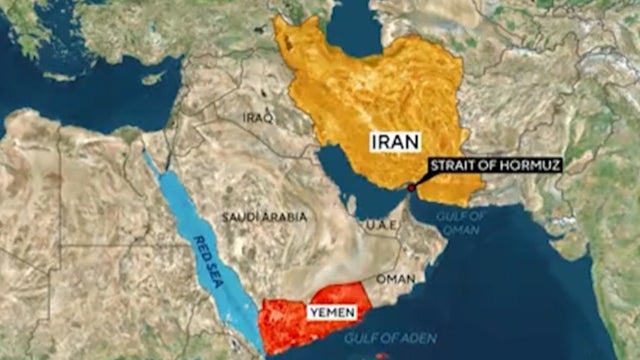
So talk about the Strait of Hormuz, Charlie. What is the latest there? Yeah, so we got an update from Defense Secretary Pete Hegseth and Chairman of Joint Chiefs of staff Dan Keane today about what's happening there. As of this afternoon, when we got that update this afternoon for us, morning for you, 14 ships have been turned back. These are Iranian flagged tankers that have been turned back. And I have to be clear here, because we just got an announcement from CENTCOM early this evening saying there is no US blockade on the Strait of Hormuz. And it may sound like semantics here, but that is not where US assets, surface fleet, as the military calls them, are positioned. At the center of that is USS Abraham Lincoln, which has got aircraft that are providing surveillance, intelligence and reconnaissance in that region to see which ships are moving in and out of that region. But the ships that are doing the hard work are the destroyers. Those are the ones that are turning back some of these ships. And they've widened that to include any ships that might be transporting contraband, ammunition to Iran, which kind of would be in a state of conflict anyway. So what we're talking about, the US has got the blockade. They're not denying that they have a blockade in place, but it's south of the Strait of Hormuz. And I can tell you, the CENTCOM officials, Central Command, the area of responsibility to keep out the military jargon there, they are positioned in a place where they're not really going to put themselves in harm's way in that tight squeeze at the Strait of Hormuz. So they are policing the area south of that. And they've already said, it's not only that region and the North Arabian Sea or the Gulf of Oman, but they are willing to intercept ships that are headed from Iranian ports. And they're putting out this call. There's a radio call that they put out to ships, warning them that if they've come from Iranian ports, they need to turn around. So 14 was the last count. That number is probably going to go up. And it's not a seizure of the Strait of Hormuz. A lot of military planes flying around here tonight, too. But south of that, intercepting any ships or suspect ships that might be leaving from Iranian ports.
MAJOR GARRETT:
00:08:42
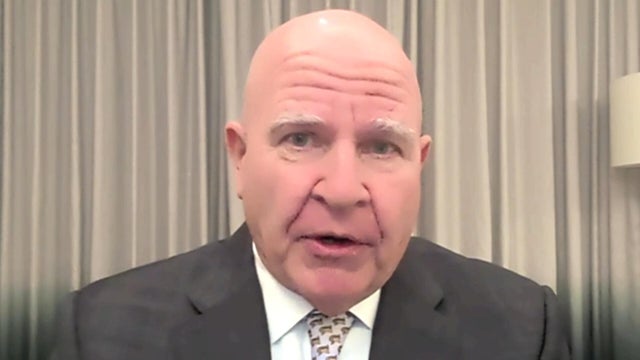
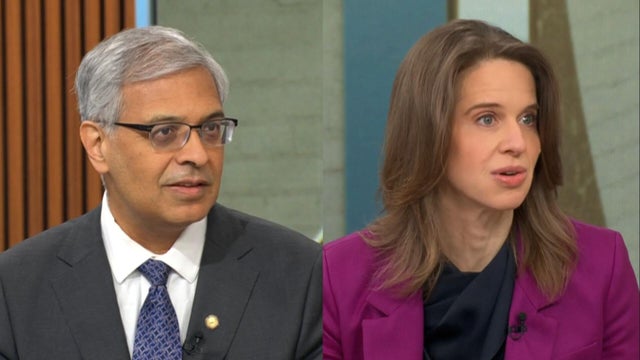
Charlie D'Agata with all of the breaking details. We appreciate it very much. Thank you. CBS News national security contributor Joe Zacks joins me now. He previously served as Deputy Assistant Director for Counterterrorism, the CIA. Joe, great to have you with us. You just wrote a piece talking about the necessity within the Trump administration for patience. How do you define patience? And when you heard the Defense Secretary say this morning, as he did, as long as it takes, how did that land with you? Yeah, so patience is at this point, I think, very critical. There's a lot of discomfort associated with what's going on right now in Iran economically, not only here at home, but worldwide. But what is happening with the blockade now, I think it's starting to put, and will over time, put a real financial squeeze on Iran. And that is going to flip what they tried to do against the world with respect to their closure of the Strait of Hormuz. What hopefully will happen, but I can understand that this could take time with respect to insurance companies and shippers being willing to take the risk of transiting through the Strait.
MAJOR GARRETT:
00:09:53
Which, they're not.
JOE ZACKS:
00:09:53
--which at the moment, they're not. But over time, they may be. But regardless, the inability of Iranian ships to transit and make money off of this crisis, especially given their very dire economic situation, will I predict, lead them back to the negotiating table with us, humbler and more willing to discuss the terms that we need to see. When you play this out in your mind, Joe, from a strategic point of view, do you define patience as a month, two months? Because if they're rationing jet fuel in Asia and Europe was told by high-ranking energy officials, you've got six weeks of jet fuel left, they're going to start pressuring this administration. You're 100% correct. The JCPOA took over 20 months to negotiate that agreement.
MAJOR GARRETT:
00:10:44
That's the Iran nuclear deal. That's the Iran nuclear deal. This is not going to take 20 months. The Iranians are in a bad position. They need to get out of this. We want to get out of this. But we need to get out of this on terms that are favorable to us.
MAJOR GARRETT:
00:10:58
And enforceable. And enforceable, very much so. So I think it's going to take several more weeks. I think the president will likely be willing to extend a ceasefire if he sees that Iranians are going to be serious, coming to the table and negotiating in good faith. We've talked about a 20-year moratorium on uranium enrichment. Apparently, the Iranians talked about five years. That's an enormous gap. But the president said again today, he doesn't like 20 years. He wants longer than that. Well, I'm glad to hear that. JCPOA was 15 years. So longer than 20 or even better yet, no uranium enrichment, would be ideal. But let's see. I think that the developments in Lebanon today are very positive.
MAJOR GARRETT:
00:11:43
If they hold. If they hold, which in the past, they have not. And that's because of Hezbollah. I think the Lebanese government, also in dire economic shape, would love to see an agreement with Israel and more favorable economic terms for them. With Israel and the US. With Israel and the United States. But Hezbollah is the spoiler. So let us, and also, Iran has a big part in that.
MAJOR GARRETT:
00:12:04
As we explained in the open. Joe Zacks, I appreciate it very much. Thank you, sir. Quick programming note. CBS News 24/7 is taking a deeper dive into the war with Iran and how it's affecting your wallet. The Daily ReportSetting It Strait, notice the spelling, streams tonight right after the show, 6:00 PM Eastern. Turning now to Capitol Hill. Just moments ago, I spoke with Republican Congresswoman Anna Paulina Luna, who has been one of the most prominent voices on Capitol Hill, pushing the expulsion for members of Congress that she believes have violated some manner of ethics rules or other rules. Please take a listen to that conversation. There's quite a bit of news. On X, you posted the following, tagging Senate Majority Leader John Thune. "It seems like the Senate has its own trash to take out. You" meaning Thune, "need to look into the allegations against one of your senators. It's very disturbing." Who are we talking about? We are talking about an Arizona Senator that was very closely tied to Eric Swalwell. And I have since confirmed with Senator John Thune's Chief of Staff, as well as they're linking us to their ethics that they are investigating, and we are sending all appropriate information directly to them now.
MAJOR GARRETT:
00:13:18
That would be Ruben Gallego, correct? Correct.
MAJOR GARRETT:
00:13:24
When you say in that X post, "it's very disturbing," for my audience's benefit, can you define what disturbing means to you? Well, without I guess getting too graphic, there is a woman that allegedly is coming forward with attorneys, wants to go on record about an incident that occurred between the two of them at the same time, and the event was sexual in nature, allegedly. But it's not just that. There's also two apparently issues of campaign finance violations. Again, look, I am one member of Congress, but I'm not going to be some of my colleagues that waited forever and a day to bring this information forward. I think that if this is happening, that it needs to be dealt with. I'm definitely not in the Senate, but I think that Thune should probably take that seriously and look into it, especially given the nature of what's become apparent regarding Eric Swalwell. Based on what you know, Congresswoman, does this sound to you, and you're not a prosecutor, neither am I, but does it sound to you that it's criminal in nature regarding Senator Gallego? I think that if it involves people that were potentially trafficked, yes. Regarding the campaign finance violations, I think that that's cut and dry. But right now, again, I'm not investigating this. I'm simply presenting this information to the authorities that have the positions and power to do what they will with it. Part of the problem that we have in Washington currently, is that a lot of this behavior was circulating publicly, people had heard about it, but they didn't present it to the appropriate authorities. And frankly, right now we have a slush fund that 3/4 of Congress voted to protect. We had to subpoena those records in House Oversight, and we should be obtaining them next week. But again, that information belongs to the American people. If your taxpayer dollars to the tune of $18 million, which is I think the current number, are being used to cover sexual harassment, sexual assault settlements, that's not something that we should be paying for and I definitely don't want to serve with these types of people. I understand, too, playing devil's advocate, that people can make false allegations, but given again, the stuff that's come out with Eric Swalwell, given the stuff involving potentially escorts involved, et cetera, again, I sent this information as soon as I got it to the appropriate authorities. And you mentioned the word trafficking. That carries a lot of weight in a lot of different ways, criminal and emotional. Do you believe sex trafficking is part of what this could be about? I think any time that you are knowingly engaging in purchasing someone for sex, that that is something that should be taken seriously. I've heard this now about a few members of Congress. One of them is under current investigation by House Ethics. I think that there's another one being opened up in the Senate. But, yes, I would say that that's criminal nature. Actually, right now in the United States, according to the Trafficking in Persons Report that the State Department typically puts out, we're one of the worst countries in the world for that. And again, we don't know anything about these individuals. I mean, are they doing it on their own accord or are they being forced or are they being coerced? Again, though, most people don't have these types of allegations. Most people don't have these types of rumors floating around about their offices. And the problem that we're seeing right now, is that there are a few people up here that are coming up here, and they're not serving their constituents. And it should not be the expectation, nor should it be asked of us by either party to cover up for this type of behavior. And so I do applaud journalists that are asking questions on this, because I don't want to serve with these people. I don't think that they should be in positions of power. And I definitely don't like what I've seen in regards to how they've treated women specifically. It's actually really gross when you hear about it.
MAJOR GARRETT:
00:17:14
Congresswoman, I want to play for you sound today. My colleague, Nikole Killion, up on the Hill, talked to New Mexico Democratic Senator Ben Ray Luján, and he had this remark. I'd like you to listen and respond, please. I appreciate the voice and the courage that Representative Luna is showing out, but she's known about all this [BLEEP] for some time. Why haven't they put any of these people on votes to expel them? She's a Republican. They're in the majority. They control the calendar. So clean it up. Any reaction? I actually did do the vote to expel Tony González and was told that we couldn't pair it. So there's that. I have actually never even heard of that member before. And to say that I know what's happening in the Democrat coalition and caucus is kind of interesting, because I'm not a Democrat.
MAJOR GARRETT:
00:18:01
Representative Anna Paulina Luna, Republican from Florida, I appreciate the time. Thank you. Thanks.
MAJOR GARRETT:
00:18:10
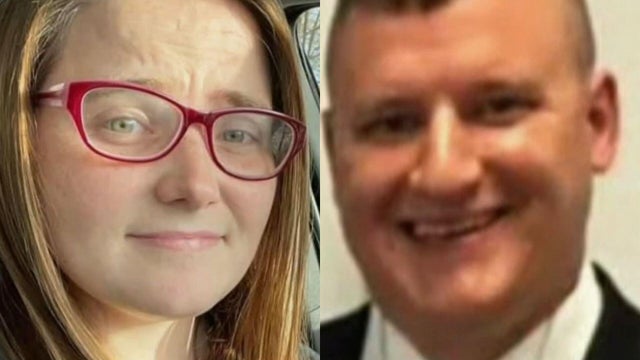
Our Nikole Killion joins me from Capitol Hill. Nikole, you were just listening. Your reaction? Yeah, that's right. Well, more broadly speaking, when we talk to Senator Ben Ray Luján, he shared a similar sentiment to what Congresswoman Luna has expressed in terms of cleaning House and taking out the trash, if you will. That is what he told me in terms of just this broader culture of potentially covering up allegations against any particular member. So he said, if anyone has been accused of misconduct or has engaged in misconduct, that we should clean it out and we shouldn't sugarcoat this anymore. So I think there, if we had played out more of the bite, perhaps both members would have found some agreement there. But that being said, to the congresswoman's point, we also spoke with Majority Leader John Thune earlier in the day, and he did confirm, as the Congresswoman did, as well, that this matter that she referenced involving a senator, has been referred to Senate Ethics and will play out there. Thune was very clear that he did not know anything with respect to these allegations, didn't know the particulars of the case, only that, yes, he had been contacted by Luna's office and has since referred the matter to Senate Ethics. So again, we will continue to monitor to see how this situation plays out. As far as her confirming to you that it might be Senator Ruben Gallego, I would point out that we did participate in a very lengthy press conference with him earlier this week, where he made clear that not only did he not have any knowledge of congressman or now ex-congressman Eric Swalwell's behavior and conduct with respect to some of these allegations of sexual assault-- --but he was asked explicitly whether or not he has been engaged in any misconduct with either staffers or any other women outside of his marriage. He definitively said, no. We also, one of our producers also asked him if he could definitively say that he has not mistreated any of his female staffers. He also said, no. So obviously, we will reach out to his office for comment in terms of the congresswoman's latest claim, but he has previously denied any wrongdoing. Nikole Killion with all that information on Capitol Hill, thank you very, very much. Still to come on The Takeout,this is a hard one. Former Virginia Lieutenant Governor Justin Fairfax fatally shot his wife and then turned the gun on himself. What we are hearing from law enforcement about this tragic, tragic story. Also, New York City Mayor Zohran Mamdani has surpassed 100 days in office. Our political panel weighs in on what he told CBS News about what his administration has done, his relationship with President Trump, and what is still on the agenda. Plus, a look inside the inner workings of the Supreme Court. The editor of SCOTUSblog, Sarah Isgur, joins me live to discuss her new book, Last Branch Standing. The Takeoutreturns in 90 seconds. Welcome back to The Takeout. As I said when we went to break, this next one is a devastating story. Just after midnight last night, police say former Virginia Lieutenant Governor Justin Fairfax killed his wife and then himself in their Annandale, Virginia, home. That's just across the Potomac River from here in Washington, DC. Both of their teenage children, aged 14 and 16, were home at the time of this crime. CBS News Homeland Security correspondent Nicole Sganga following everything today, Nicole, what do we know? I was at the scene earlier today, Major, and shock is the word that neighbors are using. It's the word that Fairfax County Police Department Chief Kevin Davis used. Justin Fairfax was not only the former Lieutenant Governor, but he was a known figure and a one-time rising political star. His wife, Dr. Cerina Fairfax, a dentist, also known in this community. We know that he used a handgun to shoot and kill his wife multiple times in their basement, and then within minutes, ran upstairs to one of the bedrooms and turned that weapon on himself. His 16-year-old son was the one who dialed 911 as all of this was playing out, and Chief Davis told me, tried to render aid on his mother and then heard the shots that ultimately killed his father upstairs. You mentioned this happened just after midnight, and that his 14-year-old daughter was also in the house when this happened. A lot of people are understandably asking why right now. What could have led to what seems to be a real spiraling. And we have been looking through the divorce papers of both Justin and Cerina Fairfax. We know that they were in the middle of a separation, that Justin Fairfax had been given until April 30 to leave the home. I do want to read some of this to our viewers. Please. The father has allowed the mortgage to go into default multiple times. They describe him as having heavy daily alcohol consumption. They also say evidence showed that in 2022, Justin Fairfax purchased a handgun with money intended for his children's horseback riding lessons, and at some point that year, left home with the gun and some clothes in a suitcase. And after frantic searching by his wife and family, he was located in the woods of a public park near their home. So clearly, this does paint a picture of, as these documents say, a very talented man who struggles with emotional and psychological issues. Authorities said today that this appears to be a contentious divorce, and that might have been a contributing factor. Contentious divorce. Contentious enough that they had to put surveillance cameras throughout the home that have aided police in figuring out what exactly happened. We also know back in 2019, Justin Fairfax, who again, was considered a rising political star, at the time, Lieutenant Governor, faced accusations of sexual assault. Two women who came forward and accused him in separate incidents in 2000 and 2004. Authorities telling me that really, that was one of many incidents that led to his spiraling. He was never the same after that.
MAJOR GARRETT:
00:24:35
Nicole Sganga, it's a tragic story. Lots of details, lots of contours, and as always, you bring them with such clarity. Thank you very much. Thank you.
MAJOR GARRETT:
00:24:43
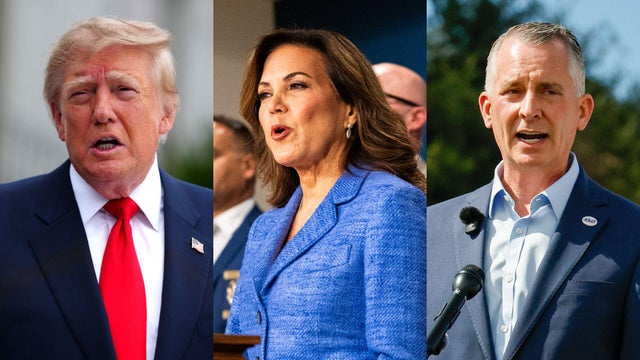
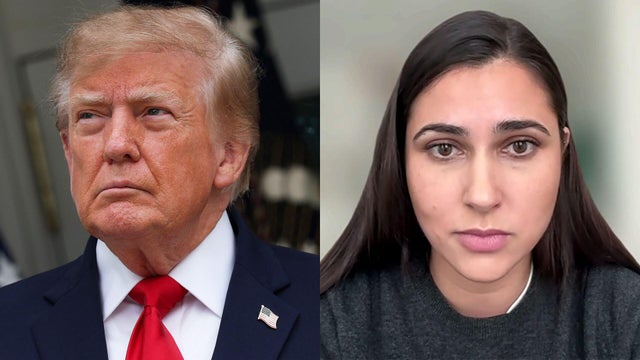
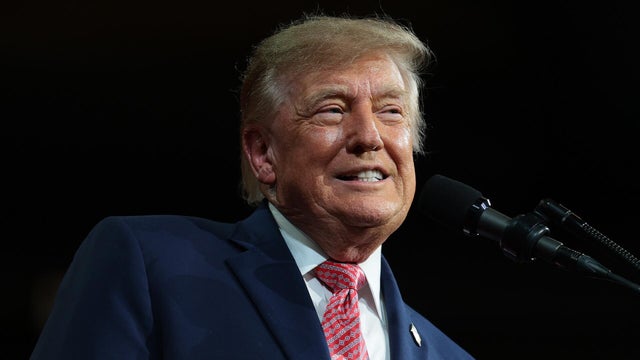
New York City Mayor Zohran Mamdani sits down with CBS Mornings. Big interview. Lots of fun in that interview, marking his 100 days in office. Our political panel joins me next to discuss that and so much more. You're watching The Takeout. Welcome back to The Takeout. New York Mayor Zohran Mamdani's been in office more than 100 days. His unlikely relationship, pretty good with President Trump until, well, just a social media post ago. I'll get to that in a second, is kind of one way or another, defining the Democratic socialist's time in office. Here is how the mayor described that dynamic, Mamdani and Trump, on CBS Mornings. Please listen. I would say the two of us are in touch. We've had a number of meetings now in the Oval Office, and we are honest, direct about the fact that we have many disagreements. There is one place of agreement that we have, which is that we both love New York City. And that's, I think, something that is at the heart of every conversation we have. It's how can we make this city better. Because both of us have said publicly that the better the city does, the better we feel. Well, on that topic, let me read a social media post from the president seconds ago. "Sadly, Mayor Mamdani is destroying" that's all caps, "New York. It has no chance." Exclamation mark. "The United States of America should not contribute to its failure will only get worse." That's also in caps. "The tax, tax, tax policies are so wrong." I stopped talking about all caps. "People are fleeing. They must change their ways and then fast." On and on. "Thank you for your attention to this matter." OK, Harrison Fields is with me, and Democratic strategist and political contributor for CBS News, Chuck Rocha. Great to have you both here. Harrison, pick up on Trump and Mamdani and what we just heard. Well, the mayor was being a little too cute by half with his videos about Tax Day, and it just reminded the president that while he's a smiling man, that he may be a cordial person to talk to in the Oval Office, he is destroying the greatest city known to man, New York City, where my family spent years, decades serving in the NYPD. And it's sad to see. But the good news for my home state of Florida, is they're all coming to us. Look at the taxes. Look at safety. Governor Hochul said she's not going to allow him to raise taxes. But look at the taxes over 20 years in New York.
MAJOR GARRETT:
00:27:03
Yeah, but he hasn't raised any new ones. Democratic policies in the city. His proposals, free childcare, free grocery stores, free buses. Where is this money going to come from? City-owned grocery stores. Fair. And it's going to take until 2030 for this thing to even open up. His policies are an empty bag that he's overpromising. He is certainly under-delivering in the first 100 days. He can't even shovel snow in the city. You talk to New Yorkers there. And it's unfortunate. But it's unfortunate for New Yorkers that cannot leave. For the rich New Yorkers that are leaving to my home state of Florida, it's fine. $20 plus billion of capital is already flooding into Miami because New Yorkers are done with New York City. But for the people that cannot leave, it's a sad story.
MAJOR GARRETT:
00:27:44
Chuck. Mamdani kind of swept into the office running against a flawed Democrat named Cuomo. Andrew. Andrew Cuomo, right. And he's made the most of it. And the one thing that I look at, a lot of folks like to pontificate on TV about all the tea leaves and stuff, but he had a lot of folks rallying around him. Democrats were looking for fresh energy, and I think they found him. Does everybody agree with all the Mamdani stuff that he's talking about with public policy? No. We're a big tent. There's a right and the left in the middle of the Democratic Party. But he's brought something that we've been looking for, and that's energy, especially after old Joe Biden. And after old Joe Biden, we were looking for somebody who had a little bit of spirit, and I think we found it here, and we're looking for other folks like that.
HARRISON FIELDS:
00:28:22
One of the things he also said he was like, well, they said Democratic socialism cannot get elected in New York City. And he's trying to flirt with the idea of maybe running statewide, maybe bringing this to a national-- He mentioned that in the CBS Mornings. And I just don't think the country is there. I don't think it's there. It's going to be very interesting to see what the Democratic establishment does when they have a primary. Do they want to go Zohran route or do they want to go more moderate? It's going to be a major test. That is going to be a fault line in the 2028 process, no doubt. Chuck, I want to ask you about Anna Paulina Luna's conversation with me about Ruben Gallego, Arizona Democratic Senator. She laid out some pretty harsh accusations, saying that the Senate needs to review them, and she's uncomfortable with him continuing to serve in the Senate. You know Senator Gallego? Yes, I do know him. And I've worked for him, and I worked for a lot of Democrats. And I tell them all the same thing. And I was shocked in watching her, and I've been shocked at watching the oppo dump on my good friend, Ruben. The one thing you do when you're telling folks what to do in these kind of situations, and Ruben did it this week when he had that long press conference that was agonizing, is, you go and tell the truth. And you get in front of people if you have nothing to hide, and he doesn't. He went out and told the truth. Now, because we live in the internet age, you have a lot of things, and I don't think that 99% of any of this stuff is true, but you get out, tell the truth. I know him, he loves his family and he loves this country.
MAJOR GARRETT:
00:29:35
So in that press conference, he said a couple of things that matter in the context of what Anna Paulina Luna said on this show. He denied any misconduct within his marriage. He denied any mistreatment of any female staffer that has ever worked for him. And that would be inclusive of the things that Anna Paulina Luna alleged on this program. So he's denied it in advance. In front of a table of cameras and in front of everybody, because that's what you do, anybody who's run a campaign for two seconds.
MAJOR GARRETT:
00:30:03
Harrison? Democrats in Arizona are hyperventilating right now. Because? They don't believe him. They are very concerned by even the appearance of impropriety, his close relationship with Eric Swalwell. There's a lot of rumor, there's a lot of innuendo. I'll be interested to see the evidence that Congresswoman Paulina Luna has. But if you are a Democrat in Arizona right now, you are getting ready to launch a campaign for whatever the special election. I want to ask you about this, because you were very close to the White House, you worked for President Trump. The president has often said, allegations, innuendo insufficient, and they're harmful in politics. We're talking about allegations that have yet to be proven. The president you worked for said, you need to prove it, not just allege it. Aren't you in any way uncomfortable with just allegations that have yet to be proven? I've never been in favor of guilt in public opinion. If this is going to come out, you're going to have potentially survivors come out. And everyone's going to have to make a decision. For Eric Swalwell, the evidence was mounting in the court of public opinion, and he made a decision to leave, as well as Tony Gonzalez. I believe if this is a criminal proceeding, let it go to a criminal proceeding and everyone has their day in court. But from a perspective of, what are your constituents lacking in this member, this person has no credibility anymore. He's in a cloud of this mess right now, and he probably has to consider dropping out.
MAJOR GARRETT:
00:31:25
Chuck, 10 seconds. Look, I think that folks here know when you read, and they know Paula Luna. Go look at the rest of her tweets is all I will say. We live in a country, one of the greatest countries in the world. She's been very consistent on this issue.
MAJOR GARRETT:
00:31:35
And the Epstein-- She's been very consistent. Innocent until proven guilty. All right. Fair. Chuck Roach, Harrison Fields, thank you very much. I appreciate it. Myth busting, the Supreme Court and the narratives that surround it. Next, I'm joined by SCOTUSblog editor Sarah Isgur, who's going to look at her new book. That's next, right here on The Takeout. Welcome back. Welcome to "The Conversation Corner." You know we love books here. Well, a new book makes the case that to understand the Supreme Court, you need to look beyond the prototypical 6-3 conservative majority thing. Last Branch Standingargues the court is actually 3-3-3. What does that mean? Helpfully, the book's author, Sarah Isgur, joins me to explain. She's an editor at SCOTUSblog. Great to have you here. 3-3-3, what does that mean? If all you think is that the court is a 6-3, partisan, it's no different than Congress, you'll get the cases wrong close to 90% of the time. And that's not just now, that's always been the case. In the last 20 years, there has been a liberal justice in the majority over 90% of the time. Last term, the same number of cases had all the liberals in dissent. Fine, that's your ideological lineup. The same number of cases had all the liberals in the majority and conservatives in dissent. So it was 6-3 the other way. So I suggest, yes, ideology, it's different than politics, but legal methodology does make a difference. But there's also this way that the justices work that presidents don't even seem to think about, which is, incrementalism, institutionalism, temperamentalism, if you will, and so Gorsuch and Kavanaugh can be identically conservative, but they're only together 50% of the time. Why? They see their jobs as quite different on that other spectrum. And that spectrum is what? When they talk about, yes, we were nominated by presidents who thought we would be conservatives, we identify ourselves in legal conversations as originalists, but yet they can come down on different sides of questions of law. That's right. So Justice Gorsuch, I call him my YOLO libertarian justice. He doesn't care what the consequences of this decision are, in the sense that that's not his problem. Congress can make a new treaty with Native Americans. Americans can ratify an Amendment to the Constitution. That's the way it's supposed to work. He's not supposed to take into account whether the consequences are good or bad. Justice Kavanaugh, on the other hand, wants to make a small change, look around, make sure everything's OK, then we can make another change to the law. More thinking of it as a middle school group project. There may be nine of us, but we turn in one diorama to our teacher. What about the Chief Justice and Amy Coney Barrett? So the Chief Justice and Barrett are incrementalists, institutionalists like Justice Kavanaugh. I would actually, again, you do have no question, conservative and liberal justices. But Justice Gorsuch and Justice Jackson, far apart ideologically, are incredibly close together temperamentally on how they see the court. They are low institutionalists. Justice Kavanaugh and Justice Kagan, again, far apart, but very close in those institutionalist concerns. You'll see Justice Kagan often making 7-2 decisions on the court. Do you have any sense of what Justice Alito is going to do? So difficult.
MAJOR GARRETT:
00:35:04
Lots of conversation in town. Lots of conversation.
MAJOR GARRETT:
00:35:07
And some of that can just be a conversation that chases itself and spins in a circle. Do you think there's anything to it that he could step down? Nobody knows the answer to this, but Justice Alito. The reason we're all talking about it, is the most common time for a justice to step down, is when a president of the party that appointed them is in office, and we are July 2 before a midterm election. So that's why we're talking about him. I think the White House would really like that opening. So they want to signal, if you step down, we'll make sure it's someone who would continue your legacy. Keep an eye on Judge Andy Oldham of the Fifth Circuit, because he is a former Alito clerk. And so, more conversations about him might convince the justice that now is the right time. On the other hand, Justice Alito is having a good time on the court. He likes his job. He thinks it's important work. None of these guys want to step down. Hashtag, life tenure. No doubt. Justice Sotomayor, through the court, released a statement earlier this week, just yesterday, apologizing for something she said about Justice Kavanaugh and something that he had written about an immigration decision. How unusual is that? I mean, the whole part of that, the denunciation and the apology. Talk about the temperament and some clashing. Absolutely. Justice Sotomayor cares deeply about collegiality on the court, especially she has reached out after their hard confirmation hearings to Justices Kavanaugh and Barrett, wanting to make sure they felt welcome coming into the court. I call it the Last Branch Standing, and this couldn't be a better example of that. How different does this feel than our political branches? Nobody pressured her to make this apology. The second she made those comments, I said, this is very unusual for a justice to comment kind of personally on another justice. And I said, but sometimes we all say things that we instantly regret. It is what we mean, but we don't want to say them publicly. And what she implied, was because of a quote, unquote privileged upbringing of Justice Kavanaugh, he didn't understand some of the underlying difficulties in a particular immigration matter, which was personal, not legal. That's right. And it is personal to her. She has talked about going back to chambers after a vote in conference and crying. Justice Kagan, of course, mentioned that she doesn't cry, she punches the wall. All of the justices have very different personalities. And if you want to be able to predict the court, you've got to actually understand those personalities.
MAJOR GARRETT:
00:37:34
Sarah Isgur, the book, Last Branch Standing. I want to read the subtitle, because it's kind of resonant for this show. A Potentially Surprising, Occasionally Witty Journey Inside the Supreme Court. Where have I heard something like that before? Anyway, thanks so much for being here. Queen Elizabeth II held personal relationships with 13 American presidents. Next, I'm joined by New York Timesbestselling author, Susan Page, who has a new book exploring all that when we come back. Welcome back. A new book out this week looks at the legacy of Queen Elizabeth II and her relationships with 13 US presidents who held office during her historic reign. Earlier, I spoke with Susan Page, author of The Queen and Her Presidents. Here is some of that conversation. Susan, I love to talk to reporters about books they write. And the first question I always ask is, what nugget or nuggets are you most proud of that readers can find in this book? There are a couple. Let me tell you one and not say it's necessarily my favorite. But President Trump, when I interviewed him for the book, told me about a phone call that Queen Elizabeth made to him that had never been reported before. It was in the aftermath of the leak of these memos by the British ambassador, making devastating assessment of Trump during his first term that resulted in the ambassador being no longer the ambassador. And the Queen called, and he described the conversation this way. "She apologized." Well, she didn't exactly apologize, but she thought he was a fool. She didn't say he was a fool. And clearly, she had managed to smooth those very troubled waters without actually throwing her ambassador under the bus. And this phone call had never surfaced before. And that anecdote, that nugget, having read the book, is a through line through her queenship, doing that thing you just described. Smoothing waters, without doing one thing overtly or another. When I was thinking about this book it was a quote from President Clinton in his memoirs that made me think maybe there was a book here. And after he met with the Queen for the first time, he said, "If she had not been born into royalty, she could have been a diplomat or a politician. Since she was born into royalty, she had to be both without ever seeming to be either." And that is the perfect description of what being the Queen of England for seven decades involves. There's a great line, page 34, about her coronation. "She would preside over a world that changed in ways she could scarcely have imagined, as she prepared for a ceremony suffused with the glory of a vanishing age." She is this person who stands between eras, seven decades of a completely transformed world. From the British Empire, which ruled the waves, to a world in which the empire crumbled, the Commonwealth emerged. The United States became the dominant power in the world, especially in the free world. And her role, as she saw it, was to protect Great Britain's interests in this world that was being transformed. How difficult or easy was it to learn about the Queen as an American journalist? It was hard. She didn't give interviews.
MAJOR GARRETT:
00:41:17
Right. She didn't write-- Well, there's one that you can check off the list. Not going to happen. No interviews. She never wrote a memoir. Her diaries have not been released. I hope they will be one day. She did keep a diary in pencil, for some reason, but whatever. And what I found was, you had to watch what she did, not what she said. Because she didn't say much in public. What she did was mostly behind the scenes. When she spoke in public, it was to toast a president or whatever the circumstances she was out to raise a glass to say something very positive. But if you watch what she did, that's where you could see her exerting her influence in ways that were not fully acknowledged. Page 220. President Obama, "Her Majesty, has such a power to her, but not simply because of her station. She was, of course, polished and poised, but she was also warm and personable, inviting and inquisitive." That's also a through line in all these relationships with different American presidents. And the British, as you write, were nervous about the relationship that was to be. They didn't know how to exactly regard President Obama, his father from Kenya, was he really going to be anti-colonial, would he hold that against the British, et cetera, et cetera. He was more interested in the Pacific than the Atlantic, President Obama. He grew up in Hawaii and Indonesia. What's more, the only connection between their families was that her government had put his grandfather in jail in Kenya. Now, this is not necessarily the foundation for a great relationship. And yet, when these two very different in generation and in so many other ways, the first time they met, they just hit it off. And it was one of the closest relationships she had with a president, closest I think of any, except for Ronald Reagan, who was truly a friend. And you covered President Obama. He's not given to false praise. But in Shimon Peres' eulogy in Israel, Obama said he had met three giants, privileged to meet three giants of the 20th century. Perez, Nelson Mandela and Queen Elizabeth. You can hear my entire conversation with Susan Page on your favorite podcast platform. Happy Thursday, everyone. This is The Takeout. Relentlessly curious, reliably civil, occasionally clever. Daily Reportcoming up next.