REPORTER:
00:04:17
Just to be clear, they were both going in the same direction? Tiger was coming up behind the guy in the pickup and pressure cooker? So the question is, were they both going the same direction? Yes. Both of them were in the 280 block of South Beach Road driving northbound. The truck pulling a trailer was trying to slow down and pull over, and Mr. Woods was overtaking him at a high rate of speed before he clipped the back end and rolled his vehicle over on the driver's door.
REPORTER:
00:04:41
How many times did he roll over? So the question is, how many times did he roll over? The answer is he didn't roll completely over. The truck, rolled to the driver's door and then just slid northbound up the road. And again, we'll provide you some photos of that. I know you said you don't know the exact speed, but you said high rate of speed twice now. Is there a way just to give us a general idea of how fast? You mentioned before, it's a two lane road. You can't drive very fast on that road. So the question is, can I give you a general idea of how fast? And the answer is I can't. But I can tell you this, it's a 30 mile an hour speed limit. And when I show you the photos, they speak for themselves. You can see where he clipped the back of the trailer. You can see where he rolled. And then as he decelerates, sliding down on the driver's door of the vehicle, you can see that he slid for a pretty decent space before he came to a stop. Yes, sir.
REPORTER:
00:05:27
Was he cooperative as far as what his schedule was today? What was he doing? Was he talking? Did he speak to you guys what his activities were today? So the question was, was he cooperative with us? The answer was, he is cooperative, but he was not trying to incriminate himself. So he was careful in what he said and didn't say. And when it came time again for the test, the urine test at the jail, he stopped that. Let me go back to one thing. There is a Florida State statute that requires us to keep people incarcerated for at least eight hours, post a DUI arrest. So he's in our jail. He will be there for at least eight hours, from 3:00 o'clock for at least eight hours, and then he'll be released on bond if he posts bond.
REPORTER:
00:06:06
Thank you.
REPORTER:
00:06:07
Injuries to the driver who was pulling that pressure washer? So the question is, injuries to the driver pulling the pressure washer. The answer is no injuries to him. He was fine, thankfully.
REPORTER:
00:06:19
You said that breathalyzer came out with zeros. It was the urine test that he denied, correct? The question is breathalyzer was zero. It's the urine test. The answer is yes. So on scene, we had a DRE experts evaluating him, and they believe from on scene that he was not impaired on alcohol. They believe it was some type of medication or drug. And again, at the jail he cooperated with the urine-- or I'm sorry. He cooperated with the breathalyzer, and then the urine he wanted no part of.
REPORTER:
00:06:44
Is there going to be any testing afterwards? What's the procedure with that to verify if he was under something? So the question, will there be any follow up testing? The answer is no. He has a right to refuse that test. There is a Florida statute which he will be charged with for refusing to take that test, but we will never get definitive results as to what he was impaired on at the time of the crash.
REPORTER:
00:07:08
Is that also a felony, refusing to take the test? The question is, is it a felony? The answer is no. Both charges are misdemeanor charges.
REPORTER:
00:07:14
Is he being given preferential treatment in the jail because of who he is? The question is, is he getting preferential treatment in the jail because of who he is? Let me go back to the simplicity of this. We're the Sheriff's Office. We know we arrested a high profile figure. I'm not trying to dramatize, but it doesn't matter who you are. If you break the law, we're going to follow the law. That's a really easy path to take. Now, as far as being in the jail, we're going to make sure he's safe. We're not going to put him in general population. He's not going to be with other inmates that could hurt him or try to capitalize on what he did. He'll pay the price, but he's not going to pay the price by getting punished in jail.
REPORTER:
00:07:46
Was there any drugs, or medication or alcohol found in the car? The question is, was there any drugs or medication in the car? The answer is no, there was not.
REPORTER:
00:07:54
Was he injured? The question is, was he injured? And the answer is no, he was not injured. Again, he was lethargic on scene, but that we believe was because of what he was intoxicated on.
REPORTER:
00:08:05
Was anyone else in the car with him? The question is anyone else in the car. The answer is no, he was alone in the car.
REPORTER:
00:08:11
And was he wearing a seat belt? The question is, was he wearing a belt? And the answer is, I don't know. I'm not sure. We know he crawled out of the passenger door prior to law enforcement arriving. We can determine that based on looking at the car. I just don't know the answer.
REPORTER:
00:08:26
Anyone else injured in the area because of the crash or the rollover? The question is, anyone else injured because of the rollover crash? And the answer is, thankfully, no. This is a small two-lane road. Again, I'm going to show you the photos. Had there been somebody moving in the opposite direction, we would not be having a conversation saying there was no injuries. This could have been a lot worse. Is that all?
REPORTER:
00:08:50
Sheriff, thank you. Thank you all. Thank you.
NIKOLE KILLION:
00:08:59
And you've been listening to an update on the rollover car crash that Tiger Woods was involved in. Officials say that Woods has been charged with DUI because he refused a urinary test after appearing impaired. He did comply with a breathalyzer test and blew a zero. He is currently in jail and must stay there for eight hours due to Florida law. There were no injuries to Tiger Woods or the other person in the crash. We want to turn now to our Anna Schecter. And Anna, what more did you take away from that news conference? Well, you just laid it out. The good news is that no one else was injured. No one else was in the car. The officials said he doesn't know if he was wearing a seat belt. But the case in point is, was he driving while impaired by a substance? And officials are saying that he appeared to be impaired by something. He was kind of acting groggy. They're not sure exactly why. Maybe it was from the crash, but he did refuse to take the test. He did a breathalyzer, but he refused further testing, and therefore, they arrested him. He's going to stay in jail for eight hours. So a lot of questions remain, exactly what might have been in his system. And let's look at the history, too. Remember, it was just a few years ago that he was involved in a serious car accident in the Los Angeles area, and he had been taking medication that affected him and caused that crash. He was seriously injured and really, through a ton of hard work, came back and even returned to exercising and playing golf, which is miraculous, given the injuries that he sustained to his leg. So this is, unfortunately, appears to be somewhat of a repeat, although a much less serious accident. But of course, with a high profile person like Tiger Woods, there's going to be a lot of attention placed on this. And the fact that he is in custody and will remain so for several more hours, I'm hoping that we learn a little bit more what type of medication he might have had in his system that caused him to get involved in this accident, caused the vehicle to roll over.
NIKOLE KILLION:
00:11:16
All right, Anna Schechter. Yeah, and worth noting, too, this came amid a lot of speculation about whether or not he would be playing in the upcoming masters, so-- That's right. --obviously, we'll have to see how this case pans out. Anna Schechter, thank you again. And now we want to head back to Capitol Hill and our Taurean Small. And Taurean, just walk us through the wild day that this has been on Capitol Hill. Yeah Nicole, I mean, I think you know firsthand from talking to House Speaker Mike Johnson this morning that he was quite exasperated by the process in which the Senate sent over its version of a DHS funding bill. He called the process testable, but really laying the blame at the feet of Democrats, saying that this didn't line up where his conference stood on funding priorities for the government. And he, after consulting with his Republican conference, came back and held that press conference that we could see right there to announce that they essentially rejected that proposal, saying that they're going to go at it in a different direction. This time, a short term spending bill that would fund the Department fully for 60 days. The problem with that, though, is that that directly conflicts with the state of where the Senate is. The Senate's recessed for about two weeks now after they voted to send their package over to the House, and Democrats have maintained that they would not be supporting any fully funding of the Department. So as it stands, that bill, if it were to pass out of the House tonight or tomorrow, would pretty much be dead on arrival once it makes it to the Senate.
NIKOLE KILLION:
00:12:58
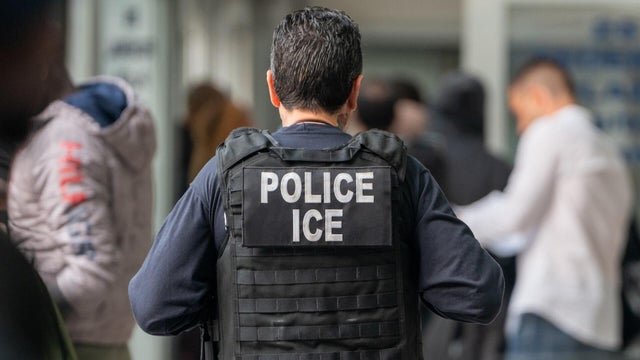
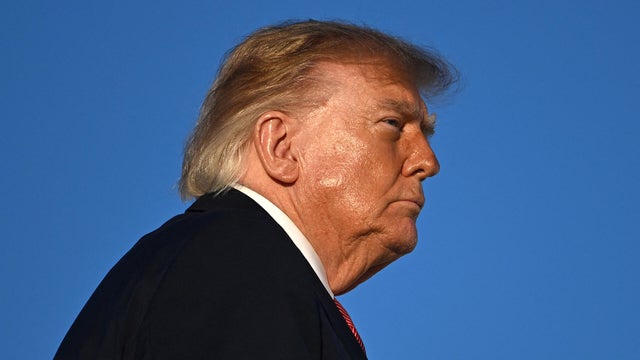
Which means this shutdown is likely to continue with no apparent end in sight. Taurean Small, we thank you so much. And now we want to turn to our Olivia Rinaldi, who is following President Trump in Miami, where he will speak shortly at a Saudi investment forum. But he did speak to reporters a short time ago. Olivia, what did he have to say with respect to this ongoing shutdown? Well, first off, he addressed what happened with Tiger Woods, saying it was just awful. I do want to remind you, last we knew, President Trump's former daughter-in-law, Vanessa, who was married to Donald Trump Jr., has been dating Tiger Woods. The president addressed that first. But as far as the shutdown, he did sound a little defeated, saying, I understand what's going on. I understand why Leader Thune is doing what he's doing. I understand why Speaker Johnson is doing what he's doing. But ultimately, the White House really declared an emergency. And the president signed this executive order allowing TSA funds to be distributed. So some of those individuals can get paid, some of those agents. Because as of this week, they have missed $1 billion worth of paychecks. It's two months now that they have missed a paycheck, so the White House taking some decisive action. But as far as fully funding the DHS as part of these appropriation bills, president is just saying, well, it's got to be up to Congress to figure that out. All right. Olivia Rinaldi reporting from Miami tonight. Thank you. And staying in Florida, we want to turn now to Democratic Congresswoman Debbie Wasserman Schultz who joins me now. And, Congresswoman, I just want to get your reaction to these latest developments and the speaker's plan to move forward with this short-term CR. Is that something you're open to supporting? Absolutely not. What we need to do is take up the bill that the Senate passed unanimously last night, which makes sure that we can set aside the already well funded ICE and CBP, which got $150 billion in the big ugly law last year, and ensure that we can fully pay our TSA agents, make sure that we can fund the Coast Guard and FEMA, and by the way, nonprofit security grants, which are vital right now with the explosive rise in anti-Semitism and anti-Semitic attacks. Not 10 days ago, Temple Israel, the largest synagogue in the United States, was attacked by someone who was reacting to and clearly connected to what's going on in Iran. And those are funded out of the Department of Homeland Security, as well. What Republicans seem to be doing-- and Mike Johnson is leading the charge-- is bear hugging the shutdown that they caused. We have always-- and President Trump finally acknowledged by saying he was going to fund TSA out of the slush fund from the big ugly law, that could have been done weeks ago. This should never have been a crisis that was caused and now blown up by Republicans. They own it, and we need to take up the bill the Senate passed last night, and make sure that we can continue to negotiate on the vital reforms that are essential to ensure that ICE and CBP conduct their business like normal law enforcement agencies and treat people with fairness and just. But can you still get those reforms? Because Leader Thune said that ship has sailed. We have to make sure that we continue to fight to prevent ICE from running roughshod over people's rights. And we have made as Democrats tremendous progress. Kristi Noem was fired. ICE is out of Minneapolis. We have a commitment from the New Homeland Security Secretary that they will use judicial warrants. I mean, those are the things that, at the beginning of this, the Trump administration said, no way. We're not going to do that. We're going to go full steam ahead. But the reason that they have relented, the reason that they have been worn down is because the American people are stunned and appalled by the conduct that ICE agents and CBP agents are engaged in. They see them brutalizing the American people. Listen, Nicole. ICE is roving around the towns that I represent, stopping lawn trucks randomly, indiscriminately, yanking people who have brown skin or have a heavy Hispanic accent, and bringing them into detention without regard to whether or not they've committed a crime, which is what Donald Trump said was going to be his top priority. This mass deportation scheme is appalling to the American people, and we need to make sure that there are reforms in place, while ensuring that the Coast Guard, TSA and FEMA are fully funded. And I want to turn to one other topic. As you know, your fellow Florida Democratic Congresswoman, Sheila Cherflius-McCormick, was found guilty by the House Ethics Committee on dozens of charges related to stealing pandemic relief funds to boost her Congressional Campaign. Should she resign? Well, I'm going to wait to see the full Ethics Committee report and what the full committee recommends as sanctions. I know that they met last night, had a hearing, and they released the adjudicatory committee's findings. But I want to make sure that I wait to see the full set of recommendations before making a judgment.
NIKOLE KILLION:
00:18:29
All right. Congresswoman Debbie Wasserman Scholz, we thank you so much for joining us here tonight. Thanks for having me.
NIKOLE KILLION:
00:18:36
And still to come on The Takeout, the Strait of Hormuz remains closed. CBS News National Security Analyst Aaron MacLean joins me live to assess the state of the war. Also, the battle between the Trump administration and Fulton County, Georgia, oversees 2020 election ballots, heads to court. What happened during today's hearing? Plus, are you ready for liftoff? The Artemis 2 crew arrives in Florida ahead of their mission around the moon. The Takeout returns in 90 seconds. [THEME MUSIC] Welcome back. US Central Command gave an update on the injuries to US service members in the Middle East. 303 US soldiers have been wounded. 273 have returned to duty, and 10 remain seriously injured. 13 American service members have died since the war began. CBS News National Security Analyst Aaron MacLean joins me now. He is also the host of the School of War Podcast. Aaron, thanks so much for being with us. And I really want to start off there with the troops, because we know thousands have been deployed to the region. And so what are the prospects for ground action? Right. So negotiations are continuing, but we have two Marine Expeditionary units coming in from the Pacific. We also have elements of the 82nd Airborne flying in from the East Coast of the United States. And I think there are three buckets, essentially, of options where you might see these troops employed in limited ground action regarding Iran. The first, of course, is right here in the Strait of Hormuz. The Iranians currently are effectively blocking transit of oil and other goods through the strait, unless they specifically approve the ship. So you can imagine a deployment of ground forces is supporting some kind of operation to open that strait again. The second bucket would be to seize facilities that Iran uses to export its own oil or other energy resources. Here, the piece of terrain on everyone's mind is a place called Kharg Island, which is a little bit further Northwest, out in the Persian Gulf. And I think the third group of options are some sort of special operations raid, targeting the Iranian nuclear facilities, which are here in the center of the country. Isfahan is the main one, but there are also potential targets at places like Natanz and Fordow. And that sounds like that would be a pretty intensive operation. Massive undertaking. Potentially, one of the largest special operations missions in modern American history, if it were to proceed. Yes. You also mentioned the Strait of Hormuz here, which you said remains closed. But it seems some ships are still able to get by. How is that possible? Yeah, that's right. So the Iranians have opened traffic to ships that they are approving through. No ships connected to the countries that are belligerent supposed to them in this war, but Chinese controlled ships, Russian controlled ships. And the way it's working is, typically, the sea lanes here go right, basically, dead through the middle of the strait, coming in between the Gulf of Oman over here and the Persian Gulf over here. But the Iranians have essentially opened a second route through the strait that runs up through here, between these two islands. And this little island right there is getting the reputation as being called the Tehran tollbooth. This is Larak Island, where the IRGC is controlling traffic through the strait right now. So basically, you coordinate with the IRGC, potentially some money moves hands, and you can move along this more northerly route. Movement right now down through the south without approval from Iran, pretty perilous. And then we know that the president just announced this week that he's putting another pause on potentially launching military strikes against Iran's power plants and energy infrastructure. But not all bombing is seized. So tell us a little bit more about the US-Israeli campaign. Yeah, there's an intensive air campaign underway as we speak. It's really just to pause, it seems, on the attacks on these power plants. So we've seen the air campaign move from west to east progressively over the course of the last few weeks. In the last 24 hours, you saw targets in a place called Mashhad, very large city in the very far northeastern corner of Iran, which is significant. Because most of our forces doing the bombing are coming either from the west or from the south, from the ocean. You also saw strikes today by the Israelis on steel plants in the center of the country, in the Isfahan area, along with, by the way, some nuclear targets. Not the buried highly enriched uranium that would be the target of a special operations raid, but other kinds of targets. There's one thing I want to draw your attention to, though, that I think has probably not gotten enough coverage in the noise of the last several weeks, which is that the Israelis, in particular, have been mounting an intensive campaign against regime targets in Tehran itself. So this is just a representation of some of the attacks that have struck central Tehran, some of these very large strikes on IRGC headquarters and facilities. But some of these smaller pinpoint strikes on checkpoints of essentially the secret police as they are standing at intersections, monitoring and managing the population. So the Israelis, in terms of the Iranian regime, are going hard right down until the clock ends, even if there's going to be some sort of negotiated solution soon. All right, Aaron MacLean, this really puts everything into perspective. Thank you so much. Coming up, Anthropic was just handed a big win in its lawsuit against the Pentagon. We'll break down the First Amendment argument at the center of the case. You're watching The Takeout. [THEME MUSIC] Welcome back to The Takeout. Here's a look at what else we're watching this evening. Sources tell CBS News cyber criminals linked to Iran successfully accessed FBI Director Kash Patel's personal email account. The FBI says they've taken steps to mitigate potential risks, but the data in question does not involve any government information. The hacker group, Handala Hack Team, took credit for the breach and posted personal photos of Director Patel on the internet. The State Department has offered a $10 million reward for information identifying the perpetrators. Later this year, President Trump's signature will appear on US currency, a first for a sitting president. It will appear next to Treasury Secretary Scott Bessent's on $100 bills with other denominations to follow. It's just the latest in a string of places the president has placed his name, such as on the Kennedy Center and the US Institute of Peace. Officials in Fulton County, Georgia, today asked a judge to order the FBI to return thousands of ballots it seized from the election offices in January. An attorney arguing on behalf of Fulton County alleged the ballot seizure was done at the request of President Trump, which the Justice Department denies. CBS News election law contributor David Becker joins me now. He is also the executive director of the Center for Election Innovation and Research. So what are you hearing with respect to today's hearing? Well, the hearing started at 9:00 AM today and it's been going on all day. It just recently took a break where the main portion of the hearing, where Fulton County was arguing for a return of their ballots. Those people were excused, and now there's a second portion of the hearing where the NAACP has brought a separate action, and that's being heard by Judge Boulet in federal district court there. What I'm hearing from people who are in the courtroom and from reports that have come from the courtroom is that there was a lot of discussion around whether or not the Fulton County had met the standard of callous disregard for demonstrating that the government had acted with callous disregard in order to get their materials back. One of the challenges they had, they brought several witnesses who looked at the affidavit. I looked at the affidavit when it first came out. It was clearly deficient on its face. It didn't allege intent. It didn't allege a specific crime. It didn't allege election theft. It didn't address the five year statute of limitations, all of which should have been in there. And it clearly had some key omissions. It used conspiracy theorist testimony that had been debunked before, and didn't tell the court that these issues had been reviewed and debunked. Those raise a lot of questions about the warrant, and a lot of witnesses for Fulton County came in and pointed out how much was missing from this warrant and how it was clearly deficient. And the government said, but you can't know what was in the FBI agent's mind who had testified. But the government also opposed that FBI agent appearing and testifying, and the judge allowed them to oppose that and prevented that FBI agent, who was apparently sitting in the courtroom, to testify. So I think the government could have some difficulty there, because on the one hand, they didn't want this individual to testify. On the other hand, he's the only person who can demonstrate and rebut the indications that there was callous disregard for the law and for the standard. Remember, a warrant is a really extreme seizure of evidence that the government is saying, we intend to use this in a prosecution. It's not to be used for a fishing expedition. It's not to be used for a PR stunt. And there were questions raised in the hearing today about whether or not it was being used for legitimate prosecution. And even the government of said, we don't know if we're ever going to use this evidence. And to that point, did we get a sense through this hearing of where these ballots actually are? It seems Fulton County, obviously, that's been something they want to know, and obviously, whether or not they're going to get these documents back, eventually. Yeah, not to my knowledge. I don't know that anyone knows where these are or what's being done with these ballots. The warrant was served about two months ago, so the government has had these for about two months. Remember, these ballots that they allegedly seized, they were counted, and counted again, and counted again three times, one of those times entirely by hand, observed by representatives of both campaigns. We know exactly what the outcome was in the election in 2020, in Fulton County and Georgia, statewide and nationwide. So I think the government has a hard time demonstrating there's a potential crime here. I don't expect they're actually going to use this evidence ever. But the judge is holding Fulton County to a standard to try to get this information back. We'll see how this plays out. I don't know if we'll get a decision tonight because it looks like it's going to go pretty late, but we might get one next week.
NIKOLE KILLION:
00:28:55
All right. Well, hopefully, we'll have a chance to follow up with you then. Thank you so much, David. A judge has temporarily blocked the Pentagon's attempt to designate Anthropic as a supply chain risk. The AI firm, which is a contractor of the US government, sued the Trump administration earlier this month, saying the designation by the Defense Department is political retaliation and a violation of its First Amendment rights. The dispute stems from a disagreement during contract negotiations over how the US military could use Anthropic's AI model, Claude. CBS News legal contributor and Loyola Law School Professor, Jessica Levinson, joins me now. And, Jessica, why is this a First Amendment issue? So what the judge said is that we have the government retaliating against Anthropic based on what they've said and, actually, the worst type of First Amendment violation based on their views. Nikole, as you know, when it comes to the First Amendment, we are protected against government action. The government action we're most worried about is when the government says, don't speak on certain subjects, or don't speak based on certain viewpoints. What Anthropic, again, is saying is that this smacks of retaliation, labeling them as a supply chain risk, is exactly what it looks like when the government says, we don't like your perspective, so now we're going to take an action against you. And the judge, at least in this temporary hearing, agreed, and therefore, issued a temporary restraining order. She said it looks like this is a classic case of-- I'm, of course, paraphrasing-- First Amendment retaliation. And so what happens next? So what happens next is that both sides will, obviously, continue arguing. This is just the first part of the case where Anthropic went to court and said we need, essentially, emergency relief. But that doesn't mean that the case is over. The federal government will argue that there are national security risks, that there are legitimate reasons, completely separate and apart from Anthropic's viewpoints and what they say for why they are labeling Anthropic a supply chain risk. Anthropic will say, there are so many other things you could have done. You could have just said, we're not going to make a contract with you. Anthropic, of course, will also continue to make its First Amendment argument and say, this is all about you just not liking what we were saying. And there's plenty in the public record they'll argue to indicate that. So what happens next? They'll continue to make their case as the case continues. Again, this was just a temporary restraining order. It just pushes pause while the parties can make their additional arguments. And what's the broader implication of this case? Great question. I think the broader implication really is about the power of, yes, this administration, but any other administration to take steps against a company and to determine whether or not those steps are being taken because they don't like what the company is saying, or because there's a legitimate problem with the company. Again, I think what it really boils down to is, what is the federal government's motivation here? Is it, we had a dispute and we don't like what you're saying, we don't like the views that you're propagating? Or is it, we think there is a problem with your product? Obviously, this has implications far beyond just AI and Anthropic. And this is a situation that happens with respect to a lot of administrations and government contractors, private contractors. All right. Jessica Levinson, thank you so much. Thank you.
NIKOLE KILLION:
00:32:48
Coming up, our reporter panel joins me to discuss House Speaker Mike Johnson's criticisms of his fellow Republicans in the Senate, and what it means for the standoff over DHS funding. You're watching The Takeout. [THEME MUSIC] Welcome back to The Takeout. Let's bring in our reporter panel now. White House Economic Policy Reporter for Semafor, Eleanor Mueller, and House Leadership Reporter for Politico, Riley Rogerson. I don't even know where to begin for this really roller coaster Friday. But, Riley, I will begin with you because start of the day, I spoke with Speaker Mike Johnson from the outset. He called Democrats and the Senate action detestable. So why, at the end of the day, did House GOP leadership, in essence, decide to blow up this DHS deal? They're furious, as you said. The problem that they had with what's going on in the Senate is that the Senate passed a deal that would fund the Department of Homeland Security, except for ICE and parts of CBP. House Republicans are saying that's unacceptable because they want to see funding for those agencies passed. Mind you, the reconciliation bill that passed over the summer, the so-called One Big Beautiful Bill, has millions of dollars in funding for ICE. So ICE will continue to be funded, but they still want to see it funded through this process additionally. And I also spoke earlier today with Congressman Ciscomani, who was involved in helping to negotiate the original DHS bill. Let's take a listen to what he had to say. Bottom line, if you have to swallow what the Senate sent over, you're willing to do that? We're going to do the right thing. We're evaluating every single option out there that we have, what's the best path forward for it. We want to make sure that we fund DHS in its entirety, even if it's going to take a little longer. But we need to start getting our TSA agents paid and everybody else that has been working without any pay due to this Democrat shutdown. So Eleanor, I there were a lot of Republicans who said, no, I'm not going to vote for the Senate bill by any means. But obviously, it seemed some were potentially open to this. So was that not enough? At the end of the day, was this about the Speaker not having the votes? I think what has really added a wrench in the gears here is that the White House has signaled to the Senate that it would support the deal that they passed late last night, early this morning. And then House Republican leaders told their members on a call today that Trump actually supported the plan that they had come up with. And then we saw Speaker Johnson later say that publicly. And so I think we have two chambers, both thinking that they're doing something that the president is on board with. And it seems that now he is really only on board with what the House has done. The Senate has left town. And that's making a big mess for these lawmakers to clean up. But hasn't there been some mixed messaging from the president on this? He really didn't endorse a plan either way. And then now it seems like he's trying to put his thumb on the scale. That seems to be part of the problem. It was a lot of back door conversations that led the Senate to believe that he would sign their legislation. And then he called Fox News today, said explicitly it would not be appropriate to pass a spending bill that did not have money for ICE, CBP. And he did not want them to enact what the Senate had passed. So now he's being a little more direct. He's telling them directly what he's looking for. But that's not what we were seeing earlier in this week. And do we have any more information on how the administration is going to pay TSA workers? What we have been told is that it will be money from Republicans' mega bill that Riley mentioned earlier that already provided funding for some of this immigration enforcement. That will be directed to the TSA officers. So that's an option that Republicans told us last night was on the table-- they knew was on the table for a while. And then, of course, we saw the president actually say that he was going to proceed with it. And, Riley, I want to turn to some other news today, of course, those charges against Congresswoman Sheila Cherfilus-McCormick. We heard earlier from Debby Wasserman Scholz, who wouldn't say whether or not she should resign. But this has become a really tricky issue for Democrats. Absolutely. And Congresswoman Wasserman Scholz, her line of saying that she wasn't going to explicitly call for the Congresswoman to resign or be expelled at this point is pretty much consistent with what we heard from House Democratic leadership and most House Democrats that I talked to on Capitol Hill today. They said they're reserving judgment until the Ethics Committee can release a recommendation in about two weeks after the House returns from recess, assuming they go on recess. What are the chances that the Congresswoman could be expelled? Talking to enough Democrats today, there are a few who are willing to go as far as to say this looks really bad, and if the Ethics Committee does recommend that she should be expelled, I'm willing to vote for her expulsion. So there also are many that are comparing the situation to George Santos, which, of course, House Democrats supported his expulsion a couple of years ago. So I think reading the tea leaves, it does seem like Democrats are willing to line up behind that, but we won't know for sure for a couple of weeks. Yeah, and how does that change the calculus, if any, in terms of just the numbers and dynamics on Capitol Hill? Because we know both sides have very narrow margins. Removing a Democrat is excellent news for Speaker Mike Johnson and the Republicans. They're excited at the prospect of expanding their majority, which has been razor thin for months and months. So Democrats, they loathe to kick out one of their own, but it sounds like they are potentially willing to do so. All right. Riley and Eleanor, we thank you so much. Of course, our night is not over as we follow these developments on Capitol Hill. Thank you, ladies. NASA's Artemis 2 rocket is on the launch pad set for an April 1st liftoff. Our Space Contributor, Christian Davenport, will join me live to discuss the historic mission around the moon. You are watching The Takeout. [THEME MUSIC] Welcome back. It's the dawn of a new lunar era for NASA. The four-person Artemis 2 crew arrived this afternoon at Florida's Kennedy Space Center, after spending two weeks quarantining in Houston. Their liftoff window is set for Wednesday. The 10-day mission will take them around the moon and back. This will be the first trip to lunar space since 1972. CBS News Space Contributor Christian Davenport joins me now. And walk us through what the final preparations are looking like. Yeah, so as you mentioned, the crew arrived at the Kennedy Space Center today. They flew in from Houston from the Johnson Space Center, and they're going to spend the next several days making sure that the health of the rocket is OK. They'll be going through all of the last preparations. This is really a historic mission. As you mentioned, flying around the moon, first woman to fly around the moon, first person of color, first non-US citizen to fly around the moon, a Canadian. So they want to make sure everything is OK and are going to be really taking their time. And they stressed this today during a press conference, that if anything is off with the rocket, if the weather's not right, they're going to pause. And they don't have to go on April 1st. They've got several windows this first week, and they're going to make sure that they fly only when they believe it's safe and that they are fully ready to do so. And so what will be accomplished over this 10-day mission once it does take off? So this is a test flight. And what they want to do is fly the Orion crew capsule around the moon. It will be the first time Orion has flown with people, so they want to test out all the systems, the life support. And this is all paving the way for the first landing on the moon by people since 1972. So before you do that, you've got to make sure the capsule works, that it re-enters the atmosphere, and the heat shield protects them, that the parachutes work. They're going to go around the far side of the moon, and they're going to see parts of the moon, potentially, that nobody has seen with their own eyes before. And this crew may actually go further out into space than any humans have ever traveled before. So it's really a historic mission. Yeah, hard to believe it's been half a century. But more broadly speaking, how does this impact NASA's efforts to get a human back on the moon? Well, this is, again-- this is a test flight. And if this goes well, they're going to take all that data, they're going to go back and they're going to try a mission next year, which again, you'll have a crew of astronauts in the Orion spacecraft. And that mission, which will be called Artemis 3, will actually dock with the lunar lander in Earth orbit as just sort of a practice. And they want to make sure that they'll be able to do that before actually docking with the lunar lander by the moon, and then landing on the surface. That would come in 2028, again, if all goes according to plan. And the dynamic that we see now is NASA is in a space race with China. NASA is saying they want to get there before China, and so they are trying to move safely, but they also want to move expeditiously. They want to move with a sense of urgency to try to get this accomplished.
NIKOLE KILLION:
00:42:13
Yeah, I was going to say, how critical is this mission? Well, it's huge in that regard. As you mentioned, first mission of having humans going to the moon in more than 50 years, setting up for the first human landing. And this is not like the Apollo era moon landings where we went, we sent crews of astronauts, they came home, and that was it. What NASA wants to do under the Artemis program is to go to the moon and to stay, have a sustainable presence, have a base camp on the moon, on the south pole of the moon. And that's really important because we know that there is ice in the form-- or there's water in the form of ice in these permanently shadowed craters. Water is, of course, vital to sustain human life. But its component parts, hydrogen and oxygen, that's rocket fuel. That's how you can get further out into the solar system, out even potentially to Mars. So all of this is part of that bigger plan to build that moon base on Mars. Really fascinating discussion. I know you will be watching on April 1st, and we thank you so much, Christian, for being with us.
CHRISTIAN DAVENPORT:
00:43:12
Of course.
NIKOLE KILLION:
00:43:13
And that does it for us here on The Takeout. Of course, we do want to give you this reminder first to tune in to CBS News 24/7 on Wednesday for all-day coverage of the Artemis 2 launch. Special coverage begins at 4:00 PM Eastern with our Major Garrett anchoring. And now that does it for The Takeout today. I'm Nikole Killion. Major, of course, will be back here on Monday. The Daily Report is coming up next. [THEME MUSIC]