CAITLIN:
00:02:10
And our Scott MacFarlane is here to break this all down. Scott, it is stunning to see that video. I've watched it several times now, today, and each time it's more apparent that this is a very concerned Federal Reserve chairman. Yeah. What more can you tell us about what we know about this investigation? This is all kinds of upside down and inside out. It's like a page out of Wacky Wednesday,only it's Monday. First of all, that a criminal investigation is being acknowledged, if not announced by Jerome Powell himself in a self-produced and self-released video, is quite something. That, the Department of Justice would undertake an investigation of a separate branch of the federal government, an independent branch of the federal government. That's quite something. And that Jerome Powell has been a frequent piñata for the President, a source of innumerable criticisms, and is now the subject of an investigation. That's something. But it's also not the first of its kind, because we have this series of investigations against political targets or critics of the President, from James Comey to Letitia James to Adam Schiff to John Bolton. There's a bit of a pattern in practice here. And I think the critics, which include some Republicans, say this is a weaponization. And you mentioned those cases. Are there any similarities here? There's a bit of symmetry to the James Comey case, which you may remember, was charged this fall as a felony in Virginia, and was dismissed by a judge and has not been resuscitated. What James Comey was accused of doing is making a false statement in testimony to Congress in 2020. It's an allegation he denied. The case was dismissed. The judge said the prosecutor was unlawfully appointed. Jerome Powell has indicated there is some question about the testimony he gave to Congress, to the Senate Banking Committee in June 2025. We went through that testimony he gave. You were there. It was incredibly minuscule on the topic of the Fed's renovations. In fact, he only answered questions about it, didn't testify about it. And even the answers were short and declarative. It's hard to see what the foothold is here for a federal investigation. But nevertheless, there is one, and that's the point, Caitlin. The process can be painful, and it could chill future critics from speaking up. And what's so interesting, too, is that Chairman Powell's term as chairman ends in May, just a few months from now, but he'll be on the board for a couple of years after. Will this loom over that? Does that have anything to do with it? Well, it's going to make things complicated to get somebody to fill his shoes, because this has ticked off senators. And senators control the confirmation of the next Federal Reserve Board chairman and any other Reserve Board governors. Unless this investigation goes away, that problem doesn't go away.
CAITLIN:
00:04:48
And Senator Thom Tillis of North Carolina, a Republican, says that he will block future nominees if this is not resolved. And he can do that. Scott MacFarlane, thank you very much for your time. We appreciate it. Massachusetts Democratic Senator Elizabeth Warren joins me now. She serves as the ranking member on the Senate Banking Committee. Senator, good to see you. Thanks for being here. You've made no secret about your criticisms of Fed Chair Jerome Powell. You voted against his confirmation twice. But explain your concerns that you have been voicing about this DOJ investigation. So for decades, the position of the United States government has been that the Federal Reserve should be independent of the President and of the politics of the President. And the reason for that is that as a country, we want the people at the Fed, economists mostly, to be making economic decisions about things like interest rate, based on what the numbers show them about inflation, and unemployment, and GDP growth, not based on politics. But we know the temptation for every President is to come in when they're facing a tough election and try to get those interest rates really low to juice the economy, like a surge of sugar. And that will give short-term benefits going into an election, but long-term be really bad for the economy. Now, since he got elected, Donald Trump has attacked Jerome Powell, because Donald Trump wants to control interest rates. He first said he was going to fire him. He's tried to fire Lisa Cook, another member of the board of the Federal Reserve. He has said that he will not put anyone as chair of the Federal Reserve unless they do exactly what Donald Trump wants. And now his Justice Department has been weaponized against Jerome Powell, against the Federal Reserve. If Donald Trump succeeds in this, this is just a Trump takeover of the Federal Reserve and ending the independence of the Fed. That would be bad for our country and bad for American consumers. And Senator, as I mentioned, you're the ranking member of the Banking Committee, the top Democrat on that committee. Is there anything Congress can do here? And I'm also curious, do you have any interest or concern about what the DOJ appears to be alleging, which is that Chairman Powell lied to Congress about renovations at the Fed? So, look, of course, we want to know if there's been a problem, but nobody thinks that's what this is really about. Jerome Powell, in his statement yesterday, said this is just a pretext for Donald Trump to be able to seize control of the Fed. And understand here, Congress does not have to roll over and play dead. If the Republicans will join the Democrats, we can basically block the President from putting anyone new in and thwart him in his efforts to take over the Fed. But it will take having enough Republicans who have enough of a spine to stand up and make that happen. And Senator, I understand that the President himself called you this morning. You gave a speech about the future of the Democratic Party, but he called you today. Did you talk at all about this potential investigation? No. I had given a speech about the importance of lowering costs for American families and how Donald Trump promised to do that, how he has betrayed the American people on that front, and how Democrats really need to be focused in on how we lower those costs and how we demonstrate to the American people we've got good plans and we will fight for them. And shortly after that speech was over, Donald Trump gave me a call. And what did you guys talk about? Well, we talked about-- remember, Donald Trump had raised this question early on about putting a cap on credit card interest rates? And I had said at the time when he announced this a year ago, I said, great. I have been proposing that for years. Let's do it. And what's Donald Trump done since then? Nothing. And while I had a chance to talk to him, I raised the question of how we reduce housing costs. We've got a bill that has passed the Senate unanimously to expand the supply of housing, but Republicans over in the House have hung it up, and Donald Trump has not lifted a finger to get that bill passed on through. Look, what I talked about this morning is the importance of Democrats fighting to lower costs. And for me, that's what this is all about. That's what the conversation was all about, how to get costs down for American families. Did he seem willing to engage with you on those specific policies? So I don't want to talk about a personal conversation here, but I do want to make clear this conversation was entirely about how to lower costs for American families. And I will do whatever it takes to get those costs down. That's what Democrats need to be fighting for right now. Donald Trump promised he was going to do it. Remember, in the run-up to the election, he said, day after day after day after day, that he was going to lower costs on day one. And now here we are one year into the Trump administration, and the cost of housing is up, the cost of health care is up, the cost of utilities is up, the cost of groceries is up. All of those are up because of Trump and congressional Republican policies. It is the job of Democrats to hold Donald Trump and the Republicans accountable, to lay out the plans that really will reduce costs, and then to get out there and fight for them. A roadmap for the party, especially ahead of the midterms. Senator Elizabeth Warren, thank you so much for your time. Thank you.
CAITLIN:
00:10:52
And we now turn to Iran, where sources tell CBS News that President Trump was briefed late today on a wide array of military options. It comes as humanitarian groups warn the death toll from the ongoing protests have climbed into the hundreds. Weijia Jiang now joins me from the White House. Weijia, good to see you. What more can you tell us about what the President is being briefed on in terms of potential military action against Iran? So, Caitlin, two Defense Department officials tell CBS News just a short time ago that it's not just military options, that while those obviously still remain on the table-- in fact, just today, White House Press Secretary Karoline Leavitt said the airstrikes were also a possibility. These officials tell CBS News that there are other opportunities as well to take action against Iran when it comes to cyber and psychological operations that could cause a huge impact there. So we don't know exactly what that means. Obviously, the details of these potential operations have not been revealed, but they are among the things that this administration is considering. The President certainly has made it very clear that he is not going to hesitate to take action against Iran if these protests continue to escalate and result in the deaths that we have seen over the past few days. Weijia, as you know, he's also said that Iran has reached out for negotiations. Do we know any more about what those communications have been like so far? Well, today, the White House said that an official reached out to the President's top advisor and mediator when it comes to negotiations with foreign countries, including Israel, and that is Steve Witkoff. He is one of the President's most trusted advisors. And according to the White House, Witkoff has been in touch with Iranian officials, and that the tone is very different from what we have seen in the public, and that they are willing to talk at least about reaching some sort of negotiation. Weijia Jiang, so much news to cover at the White House. Thank you so much for being on top of all of it for us. We appreciate it. And among those encouraging the demonstrations across Iran is exiled Crown Prince Reza Pahlavi. He's been in exile since millions took to the streets in 1979 to force his widely hated father, Iran's Shah, from power. Now today, our Norah O'Donnell spoke with Pahlavi about the current unrest in his homeland and what he sees as his country's future. Is it responsible to be sending citizens in Iran to their deaths? Do you bear some responsibility?
REZA PAHLAVI:
00:13:46
As I said, this is a war, and war has casualties. In fact, in order to preserve and protect and minimize the death toll, minimize innocent victims yet again being killed by this regime, action is needed. The regime is going to try and brutalize its citizenry as it has always done. But we are in a fight for liberation. I didn't ask the people to come to the streets to fight for against the regime because I wanted so. They asked me to step in to help them and to be their voice on the outside world, to do everything that we can so we make this uprising successful this time. And I think we have some serious leaders that understand what is necessary, that understand the ask of the Iranian people and are responding to that. And here with me now is Samuel Katz. He's written more than 20 books on the Middle East and is widely recognized as an expert of the region. Thank you so much for being here. It's really stunning to look at those pictures and video. And I'm curious what you make of, first of all, these protests, the death count that seems to be rising. And I'm also curious how this compares to other protests that we've seen come out of Iran in previous years. Well, the Iranian regime has never been as weak as it is now, two years after October 7, when its proxy armies have suffered humiliating defeat after defeat and the Iranian government was defeated in a 12-day war against Israel. All of the hyperbola, all of the saber-rattling that the Islamic regime has done over the last 47 years has proven futile. The economy is in shambles, and the people are fed up. The Ayatollah is talking about a renewed war against Israel, and people can't afford to buy groceries for their families. So this is a popular uprising, and it's an uprising that has placed the regime on its back feet, and they feel threatened like never before. The question is, what are the governments in the region and around the world, primarily the United States, going to do to assist the protesters? And once and for all, see that there's regime change in Tehran?
CAITLIN:
00:16:07
And Samuel, on that note, as we were just reporting, the President has been briefed on military options there. I'm curious if you think that potential pressure from President Trump could have an impact on how Iran treats their own people. Well, obviously, the tweets and the statements by the President have given the Iranian people hope that this time, as opposed to previous demonstrations and uprisings against the government, that they have a friend in Washington who will stand by their words and support their quest for freedom. The question is, what kind of action would the President take? Is it kinetic? Is it covert? Or what risks are there by a sudden regime change in violence that will impact US national security?
CAITLIN:
00:16:54
And on that note, what do you make of the President thinking, or at least being presented with options for military action? What kind of impact could that have? Well, the President has always proven to be risk-averse. And after the conflict in June, when Israel took out Iran's nuclear sites along with the United States, the country's military is at its weakest point. So this has given the President a wide array of options. I don't think that the US or any other government will go after economic targets. This is obviously an economic uprising of people not wanting their government to invest in holy wars across the region and around the world. But there are other options available. The Revolutionary Guard, the internal security apparatus, and any other symbol of Iranian rule that would embolden the people to increase their protests around Tehran and the other 31 provinces in the country. And how do you think this would affect the overall stability of the Middle East at this point? Well, Iran has been an unstable delivery system since the revolution in 1979. The entire global security apparatus is waiting for regime change in Tehran. Iran and its proxies have been responsible for hundreds of thousands of deaths around the region. They have led to wars, conflicts, and suffering by people across the Middle East. So it has always been assessed that once there is regime change and a stable government, one that doesn't export terrorism as a natural resource, comes to power in Tehran, that global security and stability will be increased. All right, we will be monitoring this. Again, just stunning pictures. Sam Katz, thank you very much for explaining all of that to us. We really appreciate your time. Thanks.
CAITLIN:
00:19:06
And later this hour, Congressman James Walkinshaw on the ICE shooting in Minnesota. Plus, the DOJ investigation of Chairman Powell sparks backlash. What it could mean for the future of the independence of the central bank? And former Congresswoman Mary Peltola jumps into the Alaska Senate race, why that race is now one to watch. The Takeoutreturns in 90 seconds. [MUSIC PLAYING] And welcome back. Local officials in Minnesota have just filed a lawsuit against the Trump administration to block the surge of ICE officers to the state. Raids escalated in the region on Sunday, including in St. Paul, where a man was dragged from his car, and a bystander filming the incident was tackled by federal agents. CBS News Homeland Security correspondent Nicole Sganga joins us now from Minneapolis. Nicole, great to see you. I know you've been on the ground there for over a week. What more do we know about this lawsuit that's just been filed? Yeah, Caitlin, just moments ago, the Minnesota Attorney General, Keith Ellison, announced this federal lawsuit. He called what is happening here on the ground in Minneapolis, what DHS's has dubbed Operation Metro Surge, a federal investigation accusing the Department of Homeland Security of launching an unlawful, unprecedented surge of federal law enforcement into Minnesota. He said, quote, "This has to stop." He went on to cite some of the legal theories in this very novel federal lawsuit, saying it was a violation of the Constitution, of federal law, citing the 10th Amendment, saying it was a violation of state sovereignty that had a reckless impact on schools, on churches, on local law enforcement. He said DHS use of excessive lethal force has made the community here terrified. He also said it was a violation of the little-known Administrative Procedures Act, which bars federal agencies from taking actions that are capricious and arbitrary. Another very interesting fact from the Minnesota Attorney General, he said, local law enforcement has spent over $2 billion over the past few days in order to protect the city in light of all of the activity here. And he went on to say that this was an unlawful commandeering of local law enforcement resources. And certainly, we're here at the vigil right now honoring the memory of Renee Good. And there is a local police presence on site. Yeah, Nicole, speaking of that memorial that you're standing in front of, there is an investigation into what happened last week. Where does that all stand? Yeah, actually, Caitlin, there are two investigations right now. We know that the FBI is leading the federal investigation into exactly what happened in the moments leading up and after Renee Good was fatally shot by an ICE agent. Certainly, there was a big FBI presence here on Wednesday. We saw them flood the scene, collecting evidence. But since then, state authorities and local leaders have spoken out, claiming that they have been sidelined and denied access to evidence. Typically, in a situation like that, you will see local law enforcement, local authorities, state authorities pairing with the federal government in a joint investigation. That is not the case here. We're seeing the FBI take control of this investigation. CBS News has also learned that the Civil Rights Division within the Department of Justice is not participating in this investigation. Because of that, Minnesota lawmakers said that they will launch a parallel investigation. And we actually saw some of those state investigators canvassing the street today, looking for witnesses. All right, Nicole Sganga, thank you so much for your reporting on that and for the past several days on the ground there. We really appreciate it. It's good to see you. And Congressman James Walkinshaw has said the Trump administration's mass deportation agenda is terrorizing communities across our nation. I'll speak with him next. [MUSIC PLAYING] And welcome back to The Takeout. Protests in Minnesota and across the country are following-- are continuing following last week's deadly ICE shooting. We're joined now by Virginia Democratic Congressman James Walkinshaw. Congressman, thank you very much for being here. I understand that you stopped by an ICE protest over the weekend. I'm curious what you heard there. That's right. This weekend, thousands of my constituents in Virginia lined the streets to protest the brutality that we've seen from ICE and from Trump's mass deportation agenda. They want to see an end to the chaos, the recklessness, the violence that this mass deportation agenda is bringing to communities around the country.
CAITLIN:
00:24:13
And there have been some Democrats who say that they want to withhold funding for the Department of Homeland Security over this. I'm curious where you stand. As you well know, government funding runs out at the end of this month. Would you support withholding funding from the agency? I'm fighting for language in that funding bill that will rein in not just ICE, but CBP and other federal law enforcement agencies involved in immigration enforcement. And yes, if I'm not satisfied and don't get the restrictions that I think are necessary, I'm willing to vote against funding of that particular bill. And what kind of restrictions specifically are you hoping for? Well, we need to see first an end to the masking. We need to see an end to the unconstitutional detention and arrest of American citizens. We need to see better, much better training and guidance for ICE agents and CBP agents. If you watch some of these videos, including the video of the shooting of Renee Good, it's clear that a lot of these guys don't know what the hell they're doing out there because they've only received six weeks of training in some cases. So there's a lot that we need to do. I'm hopeful we can make some progress in the funding bill that's coming up. And speaking of legislation on Congress, just to switch gears here, as you know, the House, including yourself, voted for an extension of those Obamacare premium subsidies for three years. That appears to be going nowhere in the House. But I'm curious, any conversations you've been having with fellow lawmakers about the path forward to address rising health care costs? Where do things go from here? That's right. After months and months of dogged effort from House Democrats, we got enough Republicans on the discharge petition to force a vote on that three-year extension passed with, I think, stronger-than-expected bipartisan margin. 17 Republicans in the House joining Democrats. The Senate should take that bill up and pass it, and put it on the President's desk. You're right. It doesn't look like Senate Republican leadership is willing to do that. They're now, I think, 16th year of trying to come up with the Republican alternative to the Affordable Care Act, the Republican health care plan. They haven't been able to come up with it in 16 years. I don't think they're going to come up with it this week or this month. They should pass a clean extension of the tax credits. And then if they need another 16 years to debate amongst themselves about their health care plan, they can go about their business and try to do that. A lot of Republicans say that the three-year extension is just a non-starter, that they want to see more reforms to the health care system. Would you be supportive of maybe a shorter, more temporary extension coupled with some reforms? Would you be open to something like that? I would vote for a shorter extension of the tax credits with reforms, as long as those reforms don't do damage to the program and damage to the tax credits that thousands of my constituents rely on. So I guess it depends what you or those Republicans mean by reforms. I think it's important to note Republicans haven't been able to decide amongst themselves what these reforms are that they could support. So they haven't been able to bring anything forward and put it on the table in a serious way. Unless they can do that, they need to get behind a clean extension. And the big news today, obviously, is the Justice Department's apparent investigation into Jerome Powell. I'm curious from your standpoint, first, what you make of that. But also, is there anything that Congress can do here? Well, look, I think it's part and parcel of Donald Trump's approach. When he doesn't get what he wants, he takes his bullying to the next level. He's attempted to bully the Federal Reserve and Federal Reserve Chair, Jerome Powell, through the media and rhetorically for months now. That didn't work. So now he's ratcheted up the pressure and taken that bullying to the next level of threatening an absurd criminal prosecution. I was pleasantly surprised this morning by the bipartisan pushback. Some prominent Republicans here in Congress, in both the House and the Senate, are calling out this action, saying that it's wrong. I think there's bipartisan support for the independence of the Fed here. I know in the Senate there's an effort to hold up additional nominees to the Federal Reserve that President Trump wants and needs. I think we have to keep up that pressure. We have to look at ways to use the appropriations process to prevent the President from diminishing the independence of the Federal Reserve. And this is important to American families. If we don't have an independent Federal Reserve, the economic chaos created would be significant and will be yet another action by Donald Trump to drive up costs on hardworking American families. That's what the impact will be.
CAITLIN:
00:29:32
Yeah, it was interesting to see the bipartisan pushback today on Capitol Hill. Congressman James Walkinshaw, thank you very much for your time. We appreciate it. Thank you.
CAITLIN:
00:29:43
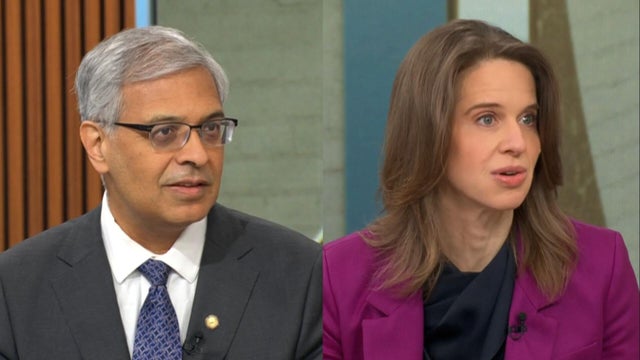
And did Pete Hegseth violate Senator Mark Kelly's First Amendment rights? The Arizona lawmaker says yes, and he is suing the Secretary of Defense over it. You're watching The Takeout. [MUSIC PLAYING] Senator Mark Kelly has filed a lawsuit against the Pentagon and Secretary of Defense Pete Hegseth. The Democratic Arizona lawmaker is accusing them of violating the Constitution by retaliating against him. Last week, Hegseth said the Department of Defense would cut Kelly's military retirement pay over his participation with other Democratic members of Congress in a video calling on service members, quote, "Refuse illegal orders." Kelly served in the Navy until 2011. Multiple Federal Reserve chairs and economic officials have signed a letter condemning the investigation into Jerome Powell, calling it unprecedented an unprecedented attempt to undermine the independence of the Fed. Jason Furman is one of the officials who signed the letter and joins us now. He chaired the Council of Economic Advisors under President Obama. We're also joined by CBS News legal contributor Jessica Levinson. Thank you both for being here. We appreciate your time and expertise. Jason, I want to start with you because you signed that letter. Can you outline for us specifically your concerns with news of this probe? Yeah, this probe is entirely a pretext. It's because Jay Powell did not do with interest rates what Donald Trump wanted him to do with interest rates. This type of pretext is what you see in countries like Argentina and Turkey. It has no place in the United States. And if it is allowed to succeed, and by the way, I do not think it will be allowed to succeed, the consequences would be quite bad for the economy. Jessica, to that point, can you break down exactly what the Justice Department is apparently looking at here? And why should Americans care about this specifically? Maybe I can take the second part first, which is because we care about the independence of the Fed, and maybe more broadly, we care about the independence of certain officials in government who Congress has said basically they enjoy a certain level of protection, that we want some space between, for instance, the person who sets monetary policy and whoever is sitting in the Oval Office. I kind of paused for a minute on the first part of your question, because I think the answer is we don't know exactly. Reporting indicates that the probe-- and we should be clear that this is just an investigation. This is the very beginning of a hypothetical criminal case that the probe is centering on construction of government programs, and specifically, testimony that Powell gave to the Banking Committee. And I think we should be very clear that at this point, investigation is very different from presenting evidence to a grand jury to ask them that there is probable cause, that there's a specific federal criminal statute at issue. So at this point, I think that's what we know about the allegations, and that's what we know about why we want to protect people like Powell. And again, it's not from President Trump. It's the ideas from anybody who is the chief executive. Yeah, I think that's a really important distinction and clarification there, Jessica. Jason, I want to play for you the response from the current director of the National Economic Council, Kevin Hassett. He discussed this today. I want to play a little bit of that sound and get your thoughts on the other side. In the fullness of time, we'll find out whether it looks like a pretext. But right now, we've got a building that's got dramatic cost overruns and plans for the buildings that look inconsistent with the testimony. But again, I'm not a Justice Department person. I hope everything turns out OK. Now, Jason, he was being asked the question that you were addressing earlier, which is that this is potentially a pretext to get lower interest rates. But I'm curious what you make of Hassett's comments there, because Hassett himself is reportedly under consideration to be the next Fed Chair. Yeah, first of all, it's sad to me to just see anyone who's an economist who's worked at the Fed, treat this as any possibility of being serious. It really isn't. People who know Jay Powell, members of Congress, both Republicans and Democrats, have stated very clearly today what they think, which is that this is all a pretext. In terms of Kevin Hassett himself, the one big question about him will be if he was nominated to the Fed, would he act independently? And there's actually going to be much, much more scrutiny of that question today than there would have been a week ago. You have Republican senators saying, in fact, they're not even going to confirm someone as Fed chair as long as any of this investigation and lawfare is hanging over the heads of the independence of the Federal Reserve. Yeah, notably, especially from Republican Senator Thom Tillis, saying that he'll hold up potential nominees going forward over this until this is resolved. Jessica, we were talking earlier about how this isn't the first time the Justice Department has gone after people. James Comey, Letitia James, go down the line. Are there any similarities here? And do you see this case playing out the way that those did? So I'll again take the second part first, which is to say we have no idea how this would play out. Again, there are some-- those who are critics of the President are saying that the probe is the point, that the point is to chill somebody who's in Powell's position, who disagrees with the President, and to say that you could be subject to a criminal probe. At this point, we are so early in the process. We don't know if a grand jury will ever be impaneled. We don't know if evidence will be presented to a grand jury, and therefore, we have no idea what an indictment would look like. In terms of the similarities, I think the question probably is the answer in the sense that when we think about Letitia James, when we think about James Comey, when we think about Powell, we're thinking about people with whom the President has had very public disagreements. We should note that when it comes to Letitia James and James Comey, there was a similarity there, that there were career prosecutors who didn't want to bring those cases. Here, we don't know if a case will be brought at all. Yeah, lots of questions still remain, early days, but stunning nonetheless. Jessica, Jason, thank you so much for your time. We appreciate it. And President Trump has declined to endorse Venezuelan opposition leader María Corina Machado after the capture of Nicolas Maduro. Now, the Nobel Peace Prize winner is White House-bound. A preview of that meeting is next with our reporter panel. You're watching The Takeout. And welcome back to The Takeout. Former Congresswoman Mary Peltola is jumping into the race for the Alaska Senate seat. She's likely to face Republican incumbent Senator Dan Sullivan, as Democrats look to flip four seats to retake the majority. Let's bring in our panel. Molly Ball is an independent political reporter and author. David Leventhal is a senior editor for The News of the US, and he's also a big Buffalo Bills fan. So congratulations on that. No affiliation, but I like watching Josh Allen play. So I'll give that to you. Cheering for the underdogs always. Dave, I'll start with you. This news of the Alaska Senate race. I mean, Democrats do have an uphill climb in Alaska and across the map. But how important is this race now that she has gotten in? Well, it's important on a couple of levels. Number one, it's going to force Republicans who already, at the Senate level, they got to deal with Ohio, they got to deal with Maine and North Carolina, places where they're going to have to spend a lot of resources to run good Senate races there. They're going to have to focus on Alaska now. And the former Representative here-- she held statewide office in Alaska and that single district. And she's pretty moderate, too. She's a blue dog Democrat and one who's going to have a message of freedom and fish. She loves to talk about local issues. And is even-- just in her announcement today, she is bringing up the memories of Republicans who served in Alaska, saying, hey, remember Alaska first, make Alaska first, and not worry about partisan considerations later. Yeah, we'll see if all politics can be local in that case. Molly, I mean, what's interesting to me about this race is that Democrats did get a big recruiting coup here, and I'm wondering if that signals anything that Democrats might be feeling heading into this midterm election. Is there anything on the board that they're looking at that seems, at least at this point, to be kind of working in their favor? Absolutely. Mary Peltola does not get in this race unless she feels the political climate in 2026 is going to substantially improve from 2024, when, of course, she lost her reelection race. And that's important to note, that she did lose her reelection race. That's why she's a former Congresswoman. And Donald Trump won the state by double digits. So as Dave said, Democrats have to put one of these red states on the board to have any chance of taking back the Senate. And her getting in is a sort of vote of confidence, saying, you see the writing on the wall right now, you see where the generic ballot is headed. Democrats have pulled ahead in the generic ballot in a lot of national polls at this point. Donald Trump's approval rating is low. The economy is-- how people are feeling about the economy seems to be trending downward. So all of those things add up to Democrats feeling like there might be a good enough political climate that a seat like this, although it is uphill, although I think Dan Sullivan is a strong candidate, a seat like this just might be winnable under the right conditions. I mean, it's so interesting too, because this morning, you had Elizabeth Warren giving a speech about how she sees the future of the Democratic Party. And her argument was that Democrats need to lean more into the progressive argument on the economy and stay laser-focused on economic issues. And you have this kind of battle going on about where the party should go. Lots of different ideas. There's kind of a vacuum because they've not done an official autopsy. Dave, I mean, I'm curious what you make of Warren's-- or her message here and whether Democrats take that route. Well, she can definitely put that message out there, but that's not going to be a winning message all the places that Democrats need to win in the United States. We're just talking about Alaska. I mentioned Maine a moment ago. They've got some action there in that state where the only way that they're going to win seats likely is going to be through a moderate Democrat, somebody who is a bit more of a centrist, and certainly not somebody who is on the far, far left. And while all the focus is on economic issues, there's a ton of foreign policy news happening. We've talked about it all today, but we haven't mentioned Venezuela yet, which a week ago was the top news. The opposition leader is coming to the White House this week. Molly, I'm curious what you make of how all of that plays politically as she comes here. Well, the politics of all of this foreign policy, I don't think chaos is too strong a word, is that it has been seemingly the main focus of this White House, really, since the beginning of Trump's second term. And what you hear over and over again from swing voters out there in real America or in focus groups and so on, is just that they feel the President is not focused on these economic issues that pretty much everyone agrees are the reason that he won back the White House in 2024. He is busy talking about Venezuela, talking about Greenland, talking about Iran, talking about Cuba. And when he mentions the importance of lowering costs for Americans, it tends to be secondary or a sidelight. So I think the political effect of what's happening in Venezuela is that Americans just wonder why we had to do this and what's in it for them. And that was a winning message for Donald Trump as well. His sort of isolationist message was, Why are we spending all of this blood and treasure overseas? Why aren't we focused on the American people? And the Donald Trump of 2024, who was so strong on that message, might have some questions for the Donald Trump of today. The scripts have been flipped. We'll see. Molly and David, thank you very much for your time. We appreciate it. But before we go, we want to take you down to Arizona and check in on the real anchor of this show, Major Garrett. Call this major in the Major Leagues. He's fulfilling a lifelong dream by participating in the San Diego Padres fantasy Baseball Camp. Take a look right here. He's got the gear. And clearly, as a baseball player, he also makes a great TV anchor. A few former Padres who are his current coaches have evaluated Major's baseball abilities. Let's take a listen to what they had to say. It's been a great couple of days so far just getting to know Major and his game. He's a hard trier, Major. He's a hard trier. Doesn't give up. Great in the clubhouse. Well, his stuff is little shaky. Well, his first name may be Major, but his skills are very minor. Very minor. OK, a hard trier, Major. We're keeping the seat back warm for you, just in case your baseball ambitions don't pan out this time with the Padres there. We'll keep you updated on that throughout the week. And that does it for us today at The Takeout. The Daily Report is coming up next. [MUSIC PLAYING]