New treatment helps Fort Worth toddler with SMA make critical developmental gains

To most people, Jessie Gonzales looks like any other toddler.
He likes playing with a soccer ball, eating cookies, and he loves his mama.
But being a healthy 19-month-old wasn't always in the cards for Jessie.
"We found out that Jessie had SMA type 1 when he was 7 days old," said Lupita Vasquez, Jessie's mom. "I just got really scared. And the type that he has, he has type 1, everything on Google says they don't live past two years old. So, I was just like, my baby is going to die, I didn't understand anything."
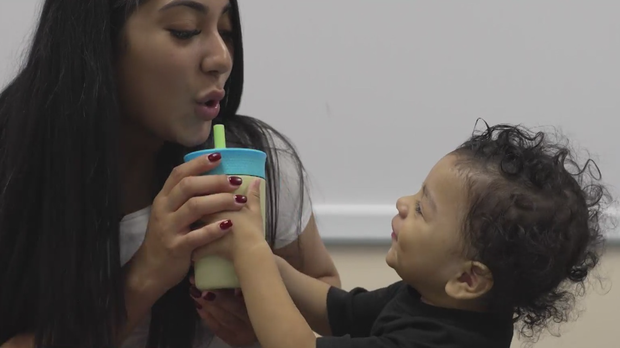
"SMA is a progressive neuromuscular condition," said Dr. Stephanie Accord, a Pediatric neurologist at Cook Children's in Fort Worth. "With no treatment, he would be unable to sit independently; he would not be able to hold his head up very well. Usually, they don't end up crawling very well. A lot of times, they end up needing respiratory support with being able to swallow. SMA, before any treatments were approved, was the number one cause, from a genetic perspective, of infant mortality. At 20 months, there used to be an 8% survival rate."
Jessie began receiving treatment right away – and while his life wasn't at risk, he wasn't making as much progress as anyone had hoped. Dr. Accord convinced Jessie's family to use a drug, Spinraza, to help Jessie's developmental progress.
However, it would require injecting the medicine directly into his spine four times over two months. This would help Jessie keep developing. Jessie would need to be put under an anesthetic and receive a lumbar puncture, injecting the medicine directly into his spine. Jessie needed this procedure four times over the course of two months.
"He was actually scheduled to receive his first treatment on March 31st, and on March 30th, is when we got news that the higher dose treatment of Spinraza had been approved," said Dr. Accord.
Jessie became the second child in the country, and the first in Texas, to receive this higher dose – meaning he got more medicine faster. The results? Have been amazing for him.
"It's been worth it. Right after maybe a couple weeks, he started pulling up to stand and taking little steps here and there. Now he's walking," said Vasquez.
And every little step Jessie takes makes it worth it for the people who care for him and little kids just like him.
"Pediatric neurology is a tough field to be in a lot of times. And this particular type of treatment for these kiddos, it changes their life," said Dr. Accord. "In particular cases like Jessie, we really are making a difference, and this is why I love my job. Because there are lots of hard days, and these days remind why I do what I do."


