Texas representatives react to U.S. Supreme court allowing use of new maps in redistricting battle
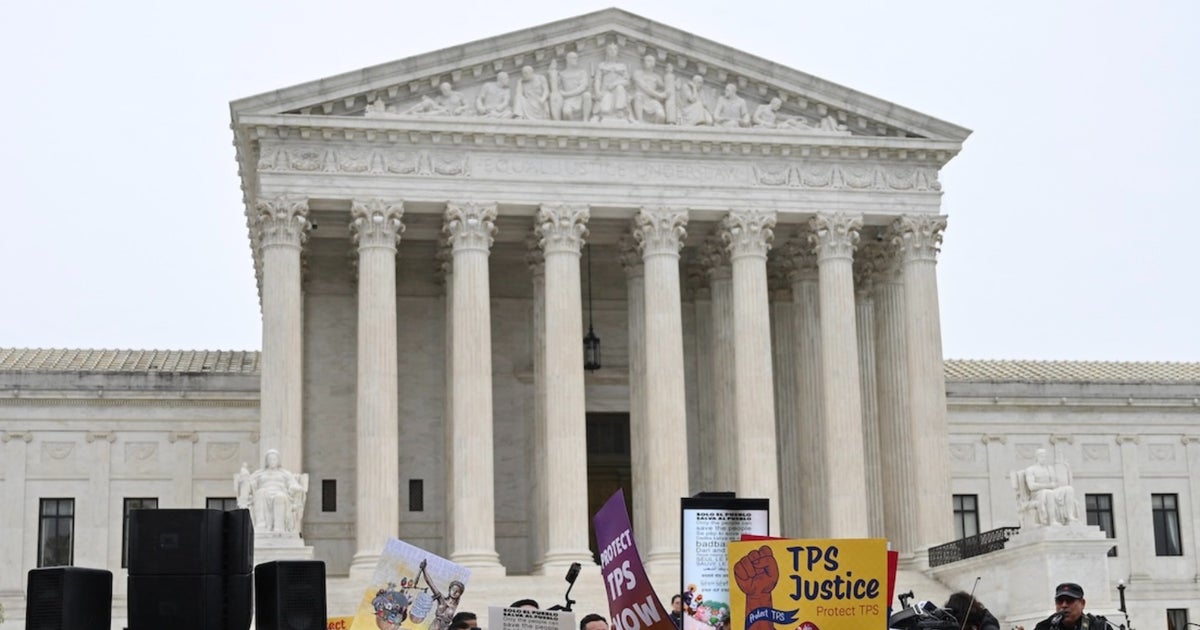
The U.S. Supreme Court overturned the ruling that Texas had racially discriminated in its 2025 congressional redistricting Thursday afternoon.
On Nov. 21, Justice Samuel Alito gave Texas Republicans a partial victory when he granted an administrative stay in the case. That set aside a ruling by two federal judges in El Paso, Texas, who blocked the 2025 maps after concluding Republicans illegally racially gerrymandered the districts to potentially win up to five extra seats in Congress. The lower court judges ruled that candidates would instead have to run under the existing congressional maps drawn in 2021.
Republicans have insisted the 2025 maps were motivated by partisan gains, not race, when they redrew the districts over the summer.
"We won! Texas is officially—and legally—more red," said Texas Gov. Greg Abbott in a statement following the announcement. "The U.S. Supreme Court restored the redistricting maps passed by Texas that were based on constitutional principles and Supreme Court precedent. The new congressional districts better align our representation in Washington D.C. with the values of our state. This is a victory for Texas voters, for common sense, and for the U.S. Constitution."
"In the face of Democrats' attempt to abuse the judicial system to steal the U.S. House, I have defended Texas's fundamental right to draw a map that ensures we are represented by Republicans. The Big Beautiful Map will be in effect for 2026," said Attorney General Ken Paxton in a statement. "Texas is paving the way as we take our country back, district by district, state by state. This map reflects the political climate of our state and is a massive win for Texas and every conservative who is tired of watching the left try to upend the political system with bogus lawsuits."
Texas House Democratic Caucus Vice Chair Rep. Mihaela Plesa of Dallas responded to the decision in a statement: "The Supreme Court sided with political power over voting rights today and that should alarm every Texan, no matter your party."
"Here are the facts, and they are damning," said Plesa. "A three-judge federal panel—including a judge appointed by Donald Trump—found that Texas "racially gerrymandered" the 2025 congressional map and that this was "much more than just politics," backed by substantial evidence. The Trump Justice Department sent a letter that effectively imposed a racial target and gave the court a blueprint to unravel the state's strategy, exposing how multi-racial districts were dismantled and converted into whiter, safer Republican seats. And Gov. Abbott went on national television and told Jake Tapper that Texas was redrawing these districts "because of that court decision," explicitly tying this mid-decade redistricting to changes in voting-rights law instead of the needs of Texas voters."
The ongoing redistricting battle has inched closer and closer to a Dec. 8 deadline for potential candidates to file their campaign paperwork for the races they will run in the March 3 primary.
Democratic Reps. Marc Veasey of Fort Worth and Julie Johnson of Farmers Branch had previously said they will run for re-election in their respective districts.
Following Alito's administrative stay, Dr. Bill Chriss, a legal and political historian in Texas, said that Alito's stay should have erased any uncertainty the congressional candidates may have.
"If that were to come out, I think legal commentators would agree it would be very unusual under those circumstances to expect the final decision of the court after extensive briefing to be significantly different. So that would be a clear signal that people would be pretty well advised to just rely on the 2025 maps," he said.