Texas lawmakers propose banning or restricting Flock cameras

Texas lawmakers have filed bills that could sharply restrict or even ban government use of automated license plate readers (ALPRs), including cameras made by Flock Safety.
The proposals follow growing concerns about how Flock cameras collect and share vehicle location data, as well as reported cases of law enforcement officers using the technology for personal reasons.
State Rep. John Bucy III, an Austin Democrat, filed House Bill 331, which would ban Texas government agencies from using automatic license plate readers.
Meanwhile, state Rep. Brian Harrison, a Midlothian Republican, has proposed a bill that would allow police to continue using the cameras, but with restrictions. His bill, HB 8471, would require law enforcement to obtain a warrant before using the cameras and would allow their use only in violent crime investigations.
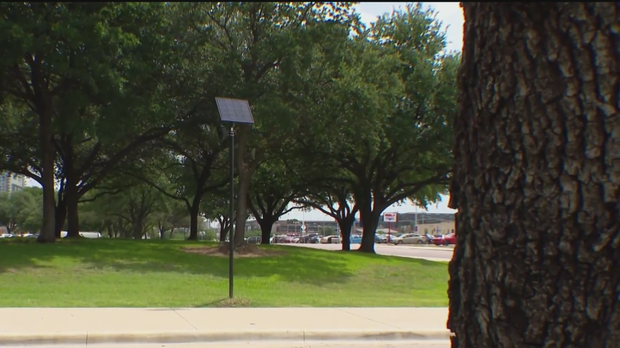
Harrison, who filed legislation restricting Flock cameras in a previous legislative session, said he believes Republican support for the technology contributed to the party's losses in the November election.
"This was a contributing factor to Republicans being defeated because the Republican leadership of the state of Texas had been supporting Flock cameras and forcing Texas taxpayers to fund their own warrantless surveillance for many years," Harrison said.
Both Harrison and Bucy said they are confident this session will be different and optimistic that state lawmakers will pass legislation this session limiting the use of the cameras.
"I think this is an issue that goes beyond Republicans and Democrats," Bucy said. "I think it was all over the campaign trail from both sides of the aisle."
These bills come just months after Gov. Greg Abbott ordered state agencies to stop using state money to purchase or operate the cameras. In Dallas, that decision affected nearly half of the police department's network of more than 600 Flock cameras.
Police say Flock cameras have helped them find stolen vehicles, locate missing people, and solve violent crimes. But with a network of roughly 120,000 cameras across the country, critics say Flock has created a far-reaching surveillance system capable of producing searchable records of where vehicles have been seen, including vehicles belonging to people who are not suspected of committing a crime.
How Flock cameras work
Flock Safety is one of the most widely used providers of automated license plate readers in the country.
The way its cameras work is that each time a vehicle passes, a Flock camera captures a still image and converts information from that image into searchable data.
That information includes the license plate, type of vehicle, time, and location. The system can also identify vehicle characteristics such as a bumper sticker, roof rack, or missing hubcap.
The information is then stored in a database that authorized users can search.
Flock says its cameras track vehicles, not people. In practice, however, a series of vehicle sightings can reveal where a person has traveled.
To better understand what the system can reveal, CBS News Texas gave Dallas police the license plate number of one of the station's vehicles.
The department found that Flock cameras had captured 87 images of the vehicle around North Texas during a single month.
The system was not continuously following the vehicle, as a GPS device would. Instead, each camera created a time-stamped record when the vehicle passed.
A single sighting may reveal little. When enough sightings are placed on a map, however, they can begin to show where a vehicle traveled.
That capability can be valuable to investigators, particularly when police are trying to locate a stolen vehicle or identify a car connected to a serious crime. It also means the system routinely collects information about vehicles whose owners are not under investigation.
Flock helped Dallas police solve a murder case
The investigation into the killing of 20-year-old Aniya Edwards shows how police can use separate camera sightings to build a case.
Detectives knew Edwards had been at a Dallas music studio before she was killed. They searched for nearby Flock cameras and found an image of her Hyundai. The same image also showed a black Dodge.
One image did not establish a connection between the two vehicles, but as investigators continued searching, they found another Flock camera that captured the same cars miles away and seconds apart.
Additional cameras recorded the two vehicles traveling in the same direction. In all, investigators found four snapshots spanning more than 20 miles.
The cameras did not record everything that happened between those locations. But each image extended the trail until it reached the area where police said an attempted robbery occurred and Edwards was shot.
Flock did not solve the case on its own, but the Flock cameras provided a lead that, combined with other evidence, helped police identify a suspect who was arrested on a capital murder charge.
The case demonstrates why law enforcement agencies consider the technology valuable.
Dallas police say Flock cameras have helped detectives solve more than a dozen murder cases this year only, or roughly 18% of all homicide cases.
In the Edwards investigation, detectives were investigating a murder. The purpose of their searches was clear.
However, a review of other Flock search records found that is not always the case.
Search records offered little explanation in some cases
CBS News Texas requested automated license plate reader search logs from police departments across Texas.
The records contained millions of entries showing when officers searched the system and the reasons they provided.
Many searches listed clear investigative purposes, such as murder, aggravated robbery, or a suspect vehicle. Other entries provided little information.
Dallas records from 2023 through 2025 included search reasons such as "info," "LOC," and "none." One entry, the single letter "I," appeared nearly 30,000 times during the three-year period.
Assistant Chief William Griffith told CBS News Texas that officers likely had legitimate reasons for the searches but failed to provide adequate explanations in the system.
"My guess is they are legitimate reasons," Griffith said. "They just didn't give a better explanation in there."
Dallas police said supervisors review search activity weekly. Griffith said the department's review found no officers who had misused the system.
In December 2025, Flock added a drop-down menu with standardized categories modeled after the FBI's crime data reporting system. The change was intended to create more complete audit records.
Former Lufkin officer used Flock to track ex-girlfriend
Concerns about misuse are not hypothetical.
Former Lufkin police officer Zachary Klein pleaded guilty to 100 felony counts of misuse of official information and was sentenced to five years in prison.
A Texas Rangers investigation found Klein conducted more than 25,000 improper Flock searches. About 18,000 involved license plates associated with three people, including his former girlfriend and members of her family, according to the Angelina County District Attorney's Office.
The case illustrates the amount of information available to an officer with access to the system and the potential consequences when that access is misused.
Flock has responded to reported cases of misuse by adding safeguards, including standardized search categories, a shorter recommended data-retention period, and software designed to identify unusual searches.
In an August 2026 interview, Flock CEO Garrett Langley acknowledged the impact of the reported misuse when CBS News questioned him about officers who used the system to search for women for personal reasons.
"I don't think that Flock created police abuse," Langley said. When asked to consider the experiences of the women involved, he added, "It's horrible, and I apologize."
Most officers with access to the technology have not been accused of abusing it. The concern is how quickly misuse can be identified when it happens and how many agencies or cameras an unauthorized search can reach.
Wylie removes Flock cameras over data-sharing concerns
Wylie, a city about 20 miles northeast of Dallas, operated only six Flock cameras. Those cameras, however, were connected to a broader network that allowed approved outside agencies to search information collected in the city.
CBS News Texas obtained Wylie's audit records and found that outside agencies across the country had conducted thousands of searches that could have included information collected by Wylie's cameras. Some listed reasons included curfew or loitering, illegal dumping, and traffic analysis.
The records did not show whether every search returned an image captured by a Wylie camera. They also did not always provide enough information for city officials to determine whether a search was justified or whether Wylie's data had been accessed.
Wylie approved the cameras in 2024. Uncertainty about how outside agencies were using the network led the city not to renew its contract this fall.
"We can't control another department on how they access data on our citizens, and so that's a concern for us," Mayor Matthew Porter told CBS News Texas.
Porter said the council ultimately determined it was time to pause the program rather than renew a system city officials were not completely comfortable with.
Wylie's decision to remove its cameras does not necessarily mean vehicles traveling through the city will no longer appear in Flock's database.
That is because cities and police departments are not Flock's only customers.
Private cameras can also share information with police
Flock cameras are also used in retail parking lots, apartment complexes, and residential neighborhoods.
The company's first customers were homeowners associations, not police departments. Retailers have since adopted the cameras as well.
Flock says its customers control the information their cameras collect and decide whether to share that data with law enforcement.
That private network creates a potential limitation for legislation or local policies focused only on cameras owned by government agencies.
A city could remove every Flock camera it owns while businesses, apartment complexes, and homeowners associations continue operating their own cameras. If those private customers share their data with the police, vehicles traveling through the community could still appear in law enforcement searches.
In that situation, the information does not necessarily stop being collected. What changes is who collects it and who controls access to it.