Online Enticement Doubles In 2020 Mount Pleasant Texas Police Warn Parents
TEXAS (CBSDFW.COM) - Mount Pleasant Police are warning parents anew about the growing threat of online predators now that the coronavirus has pushed more children into spending more time at their computers or on smartphones.
The department shared a graph on Jan. 22 via Facebook, which showed that online enticement reports more than doubled nationwide in 2020.
Their post said: "2020 has been a busy year for online predators. With at-home school, quarantines, and social-contact prevention our kids are online more than ever. It's also reported that now the majority of kids have a smartphone by age 11 - which is a computer that would beat out anything we had 10 years ago (and it has a camera!). Let's keep all the kids safety in our community!!!"
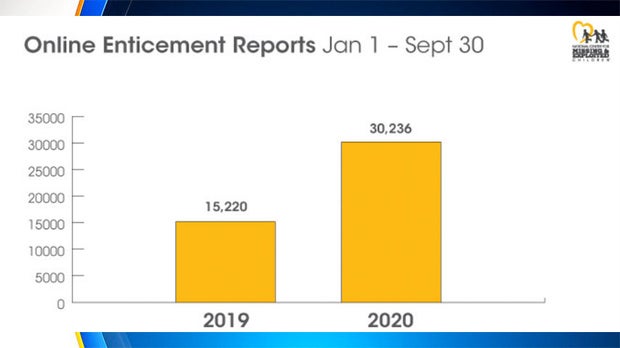
In October 2020, Vice president of the National Center for Missing & Exploited Children Exploited Children Division, John Shehan said, "COVID-19 has presented challenges and opportunities in the fight against child sexual exploitation. In the first quarter of 2020, NCMEC became aware of predators openly discussing the pandemic as an opportunity to entice unsupervised children into producing sexually explicit material. At the same time, we experienced an explosion in reporting to our CyberTipline from both the public and electronic service providers, all while transitioning to a telework environment."
Online Enticement involves someone communicating with who they believe is a child via the internet with the intent to commit a sexual offense or abduction. This is a broad category of online exploitation and includes sextortion, in which a child is being groomed to take sexually explicit images and/or ultimately meet face-to-face with someone for sexual purposes, or to engage in a sexual conversation online or, in some instances, to sell/trade the child's sexual images. This type of victimization takes place across every platform; social media, messaging apps, gaming platforms, etc.
The most common tactics used to entice children seem to be engaging in sexual conversation/role playing, and asking the child for sexually explicit images of themselves or mutually sharing images. While certain online behaviors may increase the risk for victimization, including lying about being older in order to access certain platforms and sending explicit photos or videos (known as "sexts") of oneself to another user.
The goals of online enticement vary, but most commonly offenders seem to want to extort additional sexually explicit images from the child.
Click here for great videos to help inform and teach your kids about the danger of online enticement.
MORE FROM CBSDFW
- 1 Dead, 3 Hospitalized In Crash Involving 6 Vehicles In McKinney
- Former ADT Technician Pleads Guilty To Hacking Home Security Cams In North Texas, Faces Up To 5 Years In Prison
- North Texas Realtor Jenna Ryan, Arrested For Alleged Role In Capitol Riot, Kicked Off PayPal