Hill Country floods return as UT Arlington researchers warn of rising risk

Engineers and scientists with the H2i Lab at the University of Texas at Arlington are back to work as another round of extreme flooding impacts the Hill Country. The team, which specializes in water data, flood hazards, and water security, began tracking the flood activity earlier this week.
"We wanted to find out what's exactly happening. Why this flood is coming back to the same location again and again?" said Adnan Rajib, director of the H2i Lab and a professor at UT Arlington. "This year we had the same amount of rainfall in four days; last year it was in four to five hours."
Using data from federal science and environmental agencies, the team measured not only how much rainfall fell in the area but also the extent of the area affected.
"Last year it was 30 square miles at least, and this year it's 20 square miles, so the magnitude of the flood is quite comparable. It's pretty bad," Rajib said.
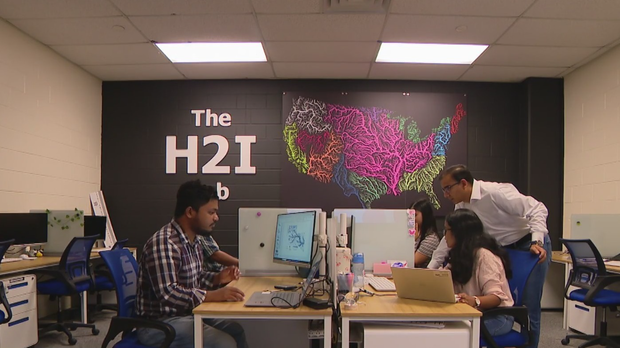
The H2i team said intense rainfall, the Hill Country's rugged topography, and the area's soil are all contributing to the region's continued major flooding.
For the first time, the team also created a flood susceptibility map for the city of Uvalde, where this week's storms dropped more than a year's worth of rain. Even areas outside designated flood zones were left underwater.
"Our finding is that a majority portion of the city area is highly flood susceptible — areas that are way outside the so‑called 'flood hazard zones,'" Rajib said. "Some of those flood‑susceptible areas are highly likely to get inundated every time there's a big storm."
With large‑scale flooding becoming more common in the Hill Country, the team said communities need to begin thinking beyond FEMA's 100‑year flood zones and provide homeowners with more detailed information about the risks where they live.
"Go beyond the sirens and warning systems to think about what else we can do to quantify the flood risk for every street, every household, every shop in our community," Rajib said. "Otherwise, we are going to be running in a loop and facing the same fate again and again."


