Children's Health reports two viruses surge after kids headed back to school

The new school year has just started, and some school districts are already seeing an increase in illnesses as children are in close contact with each other. A North Texas hospital is also seeing a surge in two types of respiratory infections.
Students are filling the halls of North Texas schools for the new school year, and illnesses are coming along with being together in the classroom. Dr. Zachary Most, an infectious disease specialist at Children's Health, said two respiratory viruses are rapidly increasing.
"The back-to-school time is always a challenging time with infections," Most said. "We're seeing a lot of rhinovirus infections right now, which is the most common cause of the common cold. We're also seeing a lot of COVID-19 right now. It's the most we've seen it in about a year."
Children's Health reports a 113% increase in positive rhinovirus cases and a 75% increase in positive COVID-19 cases from Aug. 9 through Aug. 16. Most said parents can look for signs to determine whether to keep a child at home or take them to the pediatrician.
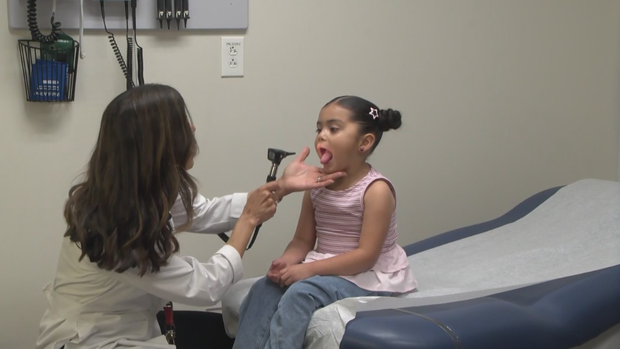
"The key signs to look out for where your child may need to seek a higher level of medical care, like seeing your doctor or maybe even going to an emergency room, include having difficulty breathing or turning blue, as well as getting dehydrated," Most said.
Parents are also encouraged to take their child to the doctor if a fever lasts more than five days.
"One of the most important things you can do to help keep everyone in your community safe is to try and stay home when you're sick."
Most said it's also important to stay up to date on vaccinations. Data shows vaccination rates among Texas kindergartners declined last year, while the number of parents seeking exemptions rose.
"Other things that are really important to keep yourself safe include really good hand hygiene, which can mean washing your hands with soap and water, or using alcohol based hand sanitizer because a lot of these viruses go from a surface to your hand, to your to your, your nasal mucosa, which is how you get the infection," Most said.
Parents can also look for key differences between the common cold and COVID-19.
"With the common cold, most of the time is going to present with symptoms like runny nose, congestion, sore throat that often develops into a course where symptoms get worse for about 2 or 3 days, and then they get better over the next week or so," Most said. "COVID-19 can present with very similar symptoms but is a bit more likely to also have fevers, as well as muscle aches and stomach aches, and is also more likely to cause complications like spreading to the lungs where you might need oxygen support."
Most also encourage children not to share food, drinks, or other personal items that can easily transfer germs.


