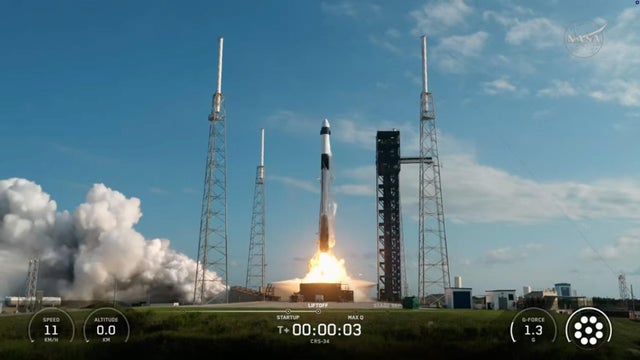
SpaceX launches cargo ship to International Space Station
The International Space Station-bound SpaceX Cargo Dragon is loaded with 6,500 pounds of needed equipment, research gear and crew supplies.
Watch CBS News
The International Space Station-bound SpaceX Cargo Dragon is loaded with 6,500 pounds of needed equipment, research gear and crew supplies.
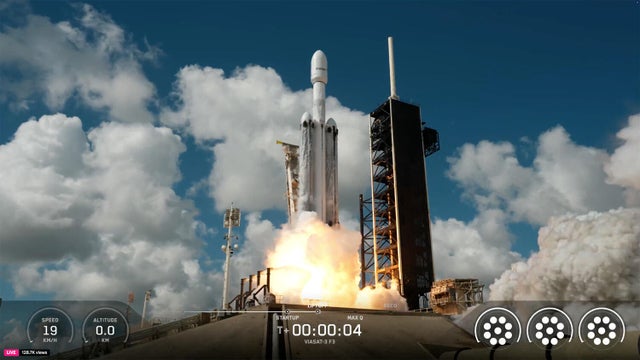
SpaceX's most powerful operational rocket boosted a high-speed ViaSat internet data relay satellite into space to complete a globe-spanning constellation.
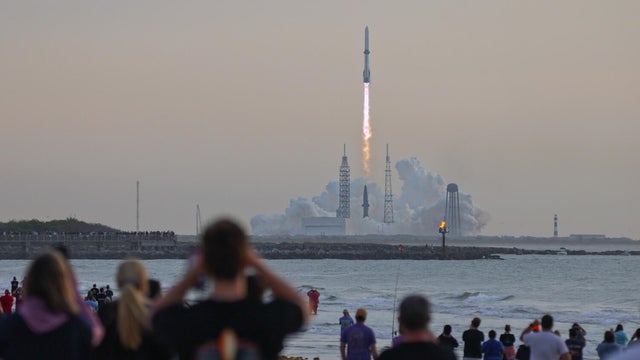
The launching appeared to go off without a hitch, but a problem prevented the rocket's upper stage from putting its payload into the correct orbit.
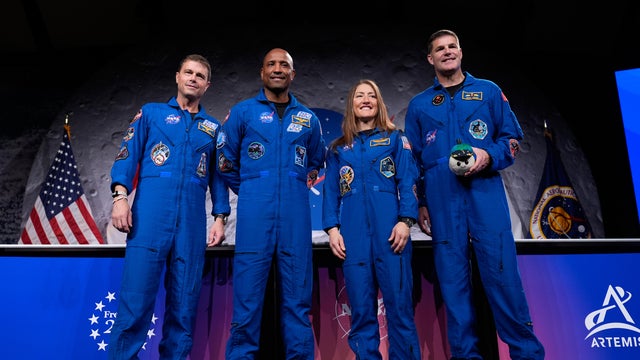
The four Artemis II astronauts struggled to describe the view and overall experience of flying around the moon's far side and witnessing a solar eclipse in deep space.
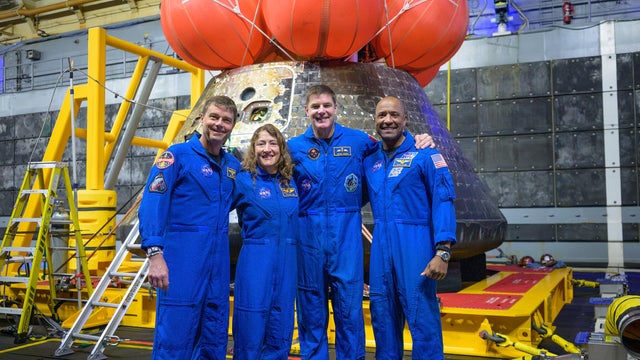
The Artemis II astronauts flew back to the Johnson Space Center in Houston Saturday to cheers and applause from family members and hundreds of NASA workers.

NASA's Artemis II astronauts returned to Earth with a splashdown landing in the Pacific Ocean after making a high-speed reentry through the atmosphere.
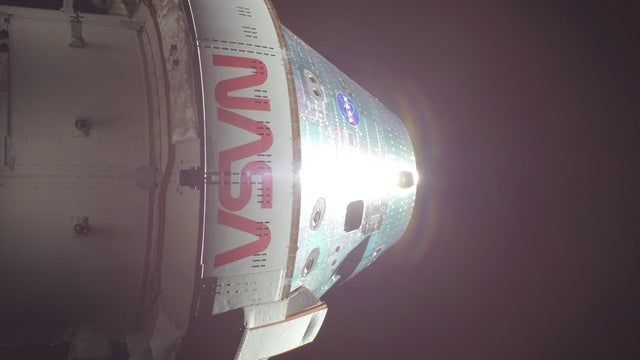
Despite problems during the unpiloted Artemis I reentry, the Artemis II crew is confident their heat shield will protect them during a fiery descent to Earth.
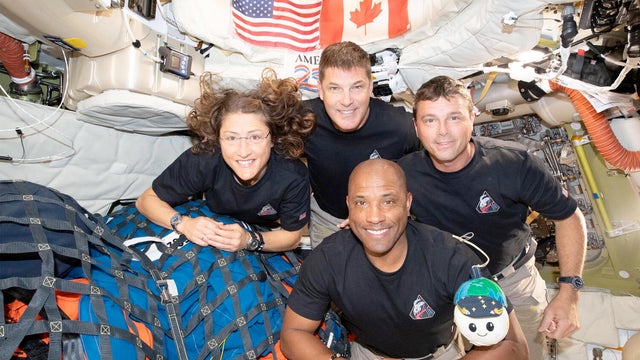
With Artemis II astronauts closing out on-board tests, flight controllers are prepping for reentry and splashdown Friday.
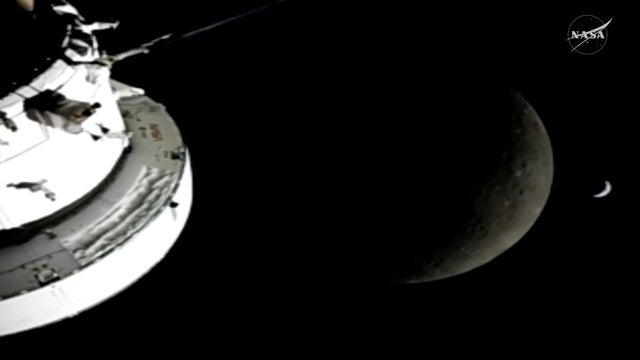
The Artemis II crew flew farther from Earth than any humans in history as they passed over the far side of the moon on Monday night.
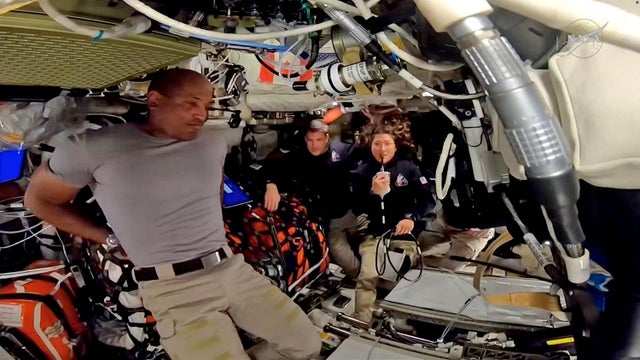
The NASA astronauts also sent down Easter messages Sunday while gearing up for a historic pass behind the moon Monday.
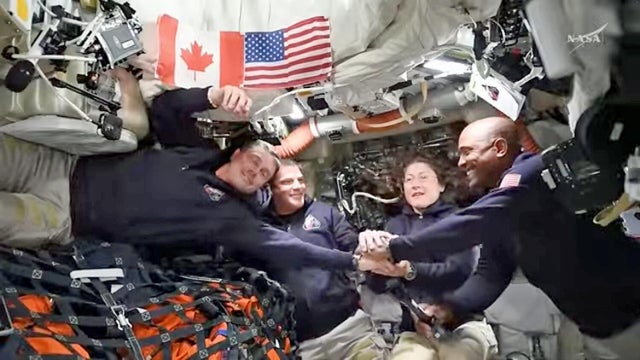
Amid ongoing toilet trouble, the Artemis II astronauts reflected on the wonder of sailing through deep space to the moon.
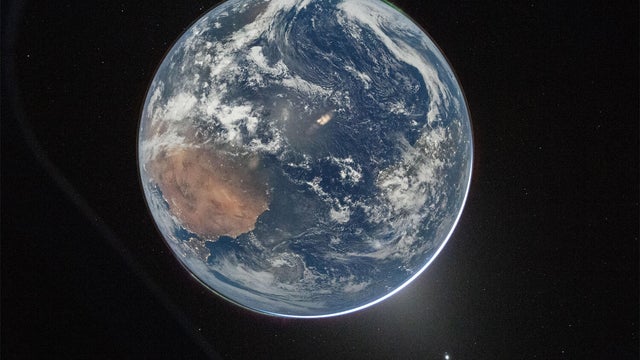
The Artemis II astronauts continued their long coast to the moon, capturing stunning photos along the way.
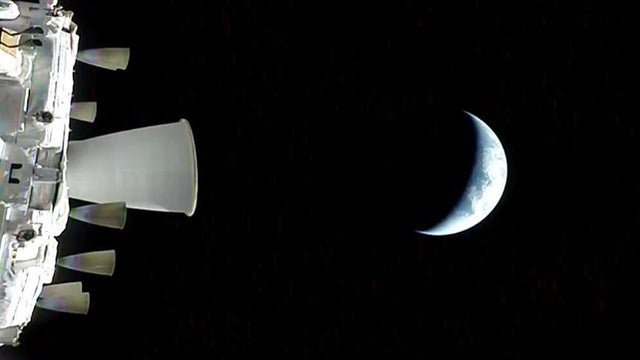
The engine firing provided a slingshot-like boost to the Orion capsule, speeding it to 24,500 mph, the velocity needed to break free of Earth's gravitational clasp for a trek to the moon.
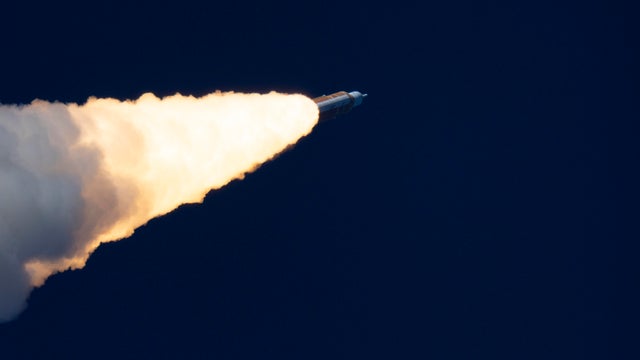
NASA's Artemis II astronauts will spend about 24 hours orbiting the Earth and running checks on their spacecraft and life support systems before heading to the moon.
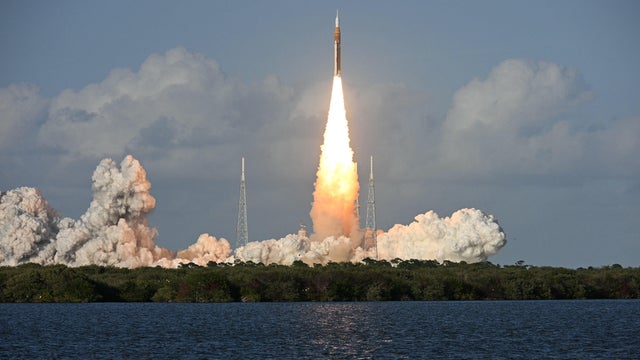
NASA's Artemis II astronauts launched on a nine-and-a-half-day mission around the moon and back.