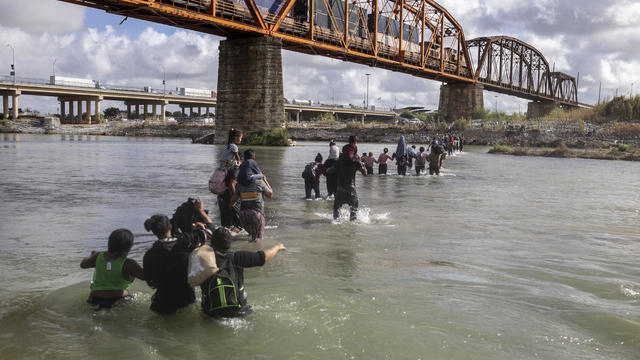
Unlawful crossings along southern U.S. border reach yearly high
For only the second time in U.S. history, migrant apprehensions along the southern border surpassed 2 million in a single fiscal year, federal data obtained by CBS News shows.
Watch CBS News
For only the second time in U.S. history, migrant apprehensions along the southern border surpassed 2 million in a single fiscal year, federal data obtained by CBS News shows.

Seven Republican candidates met for the second primary debate in California on Wednesday, taking aim at President Biden and each other.

The U.S. will keep the refugee cap unchanged at 125,000, while more than doubling the allocation for refugees from the Western Hemisphere.

More than 7 million Venezuelans have fled their homeland's economic collapse in recent years — and many of them are heading to the U.S.

U.S. Border Patrol agents have reported record levels of both migrant deaths and crossings in recent years.
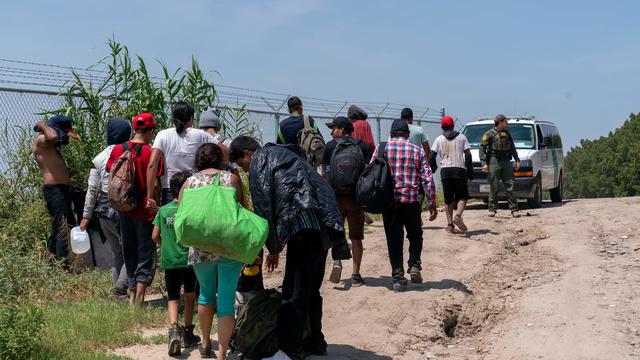
U.S. border agents apprehended roughly 140,000 migrants along the U.S.-Mexico border during the first 20 days of September, an average of roughly 6,900 each day.
The Biden administration will make hundreds of thousands of migrants from Venezuela eligible for work permits and deportation protections under an expansion of the Temporary Protected Status policy.
The Biden administration will make hundreds of thousands of migrants from Venezuela eligible for work permits and deportation protections under an expansion of the Temporary Protected Status policy.
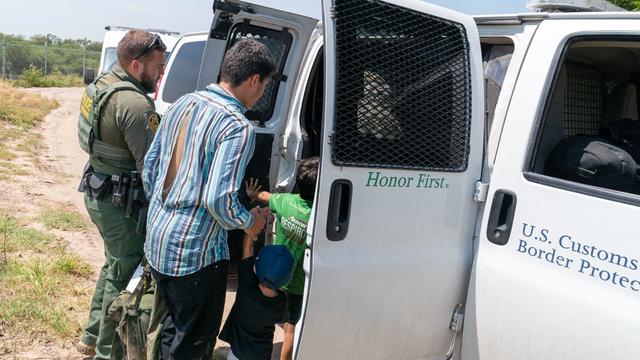
An independent court monitor said migrant children as young as 8 were separated from their parents for several days to avoid overcrowding in a Texas holding facility.

A majority of Latino voters in key states want President Biden to take further actions to both grant legal status to undocumented immigrants and secure the border.
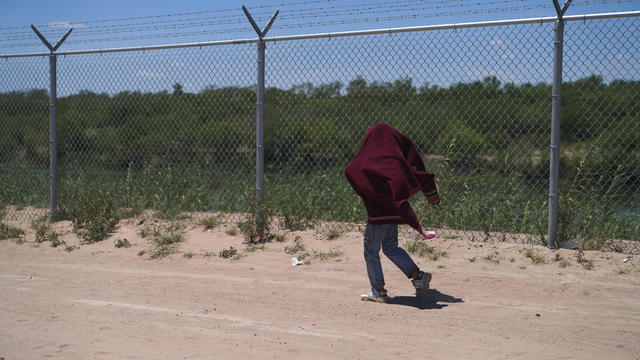
In response to an increase in border crossings by unaccompanied minors, the Biden administration is housing migrant children in a former work camp, for a second time.
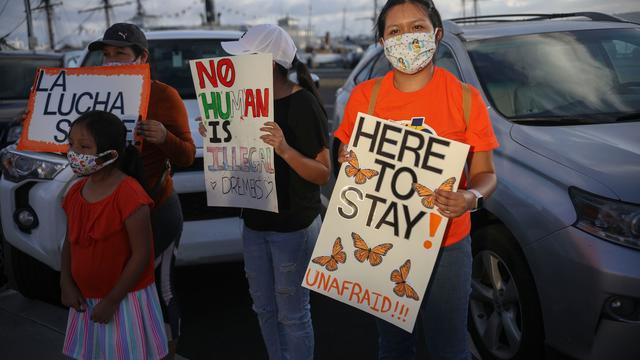
While he declared the program unlawful, Judge Andrew Hanen allowed 580,000 DACA recipients to continue working and living legally in the U.S.
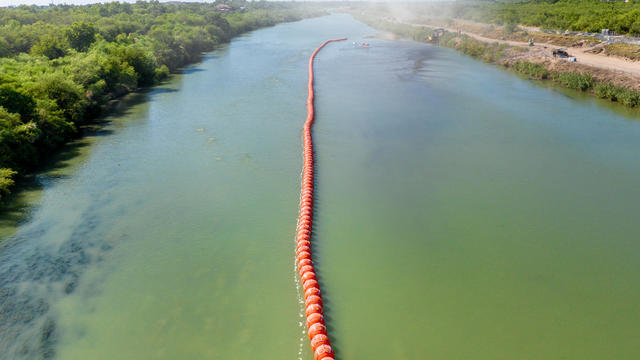
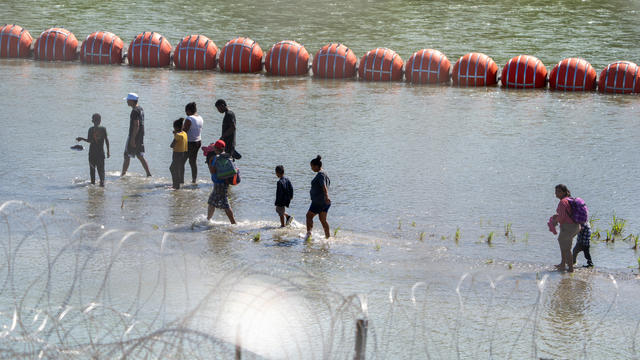
Earlier this month, Texas repositioned the buoys closer to American soil after federal officials concluded that roughly 80% of the barriers were in Mexico.

The Biden administration is sending emails and texts to tens of thousands of migrants to remind them that they are eligible to apply for work permits.
The U.S. has carried out fewer than 100 deportations under a program the Biden administration set up in May to deter unlawful border entries by migrant families.