China delays WHO team's visit to probe COVID-19 origins
Foreign Ministry says China must complete unspecified "procedures and make relevant arrangements" before the long team of experts can be welcomed.
Watch CBS News
Foreign Ministry says China must complete unspecified "procedures and make relevant arrangements" before the long team of experts can be welcomed.

Nationwide logistical issues are bringing Operation Warp Speed to a crawl as states struggle to dole out vaccines. COVID-19 deaths continue to spike across most of the country as health care workers say they are stretched thin. David Begnaud reports.
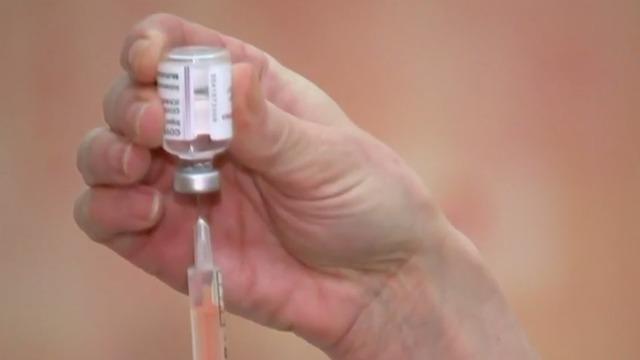
On the day Britain became the first to roll out the new Oxford-AstraZeneca vaccine, Prime Minister Boris Johnson returned the nation to national lockdown, closing all schools to combat spiraling coronavirus cases and hospitalizations. As Charlie D'Agata reports, a dangerous new strain of coronavirus from South Africa is causing concern among scientists.
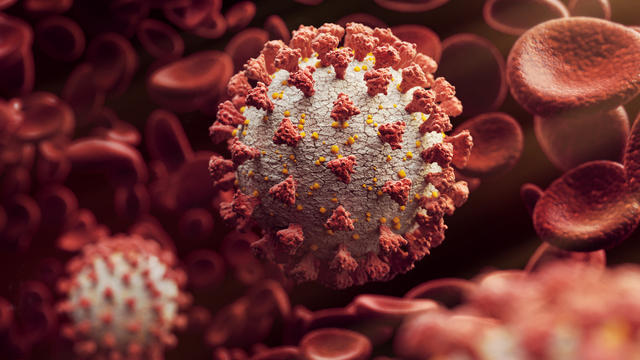
As more Americans get sick with COVID-19, health officials are reporting that a man in New York has contracted a potentially more transmissible variant of the coronavirus first identified in the U.K. Dr. John Moore, professor of microbiology and immunology at Weill Cornell Medical College at Cornell University, joins CBSN to discuss the latest news surrounding the new variant and the lagging U.S. vaccine rollout.

Local leaders worry communities that lack access to pharmacy services will be left out.
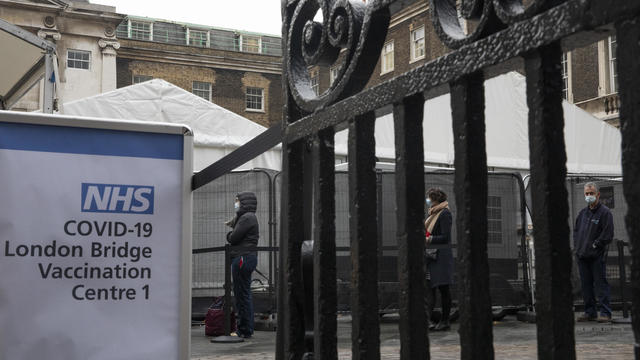
Facing a surge in infections, U.K. officials said the 2nd dose of the Pfizer vaccine can wait up to 12 weeks. The FDA says that decision is "not rooted solidly in the available evidence."

The coronavirus outbreak in the U.S. is getting more dire by the day. Estimates show one American is dying from the virus every 30 seconds. Meanwhile, cases and hospitals are skyrocketing as experts warn the worst is yet to come as CBS News correspondents Jonathan Vigliotti and Manuel Bojorquez report. Then, Dr. Richard Besser, president and CEO of the Robert Wood Johnson Foundation and the former acting director of the CDC, joins CBSN to discuss the latest on the fight against COVID-19.

With vaccinations in the U.S. far behind schedule, the FDA is considering cutting doses of the Moderna vaccine in half to double its supply and speed up distribution. Manuel Bojorquez has the latest.

Here's a look at the top stories making headlines on the "CBS Evening News with Norah O'Donnell."
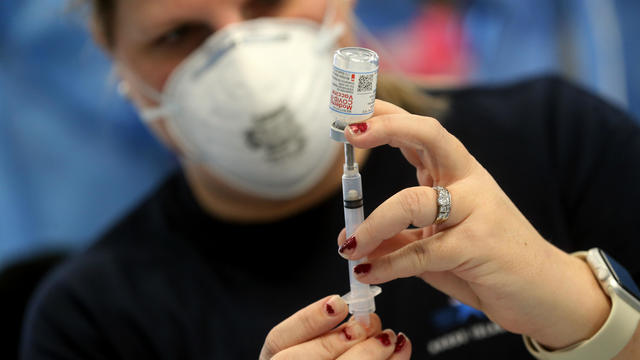
So far, more than 4.5 million COVID shots have been given out — a fraction of the 20 million initially expected by the end of 2020.

Across the country, small pharmacies are quickly becoming a vital part of the COVID-19 vaccine distribution. They're stepping up to combat misinformation and administer the vaccine in areas where medical resources and accessibility is often limited. Mireya Villarreal reports from Texas.

Surgeon General Dr. Jerome Adams joins "CBS This Morning" to discuss why there was a delay in COVID-19 vaccinations in the U.S.

A U.K. judge has rejected a request to extradite Wikileaks founder Julian Assange to the U.S. to face charges of espionage. Crews are searching for three people after a devastating landslide destroyed homes in Norway. South Korea is rethinking policy after seeing more deaths than births in 2020. Experts are concerned about India's Covax vaccine, which was approved before trials were finalized. CBS News foreign correspondent Roxana Saberi joins CBSN AM with today's headlines from around the globe.

The U.S. is bracing for a post-holiday surge of COVID-19 cases, hospitalizations and deaths, as President Trump continues to downplay the severity of the virus. Dr. Ron Elfenbein joins CBSN to discuss the pandemic and why the vaccine distribution plan is lagging behind expectations.

The situation at some Los Angeles County hospitals has grown so dire, the U.S. Army Corps of Engineers was called in to help.
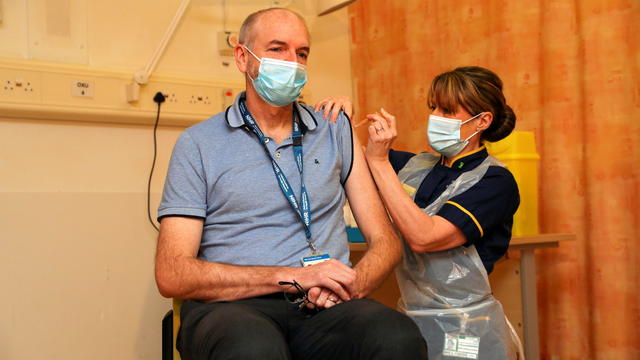
An 82-year-old dialysis patient and a scientist who helped develop the Oxford-AstraZeneca vaccine were among the first in the world to get the shot outside of trials.
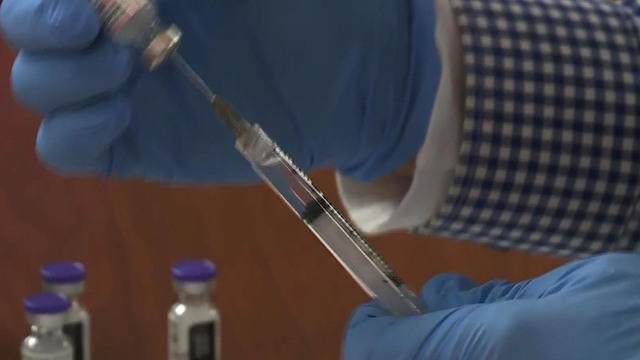
Across the U.S., nearly 3 million doses of coronavirus vaccines have been administered thus far — nowhere close to Operation Warp Speed’s goal of administering 20 million doses by the end of 2020. U.S. infections are now over 20 million cases with over 349,000 deaths. Tom Hanson reports.

Some experts predict the next month could be the worst part of the pandemic so far in the U.S., after millions of people traveled for the holidays. The new, more transmissible COVID-19 variant — first detected in the U.K. — is now in the states, and vaccinations are happening much more slowly than predicted. Dr. Stanley Perlman joins CBSN's Lana Zak to discuss the latest on the pandemic.

The race is on to end the pandemic with global immunization, but the world is hardly an equal place. Elizabeth Palmer has more on the struggles to get the vaccine to everyone.

Governor Asa Hutchinson says limited supply of vaccine doses and hesitancy to get the shot are contributing to delays in administering doses.

Garcetti says Americans "cannot let up" even with the vaccines, predicting "the toughest moment" over the next few weeks.

CBS News senior foreign correspondent Liz Palmer reports from London on the ongoing worldwide impacts of the coronavirus.

AARP CEO Jo Ann Jenkins says "we're not moving fast enough" to administer COVID-19 vaccines to elderly residents at long-term care facilities.

Moncef Slaoui, the chief science adviser for Operation Warp Speed, says the federal government is "standing by" and ready to help states speed up administering the vaccine.

The former FDA commissioner says the government should make the vaccine more widely available to older populations.