Iran attacks ships in Strait of Hormuz after Trump extends ceasefire
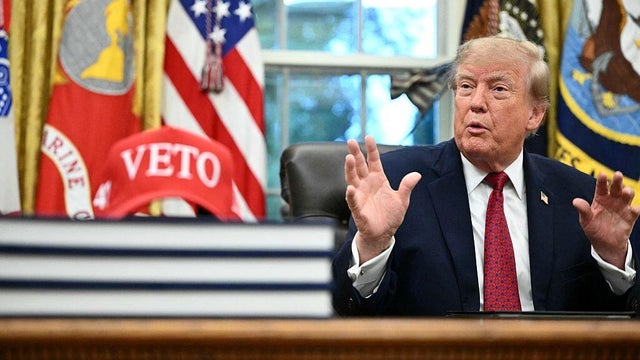
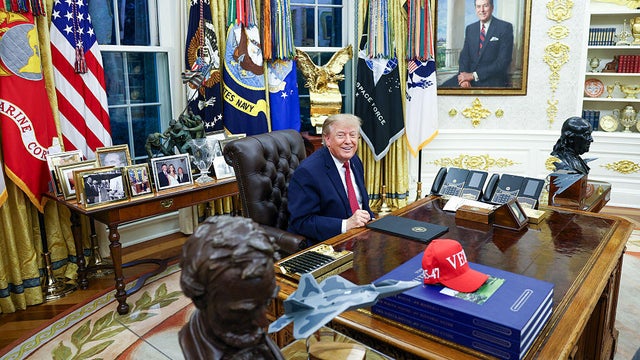
Iran renews attacks in the Strait of Hormuz after Trump says he's extending a ceasefire indefinitely, as thousands more U.S. forces head for the region.
Watch CBS News
Iran renews attacks in the Strait of Hormuz after Trump says he's extending a ceasefire indefinitely, as thousands more U.S. forces head for the region.

Future of Iran war uncertain with no date set for peace talks; new poll shows Congress is historically unpopular.

Tuesday marks Day 54 in the war with Iran and a new analysis from the Center for Strategic and International Studies found that the conflict is taking a toll on the Pentagon's munitions stockpile. Mark Cancian, a senior adviser with the Defense and Security Department at CSIS, joins "The Daily Report" to discuss.

U.S. Navy Secretary John Phelan is out, effective immediately, the Pentagon said. It's the latest departure of a top defense leader as the U.S. and Iran fight for control of the Strait of Hormuz. Charlie D'Agata reports.

The Pentagon says Navy Secretary John Phelan is leaving his post effective immediately. This shake-up comes at another moment of uncertainty, seven and a half weeks into the war with Iran. Eleanor Watson and Ed O'Keefe report.

As President Trump extends the ceasefire with Iran until "discussions are concluded," where is the war heading? Democratic Rep. Jason Crow of Colorado, a retired Army Ranger who sits on the U.S. Armed Services Committee, joins "The Takeout" with his perspective.

Wednesday marks 53 days since the U.S. launched the war with Iran. Republican Sen. Thom Tillis of North Carolina joins "The Takeout" to discuss the state of the conflict and more.

The situation in Iran remains fluid as the global economy, increasingly stressed by energy shortages, awaits clear signals. CBS News senior White House and political correspondent Ed O'Keefe has the latest.

White House press secretary Karoline Leavitt spoke to reporters on Wednesday about the Iran war, saying President Trump can be flexible while waiting for a unified proposal.

President Trump posted on social media Wednesday that eight women protesters who were going to be executed in Iran will no longer be killed. CBS News contributor Masih Alinejad shares her reaction.

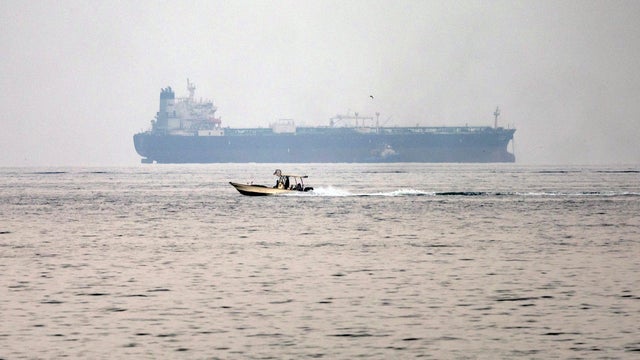
Iran launched attacks on commercial vessels in the Strait of Hormuz on Wednesday while calling the U.S. military's blockade of Iranian ports a breach of the ongoing ceasefire. CBS News' Natalie Brand and Charlie D'Agata have more.

Iran attacked at least 3 ships in the Strait of Hormuz, according to international news agencies, amid the indefinite ceasefire extension President Trump announced Tuesday. Robert Murrett, the deputy director for Syracuse University's Institute for Security Policy and Law, joins with more.

About half of Iran's stockpile of ballistic missiles and its associated launch systems were still intact as of the start of the ceasefire in early April, officials said.

Tensions are mounting in the Strait of Hormuz as questions linger about diplomacy to end the war with Iran. CBS News' Ramy Inocencio and Aaron Navarro report. Also, Eric Lob, an associate professor of politics and international relations at Florida International University, joins with more insight.

It could take months for U.S. gas prices to recede to their level before the outbreak of war in Iran, economists and energy experts say.

The U.S.-Iran war isn't just driving prices higher for gasoline. Petrochemicals derived from oil and natural gas go into making more than 6,000 consumer products, the Department of Energy says.

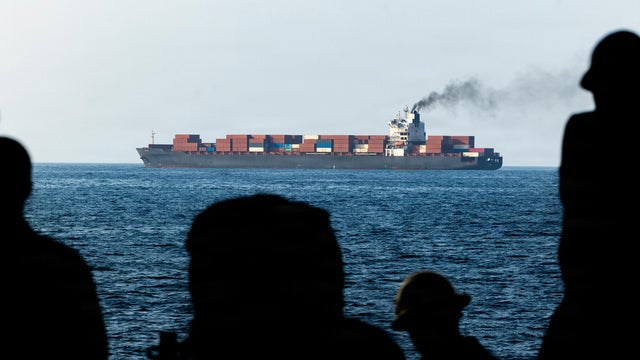
A gun boat from Iran's Revolutionary Guard Corps fired on a container ship in the contested waterway before a cargo ship came under fire in a separate attack, the British military says.

The British military says at least two vessels were attacked in the Strait of Hormuz by the Iranian Revolutionary Guard Corps. This comes after President Trump extended the U.S. ceasefire indefinitely. CBS News' Imtiaz Tyab and Aaron Navarro report, and Joel Rayburn, a senior fellow at the Hudson Institute's Center for Peace and Security in the Middle East, joins with additional analysis on Iran's nuclear stockpile.

Sam Vinograd, a CBS News national security contributor and former assistant secretary for counterterrorism at the Department of Homeland Security, breaks down where things stand between the U.S. and Iran.
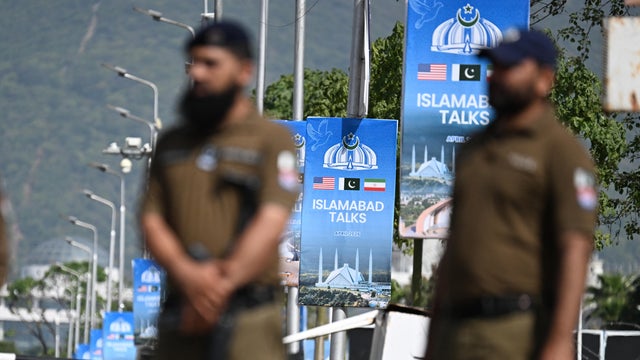
With a two-week ceasefire set to expire and Iran balking at the resumption of peace talks, President Trump said he would be extending the deadline to allow for Iran to "come up with a unified proposal."

Over the past several days, President Trump has made multiple statements on the U.S. goal to seize Iran's "nuclear dust." "The Daily Report" dives into what the president means by "nuclear dust" and how much Iran has. Will Todman, the chief of staff of the Geopolitics and Foreign Policy Department at CSIS, has more analysis.

The war with Iran has disrupted one of the world's busiest shipping lanes, and the global pharmaceutical supply is getting caught in the middle. CBS News medical contributor Dr. Céline Gounder has more details.

President Trump extends ceasefire with Iran; Rep. Sheila Cherfilus-McCormick resigns before facing ethics panel meeting.

The largest U.S. military presence in the Middle East since the invasion of Iraq has gotten even larger in recent weeks with the deployment of additional forces and a third aircraft carrier. Charlie D'Agata reports on the president's 21st-century "gunboat diplomacy."

President Trump threatened new attacks on Iran Tuesday and said he didn't want to extend the ceasefire. But later, he said he would extend the pause "indefinitely." Ed O'Keefe has the details.