Role of Persian Gulf states in war with Iran
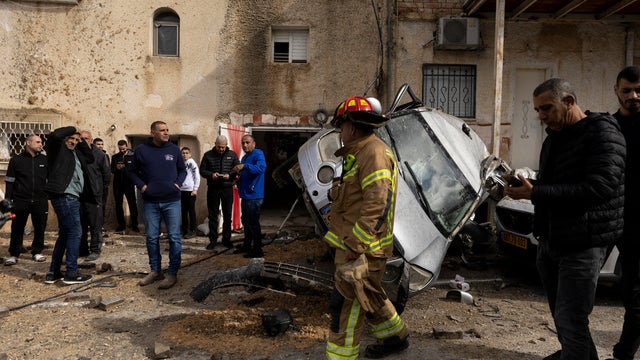
The Persian Gulf states are facing more attacks from Iran amid its war with the U.S. and Israel. CBS News chief correspondent Matt Gutman has more from Tel Aviv.
Watch CBS News
The Persian Gulf states are facing more attacks from Iran amid its war with the U.S. and Israel. CBS News chief correspondent Matt Gutman has more from Tel Aviv.
War is deadly serious business and challenges presidents as no other event can. And yet, both former President Joe Biden and President Trump have been tripped up by bizarre language around the topic of war. CBS News chief Washington correspondent Major Garrett explains.
Defense Secretary Pete Hegseth said Tuesday would be the most intense day of U.S. strikes inside Iran. Meanwhile, Iran is launching ballistic missiles and drones against U.S. allies in the Gulf. Retired U.S. Army Major and military analyst Mike Lyons joins CBS News to discuss.
The pressure to reopen the Strait of Hormuz is intensifying, along with the rhetoric around it from the U.S. and Iran. Matt Smith, an analyst at the data firm Kpler, joins to discuss.
Approximately 140 U.S. service members have been wounded in the first 10 days of the war with Iran, the Pentagon said Tuesday. When asked to confirm, White House Press Secretary Karoline Leavitt said the number was "within that ballpark." CBS News' Olivia Rinaldi reports.
Defense Secretary Pete Hegseth said Tuesday morning that, "Today will be, yet again, our most intense day of strikes inside Iran." CBS News' Charlie D'Agata reports on the situation in the Middle East, Retired U.S. Navy Vice Admiral Robert Murrett joins with analysis and CBS News' Olivia Rinaldi has the latest from the White House.
Democratic Sen. Richard Blumenthal said he left a Senate Armed Services Committee briefing on the war with Iran with "more questions than answers." CBS News' Caitlin Huey-Burns has more.
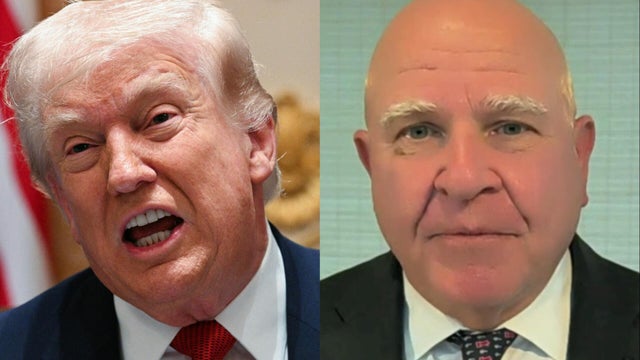
H.R. McMaster, who served as President Trump's national security adviser during his first term, joins CBS News 24/7 to break down U.S. strikes on Iran after Defense Secretary Hegseth said Tuesday would be the "most intense day" of attacks on the country.
President Trump said Monday that the war with Iran will end "very soon," but on the 11th day of fighting strikes are still intensifying. CBS News' Charlie D'Agata, Nancy Cordes and Edward Smith have more.
President Trump said Monday the war against Iran will be over "very soon," while Defense Secretary Pete Hegseth said Tuesday would be the most intense day of strikes on Iran so far. When asked about timing, Hegseth said, "It's not for me to posit whether it's the beginning, the middle or the end." CBS News' Eleanor Watson and Aaron Navarro have more.
Secretary of Defense Pete Hegseth promised that Tuesday would be the "most intense day of strikes" against Iran. CBS News senior foreign correspondent Holly Williams spoke with some Iranians about the conflict's impact.
President Trump said he "knew oil prices would go up," but it's been less than he anticipated after oil prices hit more than $100 per barrel on Monday. CBS News' Kelly O'Grady has more.
CBS News contributor Elliott Ackerman, a former CIA officer and Marine Corps veteran, joins to discuss what U.S. ground troops in Iran might look like as President Trump weighs the option.
The U.S. is considering a special operation in Iran to take control of the country's nuclear stockpile, Axios reports. CBS News contributor Elliot Ackerman, a former CIA officer and Marine Corps veteran, joins to discuss.
President Trump's assurances that a rising U.S. death toll and soaring energy prices will be temporary and worth the pain are failing to assuage jittery investors.
On Monday, President Trump told CBS News senior White House correspondent Weijia Jiang that the war in Iran "is very complete," but he did not provide a timeline for the end of the conflict. Lindsey Reiser takes a look at the war's first 10 days and some of the strikes that have been carried out across the Middle East.
President Trump told CBS News the U.S. war with Iran is "very complete," and said the U.S. "could do a lot" about the Strait of Hormuz.
Survivors ask DOJ to take down Epstein files because of redaction failures; DHS funding at center of government budget talks.
At a Miami-area news conference Monday, President Trump said he expects the war in Iran to end "very soon," but also called it "the beginning of building a new country."
As U.S.-Israeli war with Iran intensifies, President Trump says it is "very far ahead of schedule." Meanwhile, there are new questions about the bombing of Iranian girls' school. Weijia Jiang and Nancy Cordes have more.
President Trump gave updates on the war in Iran on Monday, saying he was "disappointed" in the country's new choice of leadership, the former supreme leader's son, Mojtaba Khamenei. CBS News congressional correspondent Nikole Killion joins to discuss takeaways from the news conference. Then, Joe Zacks, former deputy assistant director for counterterrorism at the CIA, joins with analysis.
Gas prices rose 14% during the first week of the joint U.S.-Israel war with Iran, according to AAA. CBS News contributor J.D. Durkin joins from the New York Stock Exchange with analysis.
After years of delays, a plaque honoring the officers who protected the U.S. Capitol during the Jan. 6 attack has finally been installed -- but you may not be able to see it. CBS News justice correspondent Scott MacFarlane explains.
President Trump is vowing not to sign any bills until the Senate passes the SAVE Act, which would add strict new voting requirements across the country. CBS News congressional reporter Taurean Small has more.
The average price of a gallon of gas in the U.S. is up 17% since the war with Iran began. Justin Wolfers, professor of public policy and economics at the University of Michigan, joins with analysis.