Prop 22: Big Money Campaign Keeps Gig Workers Classified As Independent Contractors
Uber, Lyft and other app-based ride-hailing and delivery services have prevailed in their expensive gamble to keep drivers classified as independent contractors.
Watch CBS News
Uber, Lyft and other app-based ride-hailing and delivery services have prevailed in their expensive gamble to keep drivers classified as independent contractors.
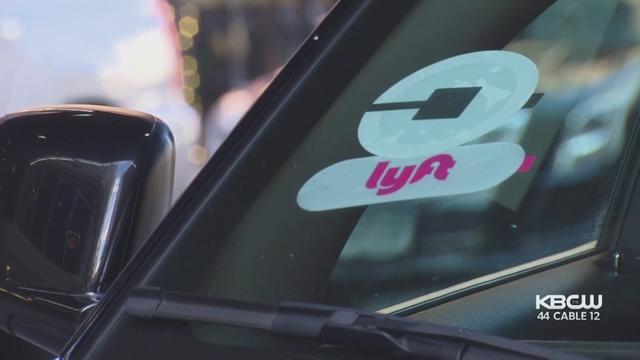
Election Day dawned Tuesday at the San Francisco Bay Area headquarters of ride-share giants Uber and Lyft with the fate of their business models in the hands of California voters.
With a week before Election Day, a new poll finds California voters are split over Prop. 22, a ballot measure backed by Uber and Lyft.
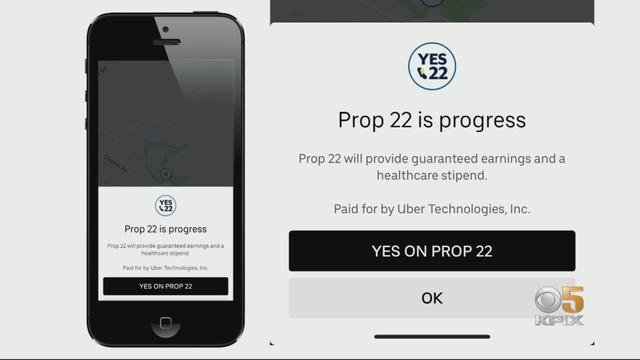
Some Uber drivers are suing the San Francisco ride-hailing giant, saying the company has "unlawfully" pressured them and other drivers to support the measure.
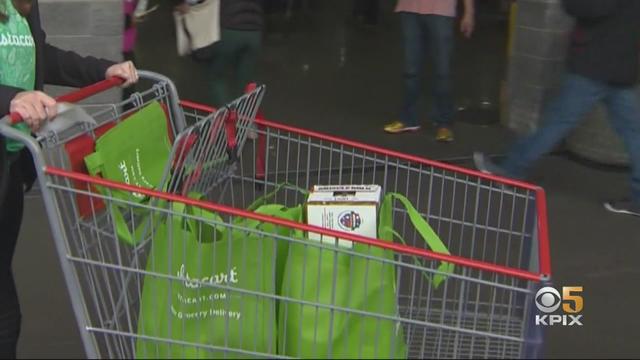
With just weeks left until Election Day, Instacart attempted to leverage the labor of some of its workers to promote its messaging about Proposition 22.
Black and Latino leaders from across California, including U.S. Rep. Barbara Lee, D-Oakland, gathered during a virtual news conference Monday to express their concerns over Proposition 22 on the state's Nov. 3 ballot.
When Lyft or Uber customers hail a car, an advertisement pops up saying if Prop. 22 fails, prices and wait times will increase, while drivers will lose their income.
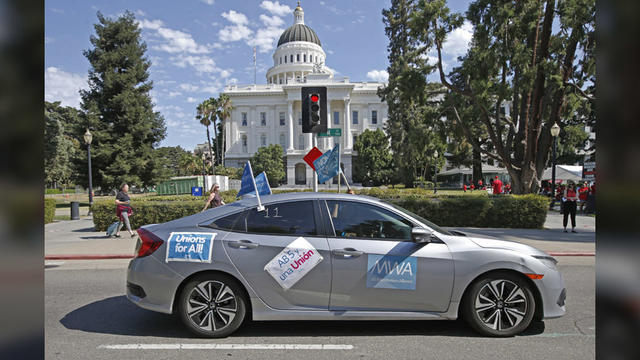
Californians are being asked to decide if Uber, Lyft and other app-based drivers should remain independent contractors or be eligible for the benefits that come with being company employees.
Uber plans to offer rides exclusively in electric vehicles by 2030 in US, Canadian and European cities, and be entirely free of emissions by 2040.
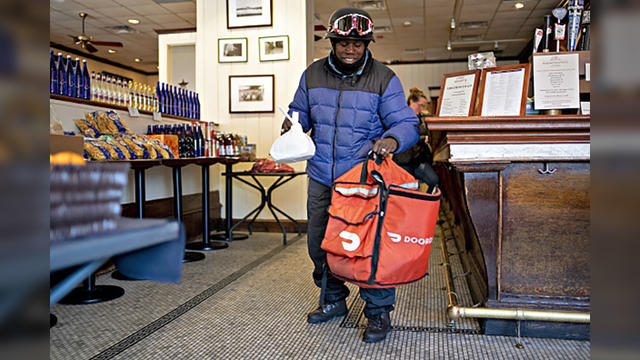
The fight over whether ride-hail drivers should be treated as employees or independent contractors, as they have long been treated by Uber and Lyft, could determine whether other parts of the industry are similarly targeted -- in particular fast-growing, on-demand grocery- and food-delivery businesses.
A former chief security officer for Uber was charged Thursday in federal court in San Francisco with trying to cover up a 2016 hack involving 57 million users and drivers, federal prosecutors said.
Lyft and Uber received a reprieve in court Thursday, hours before the ride-hailing giants looked to shut down California operations stemming from a recent court ruling over the classification of drivers.

Lyft posted a loss on Wednesday of $437.1 million for the second quarter, when the coronavirus outbreak meant few people were looking to use its ride-hailing service.
The CEO of Uber said Wednesday the ride-hailing giant may be forced to shut down its California operations if an injunction requiring drivers to be classified as employees is upheld.
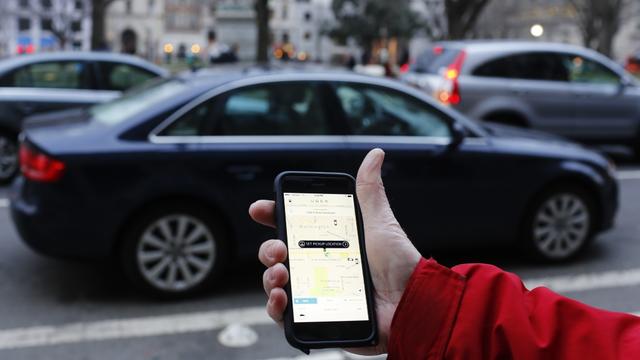
In a blow to Uber and Lyft, a judge in San Francisco ruled Monday that the ride-hailing companies must start classifying their drivers as employees in the state.
Uber lost $1.78 billion in the second quarter as the pandemic carved a gaping hole in its ride-hailing business.
The California Labor Commissioner on Wednesday announced two separate lawsuits against Uber and Lyft for committing wage theft by incorrectly classifying employees as independent contractors.
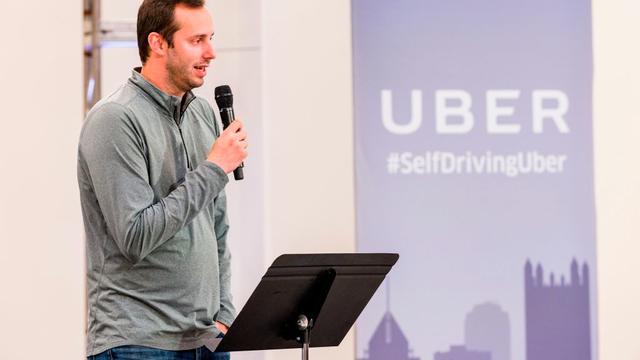
A former engineer at Google and Uber pleaded guilty Tuesday to stealing confidential information from Google's self-driving car program and received an 18-month prison sentence.
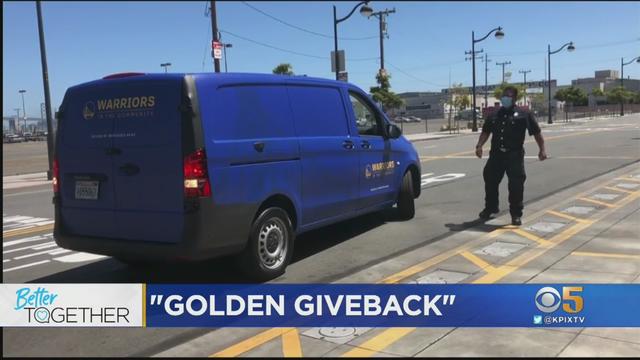
The Golden State Warriors have partnered with Uber Eats to drive business to local restaurants and feed essential workers in the process. The program is called the Golden Giveback.
Two San Francisco-based food delivery services companies are merging as Uber announced Monday it was acquiring Postmates in a $2.65 billion all-stock deal.

An rideshare customer allegedly hit and tried to steal an Uber driver's car after he became angry because he couldn't change his itinerary.
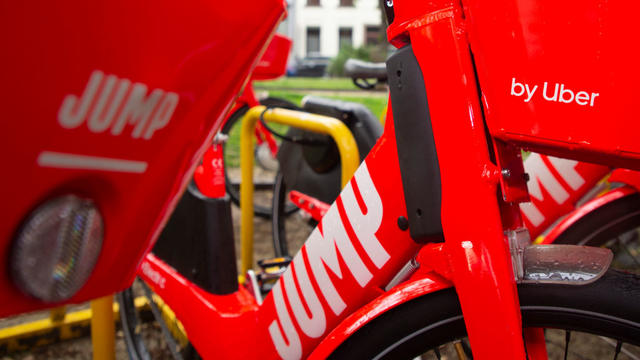
Videos and photos are surfacing of thousands of Uber's Jump bikes and scooters stripped of parts and crammed into trucks to be scrapped.
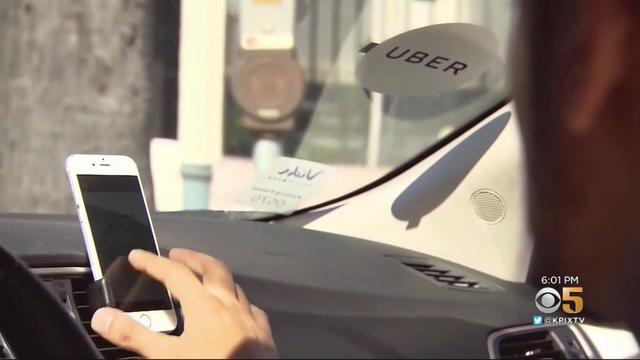
A ballot initiative backed by Uber, Lyft and DoorDash is set to go before California voters in November, which if passed, would exclude the companies from a new law giving more benefits and wage protections to gig workers.

Uber has cut 3,000 jobs from its workforce, its second major wave of layoffs in two weeks as the coronavirus slashed demand for rides.