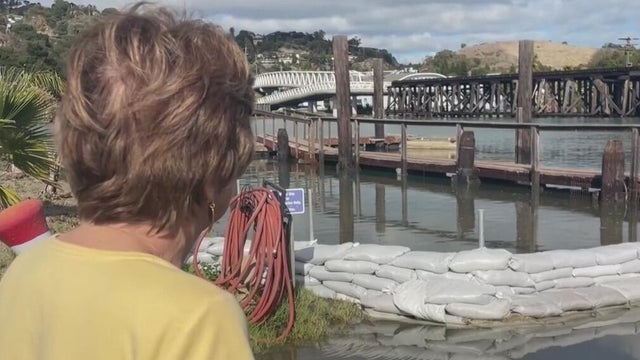
Climate expert links recent California snowfall to warming planet
The blockbuster blizzard that dropped six to 10 feet of snow in early March likely has links to climate change.
Watch CBS News
The blockbuster blizzard that dropped six to 10 feet of snow in early March likely has links to climate change.
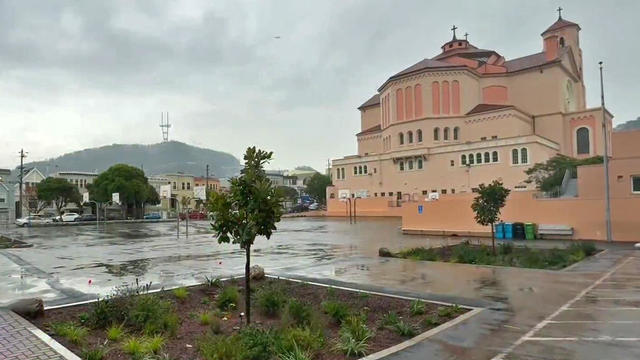
On average, over 10 billion gallons of rain falls in San Francisco every year. Add climate change and more extreme weather to the mix combined with the city's antiquated sewer system and you can have flooded streets and backed up drains.

A commercial carbon-capture facility in Tracy takes carbon dioxide from the air and seals it in crushed limestone. Ben Tracy reports. (2-22-24)

The global fashion industry is worth an estimated $1.7 trillion, but that value comes at a cost. Each year, more than 11 million tons of textiles – mostly discarded clothing - ends up in landfill.

A volunteer fixit clinic, organized by the San Mateo County's Office of Sustainability, helps keep household gizmos out of the local dump.

In the northwest part of Contra Costa County, a remarkable effort is now underway to help some of the most important creatures on our planet: the creatures that pollinate our foods.

A Bay Area biotech firm is working on a clever strategy to capture a worrisome greenhouse gas, and in the process turn it into a rich organic fertilizer.

A Bay Area biotech firm is working on a strategy to capture atmospheric methane and turn it into a rich organic fertilizer. Sara Donchey and Molly McCrea report (1-11-24)

For farmers like Nick Petkov, it's hard to forget the winter of 2023, which was characterized by the series of drenching atmospheric rivers and dramatic snowfall.

Anne Makovec narrates a look back at some of the most notable reports in KPIX's environment series, Project Earth. (12-28-23)

About 50 landscape, architecture and design offices participated in a unique -- and edible -- exhibition featuring environment-friendly cityscapes. Elizabeth Cook and Molly McCrea report (12-21-23)

Majestic frigatebirds are helping earth science researchers in the Bay Area map the atmosphere to better understand climate change.
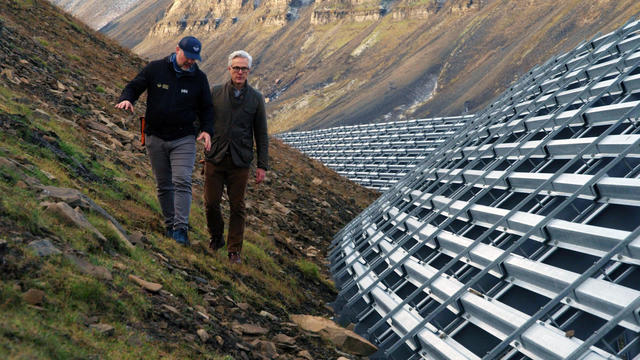
Climate change is an urgent problem in the Arctic. From renewable energy to avalanche protection, here's what we can learn from how people there are protecting their way of life.

While the United States works to cut its greenhouse gases, melting glaciers are adding to the problem. David Schechter shows us what is deep underneath. (12/6/23)

How much will sea levels rise in the United States? To help predict that -- scientists are measuring how fast glaciers are melting in the Arctic. David Schechter reports. (12/5/23)

As part of a series exploring the effects of warming temperatures, David Schechter explains how the warming of the Arctic affects weather everywhere. (12/4/23)
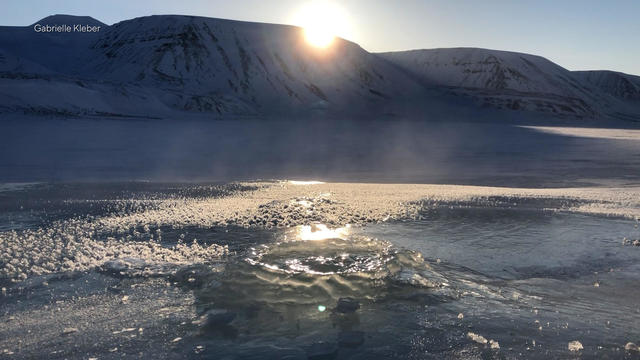
Spiking temperatures in the Arctic are rapidly melting glaciers. Scientists are now worried about underground methane, a potent greenhouse gas, leaking up to the surface.

Experts are predicting strong El Niño conditions this winter with heavier rains and warmer temperatures. Those factors combined with the rising carbon dioxide levels causing climate change could actually worsen allergies and asthma.

Berkeley students led by their science teacher are planting tiny micro forests to curb the impacts of climate change.

Emperor penguins are not simply majestic. These birds are tough creatures who manage to survive in some of the harshest weather conditions imaginable.

The San Francisco waterfront is home to some of the most iconic landmarks, historic districts, and stunning views in the world, but the critical gateway and economic backbone to the city is threatened by rising sea levels.

A new global study launched by NASA aims to improve our understanding of the world's oceans, lakes and rivers and their role in the science of climate change.

A Bay Area high school is doing its part to make sure there are enough certified auto techs and mechanics to keep pace with the surging demand for electric vehicles.

Scientists, researchers, and volunteers are working on an Olympian quest - to restore the Olympian oyster to once-historic levels at a coastal wetland along the Monterey Bay, an effort that may help to curb the impacts of the warming climate.

California's valuable remaining salt marshes are disappearing; climate change, with its melting glaciers and warming seas, threatens to drown the remaining coastal marshes out of existence.