Santa Cruz marine scientists team up with special effects team for virtual blue whale exhibit
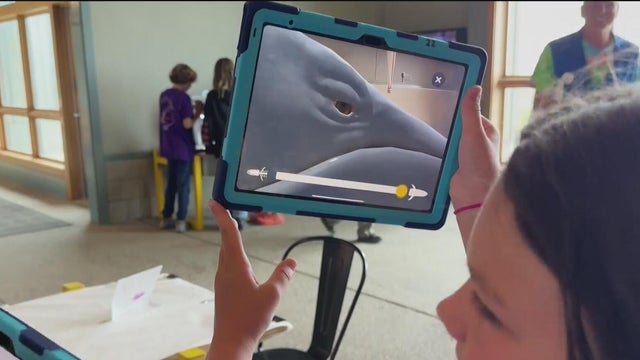
Step inside the Seymour Marine Research Center at the University of California at Santa Cruz and be prepared to be "swallowed up" by a whale of a tale.
Watch CBS News
Step inside the Seymour Marine Research Center at the University of California at Santa Cruz and be prepared to be "swallowed up" by a whale of a tale.
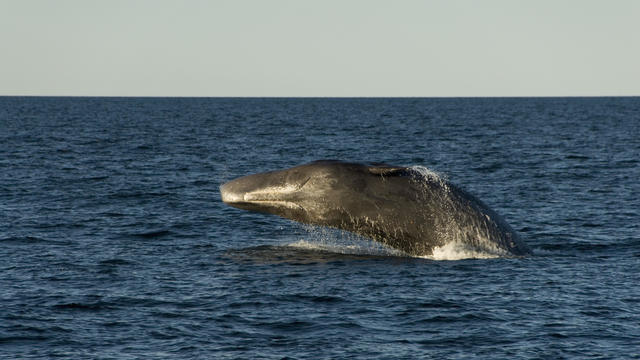
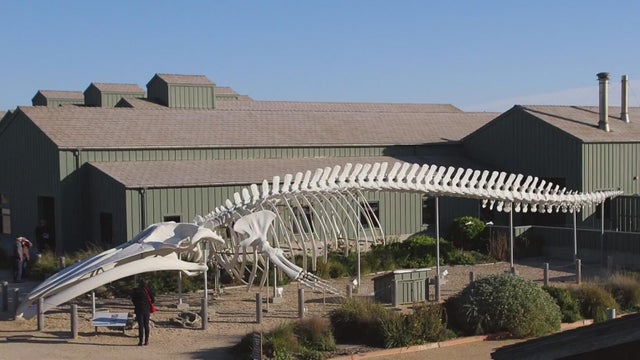
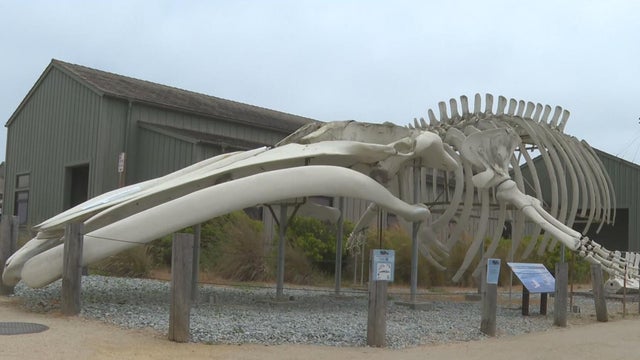
From the California coast, you can see a lot of surfers. It's not so easy to see a blue whale. However, at UC Santa Cruz, you can walk right up to a legendary blue whale, or at least its skeleton.
A chance encounter at the University of California, Santa Cruz, has led to the restoration of a long-time, massive display of a blue whale skeleton display at the university.
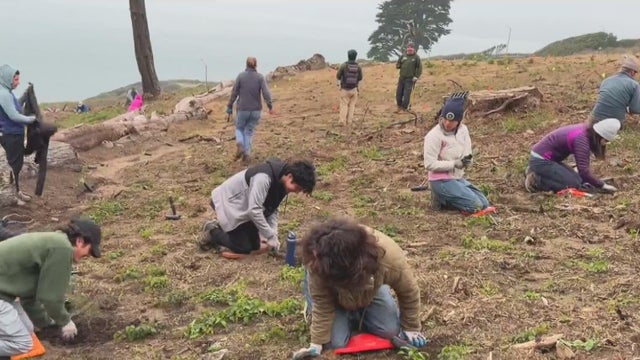
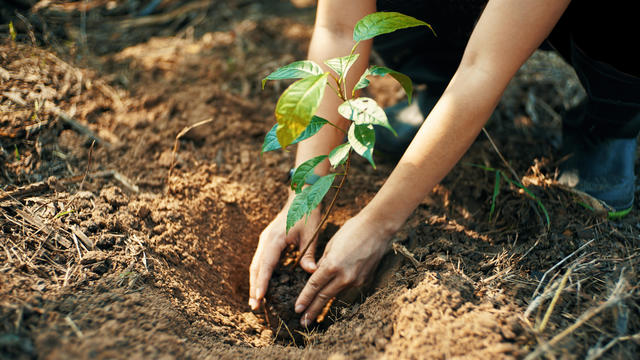
Volunteers have reached another milestone in their effort to re-establish native plants and animal species at the Presidio of San Francisco.
In a recent survey, the vast majority of surfers feel a personal responsibility for the health of the ocean. Now, a Santa Cruz company hopes to provide them with one way to surf in a more eco-friendly manner.
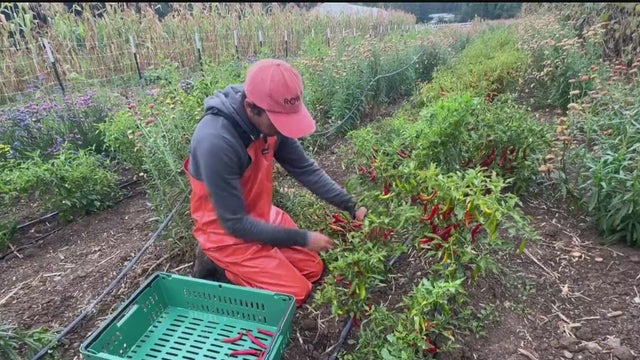
California has emerged as a leader in the field of sustainable agriculture with its focus on creating and maintaining healthy soils, and one small Bay Area farm is reaping the benefits.
While recent data and reports show how car break-ins in the Bay Area are down, they still occur and it's the last thing you want to see as you head to the car.
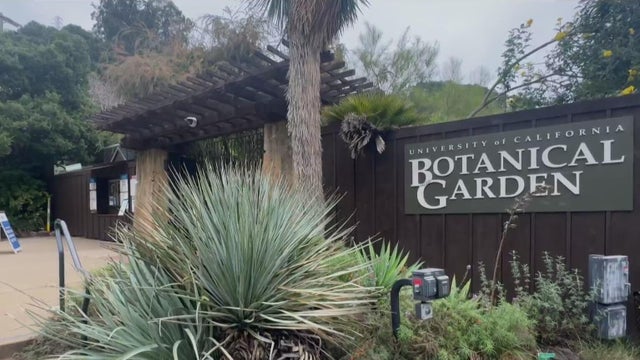
Above the main campus at the University of California, Berkeley, nestled in Strawberry Canyon at the Botanical Gardens, you'll find a critically important bank.
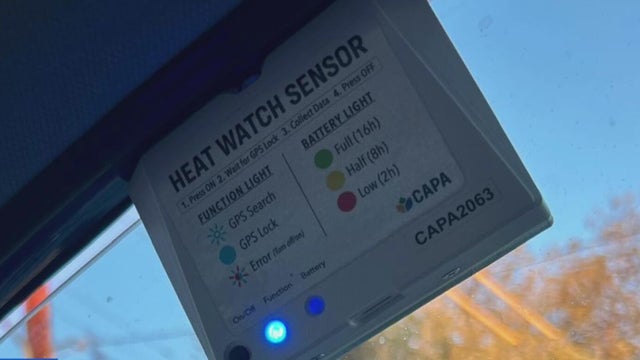
At a recent gathering of community groups, a city council member, students, and climate activists, the talk was all about heat - very extreme heat - and the phenomenon of record-breaking temperatures largely driven by climate change.
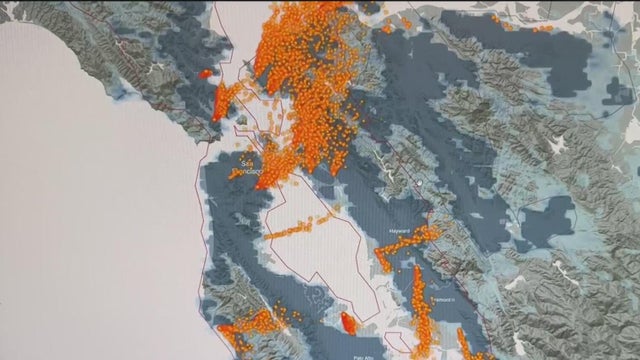
A form of harmful air pollution that often can't be plainly observed is now being tracked with a groundbreaking new tool developed by scientists that allows residents to see where it's coming from.
Last weekend, a special performance unfolded in Central San Rafael. The location was unusual: it's where collection bins full of waste, recycling and compost are brought.
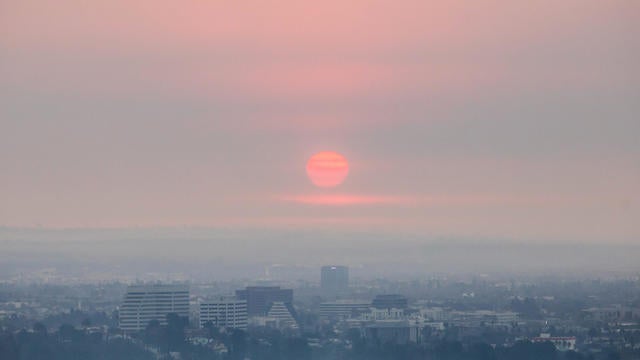
As California sees an increasing amount of wildfires, researchers from Stanford University and a Northern California nonprofit are helping residents prepare for and manage their exposure to toxic wildfire smoke.
With only 7.5% of Earth's surface covered in fertile, agricultural soil, it's critically important to maintain the soil to grow food, filter water, and regulate the climate.
Due to a scheduling conflict at Chase Center in San Francisco, the Valkyries' first-ever home playoff game will take place 54 miles south, at the SAP Center in San Jose.
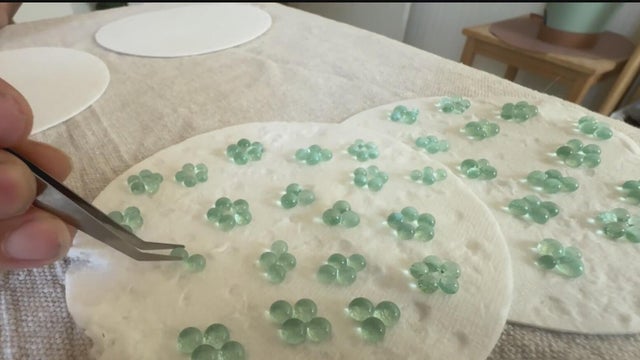
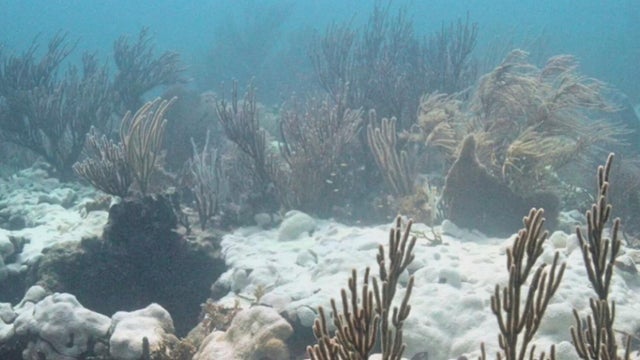
Bay Area scientists are creating baby corals to help regenerate the world's second-largest coral reef, which is being devastated by climate change.
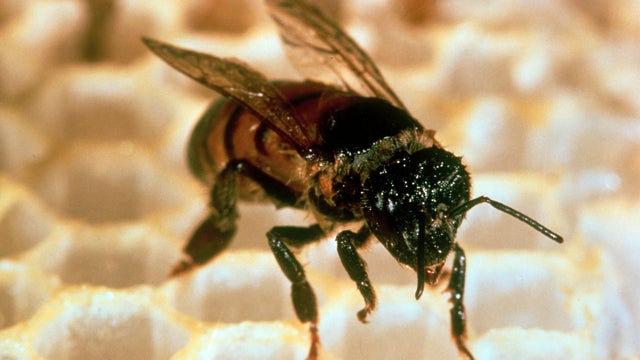
Honeybee populations facing severe challenges are now being helped by the development of a bee superfood using technology developed in the Bay Area.
In the San Francisco Bay Area, on the island of Alameda, six months ago, a small store opened up on Webster Street and already has quite a clientele.
A group of volunteers at San Francisco's Presidio National Park is drawing inspiration to restore local habitats and biodiversity from a life-sized art project across the globe.
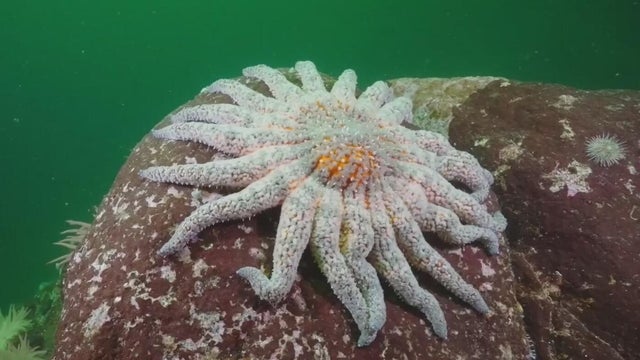
Scientists have determined the cause of an epidemic that has devastated a species of starfish, wiping out billions over the last decade, and a Bay Area team is at the forefront of an effort to restore their population.
Clean, renewable energy is powering California to levels never seen before, and a Stanford professor's home is the blueprint for the near future.
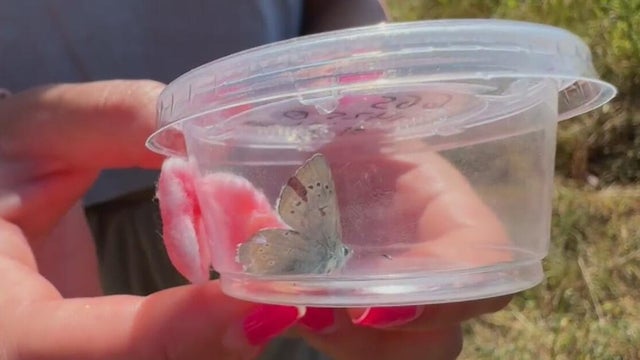
A butterfly that went extinct decades ago after the destruction of its Bay Area habitat is now the driving force behind its restoration with the help of a close relative now fluttering in its terrain.
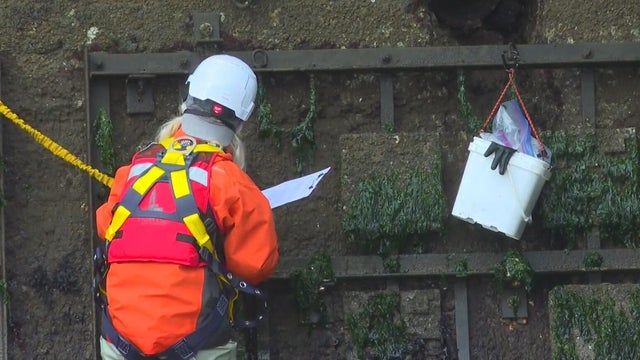
Along San Francisco's Embarcadero, a groundbreaking experiment is revealing promising results.
Off the coast of California, south of Salinas and located at the base of the Santa Lucia Mountains, clusters of high-quality pinot noir and chardonnay grapes ripen in the cooling fog, warming sun and perfect soil.
Emperor penguins may live in some of the most remote and environmentally pristine regions in the world, but that doesn't mean they're safe from the impacts of a warming planet.
The City Nature Challenge began 10 years ago as a friendly competition between two cities: San Francisco and Los Angeles. Today, it's an international event that involves almost 670 cities and metro areas across six continents.