El Niño Has Been Good To San Francisco's Water Supply
It looks like San Francisco will have more than enough water this year, thanks to a rainy winter.
Watch CBS News
It looks like San Francisco will have more than enough water this year, thanks to a rainy winter.

A new state report shows California farmers reaping record sales despite the drought.

While a strong start to the rainy season has given way to an extended dry spell and record warmth, a climate professor said the wet conditions typical of an El Nino winter will return.

A new state analysis warns that some sectors hit hardest by California's drought may still need help long after the current dry spell ends.

Although the amount of rain and snow in California this year has reached higher levels than last year, the state's drought is still not over.

Almond prices in California have dropped significantly in the past few months.

A list of East Bay water customers showing excessive water use - used by the water district to call attention to those who surpass usage limits - shows inaccurate figures for some customers, according to a published report.

Recent El Nino storms have boosted the Sierra Nevada snowpack to 115 percent of normal -- more than the drought-stricken state has seen in five years.

The recent onslaught of El Nino storms only slightly increased the levels of California reservoirs that stand at half of historic depths for this time of year.

One of the water districts that serves Contra Costa County announced Tuesday that its customers cut back on water use by more than a third last month compared to two years ago.
Snow was still falling Tuesday night in the Sierra as storms moved across California, helping bring the state's snowpack above normal for this time of year.

Farmers in the San Joaquin Valley are bracing to receive no irrigation water from a federal system of reservoirs and canals for a third consecutive year.

The East Bay Municipal Utility District Thursday released another list of more than 700 customers who have been fined for wasting water.

Three storms may bring as much as 3 inches or more of rain to several locations in the Bay Area between Thursday and early next week, forecasters said.
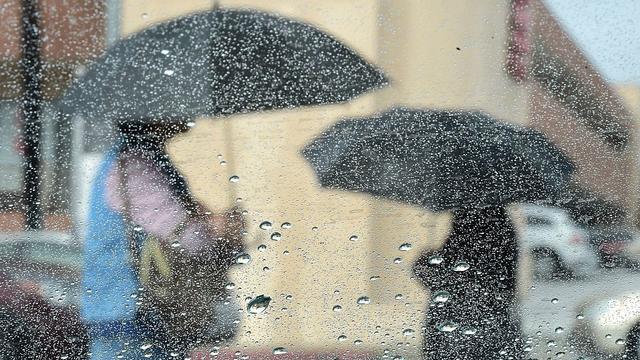
The latest in a series of storms churned to life in the Pacific rolled through the Bay Area early Wednesday, dumping nearly an inch of rain in Wine Country.

The amount of rain in the San Francisco Bay Area in the 2015-16 rainfall season is less than same period last year and less than normal, National Weather Service officials said Sunday.

A dramatic video released by NASA's Global Precipitation Measurement (GPM) mission takes a look back at 2015 -- a year of storms.
Residents of drought-stricken California used 20 percent less water in November, falling short of the governor's 25 percent conservation mandate for a second straight month.

The latest in a succession of El Nino storms rolled through the Bay Area early Tuesday, triggering a flood advisory for the heavily traveled I-80 corridor between San Francisco and Sacramento and creating chaos for the morning commute in the Bay Area.

With heavy storms forecast to hit the Bay Area as El Nino approaches, Concord officials are asking residents to be on alert for its potential consequences.

The onslaught of El Niño rains has Bay Area residents scrambling to get sandbags to avert possible flooding. Several free sandbag locations have been set up to meet the increased demand.

Light rain is falling north of San Francisco in what forecasters say is the first sign of a series of storms expected to bring heavy rainfall and a lot of snow to drought-parched California this week.
The water content of the Sierra Nevada snowpack in drought-stricken California was 136 percent of normal Wednesday when officials took the winter's first manual survey — an encouraging result after nearly no snow was found at the site in April.

A new satellite photos show the waters of the Pacific are getting warmer and the conditions for a strong El Niño aren't showing any signs of weakening, according to researchers at the Jet Propulsion Laboratory.

High-tech imaging has revealed the dire, drought-starved state of tens of millions of California's oldest, tallest trees. Even heavy rains from a persistent, strong El Niño may not save them.