Hearing held in San Francisco over Trump administration's move to end temporary protected status for immigrants
In its quest to remove immigrants from the United States, the Trump administration is now going after those who hold Temporary Protected Status, or TPS.
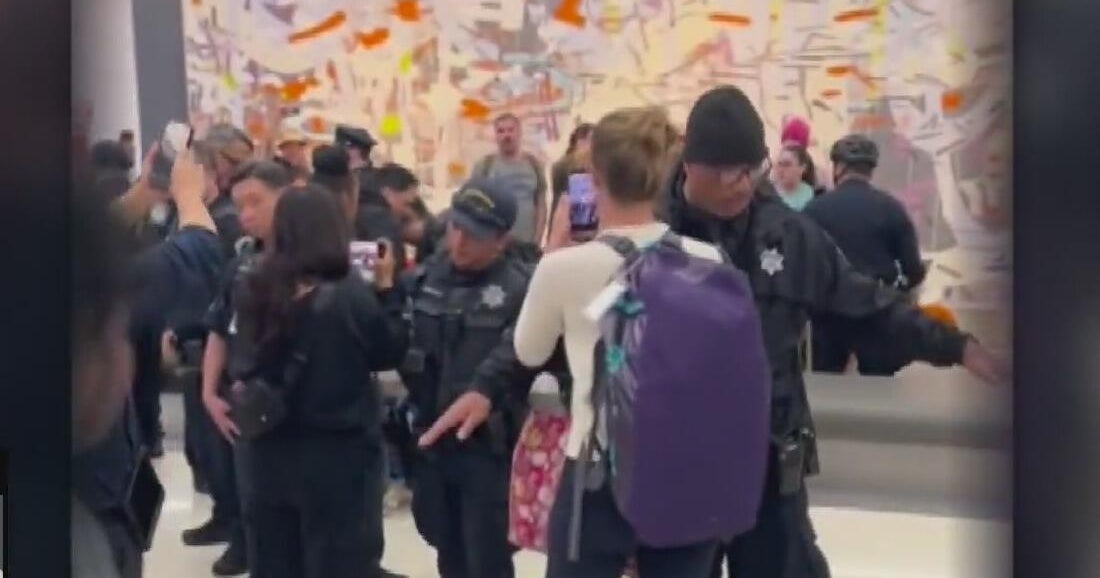
A deadline has been set for immigrants from three protected countries to lose their legal status, and in San Francisco, on Tuesday afternoon, arguments were heard in a lawsuit challenging the decision.
The news conference before the hearing began with a Honduran band playing upbeat Latin music.
"They have built their lives here. Some have bought homes, raised children, pursued their education and their dreams," said lead attorney Emmy MacLean with the ACLU.
But the issue was deadly serious. Holders of TPS status come from 17 countries that the US government has decreed to be too dangerous, either from repressive governments or natural disasters. Sindia Lama fled her native land of Nepal following a devastating earthquake in 2015.
"I was deeply grateful. My country was in crisis and returning would not have been safe," she said. "TPS allowed me to work, support my family, and live here without fear. Now, nearly 20 years later, this country is my home."
But if TPS end on Aug. 5, Sindia's legal status will be revoked, with the same happening to people from Nicaragua and Honduras the following month.
In a July interview with CBS News, Todd Lyons, the acting director of Immigration and Customs Enforcement, said, "One difference you'll see now is under this administration, we have opened up the whole aperture of the immigration portfolio."
If ICE encounters someone "that is here in the country illegally, we will take them into custody," Lyons said.
TPS was created in 1990 after the U.S. got involved in a civil war in El Salvador and needed a way to protect refugees from the conflict. Now, those here under that protection face an uncertain future.
"The government has broken its promise, violated the law," said attorney McLean. "So, these brave individuals are here today in federal court to say that the law still means something. And President Trump and DHS Secretary Noem are not above the law."
Johnny Silva, who moved from Honduras as a toddler, said he stepped up because it was a matter of conscience.
"I joined this lawsuit because I feel it in my heart that I have to stand up for people and for others like me," he said. "The government decision to terminate TPS for Hondurans and many other countries doesn't just hurt TPS holders. It hurts our families, our friends and our communities."
Tuesday was the lawsuit's first hearing before a federal judge. President Trump tried to end TPS in his first term, but it was held up in the courts. Now, the Department of Homeland Security is arguing that there is no more threat in those designated countries.
"Honduras hasn't even recovered from Hurricane Mitch," said Pablo Alvarado with the National Day Labor Organizing Networks. "So, TPS was essential in the early 90s, was essential when the hurricanes took place, and continues to be essential now. And we have to protect it."
There were about 72,000 people living with TPS in California and 1.1 million in the U.S. as of Sept. 30, 2024, a report to Congress citing Citizenship and Immigration Services data states.
The Department of Homeland Security has ordered immigrants from Nepal, Honduras and Nicaragua be stripped of their legal status and work authorization in 60 days.
Cameroon was listed as having TPS ending as well on the Citizenship and Immigration Services website, and in a news release, the Department of Homeland Security said Secretary Kristi Noem had rescinded the TPS extensions for Venezuela and Afghanistan.