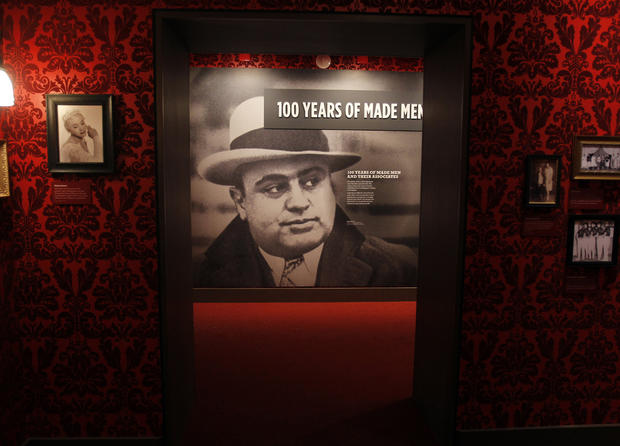
Ethan Miller/Getty Images
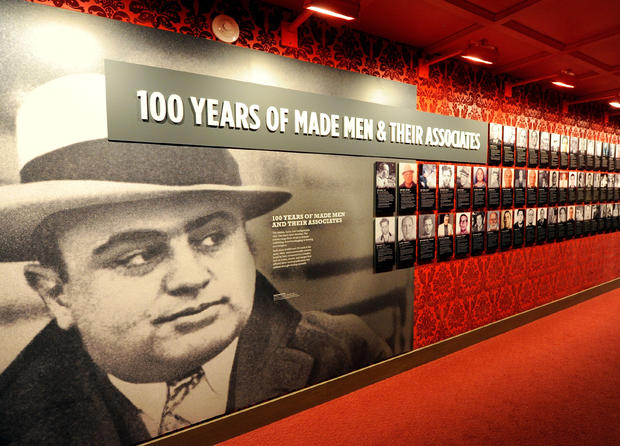
A wall of images of mobsters is displayed at The Mob Museum February 13, 2012 in Las Vegas, Nevada. The museum - also known as the National Museum of Organized Crime and Law Enforcement - opened February 14, 2012, and chronicles the history of organized crime in America and the efforts of law enforcement to combat it.
Ethan Miller/Getty Images
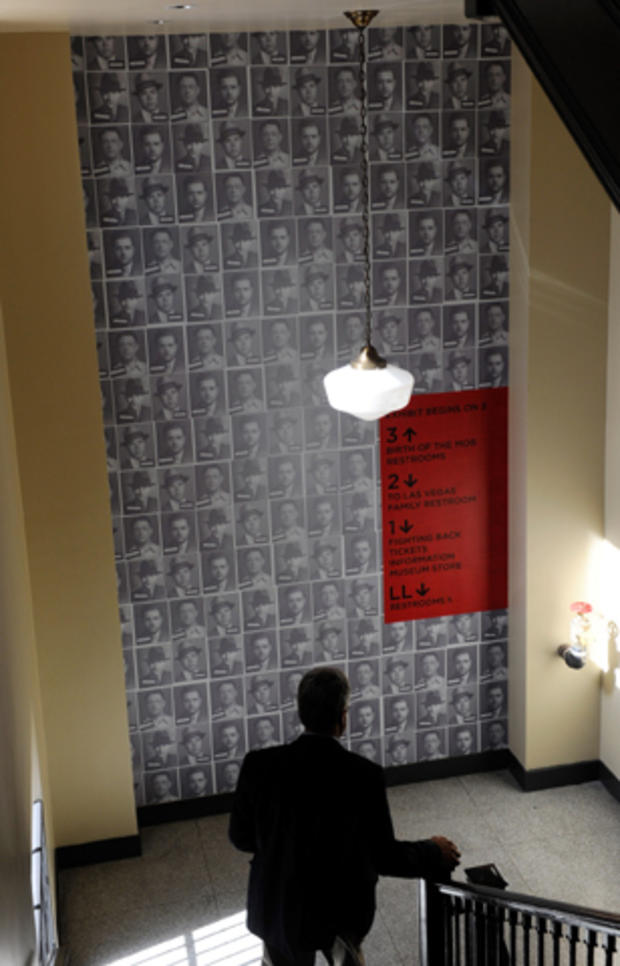
Photos of mobsters are displayed in a stairwell at The Mob Museum February 13, 2012 in Las Vegas, Nevada.
Ethan Miller/Getty Images
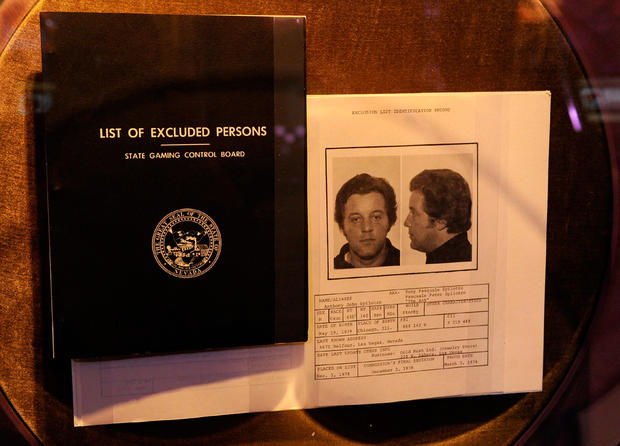
The List of Excluded Persons - commonly known as "The Black Book" - contains names of people connected to organized crime who are barred from entering Nevada casinos. It is shown on display at the Mob Museum, next to the entry for Anthony "Tony" Spilatro (1938-1986), who was an enforcer for the Chicago Outfit in Las Vegas.
Ethan Miller/Getty Images
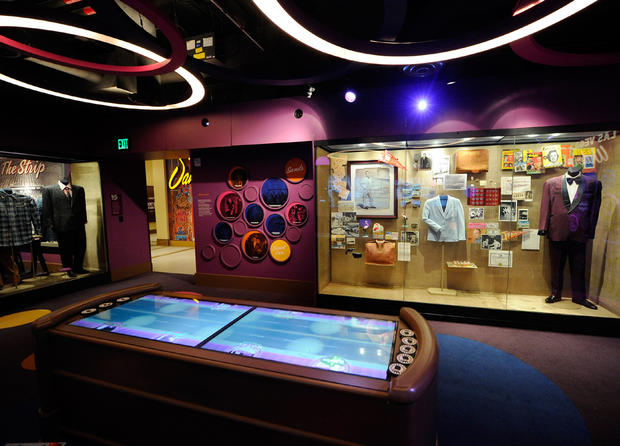
A general view of a Las Vegas-themed room at The Mob Museum February 13, 2012 in Las Vegas, Nevada.
Ethan Miller/Getty Images
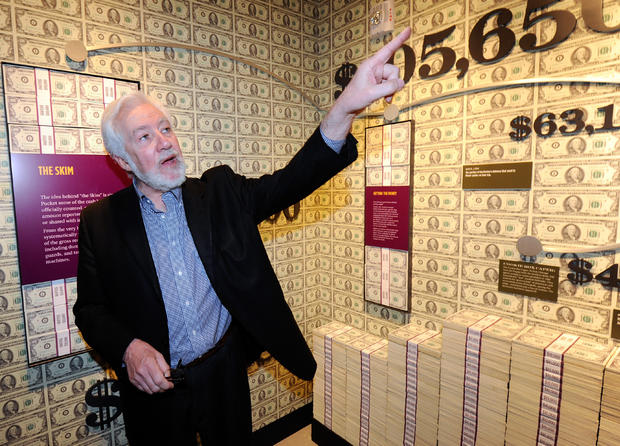
Dr. Dennis Barrie, creative director of The Mob Museum, gives a tour of a "skim room" - demonstrating how mobsters would steal some of the cash in a casino's counting room.
Ethan Miller/Getty Images
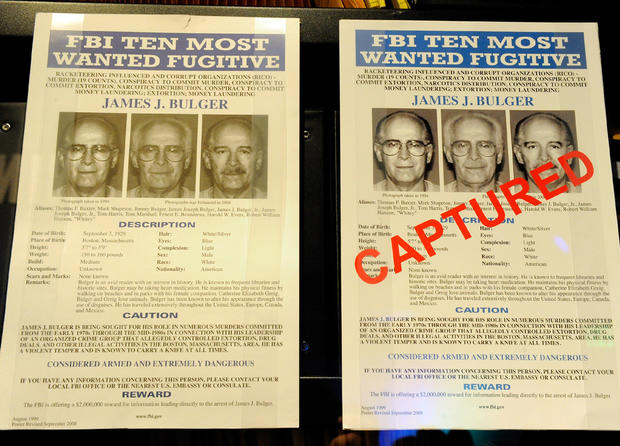
On display are FBI Wanted posters for James "Whitey" Bulger, the Boston mob boss and FBI informant who went into hiding for 16 years until he was captured in Santa Monica, Calif., in June 2011. Bulger, at age 81, pleaded not guilty to a racketeering indictment that accuses him of participating in 19 murders, some dating back to the 1970s.
AP Photo/Isaac Brekken
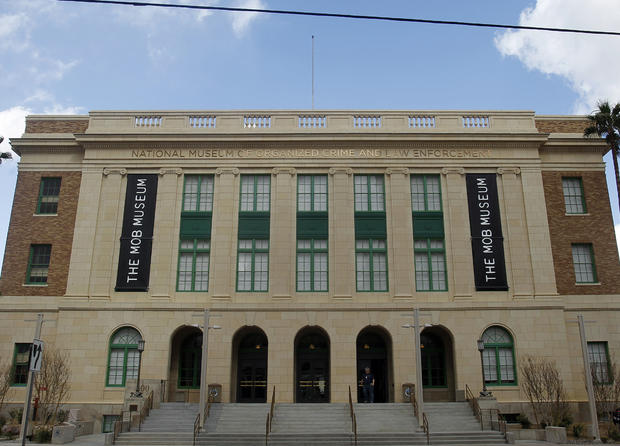
The Mob Museum - a $42 million project funded by the city of Las Vegas with nearly $9 million in historic preservation grants - is located in a former federal building built in 1933. The building was a site in 1950 of the Kefauver Committee hearings into organized crime.
Ethan Miller/Getty Images
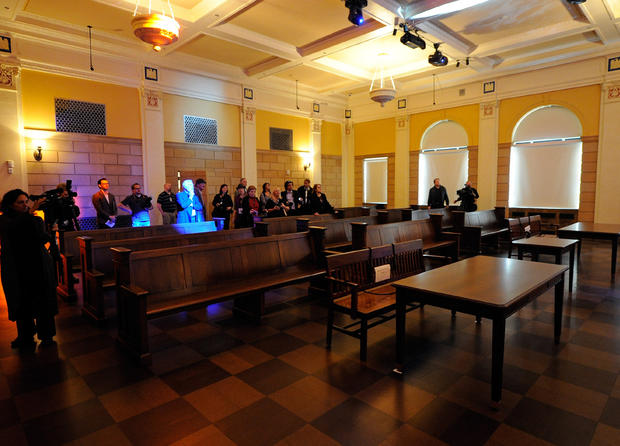
Members of the media take a tour of a courtroom that was the site of the Las Vegas Kefauver Committee hearing, now part of the Mob Museum.
The Kefauver Committee hearings were a series of U.S. Senate Special Committee hearings in 1950-51 investigating organized crime crossing state borders. Writing of Nevada, the Committee's final report stated, "Gambling is the big business in the cities of Las Vegas and Reno, the two largest cities of the State of Nevada. A short tour of either of these cities suffices to show that gambling is the major preoccupation of the residents in both places. As a case history of legalized gambling, Nevada speaks eloquently in the negative."
Ethan Miller/Getty Images
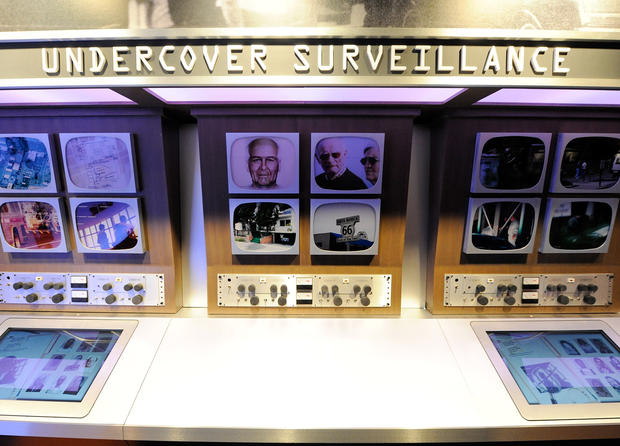
An exhibit about law enforcement surveillance is displayed at The Mob Museum February 13, 2012 in Las Vegas, Nevada.
Ethan Miller/Getty Images
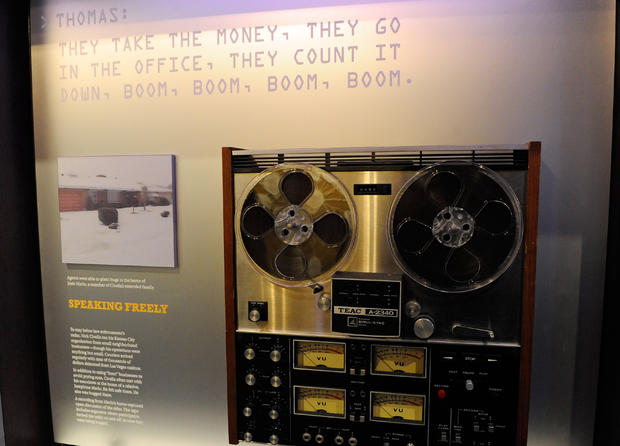
An exhibit about wiretapping is displayed at The Mob Museum February 13, 2012 in Las Vegas, Nevada.
Ethan Miller/Getty Images
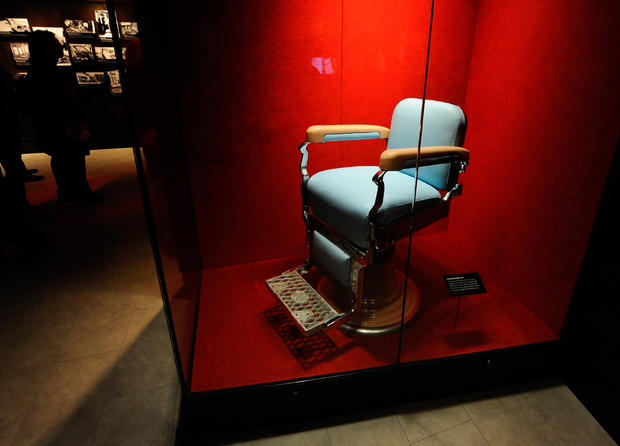
The barber chair from the Park Sheraton Hotel in New York in which Gambino crime family boss Albert Anastasia was murdered is displayed at The Mob Museum February 13, 2012 in Las Vegas, Nevada.
Ethan Miller/Getty Images
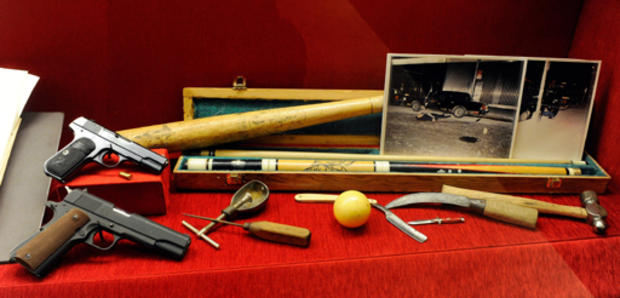
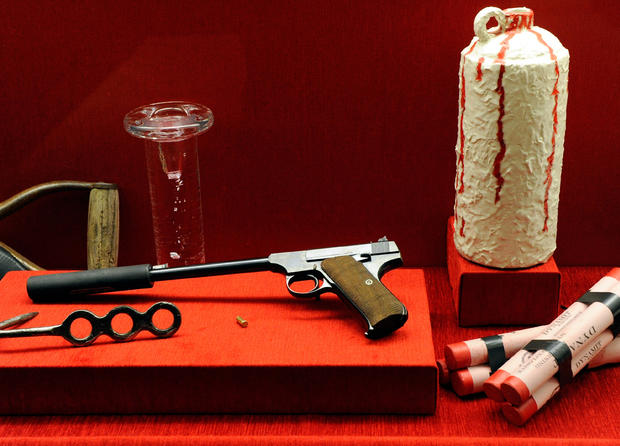
Weapons associated with organized crime are displayed at The Mob Museum February 13, 2012 in Las Vegas, Nevada.
Ethan Miller/Getty Images
Weapons associated with organized crime are displayed at The Mob Museum February 13, 2012 in Las Vegas, Nevada.
Ethan Miller/Getty Images
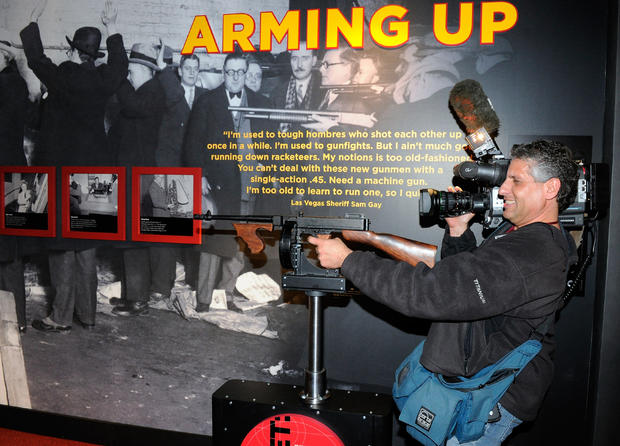
Television photojournalist Richard Gacovino films a Thompson submachine gun (or Tommy gun) simulation, during a preview tour for The Mob Museum, February 13, 2012 in Las Vegas.
Ethan Miller/Getty Images
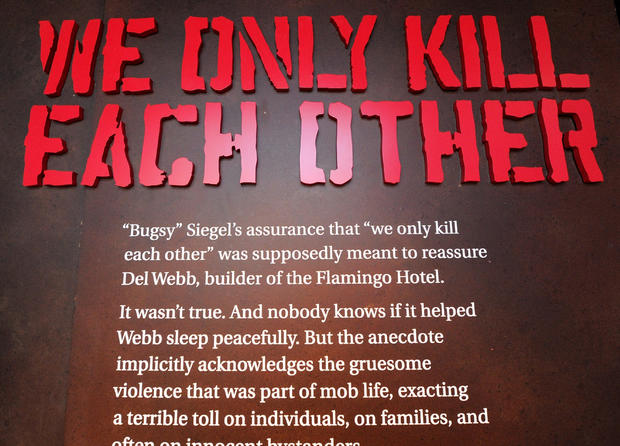
A sign at the entrance of an exhibit at The Mob Museum February 13, 2012 in Las Vegas, Nevada, states what was supposedly a mobster's creed.
Ethan Miller/Getty Images
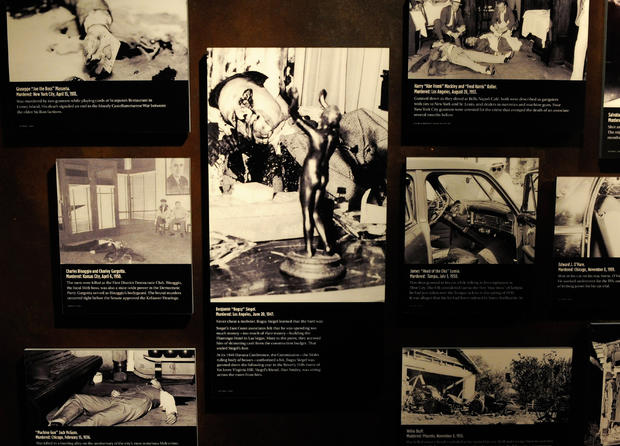
Benjamin "Bugsy" Siegel, who helped create Las Vegas as a gambling Mecca, is offered as graphic evidence of his own statement: "We only kill each other."
Images of Siegel's 1947 killing and other mob-associated murders are displayed at The Mob Museum.
Ethan Miller/Getty Images
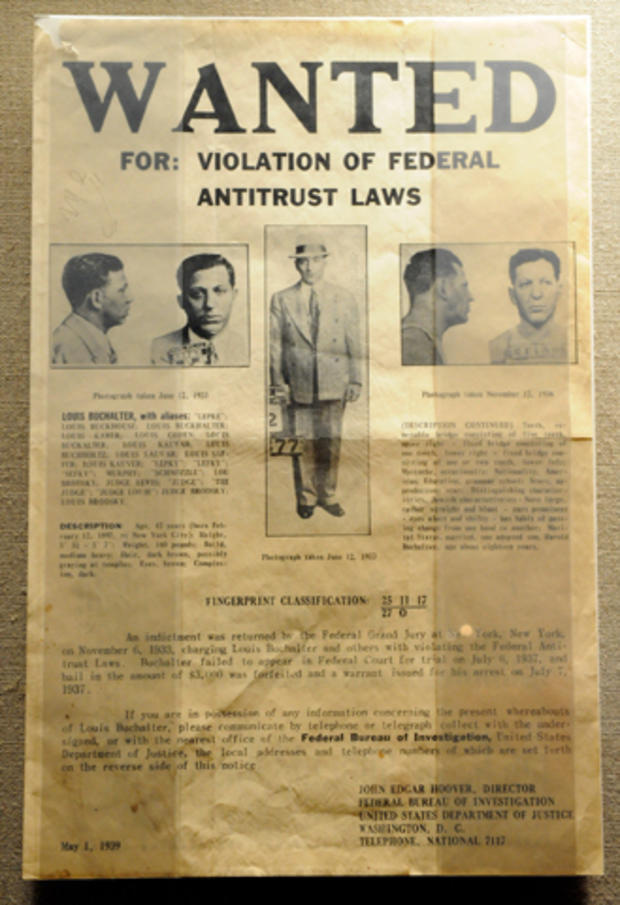
A Wanted poster for mobster Louis "Lepke" Buchalter (1897-1944), an underworld enforcer who ran "Murder Inc.," is displayed at The Mob Museum February 13, 2012 in Las Vegas, Nevada.
Ethan Miller/Getty Images
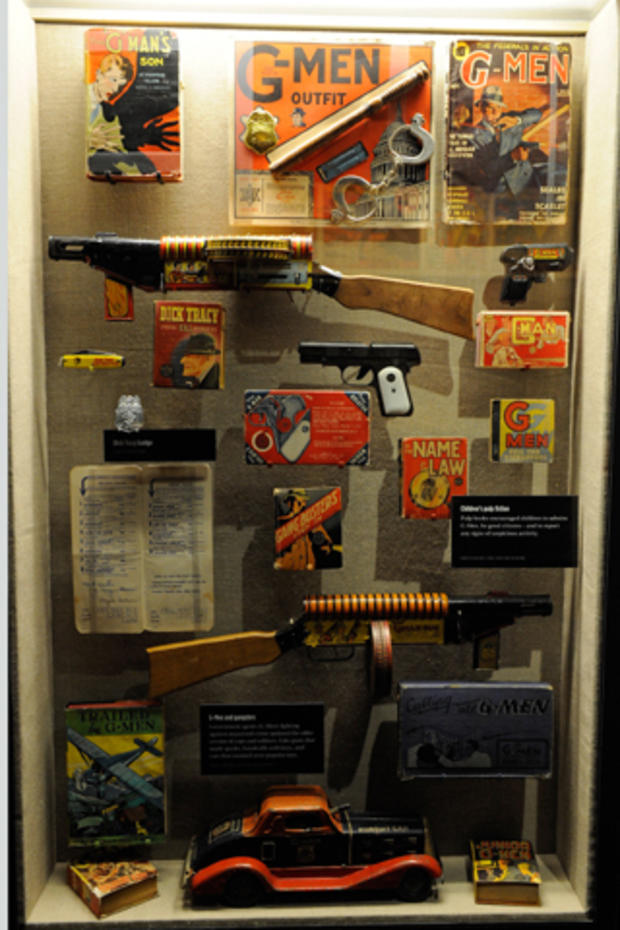
As organized crime grew in influence during and after Prohibition, the role of the FBI grew as well, with "G-Men" becoming fixtures of popular culture. Seen here is a display of law enforcement toys and books at The Mob Museum in Las Vegas, Nevada.
AP Photo/Isaac Brekken
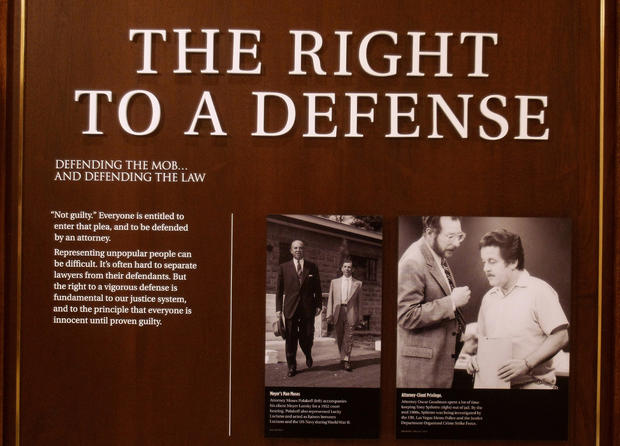
Oscar Goodman, a former mob lawyer, ex-Las Vegas mayor and a proponent of the Mob Museum, is highlighted in a display on the law. The undated photo on the right shows Goodman (left) with Anthony Spilotro.
AP Photo/Isaac Brekken
Reporter MaryAnn Martinez checks out an exhibit at The Mob Museum, dedicated to the mobsters that made this desert town.
AP Photo/Isaac Brekken
An Al Capone exhibit is seen at The Mob Museum on Monday, Feb. 13, 2012, in Las Vegas. Museum officials deny that they are sensationalizing the mob experience to sell tickets, which cost up to $18 each.