SS United States Conservancy
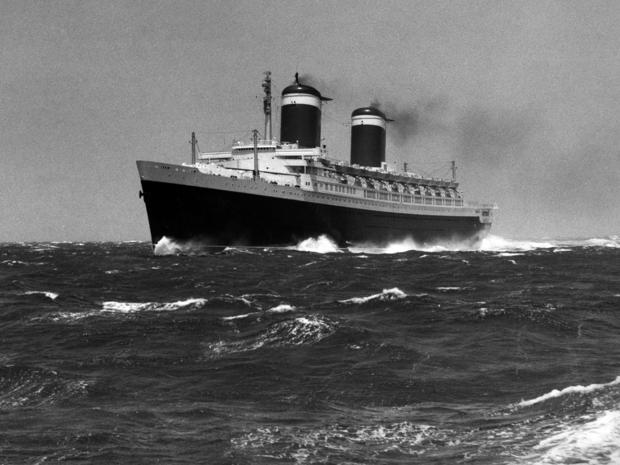
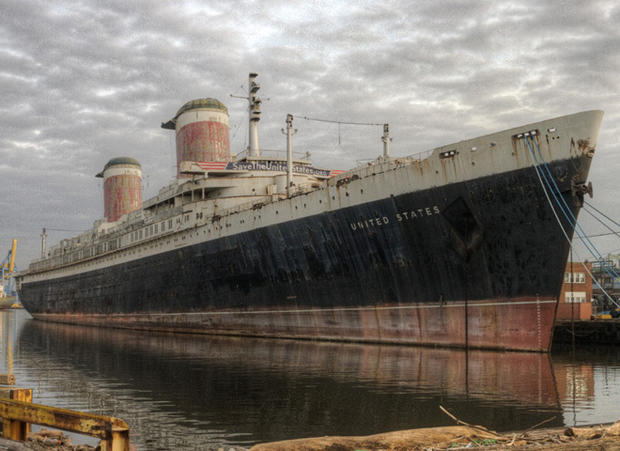
The famed superliner SS United States -- once heralded as "the greatest ship in the world" -- was the fastest, most technologically advanced ship of its day. Built in the early 1950s, it broke speed records for trans-Atlantic crossings that stand to this day, and became a proud standard-bearer of the United States Lines.
Now consigned to mothballs, conservators are trying to rescue her from the scrap yard.
SS United States Conservancy
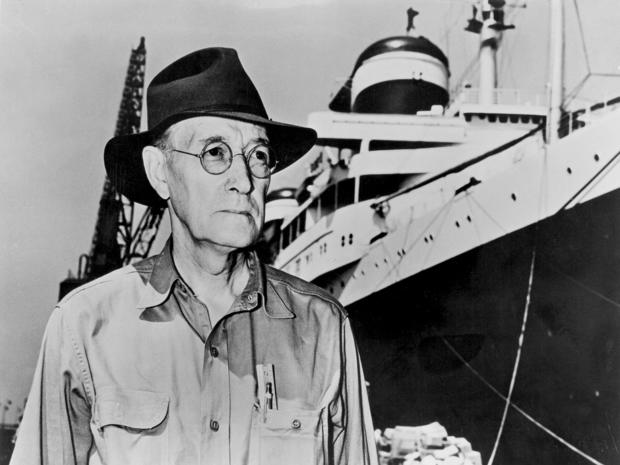
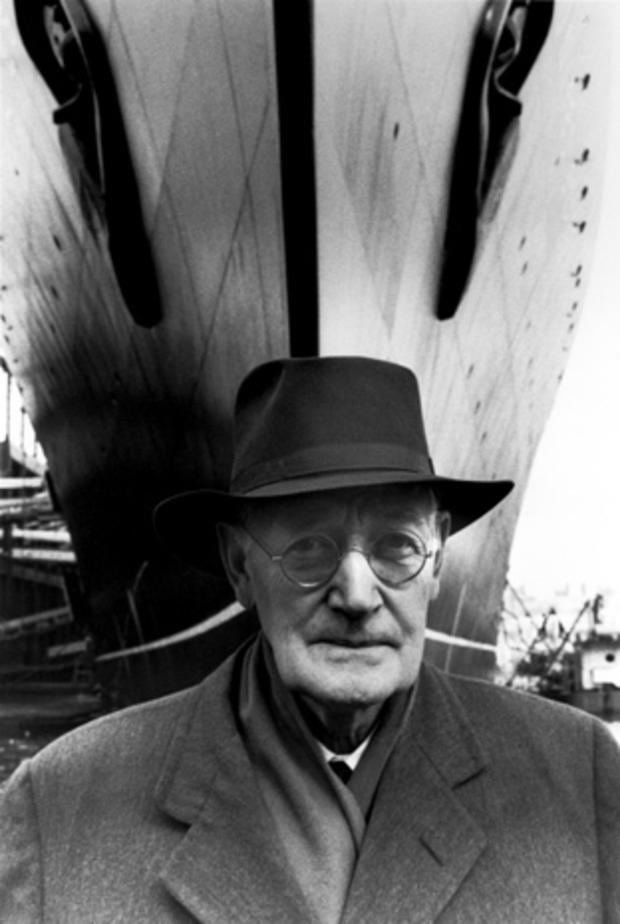
William Francis Gibbs, the designer of the SS United States, was a self-taught naval architect, a Harvard dropout with a single-minded devotion to his work. During World War II, three-quarters of U.S. naval vessels built were designed by Gibbs' shipbuilding firm -- from destroyers to "liberty ships" to the landing craft used on D-Day.
After the war, Gibbs poured everything he knew into one, ultimate ship.
SS United States Conservancy
Larger, faster, and far safer than the Titanic, the vessel could accommodate 2,000 passengers in high-style -- though if war broke out, she could be converted to carry 14,000 troops.
The design was so revolutionary it was classified.
CBS News
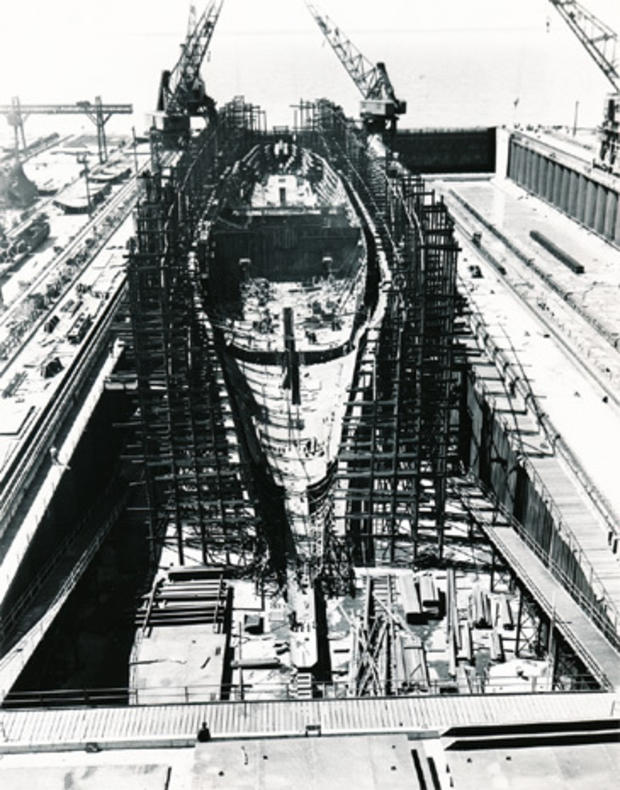
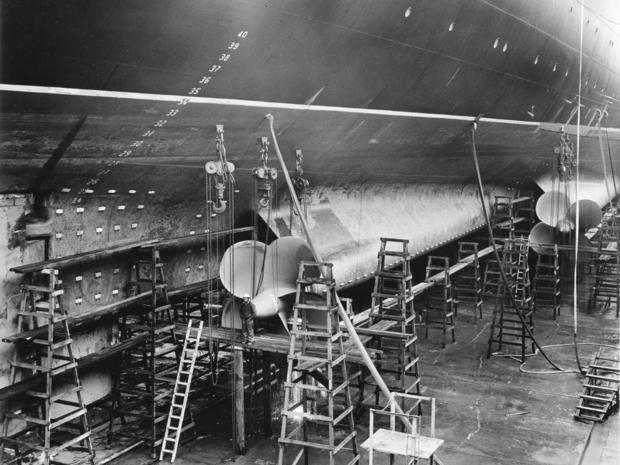
The ocean liner SS United States under construction in Norfolk, Va., 1950.
SS United States Conservancy
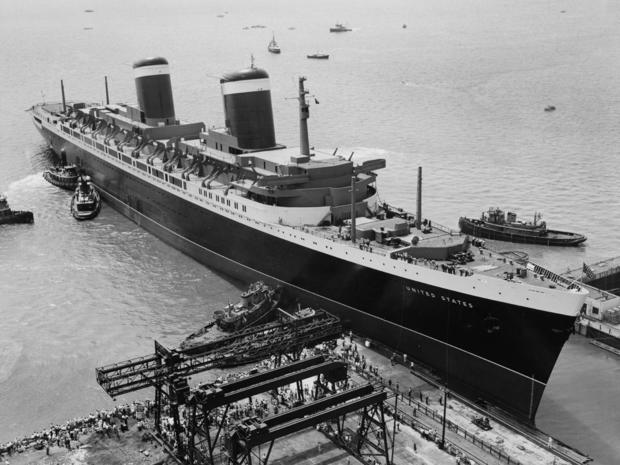
Beginning in 1950, the SS United States was built in just over two years at the Newport News Shipbuilding and Dry Dock Company under great secrecy.
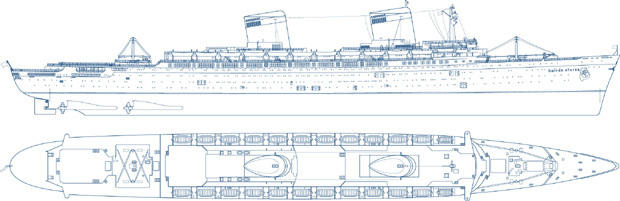
The ship was 990 feet long -- 100 feet longer than the Titanic -- with gross tonnage of 53,000.
SS United States Conservancy
The SS United States was fitted with four propellers (two four-bladed, and two five-bladed) for superior hydrodynamic performance. The design was overseen by a pioneering female engineer, Elaine Kaplan.
The ship's steam turbines generated 245,000 horsepower.
SS United States Conservancy
More aluminum was used in the SS United States than in any previous ship, contributing to its light weight and speed.
CBS News
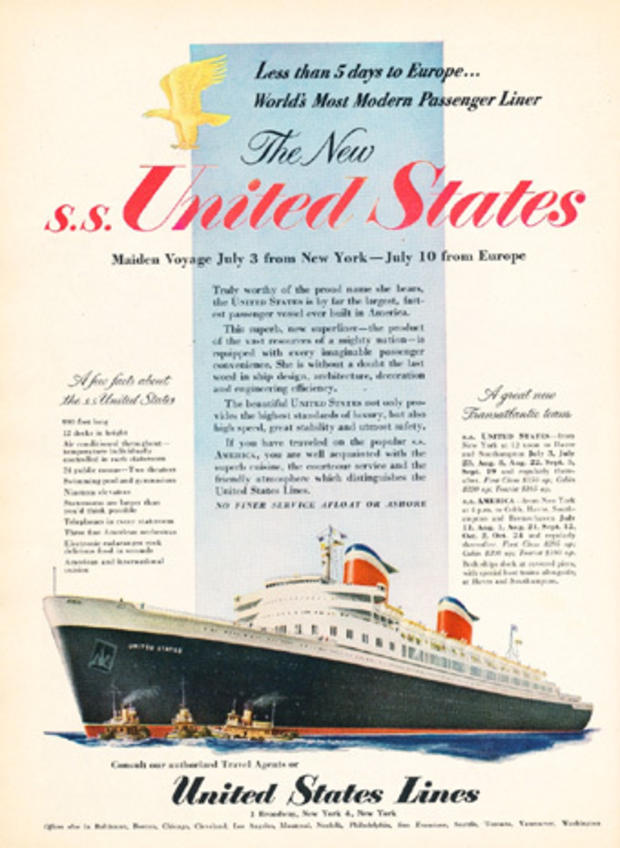
An ad for the maiden voyage of the SS United States.
SS United States Conservancy
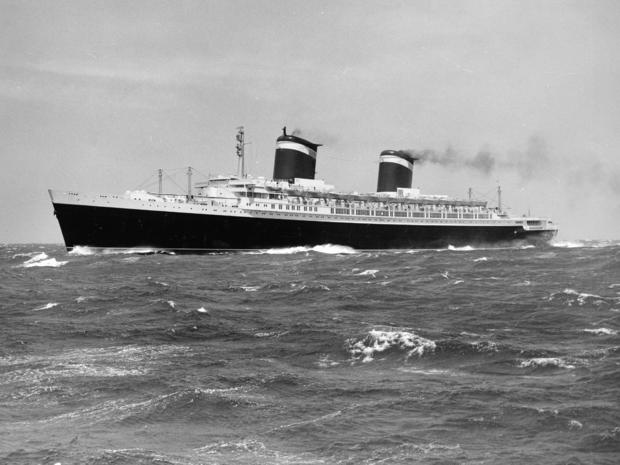
On her very first Atlantic crossing, in July 1952, the SS United States set the world's speed record: three days, ten hours and 40 minutes.
Her return time, from England to New York, remains unbeaten to this day.
S.S. United States Conservancy
"Imagine taking a structure the size of the Chrysler Building, turning it on its side, and pushing it through the Atlantic at 44 miles per hour," said author Steven Ujifusa. "That's a heck of a lot of engineering -- and on top of that, make it the most beautiful ship in the world."
SS United States Conservancy
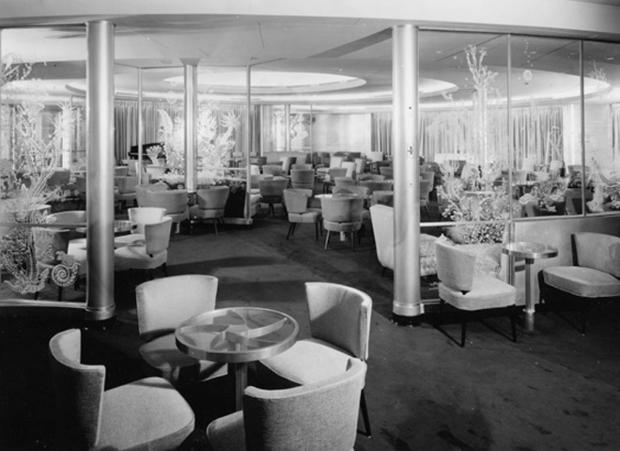
A view of the first class ballroom of the SS United States.
SS United States Conservancy
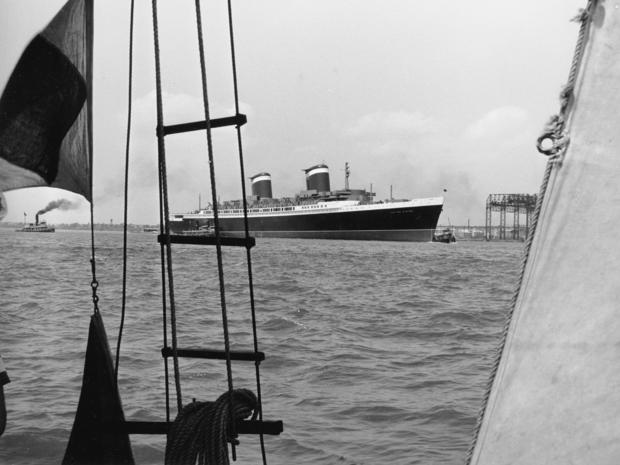
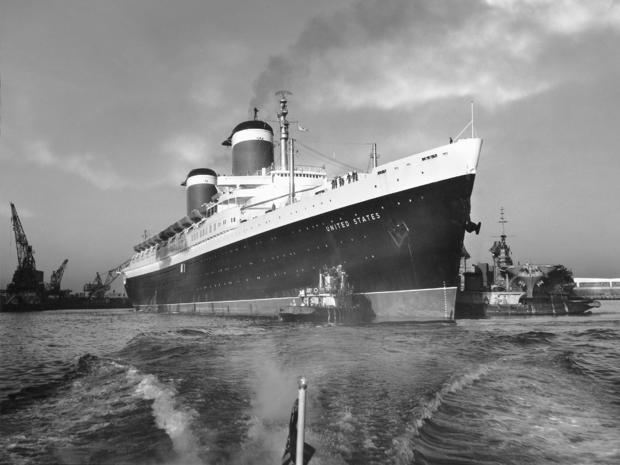
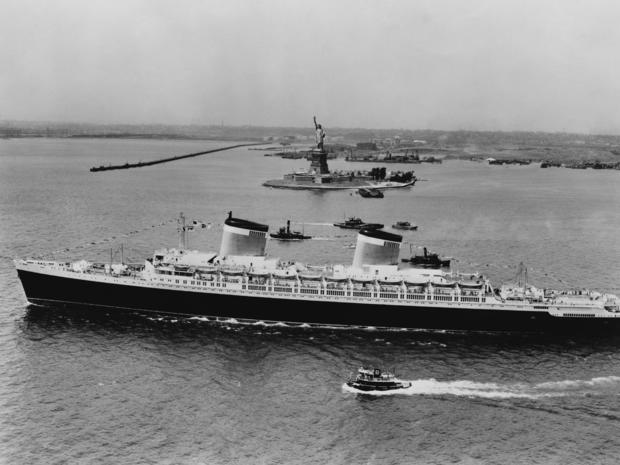
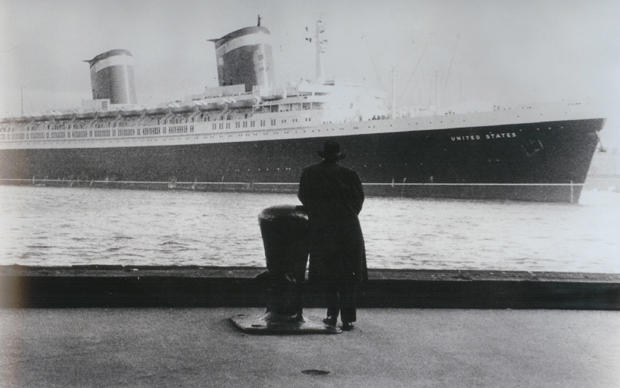
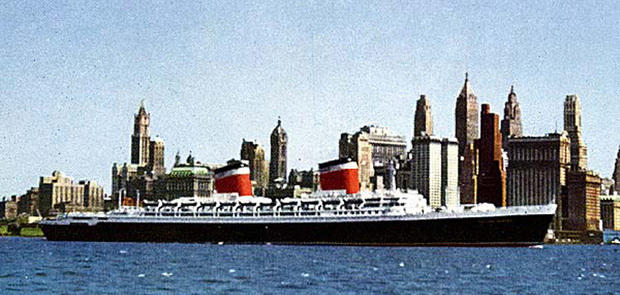
The SS United States in New York Harbor.
SS United States Conservancy
An undated photo of designer William Francis Gibbs in front of the SS United States.
SS United States Conservancy
Designer William Francis Gibbs before the SS United States in New York Harbor, c. 1955.
AP Photo
The SS United States cruise ship in seen in New York City harbor, June 1, 1962.
"This is the most famous ship that didn't sink," said Susan Gibbs, executive director of the SS United States Conservancy. "We all know the Titanic and this spectacular, maiden voyage catastrophe. This ship is famous for many of us, precisely because she did her job."
AP Photo/Bob Misewich
Yet no ship could compete with the rise in jets, which cut trans-Atlantic travel time to six hours. In 1969, the S.S. United States was moth-balled, and in 1984, her fittings were auctioned off.
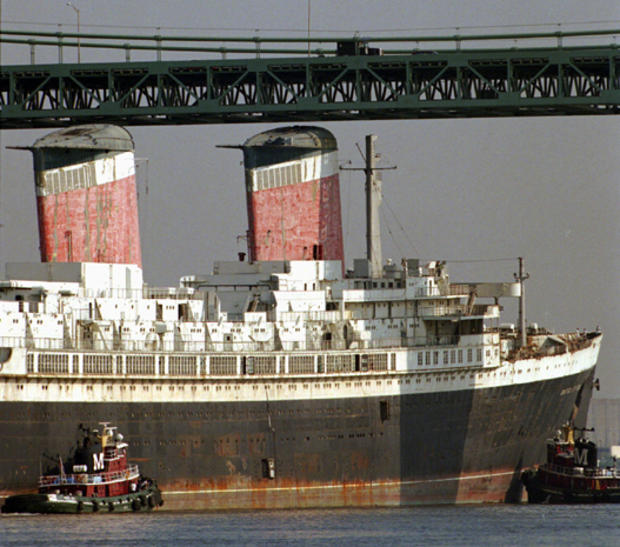
Left: The SS United States slips under the Walt Whitman bridge in Gloucester City, N.J., as it heads up the Delaware River to Philadelphia's Pier 96 on Thursday, August 15, 1996. Five tugs pushed the ship up the river at low tide. It was a tight squeeze under the bridge -- the smokestacks of the 150-foot-high ocean liner cleared the bottom of the span by about five feet.
SS United States Conservancy
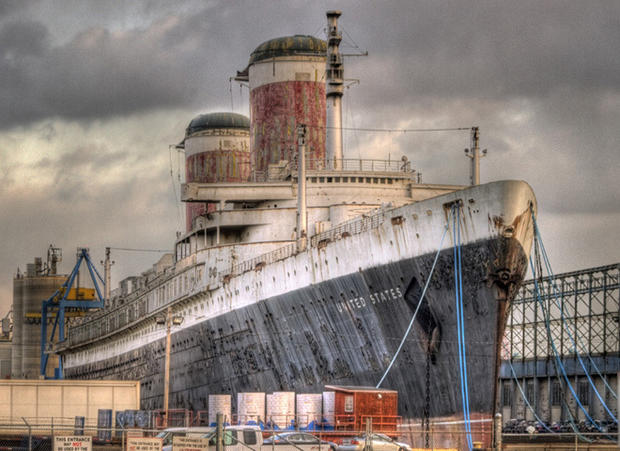
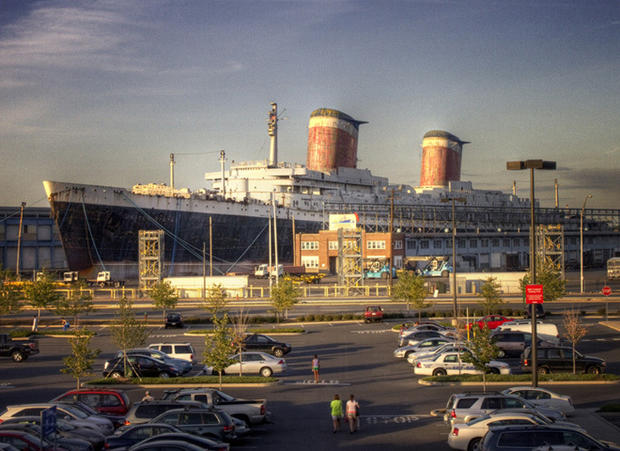
The SS United States, seen moored in Philadelphia.
SS United States Conservancy
The SS United States Conservancy is searching for a final home port, where she can be converted to a museum, hotel and conference center. The estimated price tag: $150 to $300 million.
SS United States Conservancy
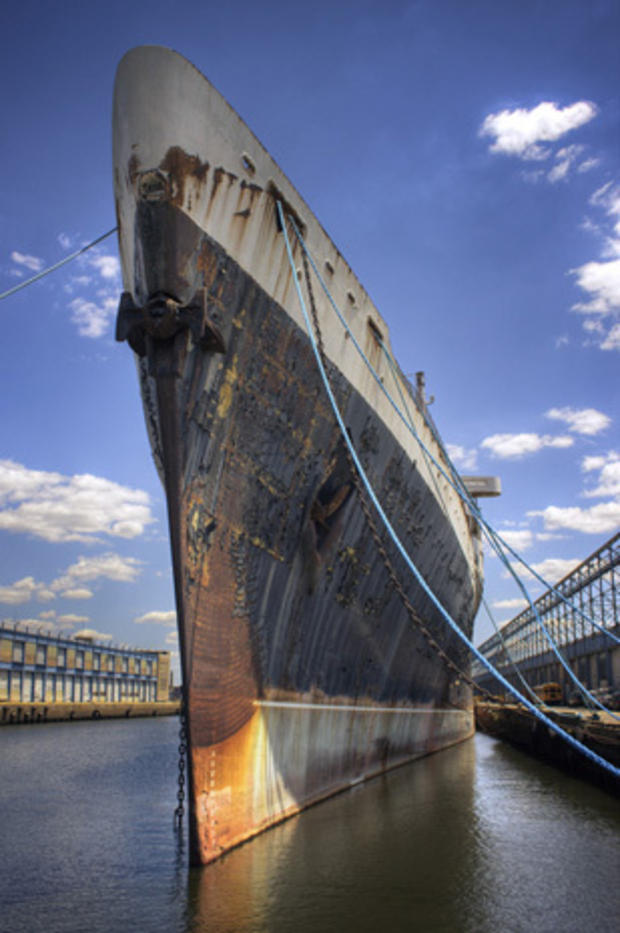
But the clock is ticking: With future funding uncertain, the ship remains in constant danger of being sold for scrap.
AP Photo/Brynn Anderson
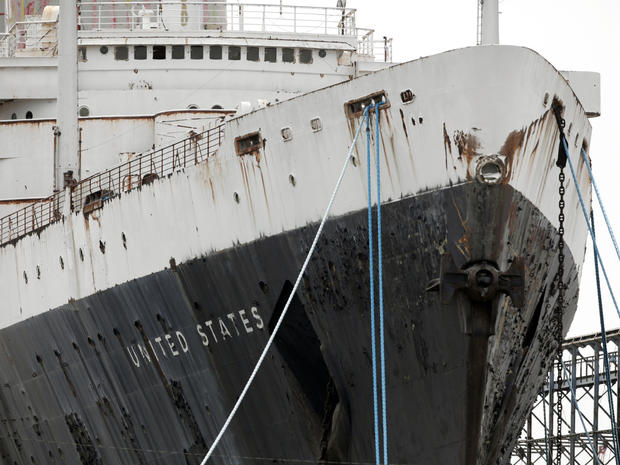
The SS United States is seen moored on the Delaware River, in Philadelphia, July 9, 2012. Caretakers for the legendary ocean liner are renewing and expanding their distress call for the beleaguered piece of American maritime history.
SS United States Conservancy
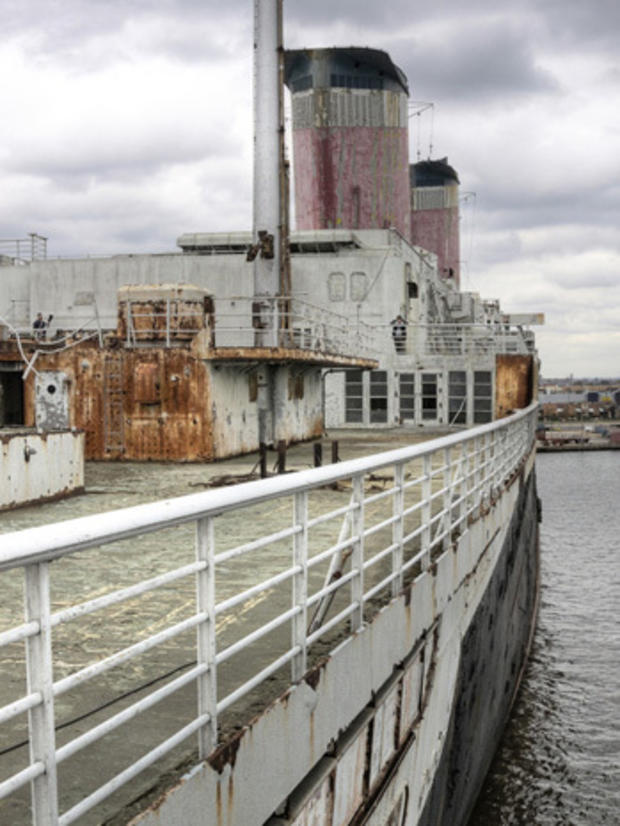
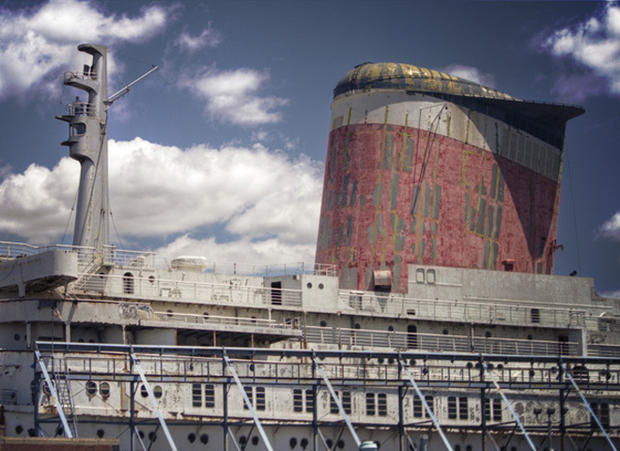
The SS United States at rest in Philadelphia. The ship's funnels -- the tallest ever installed on a ship, as high as a six-story building -- were slanted sharply backwards, giving the impression of speed.
AP Photo/Brynn Anderson
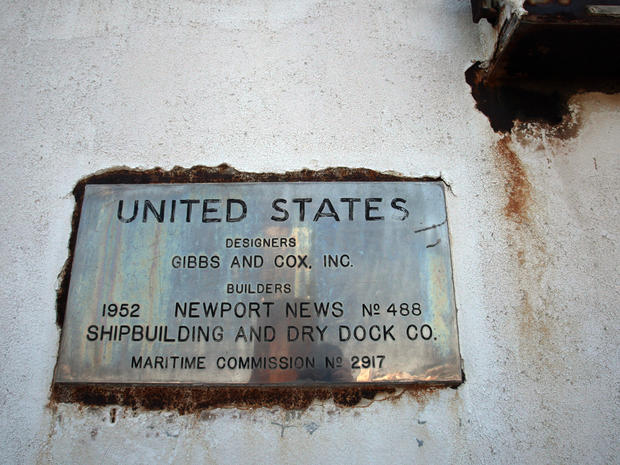
Rust collects around a plaque on the SS United States, in Philadelphia, June 25, 2012.
AP Photo/Brynn Anderson
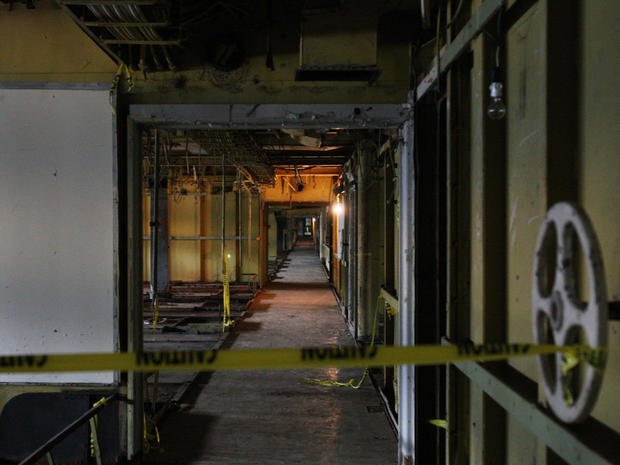
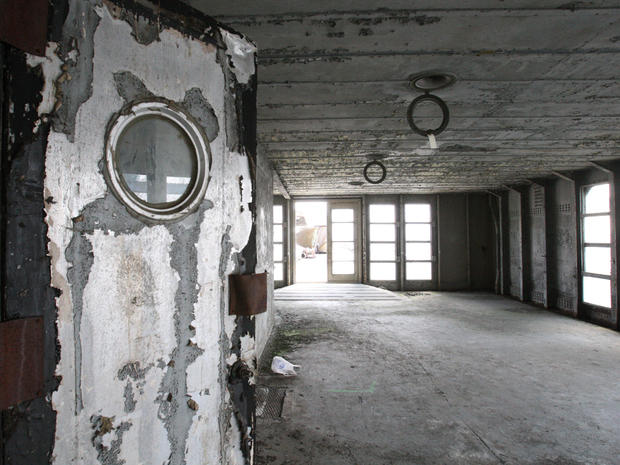
The SS United States ship's interior first class hallway is seen in Philadelphia, June 25, 2012.
AP Photo/Brynn Anderson
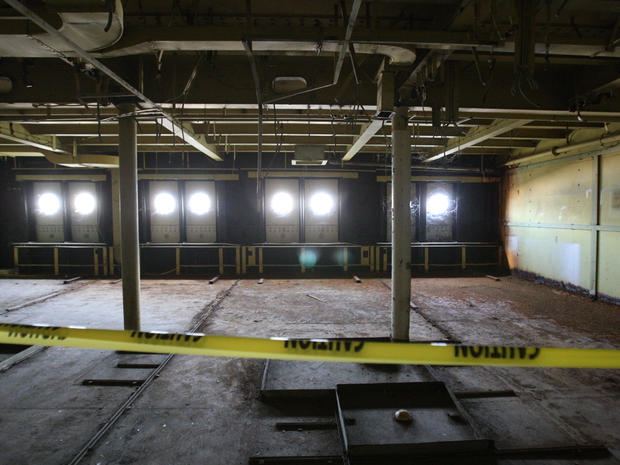
The SS United States' interior is seen in Philadelphia, June 25, 2012.
AP Photo/Brynn Anderson
The SS United States' promenade deck is seen, in Philadelphia, June 25, 2012.
SS United States Conservancy
"It's going to take people of imagination," SS United States memorabilia collector Charles Howland said. "It's going to take political will, and it's going to take money. We, as a nation, should be able to save our best ship, and she is our best ship. We should be able to celebrate her."