Justin Sullivan/Getty Images
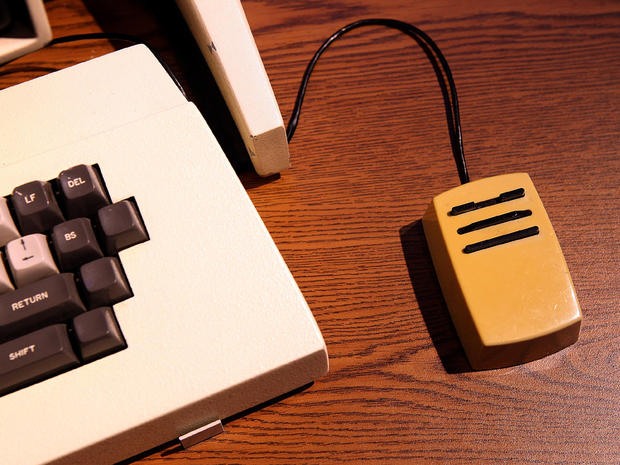
A vintage mouse is seen in a display featuring the Xerox Alto personal computer, at the Computer History Museum on January 19, 2011 in Mountain View, Calif.
Originally created in 1964, the computer mouse has evolved through several iterations, from a mechanical device using balls and wheels to optical and laser-guides interfaces, from corded to wireless. But the constantly-changing world of personal devices may one day make these handy tools obsolete.
By CBSNews.com senior producer David Morgan
Institute of Electrical and Electronic Engineers (IEEE)
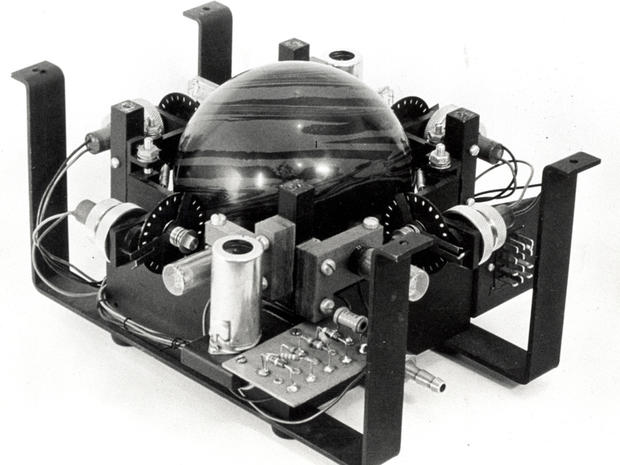
In 1952 a trackball was developed for the Royal Canadian Navy for use as an interface for the Navy's DATAR (Digital Automated Tracking and Resolving) system, linking computers with communications in a tactical battlefield information system.
The trackball became a key component of a mechanical computer mouse.
Left: Prototype of the DATAR trackball.
SRI
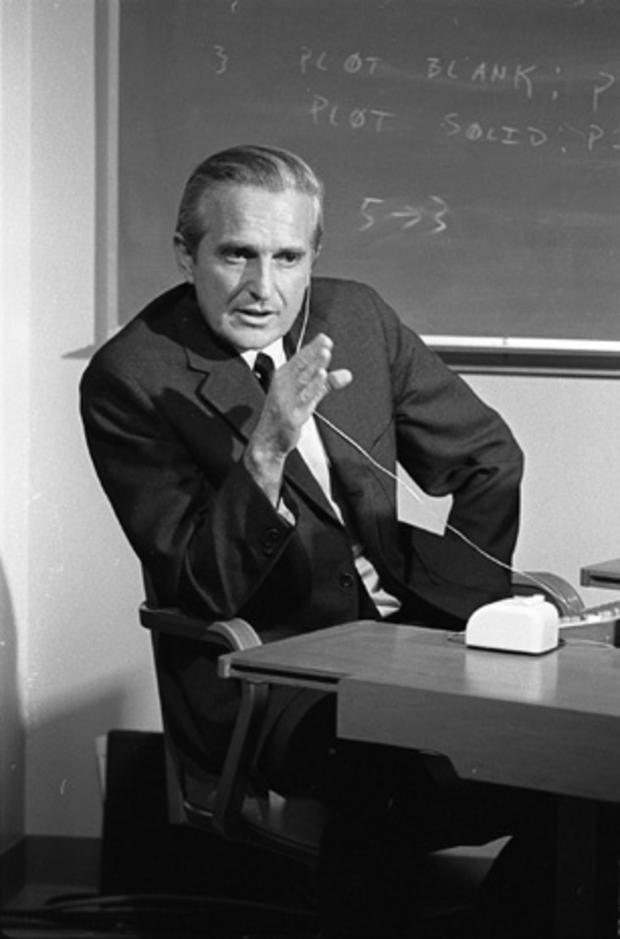
Scientist and inventor Douglas Engelbart (1925-2013) directed the Augmentation Research Center lab at Stanford Research Institute (now SRI International), and was a senior scientist at Tymshare and McDonnell Douglas. Engelbart developed such computer innovations as display editing, graphic interfaces, cross-file editing, hypermedia and groupware, but he is best-known as the father of the computer mouse.
Left: Engelbart prior to a 1968 public demonstration on the use of a mouse as a computer interface.
Getty Images
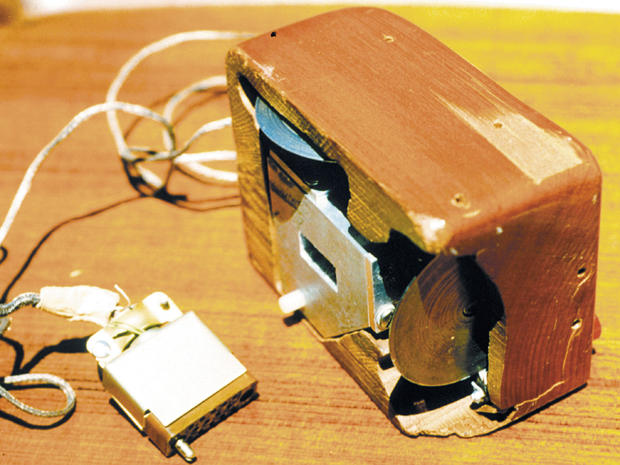
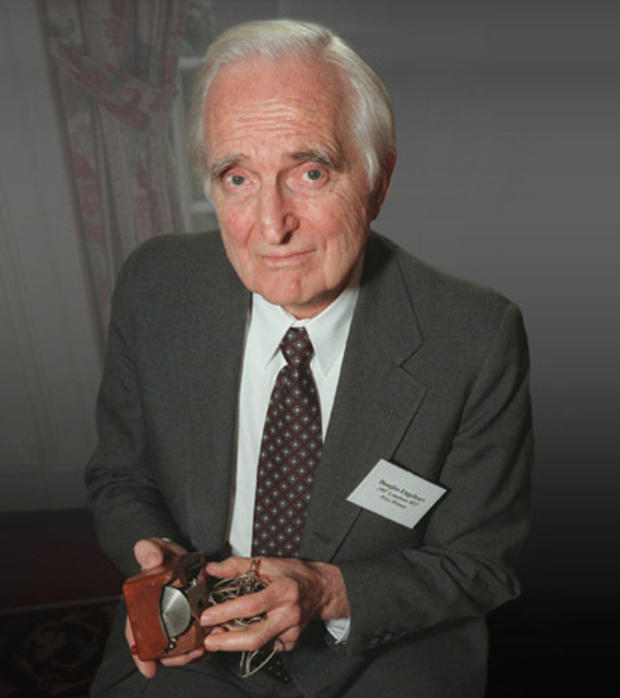
Engelbart here shows off the prototype computer mouse, built by SRI's Bill English in 1964 as part of an experiment -- a wood-encased "X-Y Position Indicator For A Display System," as it was called at the time.
"It was no great shakes, the invention," Engelbart said. "It was just putting things together that were already known."
Getty Images
An early design of a computer mouse by Douglas Engelbart.
Scott Ard/CNET
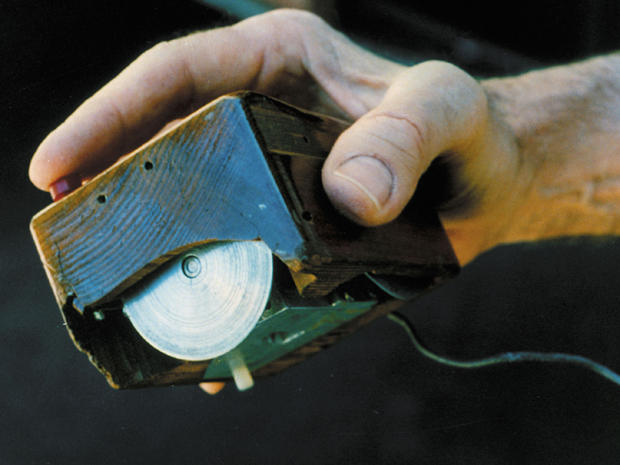
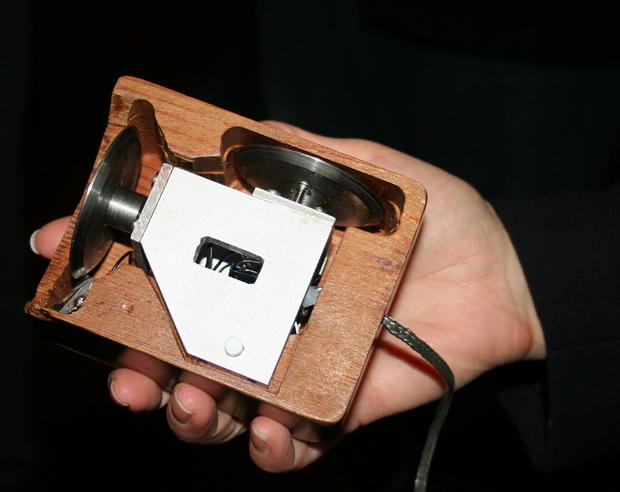
The underside of the prototype computer mouse.
Scott Ard/CNET
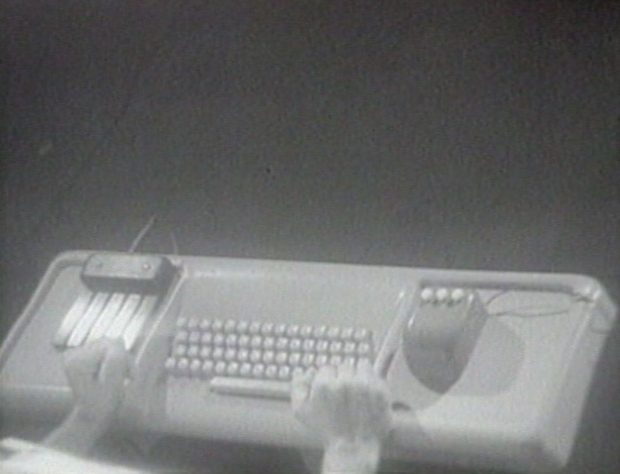
In a December 9, 1968, demonstration (later dubbed "The Mother of All Demos") given by Doug Engelbart and fellow researchers at the Stanford Research Institute (SRI), a view of the future of computing was offered, including the use of a computer mouse, keyboard, and a "keyset" (far left) that could input characters.
Clicking once on the mouse button selected a word on the screen by placing an arrow underneath it; a second click would execute a delete command.
SRI
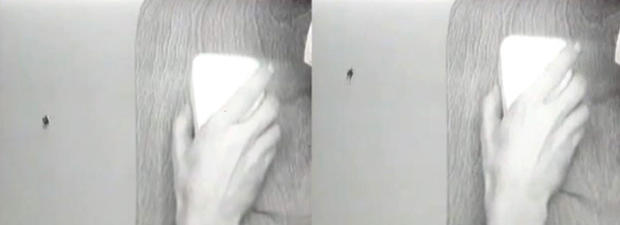
Engelbart explained how a cursor point would track the movements of a mouse made by the computer's operator.
"I don't know why we call it a mouse, sometimes I apologize," Engelbert admitted during the demonstration. "It started that way and we never did change it."
Flickr,Wikipedia/Marcin Wichary
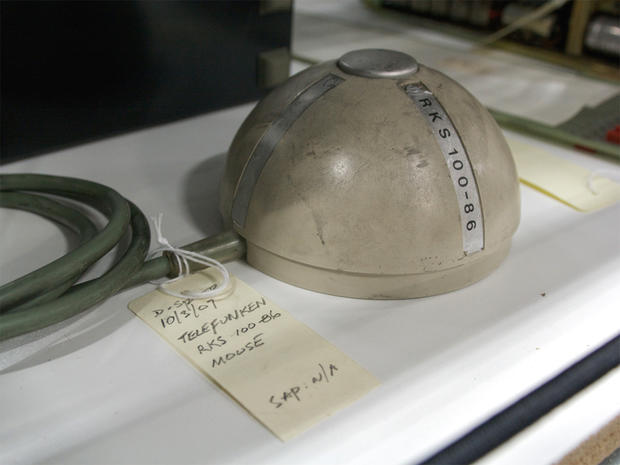
The 1968 "Rollkugel" rolling-ball mouse, built by the Germany company Telefunken for their TR-440 computer.
Google Patents
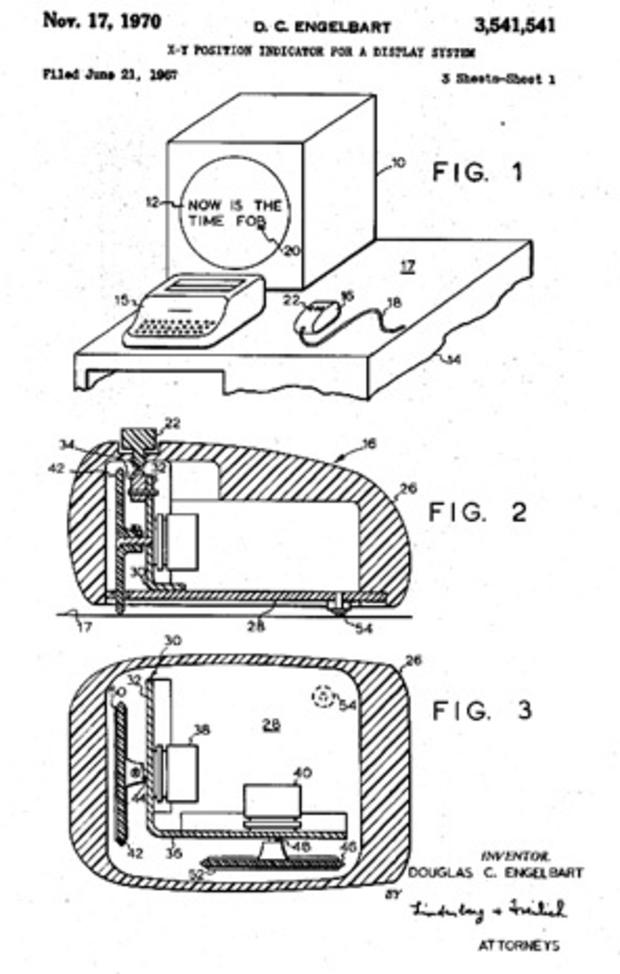
Doug Engelbart won a patent for his mouse in 1970, but he never made a fortune off it. By the time the mouse became commonplace in the late 1980s, his patent's 17-year-life span had expired.
Copyright Mark Richards/Computer History Museum
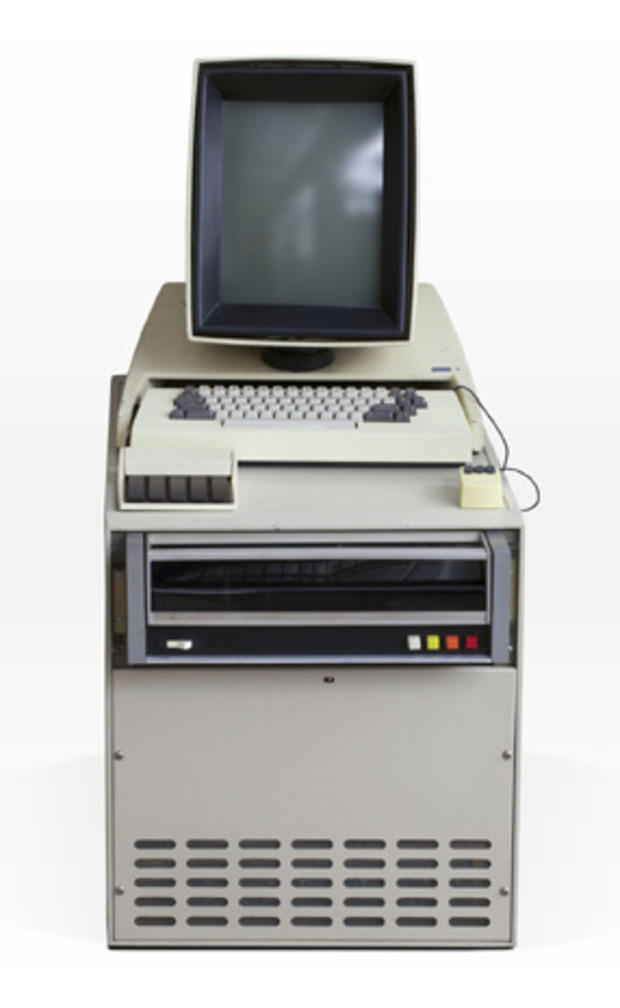
Left: The Xerox Alto system (1973) combined a three-button mouse with a bit-mapped video display, graphics software, removable 2.5 MB memory disks, and networking capability.
The ball mouse supplied with Alto used light-reading sensors to detect the directional movement of the trackball.
AP Photo
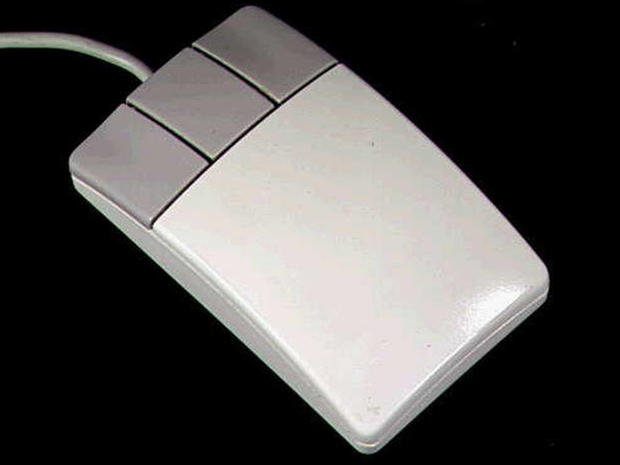
A three-button mouse.
Smithsonian Institution
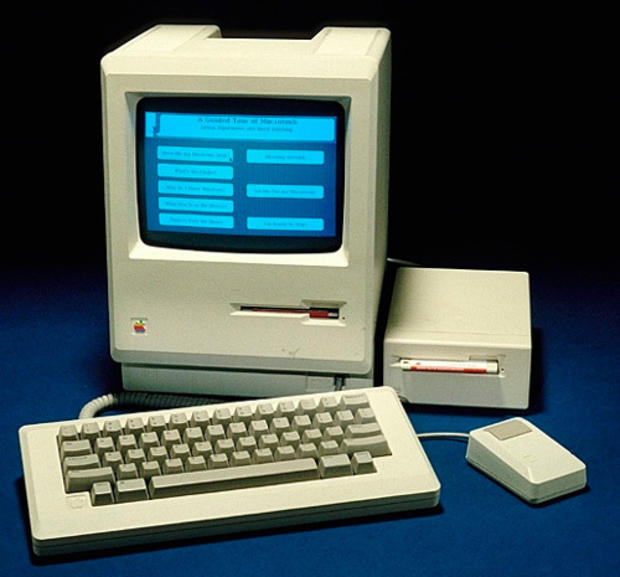
The 1984 Macintosh by Apple.
In a review published by the San Francisco Examiner, John Dvorak wrote, "The Macintosh uses an experimental pointing device called a 'mouse'. There is no evidence that people want to use these things."
AP Photo
A trackball for the iMac, 1999.
Mark Wilson/Getty Images
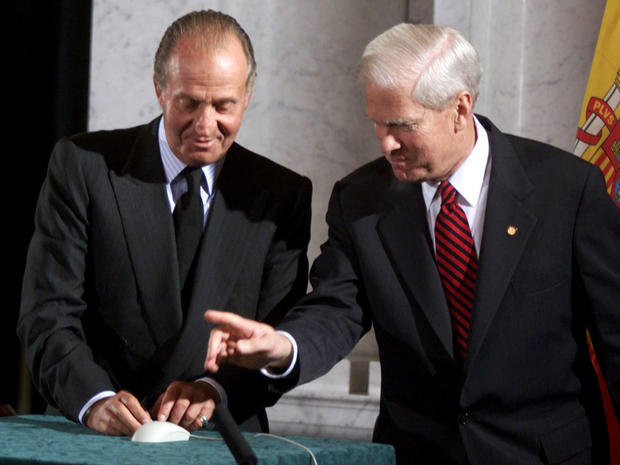
Librarian of Congress James H. Billington (right) instructs King Juan Carlos of Spain in the proper use of a computer mouse, during the King's visit to the Library of Congress in Washington D.C., February 24, 2000.
TIMOTHY A. CLARY/AFP/Getty Images
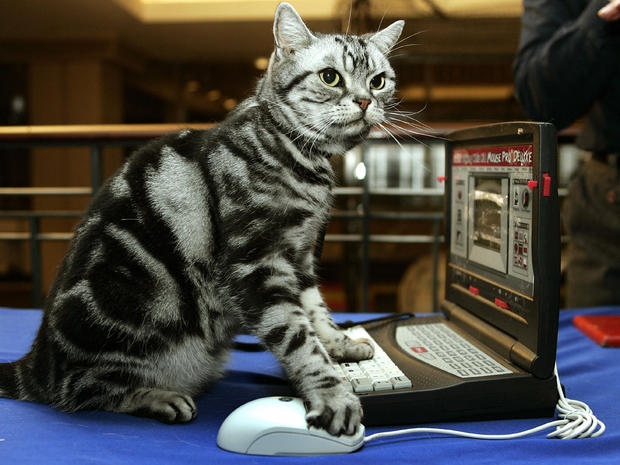
Maverick, an American Short Hair Silver Classic Tabby, plays with a computer mouse and laptop at the 4th Annual CFA Iams Cat Championship, October 11, 2006, at Madison Square Garden.
JUNG YEON-JE/AFP/Getty Images
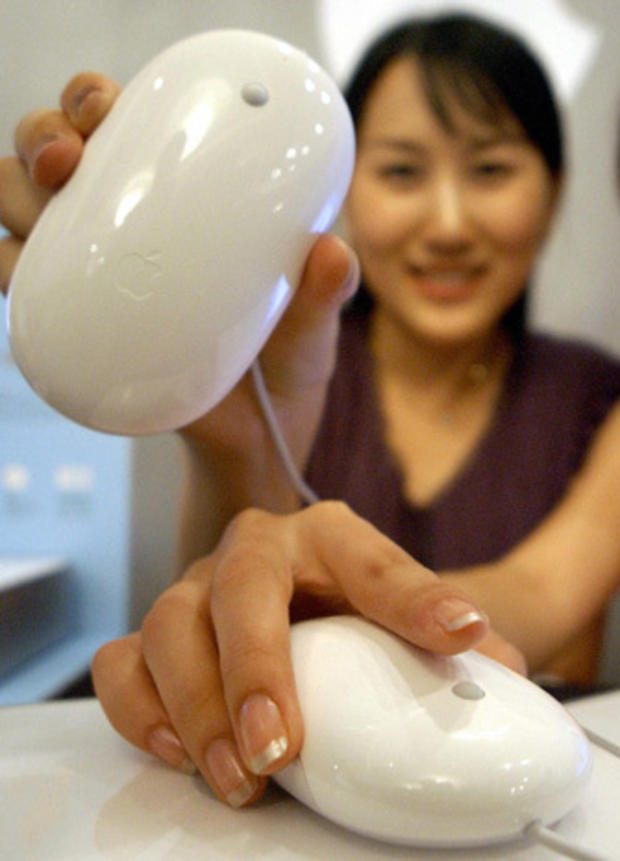
A woman shows new Apple Computer mouses during a sales promotion in Seoul, August 18, 2005. Apple Computer Korea began selling the new "Mighty Mouse" products with left, right and side buttons and a scroll ball.
Spencer Platt/Getty Images
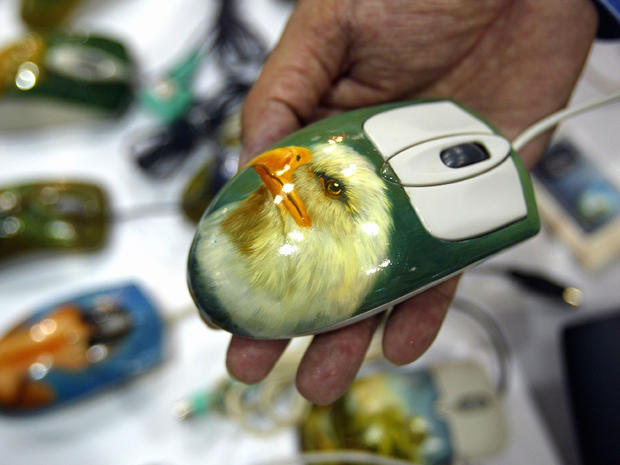
A handcrafted, oil-painted computer mouse from Innovation Technologies is displayed October 5, 2004 at the TECHXNY show in New York City.
Kensington Technology Group
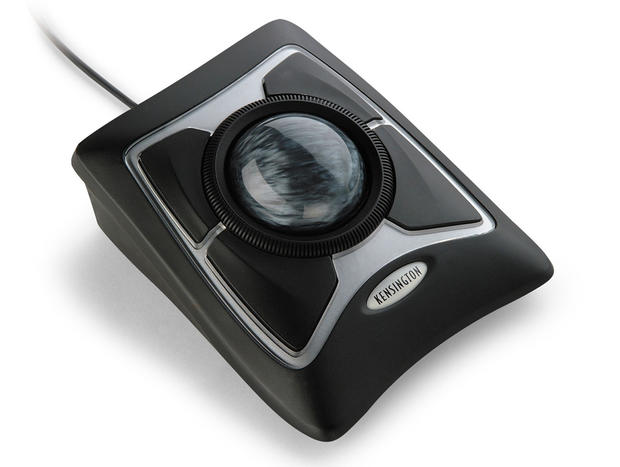
The Kensington Expert Mouse trackball.
AP Photo
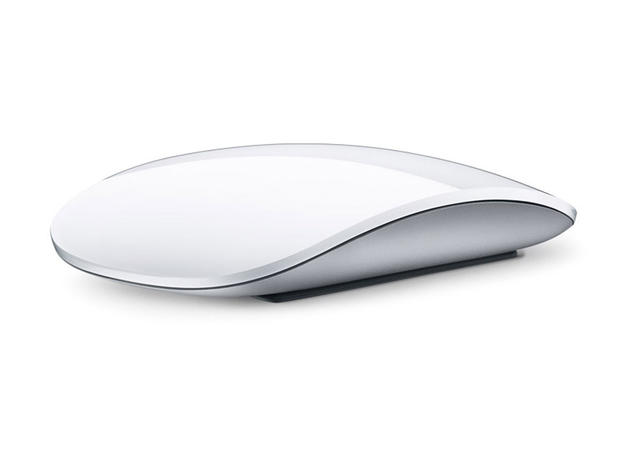
Apple's button-less, multi-touch Magic Mouse from 2009.
Logitech
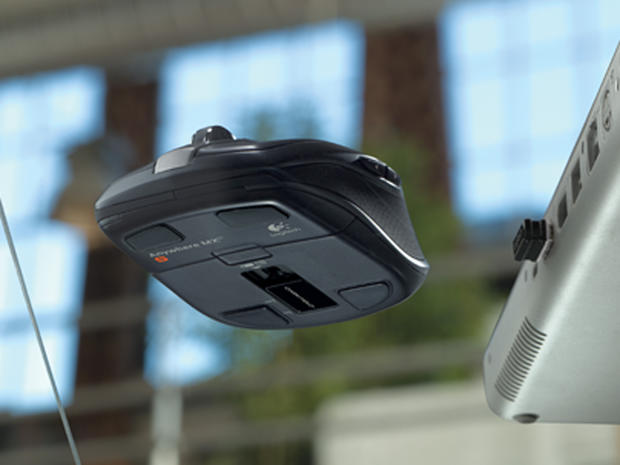
Left: The Anywhere Mouse MX by Logitech (a Swiss company that is a leading manufacturer of computer mice since the early 1980s) can detect the mouse's movement on a clear, smooth surface, including a glass desktop.
YOSHIKAZU TSUNO/AFP/Getty Images
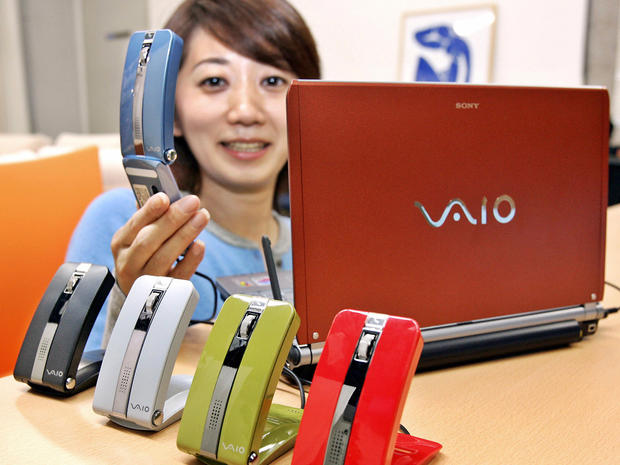
Sony employee Sayaka Komai displays a computer mouse dubbed the "MouseTalk," which functions both as laser-guided optical mouse and - when flipped open - as a Skype phone.
David Paul Morris/Getty Images
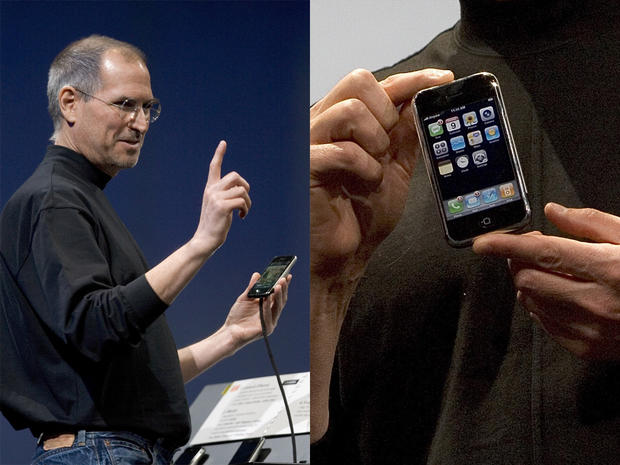
As tablets (such as the Apple iPad), ebook readers and smartphones became more prevalent, touch-screens became a more common means of interacting with devices than buttons, a stylus, or a mouse.
LEft: Apple CEO Steve Jobs delivers his keynote speech at Macworld on January 9, 2007 in San Francisco, California, during which he introduced the new iPhone. Eschewing a stylus, the iPhone uses a technology Apple calls "multi-touch."
"We're going to use a pointing device that we're all born with," Jobs said.
Manjunath Kiran/AFP/Getty Images
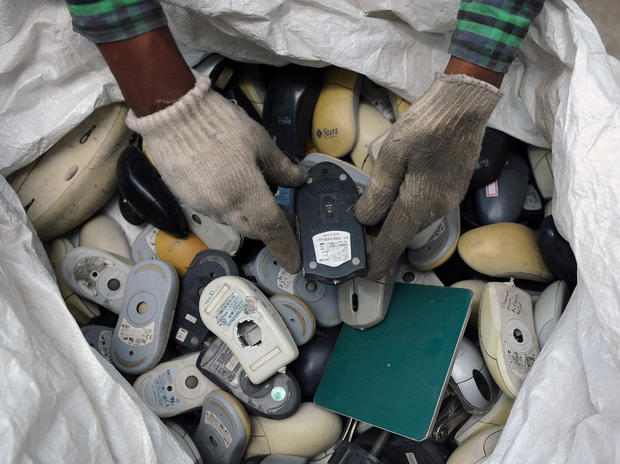
Left: An Indian worker sifts through a bag full of defunct computer mice prior to disassembly at Ash Recyclers, an e-waste management firm in Bangalore, June 5, 2013.
At least one billion mice (or is it "mouses"?) have been sold worldwide to date. But with changing technology, the future of the mouse is hardly guaranteed.
In January 2013, mouse-maker Logitech announced it was shifting its business to cater more toward the owners of tablets and smartphones.
That the mouse may eventually fade away would hardly surprise its inventor. "It's hard to believe it won't someday be obsolete," Doug Engelbart once said. "Everybody sort of thinks we're there, and we're just a little ways up a hill. There's *this* much to go."
Engelbart died Tuesday, July 2, 2013, at his California home. He was 88.