Popular Mechanics
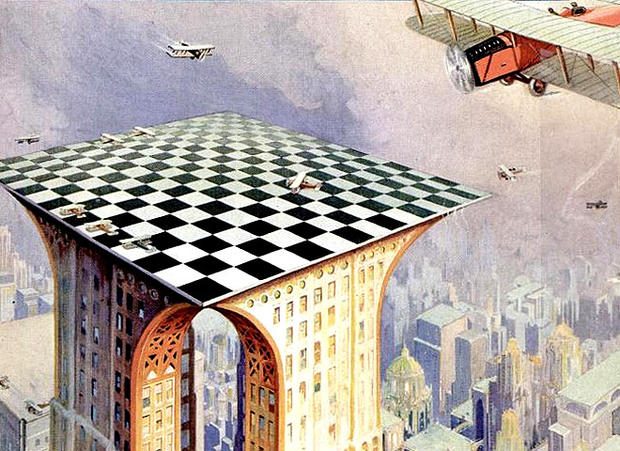
Left: A runway for airplanes on the tops of skyscrapers were foreseen in a 1926 issue of Popular Mechanics.
The magazine has been predicting the future for 111 years now. A lot of times they nailed it (flat-screen TVs, pocket calculators), and often didn't (pneumatic tube highways, grass as a supplement to food for humans, mail delivery by parachute).
The scientific publications of the early 20th century - as well as science fiction stories, movies, comic strips and other pop culture - were sometimes overly optimistic about what was technologically feasible in the coming decades, as well as what companies and consumers would demand, or tolerate.
By CBSNews.com senior producer David Morgan
Popular Mechanics
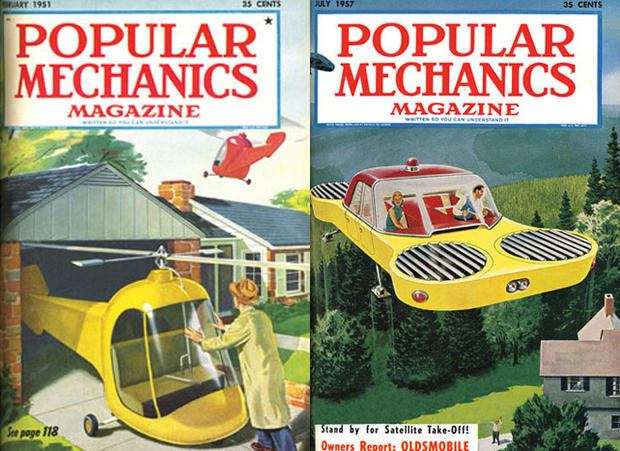
Personalized air travel, as predicted in 1950s issues of Popular Mechanics magazine. Flying cars still have not made it to America's skies (though a fender bender at 10,000 feet would be quite the horror).
Library of Congress
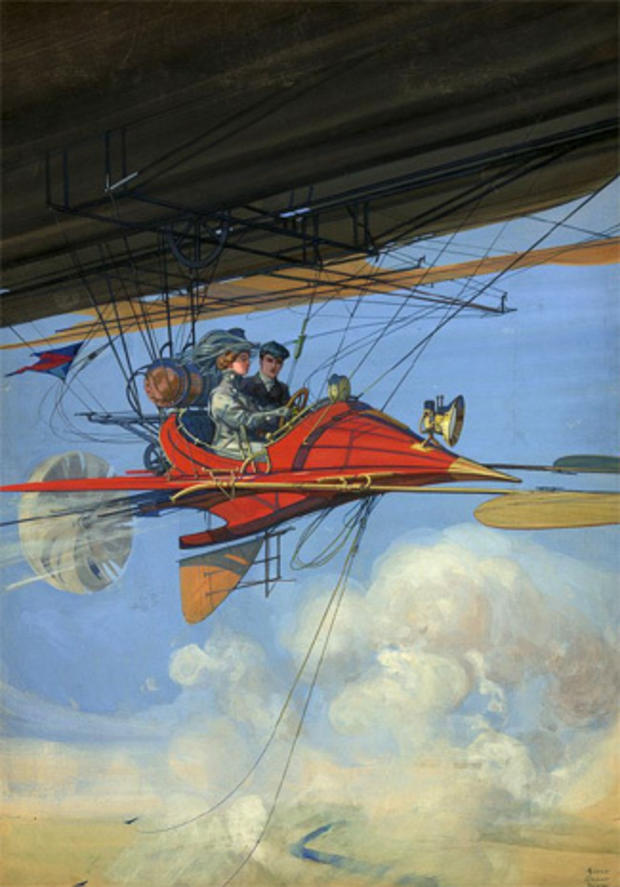
Futurist artist Harry Grant Dart (1869-1938) illustrated many stories of fantastic machines, such as this aircraft for the October 1908 magazine "The All-Story." Women had not yet gotten the vote, but they were driving, in the air!
20th Century Fox
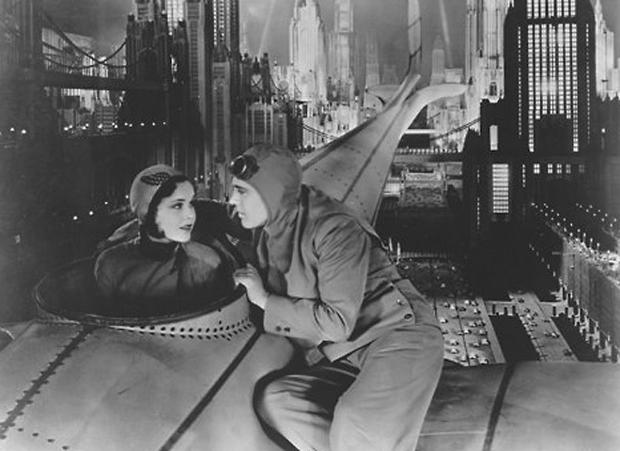
Just a few years after Fritz Lang's classic vision of the future, "Metropolis," 20th Century Fox produced "Just Imagine" (1930), a musical comedy which depicted life in the 1980s. Personal airplane plied the skies of New York; babies were born out of vending machines; and men traveled to Mars. Oh-for-three here.
CBS News
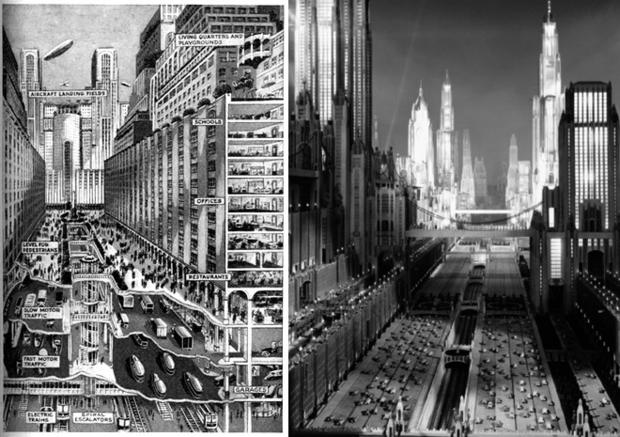
Popular Mechanics' 1928 vision of the "City of the Future" (left) featured many levels of pedestrian and motor traffic (including circular escalators!) and multi-use high-rises (with restaurants, offices and schools combined). At right: A similar metropolitan vista is seen in the film "Just Imagine."
National Library of France
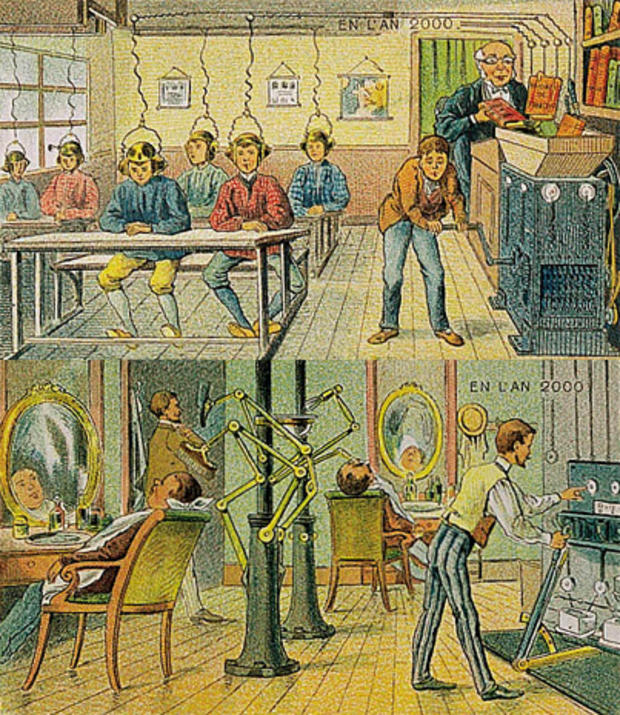
"Visions de l'an 2000" was a series of lithographs published in France in 1910 which foretold what life would be like at the turn of the 21st century.
Among the highlights: a school in which knowledge is telegraphically fed into students' brains; mechanical barbers; electric-powered roller skates; and machines centrally controlled by an architect which would construct a building without human labor.
Popular Mechanics
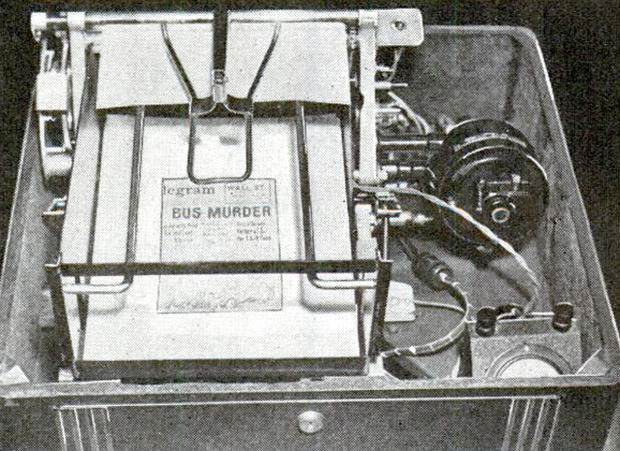
In 1938 Popular Mechanics predicted that radio signals would be used to transmit newspapers to home receivers, which would print facsimile editions every morning. No need for delivery boys!
The magazine also predicted "Newspapers that talk" by way of a soundtrack printed on the paper, which would allow readers to hear, for example, a murderer's confession.
Popular Mechanics
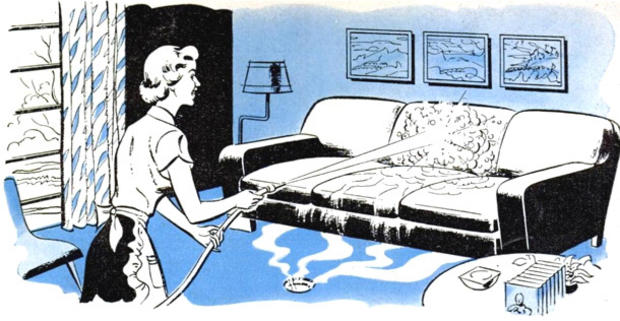
In February 1950 Popular Mechanics predicted what a household of the year 2000 would be like. In this illustration, a housewife (yes, there are still housewives) cleans simply by turning a hose onto furniture, rugs, draperies, floors -- all made of waterproof, synthetic fabrics and plastics. Water pours down a central drain, and a blast of hot air dries everything. Voila!
MoneyWatch
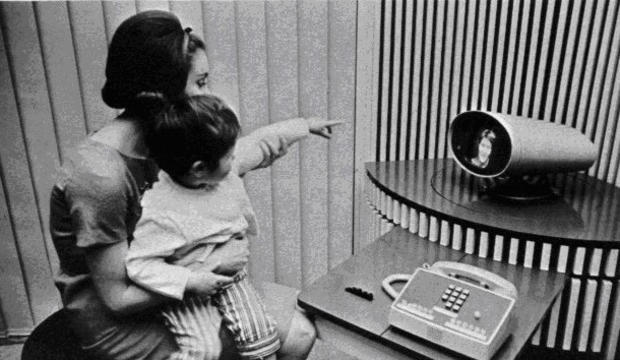
Video phones were forecast soon after the development of regular telephones, and usually mocked -- who'd want to answer a videophone after just coming out of the bath?
Bell Labs developed the PicturePhone in the late 1950s, and by 1963 it was available in the Chicago area. The units transmitted pictures and sound over existing phone lines but were expensive to operate -- and people still feared the prying eyes of the person on the other end of the line. The product never took off.
Getty Images: Junji Kurokawa, Patrick Baz
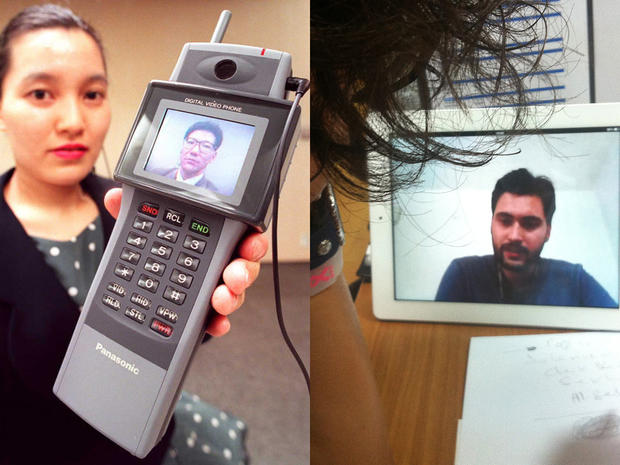
Videophones are actually an example of how, while the marketing of a consumer product can fail, other technology can be adapted to new use.
Although Bell Labs' PicturePhone failed, Matsushita's digital portable video phone (left) was a precursor to today's smartphones, which employ applications (like FaceTime) specifically written to turn the device into a videophone. Skype is also a program which can turn a personal computer with an attached camera into a two-way videophone.
Popular Mechanics; AP/Air Race Pilots Association, Jason Boule
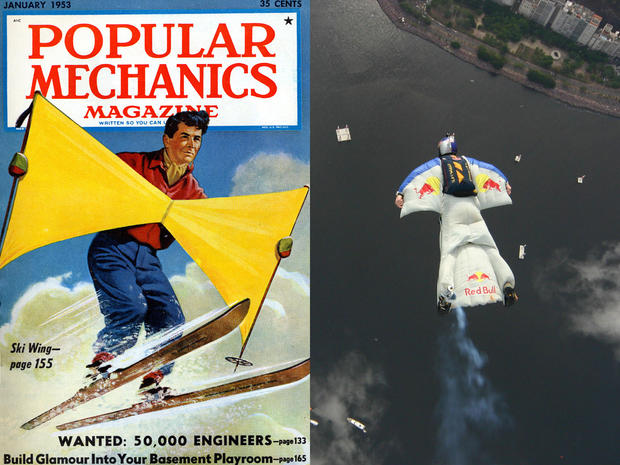
Left: An Austrian inventor's "ski-wing" was intended to help skiers leap effortlssly over obstacles and increase speed.
Right: Switzerland's wingsuit flyer Ueli Gegenschatz approaches Botafuogo Bay to open the "Red Bull Air Race World Series 2007" in Rio de Janeiro, Brazil, Saturday, April 21, 2007.
CBS News
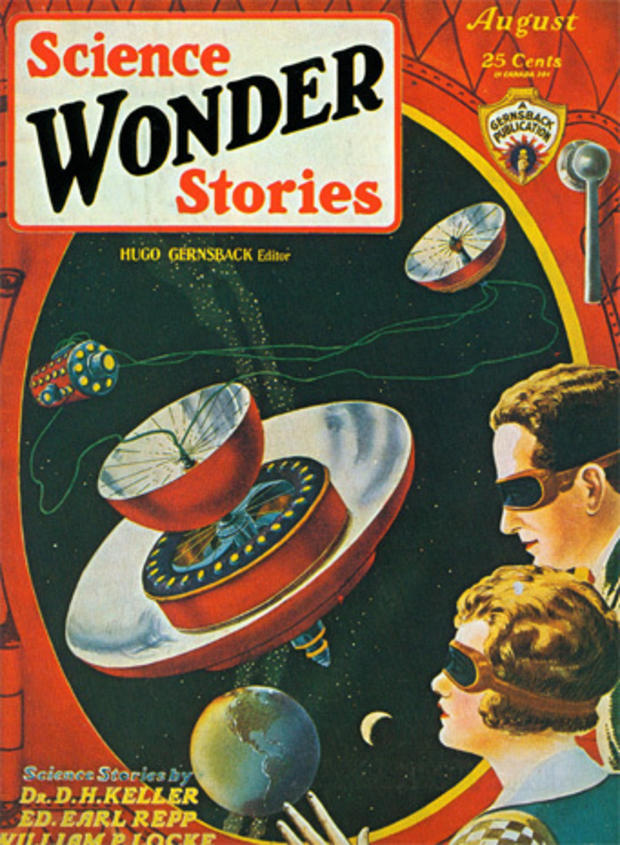
As a writer, editor and publisher of science and science fiction magazines (including Science Wonder Stories and Amazing Stories), Hugo Gernsback was hugely instrumental in promoting science fiction as a literary genre. He published works by such authors as Isaac Asimov, Ray Bradbury, Robert Heinlein, Ursula K. Le Guin, Cordwainer Smith and Theodore Sturgeon, whose stories of space travel, robots and technological marvels promised a fantastic future.
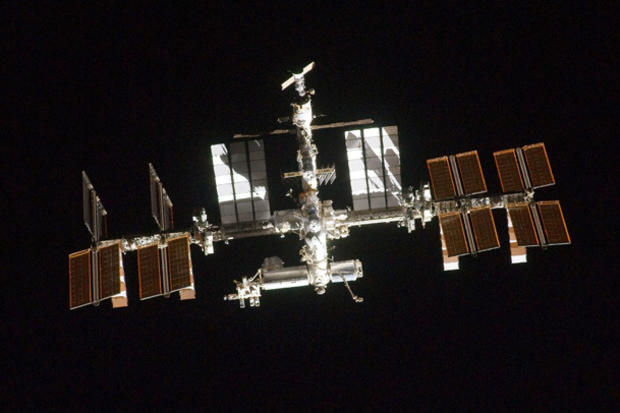
NASA
A view of the International Space Station as photographed by a crewmember aboard the space shuttle Atlantis, July 10, 2011. Sometimes science fiction does become science fact.