Sterling and Francine Clark Art Institute, Williamstown, Mass.
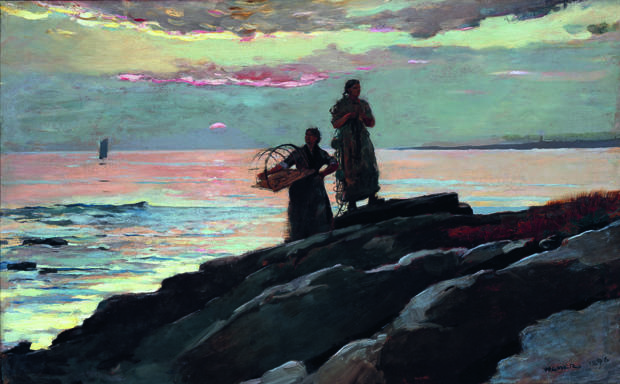
"Saco Bay" by Winslow Homer (1896). Oil on canvas.
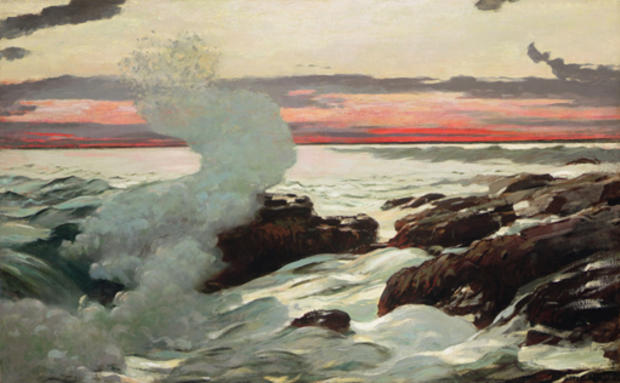
If any painter has captured the rugged beauty of Maine's coast - the thrilling play of water and light against rock - it has to be Winslow Homer (1836-1910). "He's a realist and he's a naturalist," said Mark Bessiere, director of the Portland Museum of Art. "He's interested in telling you about the power of nature in a single wave. He wants you to feel the spray, be in that painting itself."
Bowdoin College Museum of Art
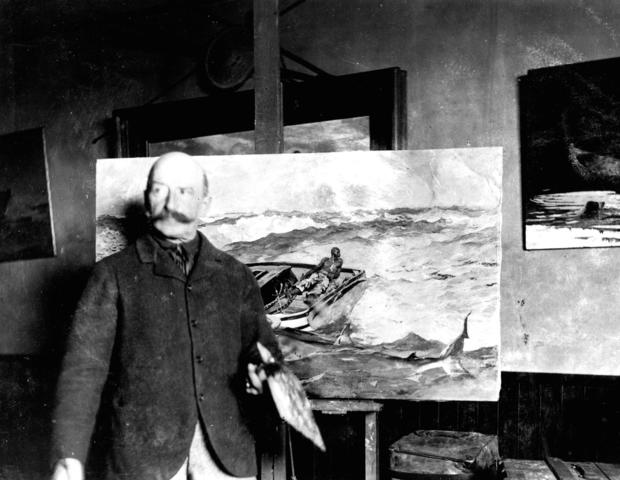
Winslow Homer is pictured c. 1900 in his painting room at Prout's Neck, Me., with his work "The Gulf Stream."
Born in Boston in 1836, Homer's father was a businessman, his mother a watercolorist. He got his start as a combat artist, working for Harper's Weekly during the Civil War.
Before he settled in Maine, Homer lived and worked in New York, and studied in Europe, too, but his work was always distinctly American.
Terra Foundation for American Art, Chicago
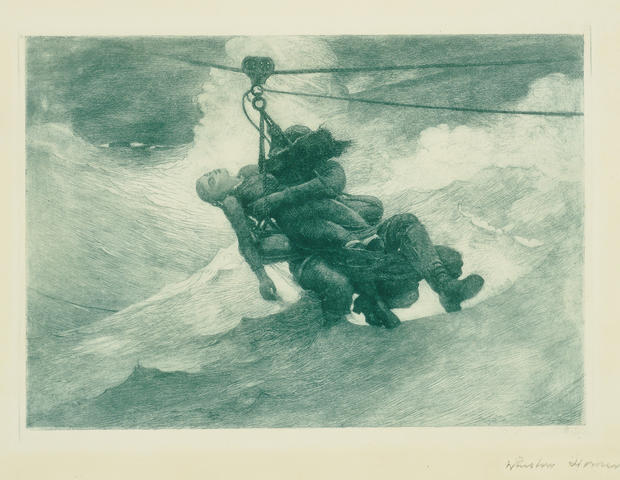
"The Life Line" (1884) by Winslow Homer. Etching printed in blue, on cream wove paper.
Portland Museum of Art,
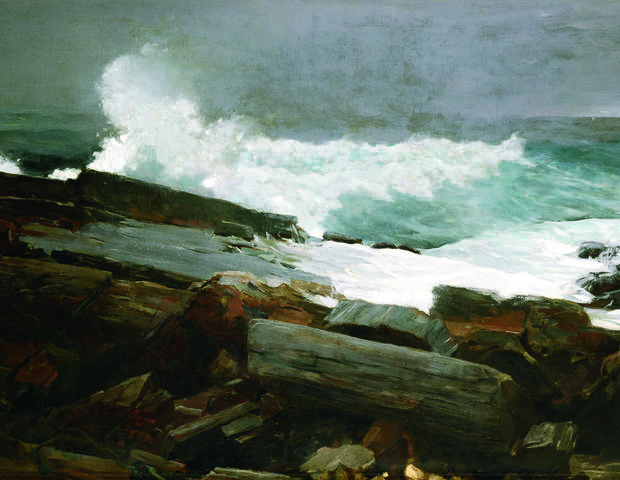
"Weatherbeaten" by Winslow Homer (1894). Oil on canvas.
Trent Bell/Portland Museum of Art
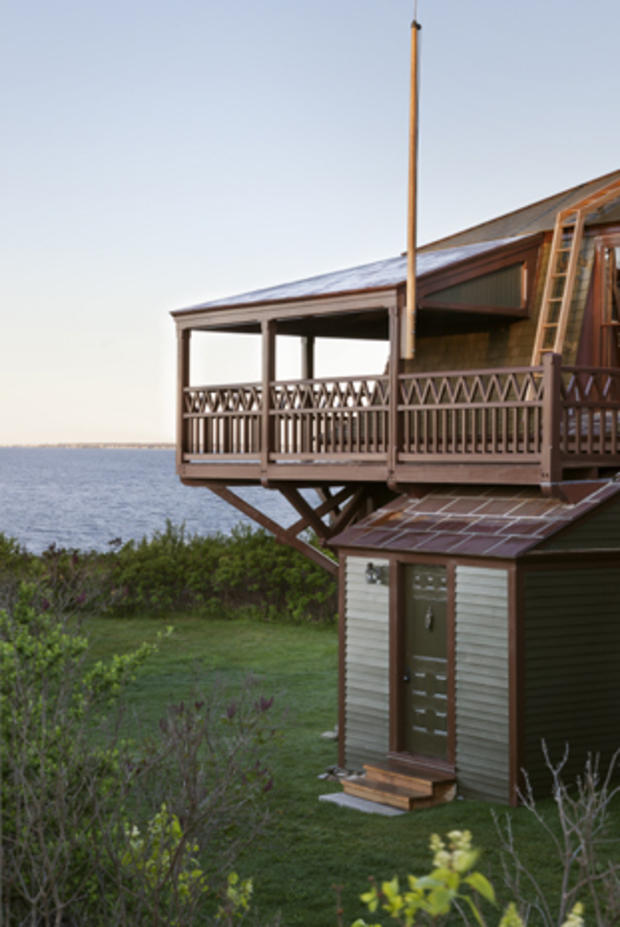
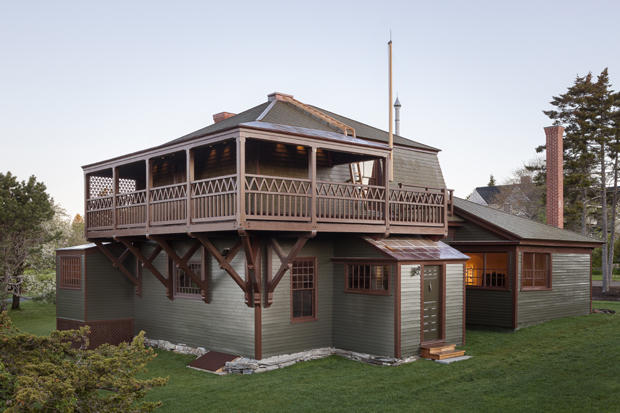
The Portland Museum of Art has just finished a 5-year, $2.8 million renovation of the Winslow Homer's studio at Prout's Neck, Me., which is now open to the public for the first time.
To celebrate the studio's opening, the Portland Museum has mounted a new exhibit, titled "Weatherbeaten: The Late Art of Winslow Homer," devoted to the work he produced at Prout's Neck.
Trent Bell/Portland Museum of Art
Winslow Homer moved to the land in Prout's Neck, purchased by his brother, and settled into the Carriage House, which served as his home and studio for a quarter-century, until his death in 1910. It was purchased by the Portland Museum of Art from Homer's great-grand nephew.
Trent Bell/Portland Museum of Art
The painting room of Winslow Homer's studio in Prout's Neck, Me.
Portland Museum of Art
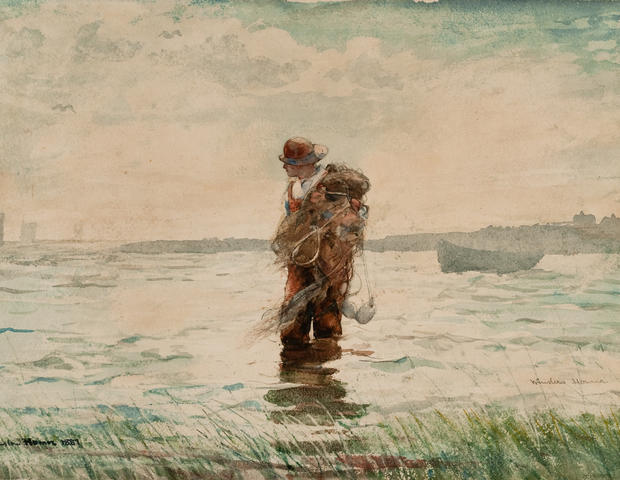
"Bringing in the Nets" by Winslow Homer (1887). Watercolor on paper.
Sterling & Francine Clark Art Institute, Williamstown
"West Point, Prout's Neck" by Winslow Homer (1900). Oil on canvas.
Brooklyn Museum
"Blown Away" by Winslow Homer (circa 1888). Watercolor and graphite on paper.
Cleveland Museum of Art
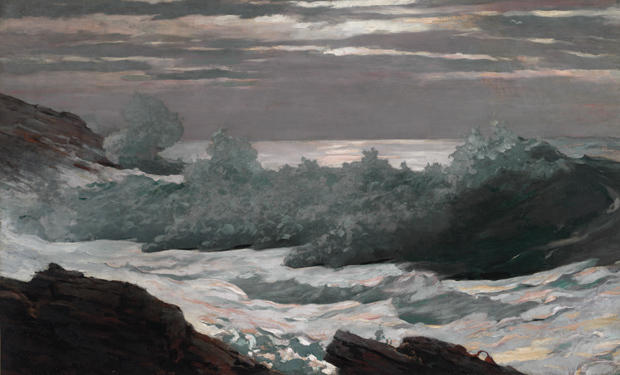
"Early Morning After a Storm at Sea" by Winslow Homer (1900-1902). Oil on canvas.
Museum of Fine Arts, Boston
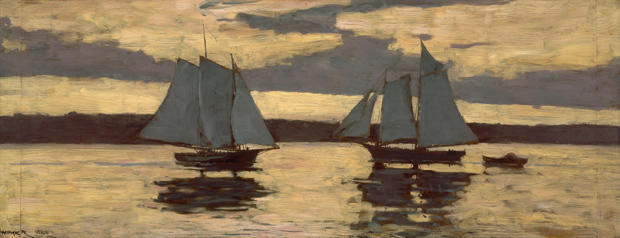
"Gloucester, Mackerel Fleet at Sunset" by Winslow Homer (1884). Oil on panel.
Sterling and Francine Clark Art Institute, Williamstown, Mass.
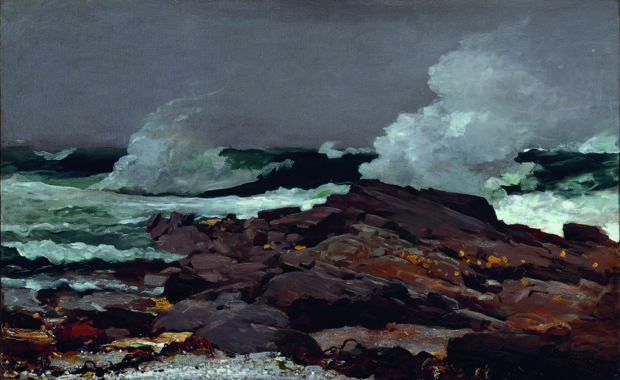
"Eastern Point" by Winslow Homer (1900). Oil on canvas.
Museum of Art Rhode Island School of Design
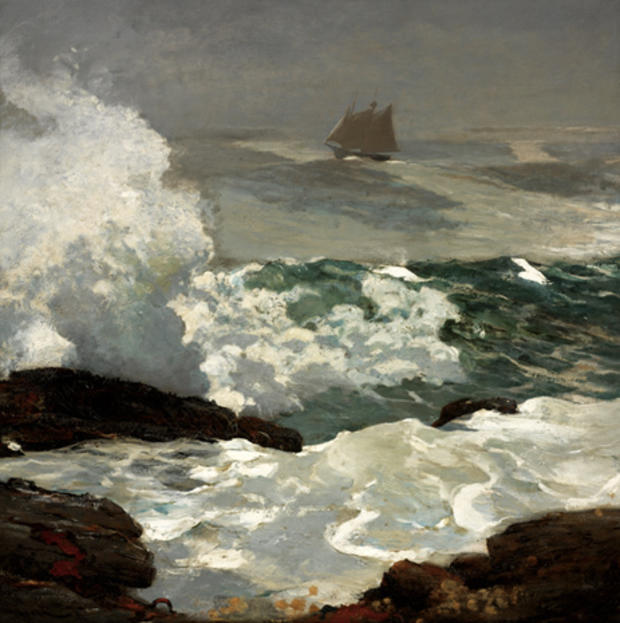
"On a Lee Shore" by Winslow Homer (1900). Oil on canvas.
The Berger Collection
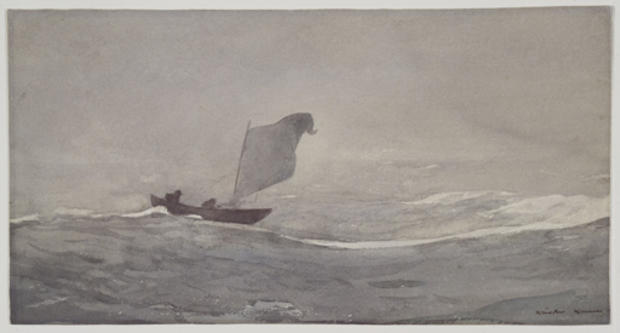
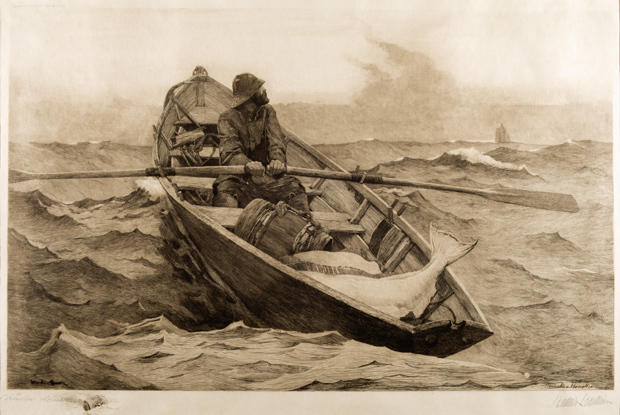
"The Fog Warning" by Winslow Homer (1887). Etching on paper.
Art Institute of Chicago
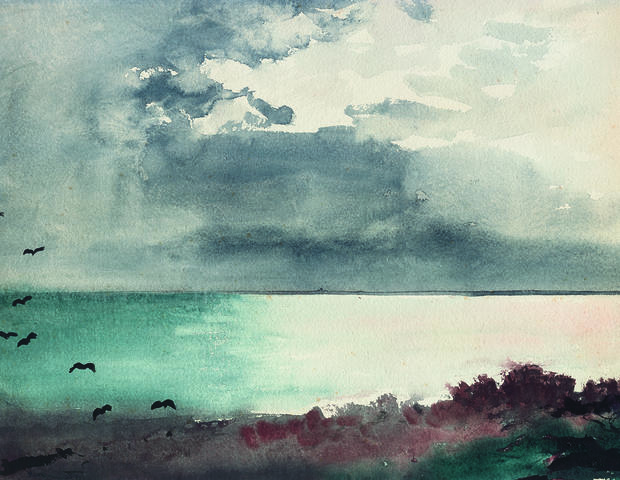
"Breaking Storm, Coast of Maine" by Winslow Homer (1894). Watercolor on wove paper.
Addison Gallery of American Art, Phillips Academy
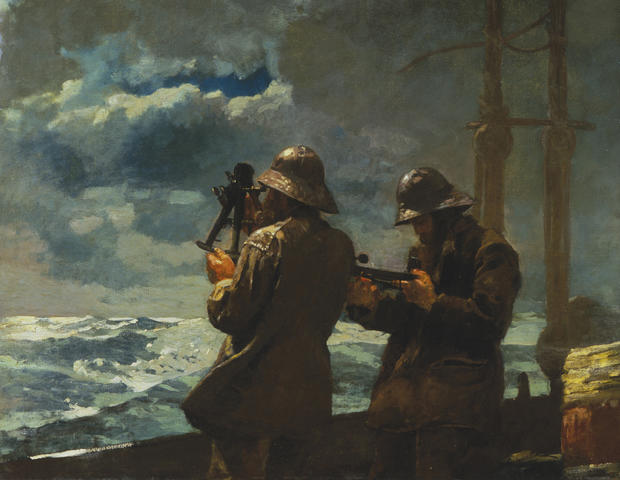
"Eight Bells" by Winslow Homer (1886). Oil on canvas.
Memorial Art Gallery of the University of Rochester
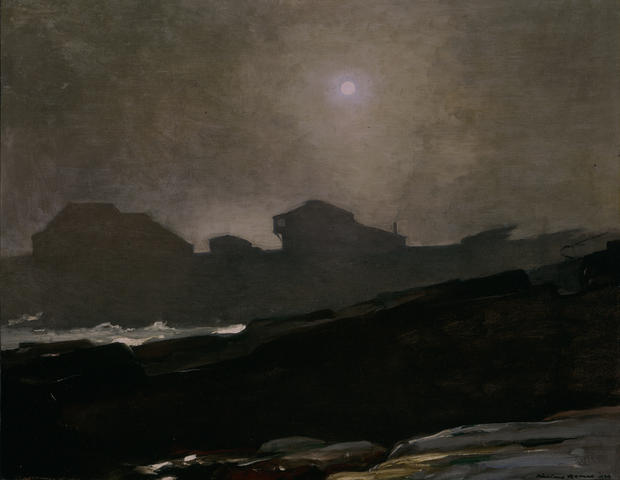
"The Artist's Studio in an Afternoon Fog" by Winslow Homer (1894). Oil on canvas.
Arkell Museum at Canajoharie
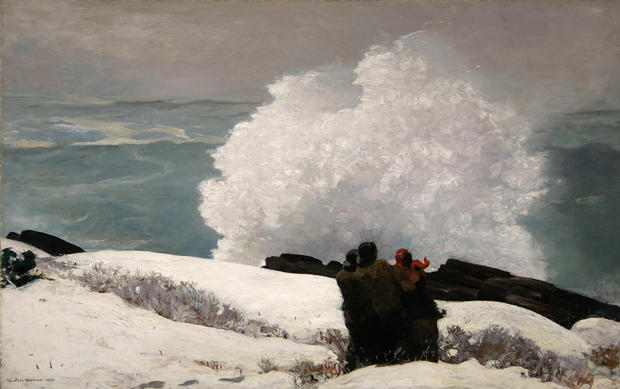
"Watching the Breakers - A High Sea" by Winslow Homer (1896). Oil on canvas.
Colby College Museum of Art
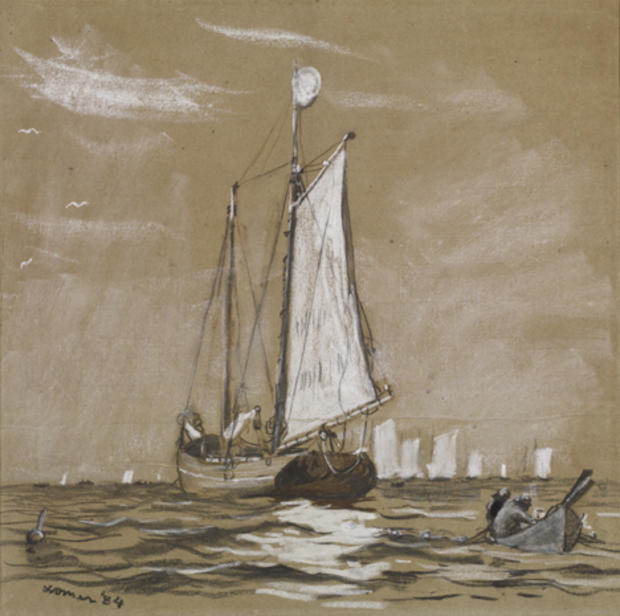
"A Fishing Schooner, Prout's Neck" by Winslow Homer (1884).
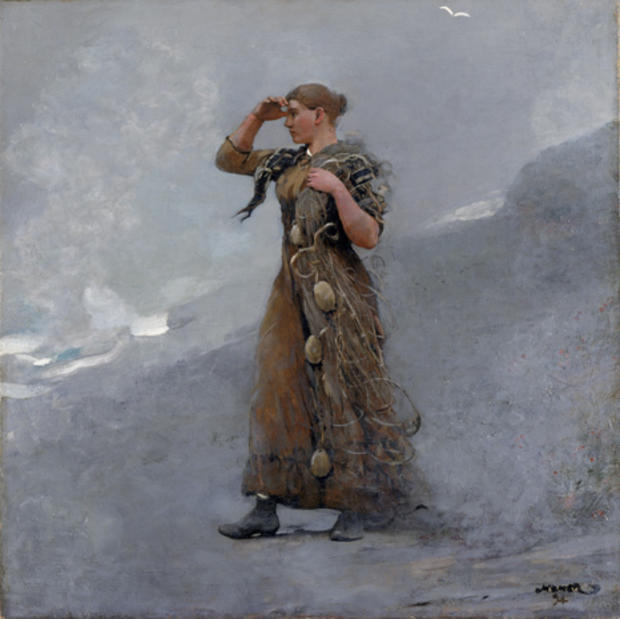
Mead Art Museum, Amhest College
"The Fisher Girl" by Winslow Homer (1894). Oil on canvas.
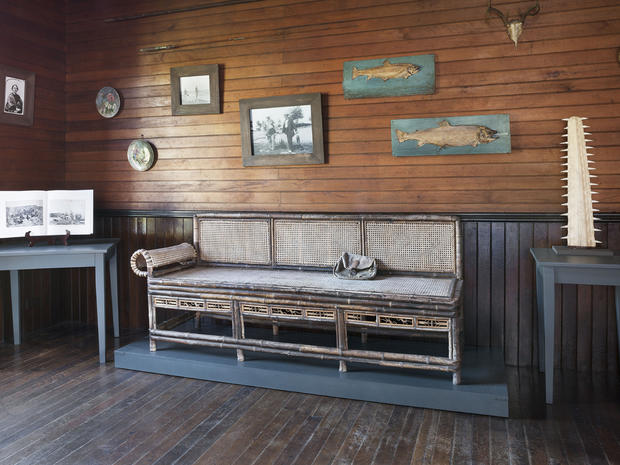
Trent Bell/Portland Museum of Art
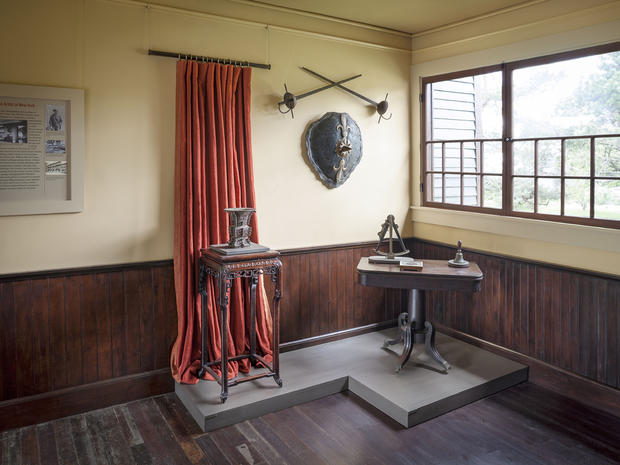
The parlor of Winslow Homer's studio.
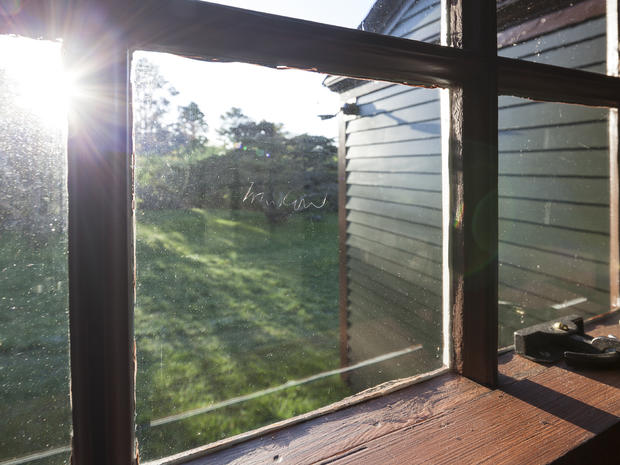
Trent Bell/Portland Museum of Art
Winslow Homer's studio, where his signature is still visible on the windowpane.