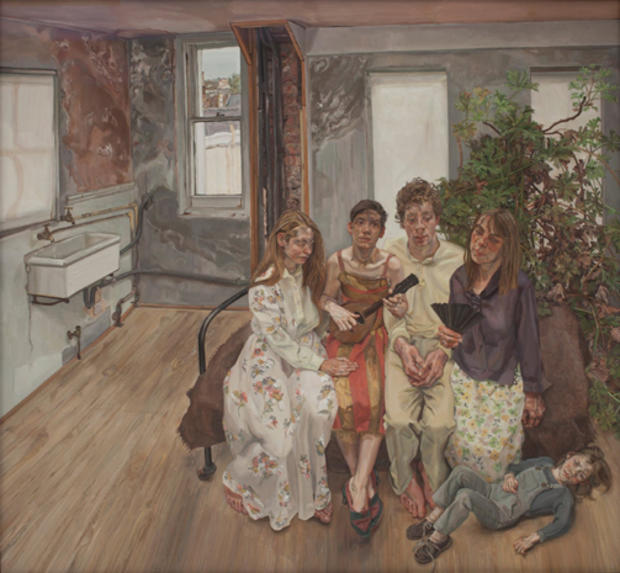
Freud (1922-2011), whom some critics call one of the greatest portrait painters of the 20th century, came into his more recognizable, more textural style after his friend and fellow painter Francis Bacon encouraged him to paint more freely. Freud began using a thicker brush, and started to focus more on the flesh. His greatest works were nudes - some slim, others corpulent. People (as Freud put it) "stripped of (their) costume."
By CBSNews.com senior editor David Morgan
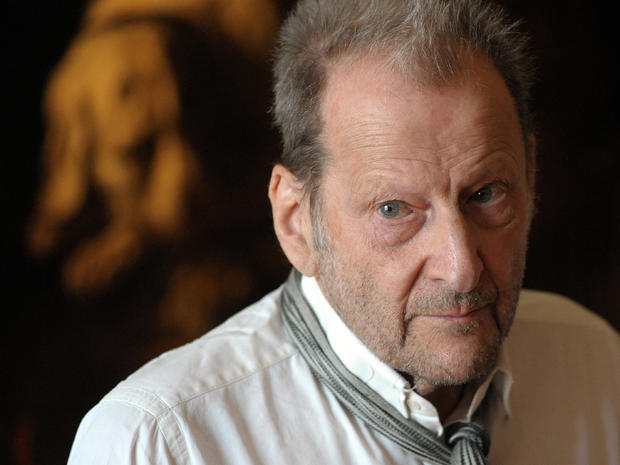
STEPHAN AGOSTINI/AFP/Getty Images
British painter Lucian Freud poses on July 4, 2010 during a visit to the Fesch museum in Ajaccio on the the French Mediterranean island of Corsica.
Born in Berlin, he and his Jewish family fled Nazi Germany in 1933 and moved to London. After a stint in the army, he went to art school. There, the grandson of Sigmund Freud began his own lifelong study of people - using not psychoanalysis, but paint.
Over six decades his output also included a number of self-portraits.
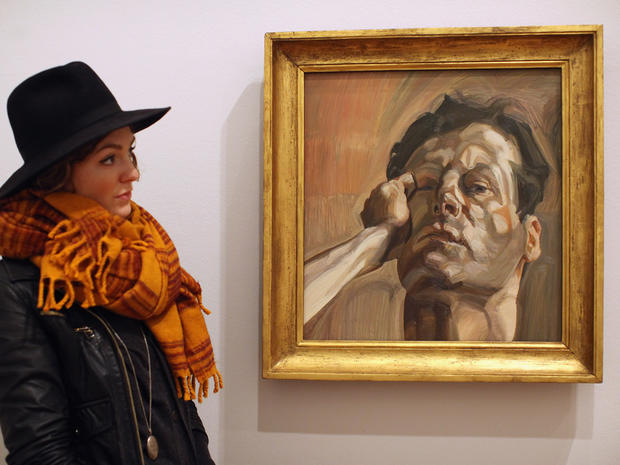
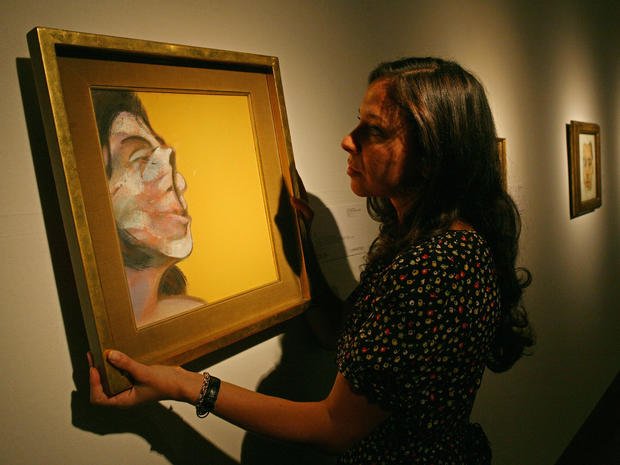
Oli Scarff/Getty Images
A woman admires the Lucian Freud painting "Man's Head" (Self Portrait 1) in the "Lucian Freud: Portraits" exhibition at the National Portrait Gallery on February 8, 2012 in London, England. The exhibition features 130 artworks spanning the length of Freud's painting career from the early 1940s until his final, unfinished work.
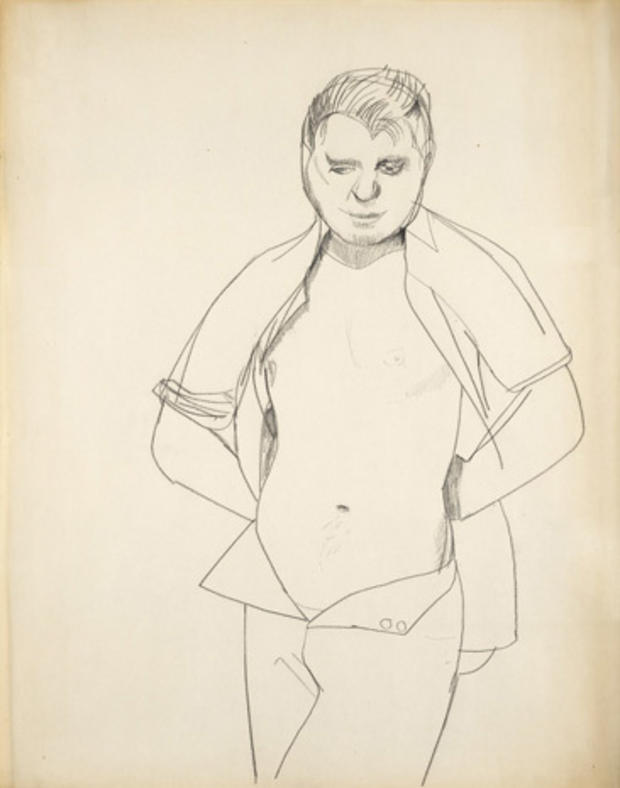
Courtesy Lucian Freud Archive
Lucian Freud's sketch of artist Francis Bacon, dated 1951.
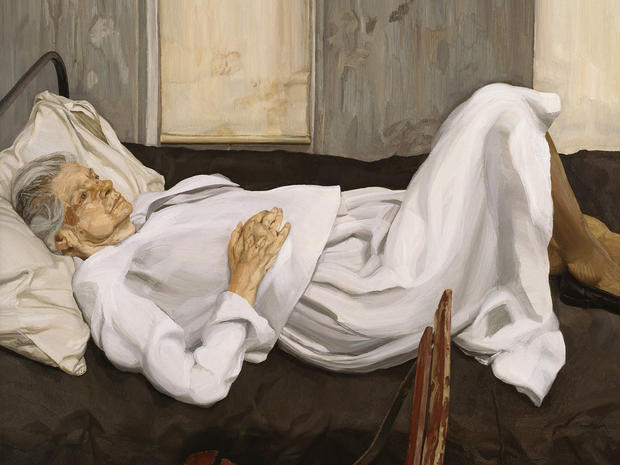
Courtesy Lucian Freud Archive
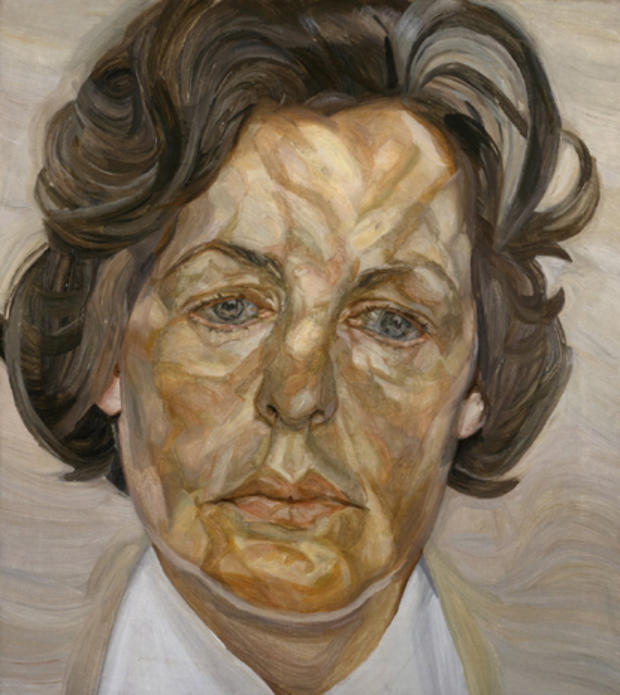
"Woman in a White Shirt" (1957) by Lucian Freud.
"Ninety-six percent of his work were portraits," said curator Michael Auping. Of the exhibition "Lucian Freud: Portraits," Auping said, "In a sense this is a retrospective of his life's work. And more than that, it's a visual biography of his life. . . .
"He would say to me, 'You know, Michael, if you're interested in the human condition, you have to study the human condition very, very carefully."
Courtesy Lucian Freud Archive
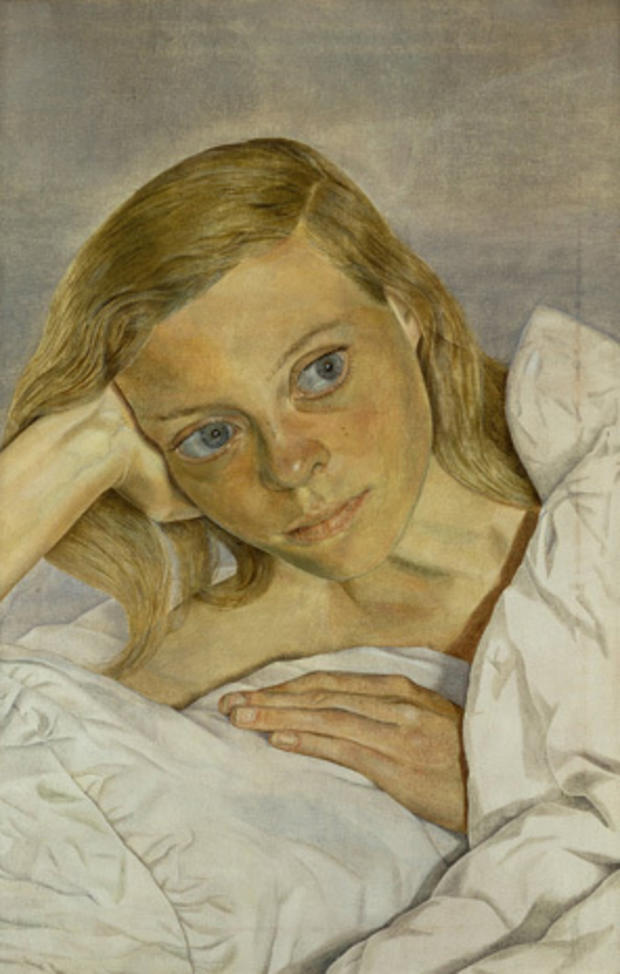
"Girl in Bed" (1952) by Lucian Freud.
David Dawson, who was an assistant and a model for Freud, was asked what he liked about the paintings: "The humanity," he replied. "The tenderness of what it is to be a human, to be alive. It's about being alive."
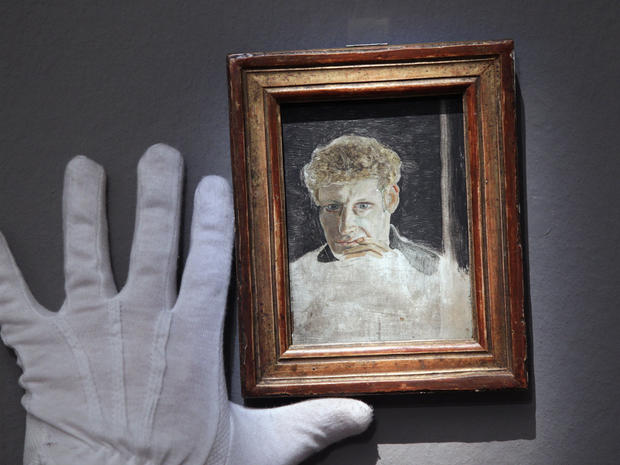
Dan Kitwood/Getty Images
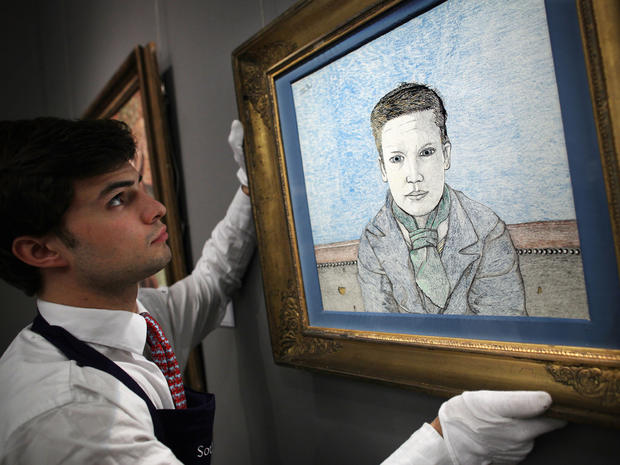
A Sotheby's employee hangs a work entitled "Boy On a Sofa" by Lucian Freud at Sotheby's Auction House on June 9, 2011 in London, England.
CARL COURT/AFP/Getty Images
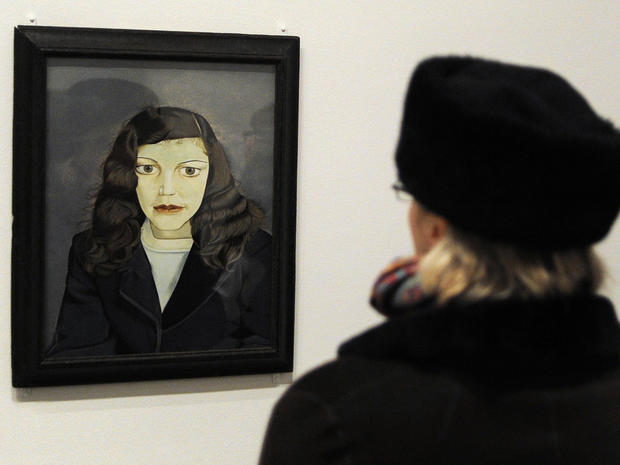
A visitor views a painting by Lucian Freud entitled "Girl In A Dark Jacket" (1947) at the "Lucian Freud: Portraits" exhibition at the National Portrait Gallery in central London on February 8, 2012.
Dawson described Freud as "Driven, single-minded. There'd always be a sitter every morning, seven days a week, every day of the year. He'd rest in the afternoons. And then there'd be another - a nighttime picture - in the evenings."
Courtesy Lucian Freud Archive
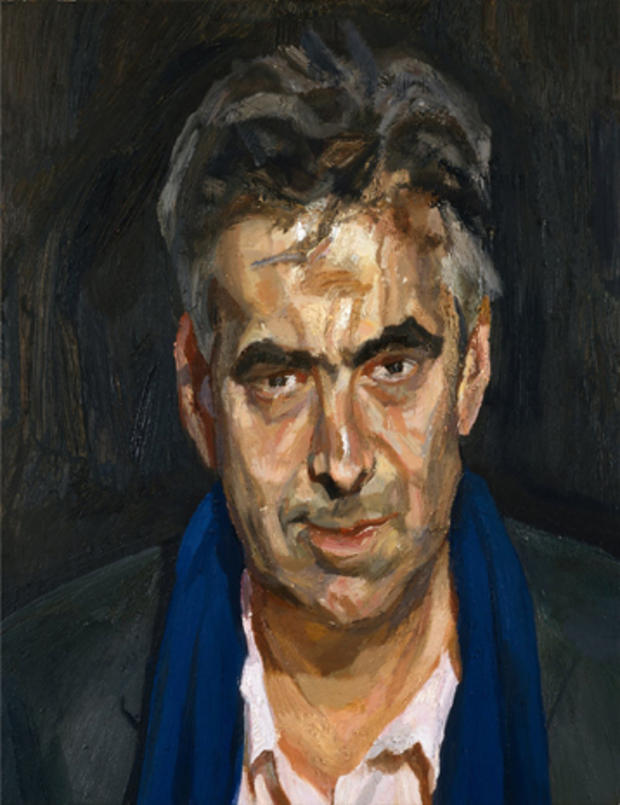
Art critic Martin Gayford sat for seven months for his portrait by Freud, "Man With a Blue Scarf" (2004), an experience he recounted in a 2010 book.
Courtesy Lucian Freud Archive
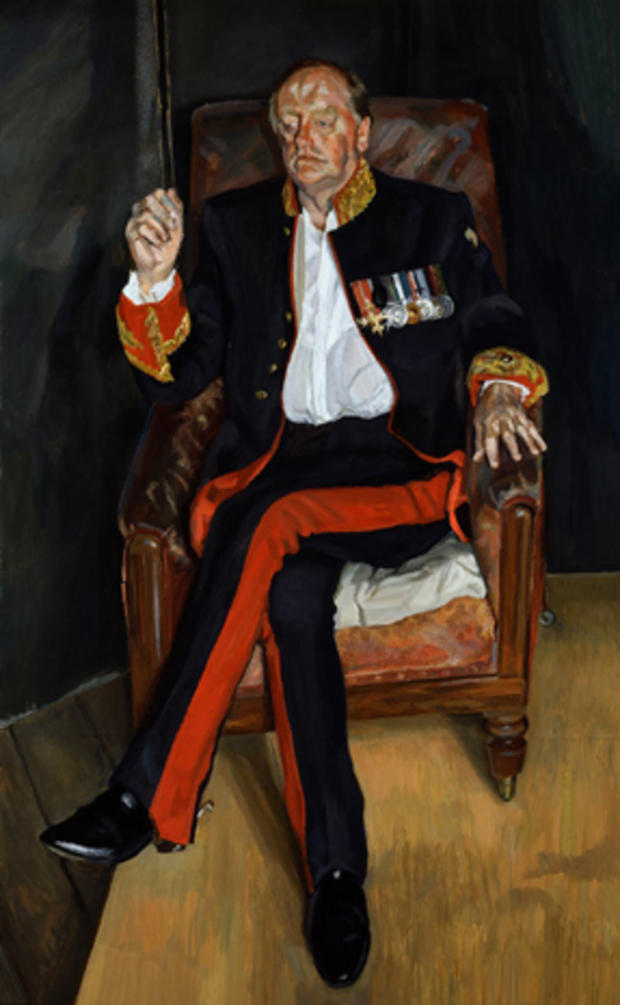
"The Brigadier" (2003-04) by Lucian Freud.
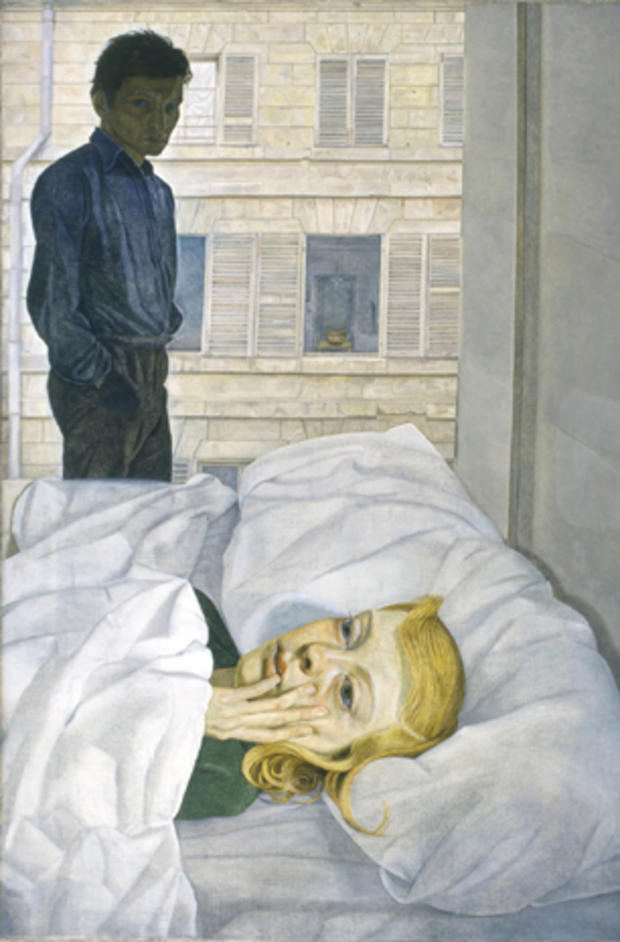
"Hotel Bedroom" (1954) by Lucian Freud.
CARL DE SOUZA/AFP/Getty Images
A Christie's employee looks at a portrait of Henrietta Moraes by British artist Lucian Freud, at Christie's auction house in London, October 14, 2008.
Freud's subjects sat for hours each day, every day. His portraits took months, even years to complete, with results often less than complimentary. Freud didn't care. His goal wasn't to please his subjects . . . and for that reason, he rarely accepted commissions.
Courtesy Lucian Freud Archive
"The Painter's Mother" by Lucian Freud.
Dan Kitwood/Getty Images
A Sotheby's employee straightens a self-portrait by Lucian Freud at Sotheby's Auction House on January 28, 2011 in London, England.
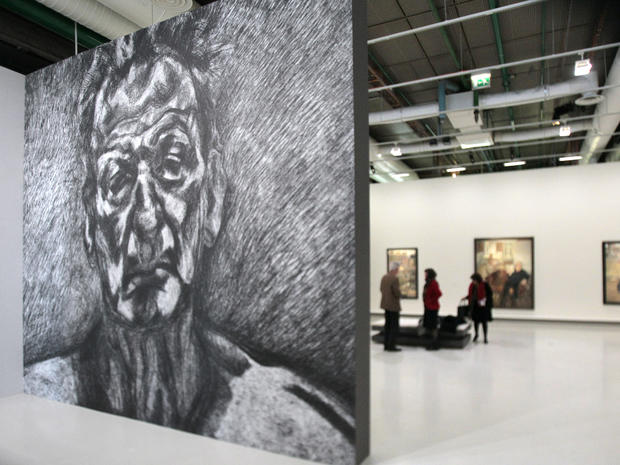
JACQUES DEMARTHON/AFP/Getty Images
A view taken on March 8, 2010 shows the exhibition of Britain's painter Lucian Freud, grandson of Sigmund Freud, at the Georges Pompidou Centre in Paris.
ANDREW WINNING/AFP/Getty Images
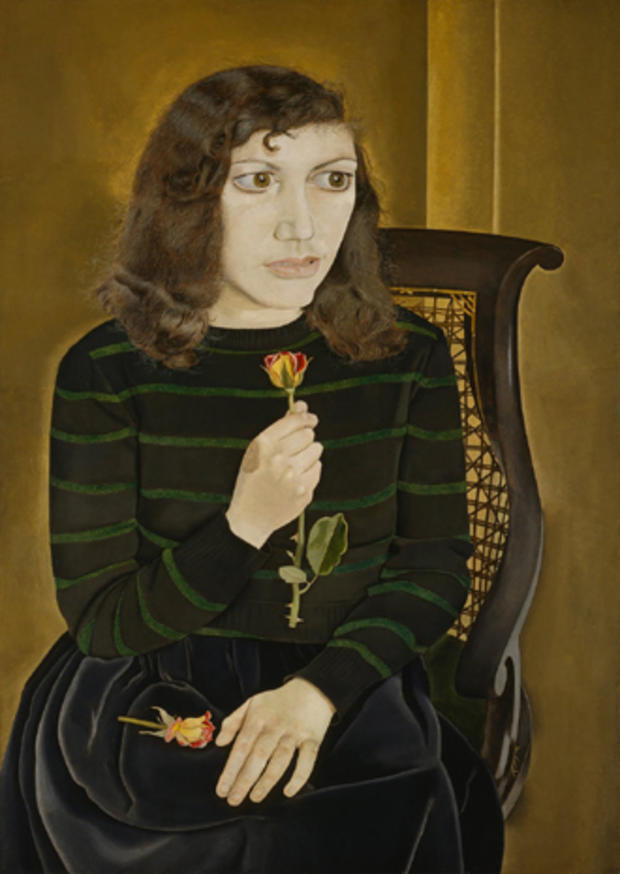
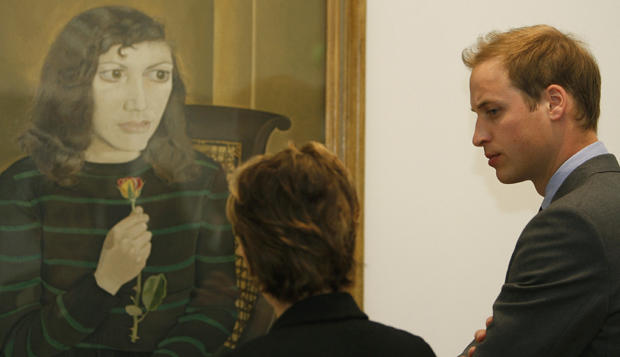
Britain's Prince William stands in front of an artwork entitled "Girl with Roses" by artist Lucian Freud during a tour of the Whitechapel Gallery in London, on May 11, 2009.
Courtesy Lucian Freud Archive
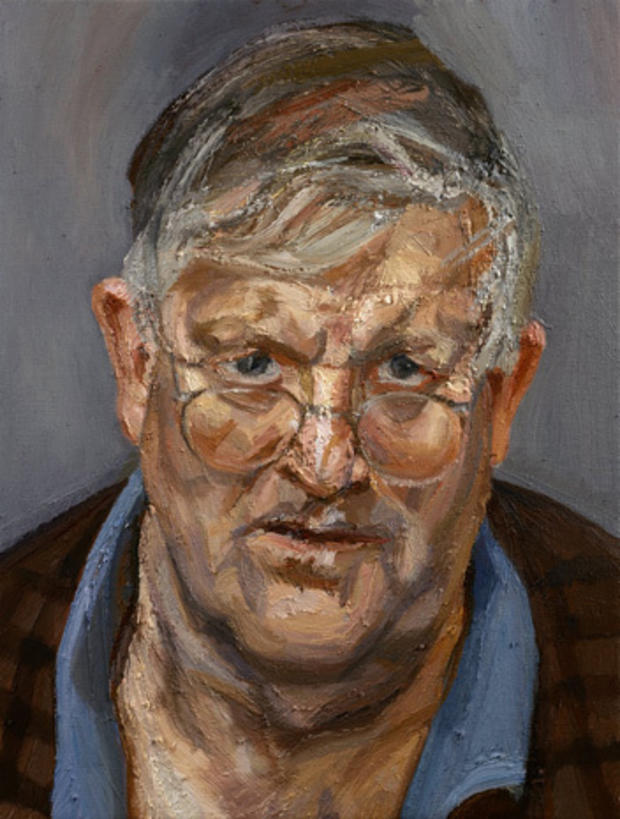
Lucian Freud's portrait of artist David Hockney, 2002.
Sion Touhig/Getty Images
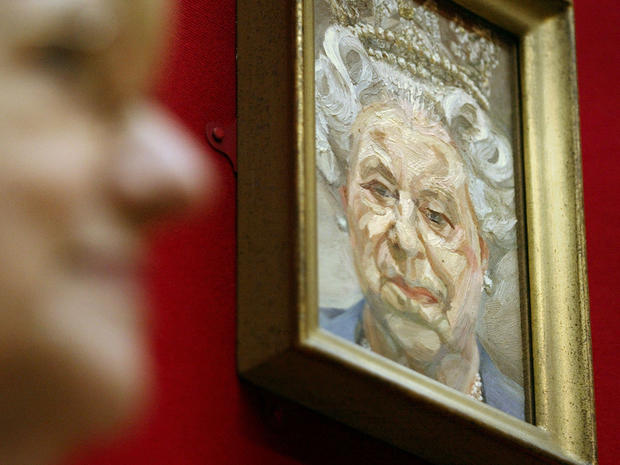
A gallery visitor walks by a newly-unveiled portrait of the Queen by British artist Lucian Freud at the inaugural opening of the Royal Collection at the Queen's Gallery in Buckingham Palace May 17, 2002 in London.
Courtesy Lucian Freud Archive
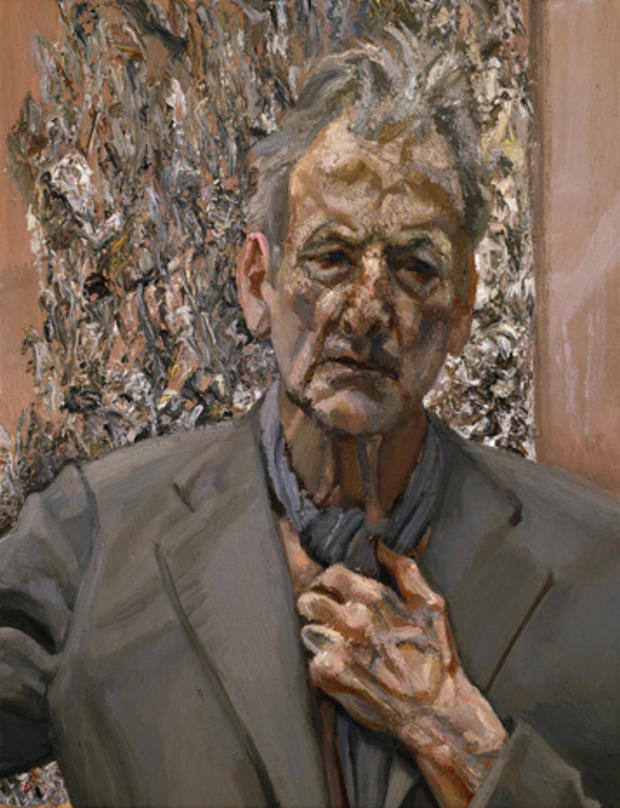
A self-portrait, dating from 2002.
Christie's New York
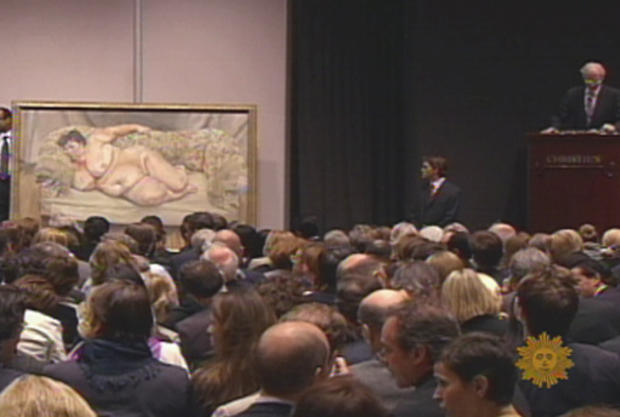
British artist Lucian Freud offered a startling, "super-sized" Rubenesque variation on the classic reclining nude with his painting titled "Benefits Supervisor Sleeping." Nicknamed "Big Sue," the work captured a super-sized $33.6 million at auction at Christie's in 2008, the highest price ever paid for the work of a living artist.
JORGE HERRERA/AFP/Getty Images
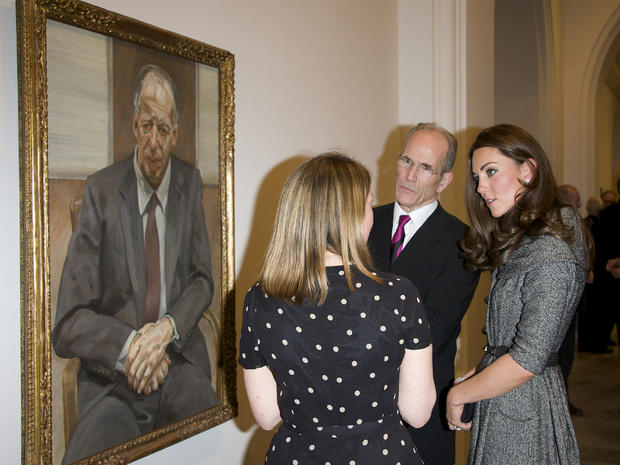
From left: Curator Sarah Howgate, National Portrait Gallery Director Sandy Nairne, and Catherine Duchess of Cambridge talk as they attend the "Lucian Freud: Portraits" exhibition at the National Portrait Gallery in London on February 8, 2012. The Duchess of Cambridge carried out her first public solo engagement - a private viewing of an exhibition of work by the late artist.
Kunsthal Museum/Triton Foundation
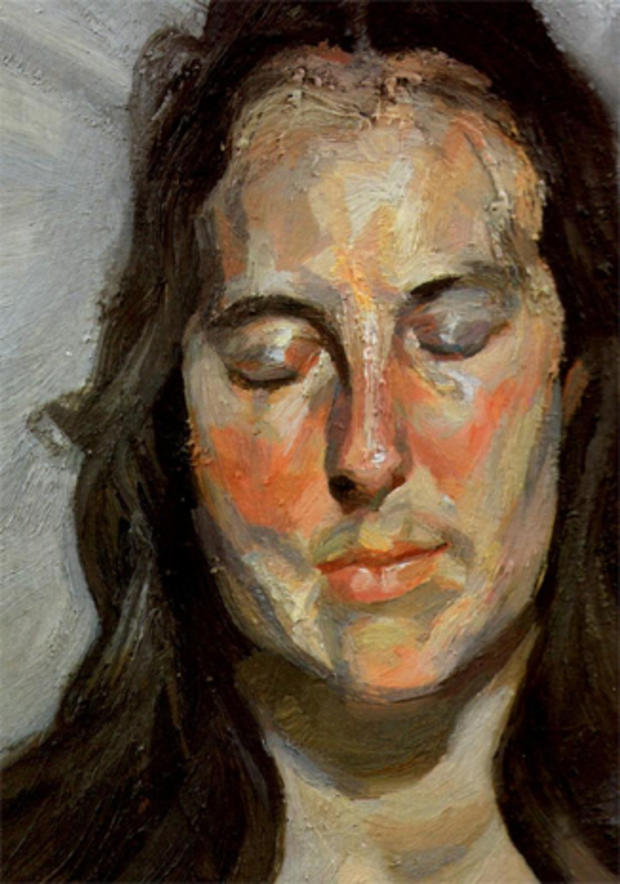
Lucian Freud's "Woman With Closed Eyes" was one of the seven modern masterworks that were stolen from the Kunsthal Museum in Rotterdam, the Netherlands on Tuesday, 16, 2012.
SHAUN CURRY/AFP/Getty Images
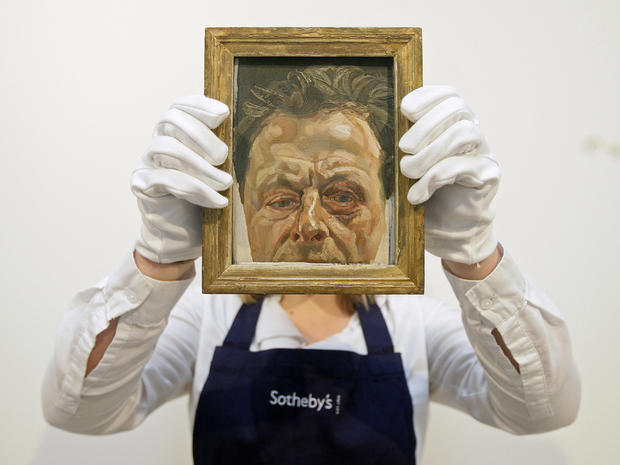
A painting entitled "Self-Portrait with a Black Eye" by British artist Lucian Freud is displayed at Sotheby's auction house in central London, January 27, 2010. The artwork was painted following an altercation with a taxi driver.
For more info: "Lucian Freud: Portraits" at the Modern Art Museum of Fort Worth (through Oct. 28, 2012)