Sean Gallup/Getty Images
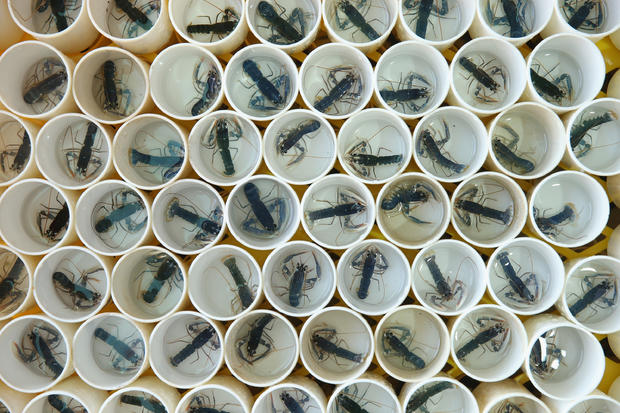
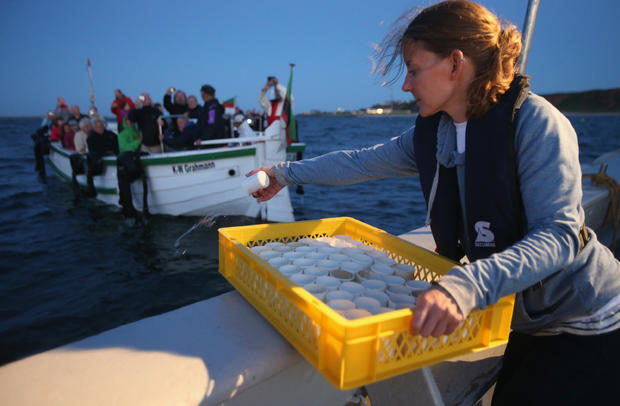
Baby European lobsters from the Helgoland Biological Institute, part of the Alfred Wegener Institute for Polar and Marine Research, lie in cups before scientists released them into the North Sea at Helgoland Island, Germany, Aug. 3, 2013.
Scientists released a total of 415 one-year-old lobsters as part of an effort to repopulate the lobster population around Helgoland. In the 19th century local fishermen caught up to 80,000 lobsters a year in the surrounding waters. This aggressive fishing, combined with the heavy allied bombing of the island during and after World War II, as well as other environmental factors, decimated the lobster population in the area.
Sean Gallup/Getty Images
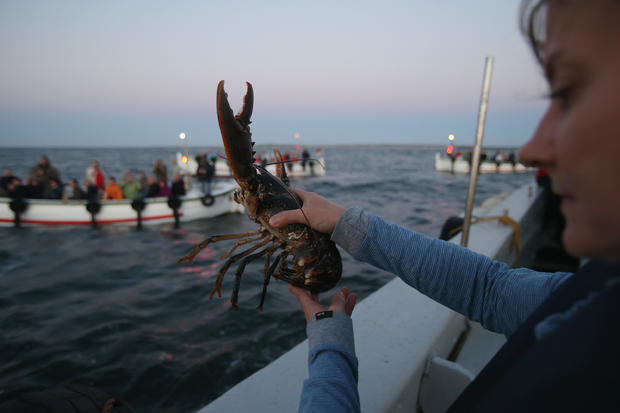
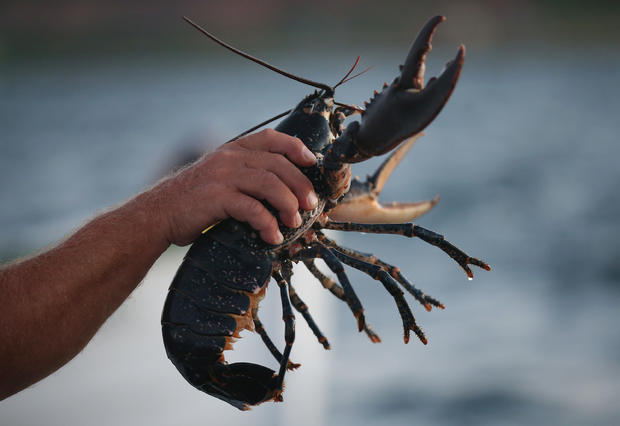
Isabel Schmalenbach, an environmental scientist with the Helgoland Biological Institute, part of the Alfred Wegener Institute for Polar and Marine Research, tosses an adult female European lobster into the North Sea before releasing baby lobsters off the coast of Helgoland Island, Aug. 3, 2013.
Sean Gallup/Getty Images
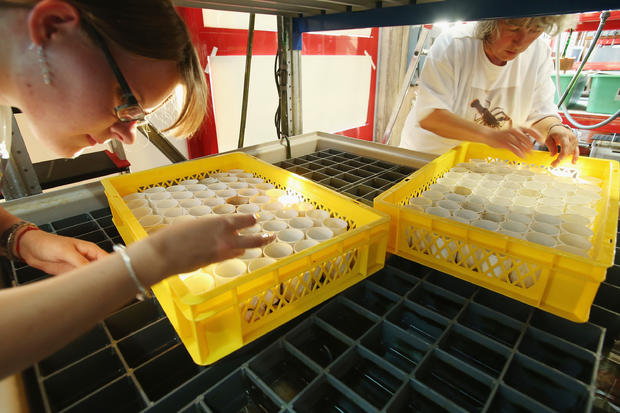
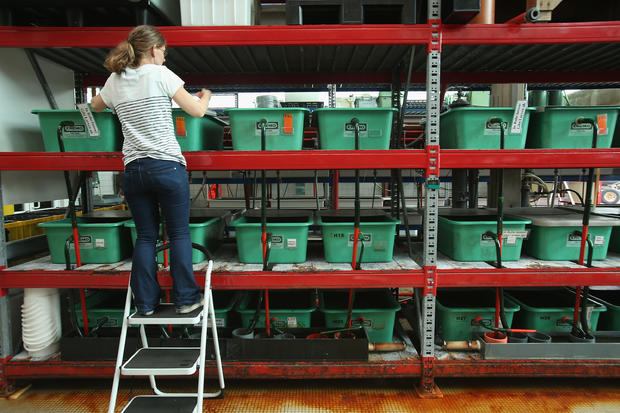
Volunteers Anna-Sophie Brands and Susanne Wiechmann pull baby European lobsters from their cubbies at the Helgoland Biological Institute to load them onto trays and later release them into the North Sea, Aug. 3, 2013.
Sean Gallup/Getty Images
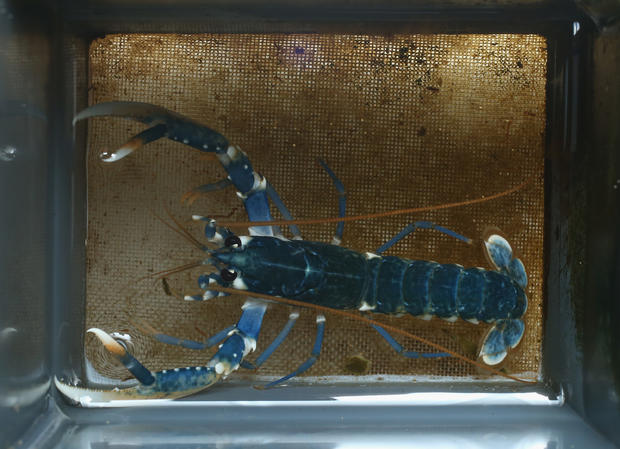
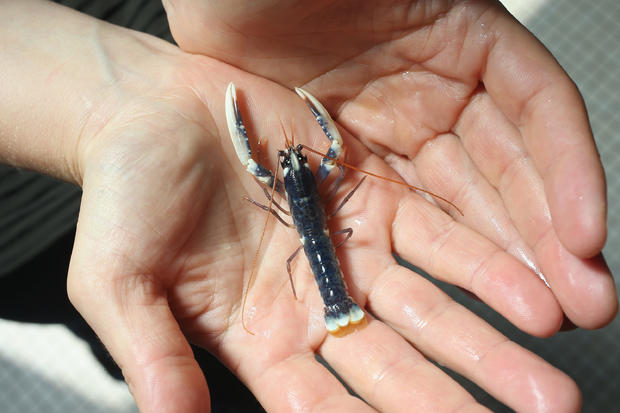
A one-year-old European lobster, approximtely 8 cm long, lies in a cubicle at the Helgoland Biological Institute, Aug. 3, 2013.
Sean Gallup/Getty Images
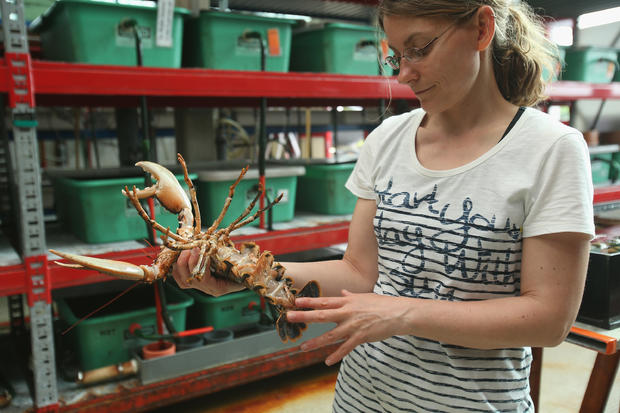
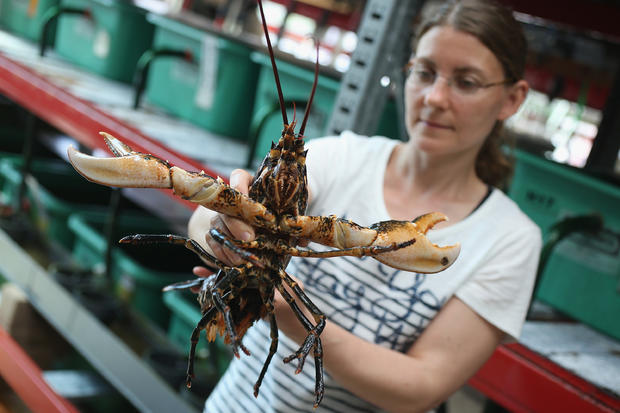
Environmental scientist Isabel Schmalenbach holds an adult female European lobster whose eggs she used to breed baby lobsters, Aug. 3, 2013.
Sean Gallup/Getty Images
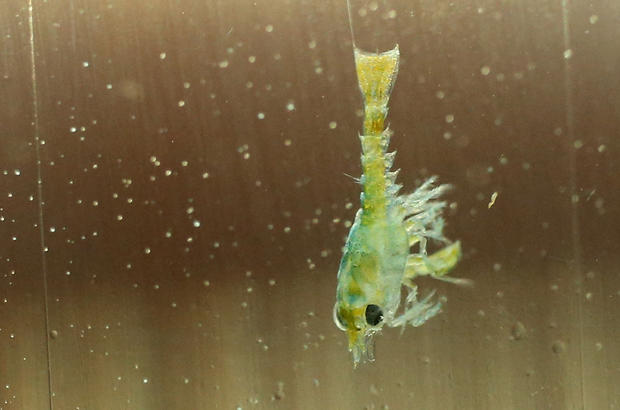
A European lobster larva, approximtely 5mm long, swims in a tank at the Helgoland Biological Institute, Aug. 3, 2013.
Sean Gallup/Getty Images
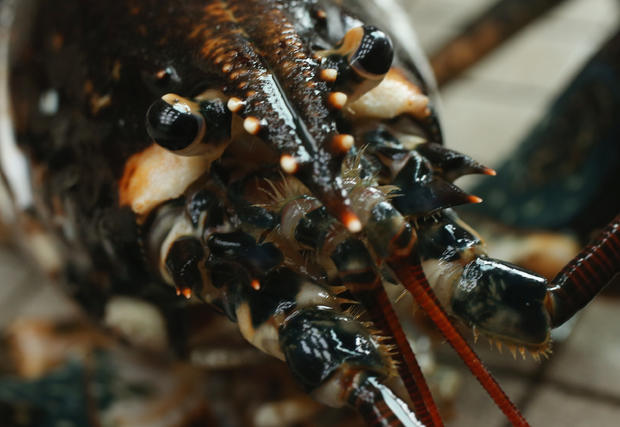
A live adult female European lobster lies on the floor for a photo at the Helgoland Biological Institute, Aug. 3, 2013.
Sean Gallup/Getty Images
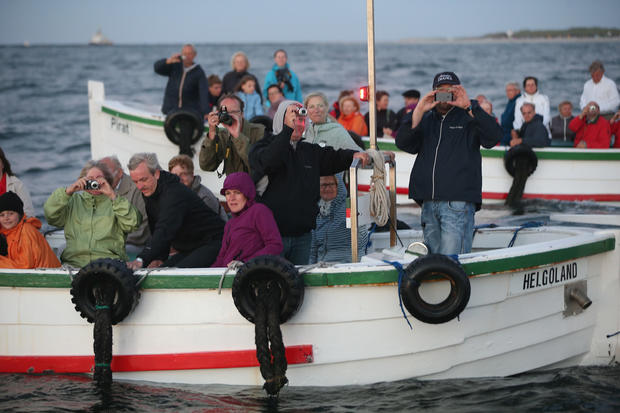
Sponsors of baby European lobsters raised by the Helgoland Biological Institute ride on boats to witness the relase of the lobsters into the North Sea, Aug. 3, 2013.
Sean Gallup/Getty Images
Isabel Schmalenbach, an environmental scientist with the Helgoland Biological Institute holds a one-year-old baby European lobster raised at the institute, Aug. 3, 2013.
Sean Gallup/Getty Images
Environmental scientist Isabel Schmalenbach checks on adult female European lobsters caught in the wild and whose eggs she uses to breed baby lobsters at the institute, Aug. 3, 2013.
Sean Gallup/Getty Images
Environmental scientist Isabel Schmalenbach releases baby European lobsters into the North Sea as sponsors of the lobsters look on from a boat off the coast of Helgoland Island, Aug. 3, 2013.
Sean Gallup/Getty Images
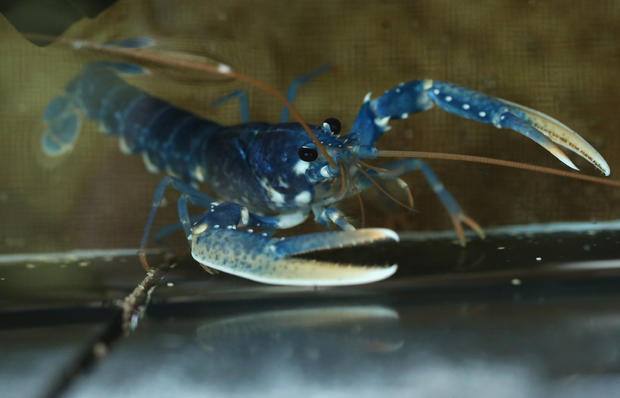
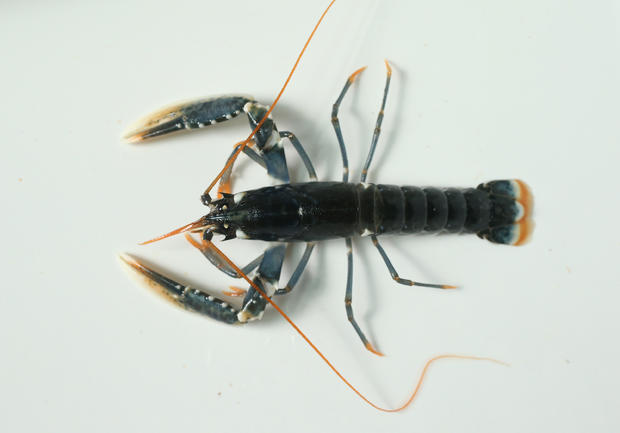
A two-year-old European lobster, approximtely 15 cm long, swims in a tank at the Helgoland Biological Institute, Aug. 3, 2013.
Sean Gallup/Getty Images
Environmental scientist Isabel Schmalenbach holds an adult female European lobster whose eggs she used to breed baby lobsters at the institute, Aug. 3, 2013.
Sean Gallup/Getty Images
A one-year-old European lobster, approximtely 8 cm long, lies in a tray at the Helgoland Biological Institute, Aug. 3, 2013.
Sean Gallup/Getty Images
A volunteer with the Helgoland Biological Institute tosses an adult female European lobster into the North Sea before also releasing baby lobsters, Aug. 3, 2013.
Sean Gallup/Getty Images
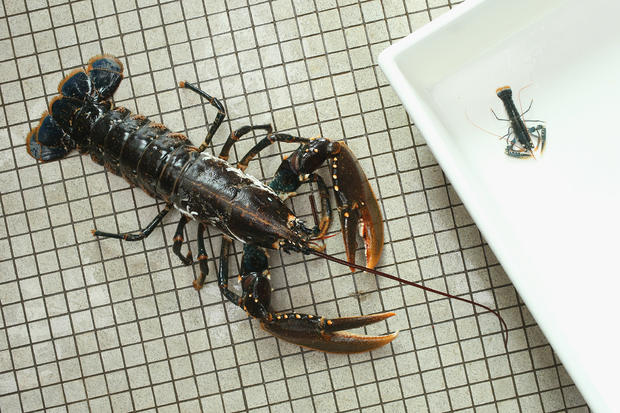
An adult female European lobster lies on the floor next to a one-year old lobster of the same species at the Helgoland Biological Institute, Aug. 3, 2013.