Bernat Armangue/AP
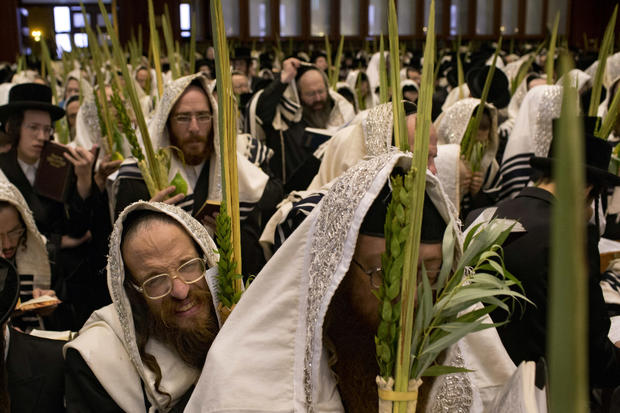
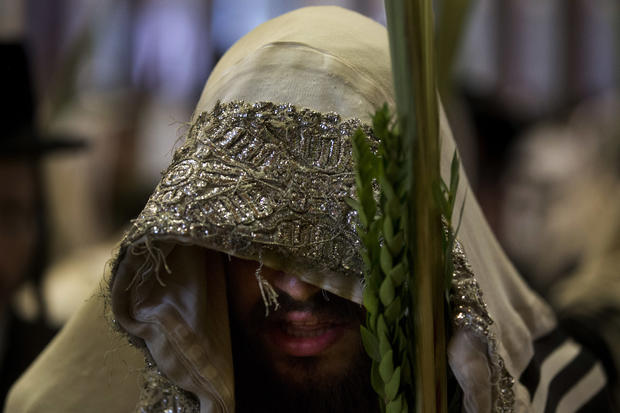
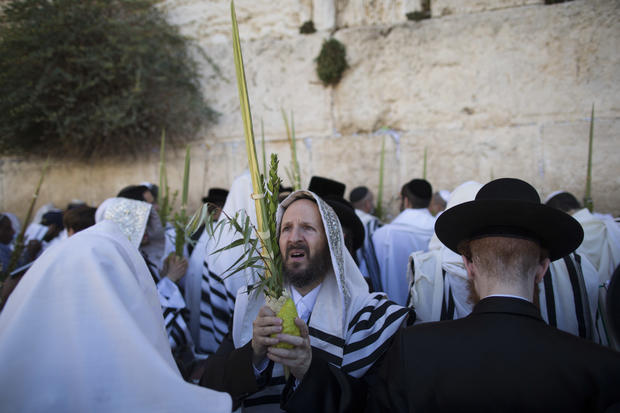
Ultra-Orthodox Jewish men attend Sukkot prayers holding a palm frond, bound with two other branches, and the fruit of an etrog tree, at the Belz yeshiva during the Jewish holiday of Sukkot in Jerusalem, Sept. 25, 2013.
The week-long holiday commemorates the biblical story of the Israelites 40 years of wandering in the desert and decorated huts are erected outside religious households as a symbol of temporary shelter.
Bernat Armangue/AP
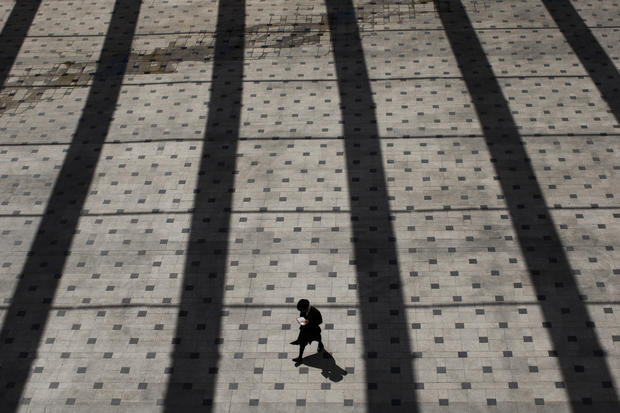
An ultra-Orthodox Jewish man walks in the courtyard of the Belz yeshiva in Jerusalem during the Jewish holiday of Sukkot, Sept. 25, 2013.
Ariel Schalit/AP
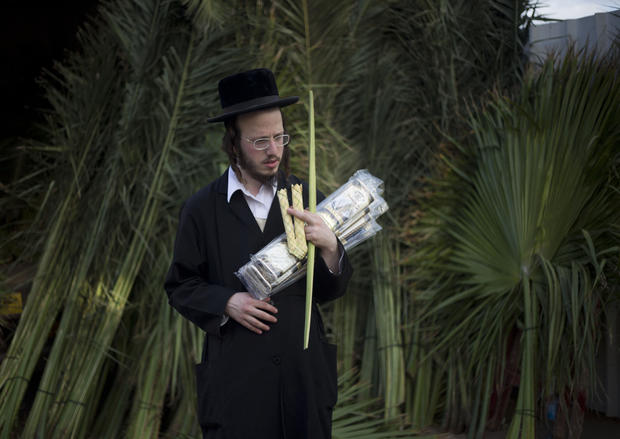
An ultra-Orthodox Jewish man holds a "lulav" as he looks for palm fronds to build a sukka, a temporary hut used for a weeklong holiday called Sukkot, in Bnei Brak, Israel, Sept. 16, 2013.
According to the Bible, during the Sukkot holiday, known as the Feast of the Tabernacles, Jews are commanded to bind together a palm frond, or "lulav," with two other branches, along with an "etrog," they make up the "four species" used in holiday rituals.
Uriel Sinai/Getty Images
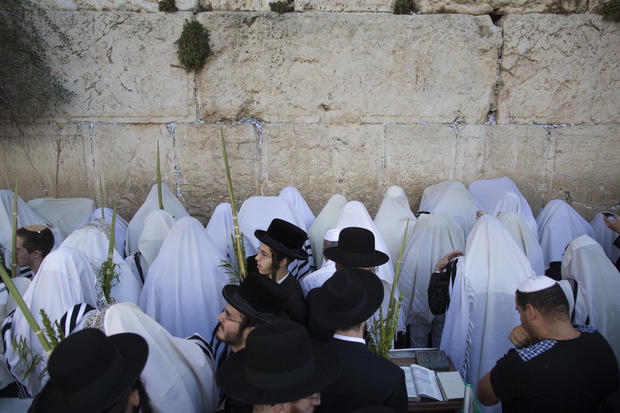
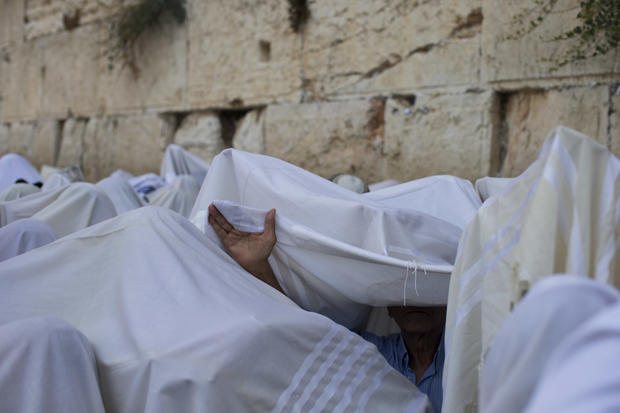
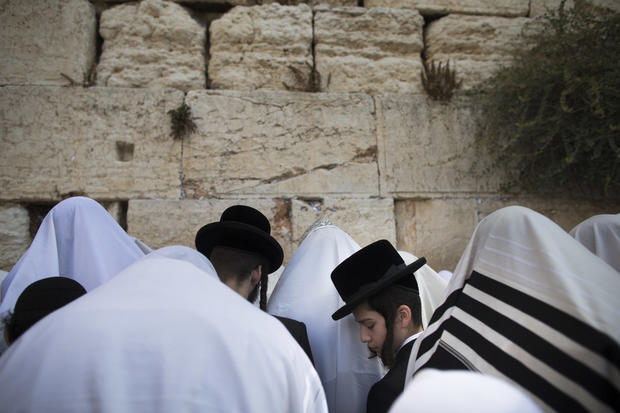
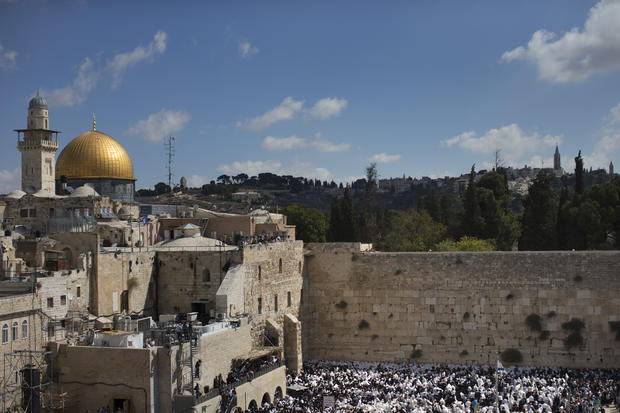
Ultra-orthodox Jews cover their heads with prayer shawls beside the Western Wall during ceremonies for the Blessing of the Priests, or "Birkat Cohanim," in Jerusalem, Israel, Sept. 22, 2013.
Thousands of religious Jews travel to Jerusalem during the Jewish holiday of Sukkot, or the feast of the Tabernacles, which commemorates the Israelites journey through the desert after their exodus from Egypt.
Ariel Schalit/AP
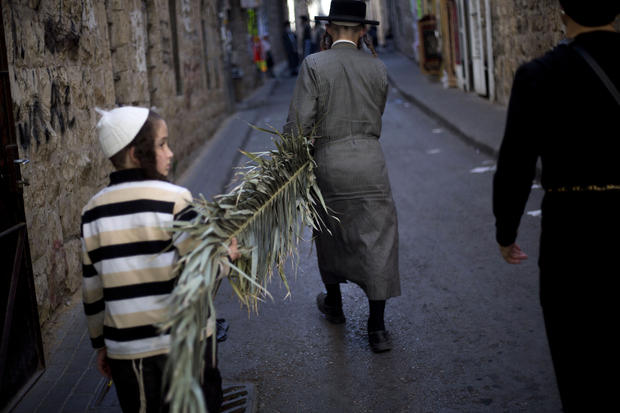
An ultra-Orthodox Jewish boy holds palm fronds used to build a sukka, a temporary hut for a weeklong holiday called Sukkot, in Bnei Brak, Israel, Sept. 16, 2013.
Bernat Armangue/AP
Ultra-Orthodox Jewish men gather during Sukkot celebrations in Jerusalem's Mea Shearim neighborhood, Sept. 22, 2013.
Bernat Armangue/AP
An ultra-Orthodox Jewish man attends a Sukkot prayer at the Belz yeshiva during the Jewish holiday of Sukkot in Jerusalem, Sept. 25, 2013.
Bernat Armangue/AP
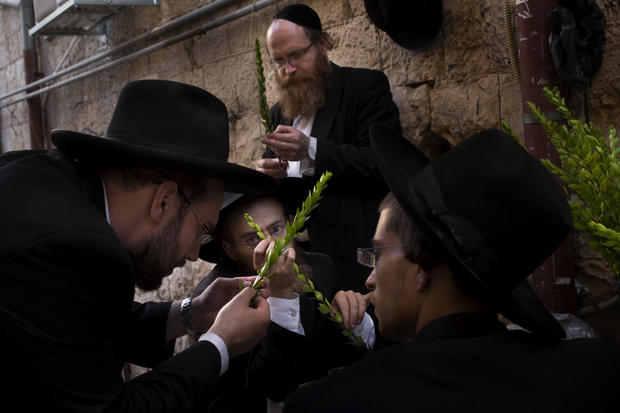
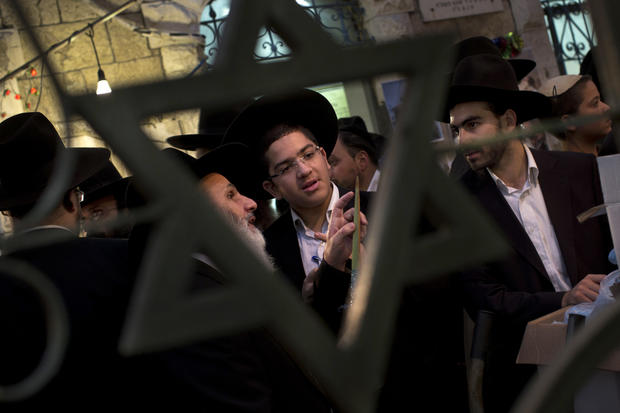
Ultra-Orthodox Jewish men hold a hadas, a myrtle branch that is one of the four items used as a symbol on the Jewish holiday of Sukkot, as they examine it for blemishes to determine if it is ritually acceptable before buying it, in Jerusalem's Mea Shearim neighborhood, Sept. 16, 2013.
Uriel Sinai/Getty Images
Ultra-orthodox Jews hold the four plant species, palm leave stalk, citrus, myrtle and willow branches during ceremonies for the Blessing of the Priests in Jerusalem, Sept. 22, 2013.
Bernat Armangue/AP
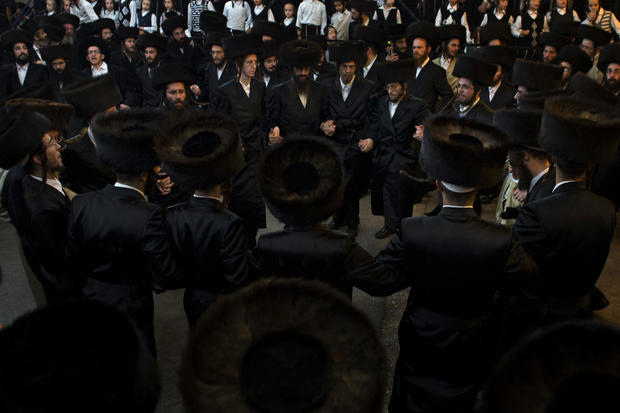
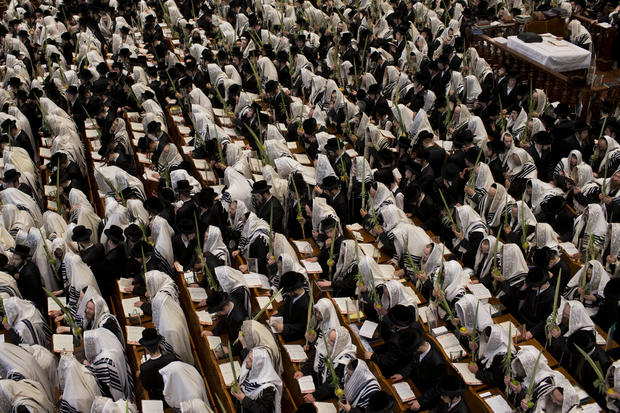
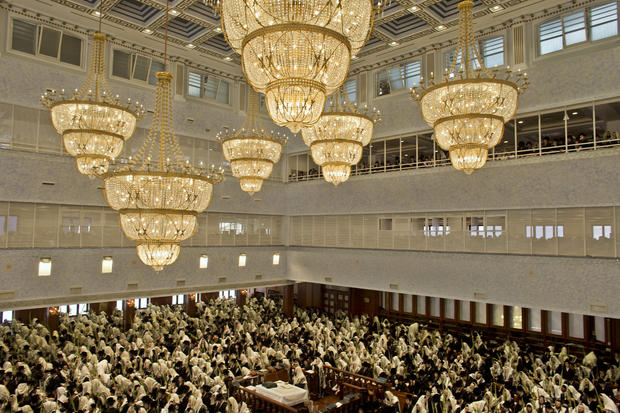
Ultra-Orthodox Jewish men gather during prayers at the Belz yeshiva during the Jewish holiday of Sukkot in Jerusalem, Sept. 25, 2013.
Ariel Schalit/AP
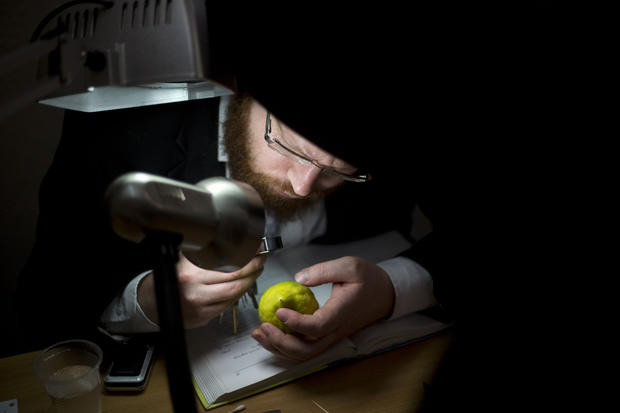
An ultra-Orthodox Jewish man inspects an etrog, a lemon-like citrus fruit, for signs of blemishes to determine if it's ritually acceptable, before buying it as one of the four items used as a symbol on the Jewish holiday of Sukkot in Bnei Brak, Israel, Sept. 16, 2013.
Bernat Armangue/AP
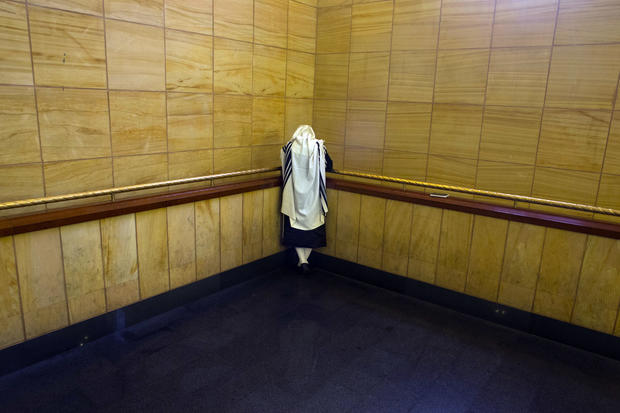
An ultra-Orthodox Jewish man prays inside the Belz yeshiva in Jerusalem, during the Jewish holiday of Sukkot, Sept. 25, 2013.
Ariel Schalit/AP
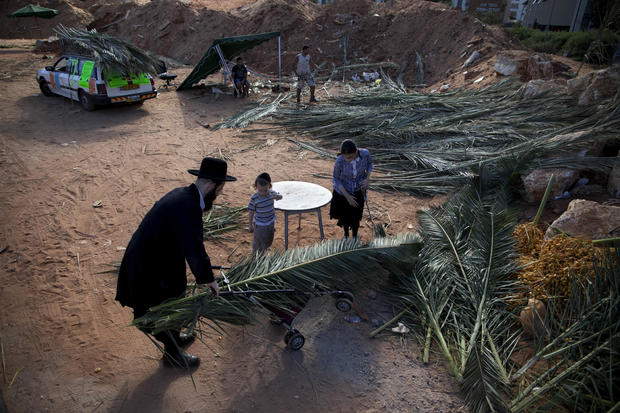
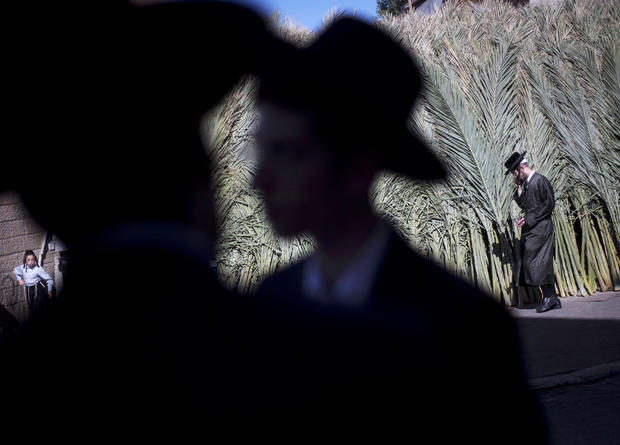
An ultra-Orthodox Jewish man and his son carry palm fronds to be used to build a Sukka in Jerusalem's Mea Shearim neighborhood, Sept. 17, 2013.
Uriel Sinai/Getty Images
Ultra-Orthodox Jews cover their heads with prayer shawls beside the Western Wall in Jerusalem during ceremonies for the Blessing of the Priests, Sept. 22, 2013.
Uriel Sinai/Getty Images
Ultra-orthodox Jews cover their heads with prayer shawls beside the Western Wall in Jerusalem during ceremonies for the Blessing of the Priests, Sept. 22, 2013.
Uriel Sinai
Ultra-orthodox Jews cover their heads with prayer shawls beside the Western Wall during ceremonies for the Blessing of the Priests, Sept. 22, 2013.
Bernat Armangue/AP
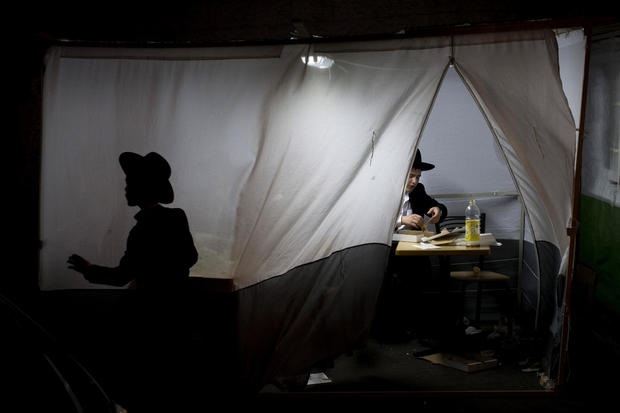
An ultra-Orthodox Jewish man eats inside a Sukkah in Jerusalem's Mea Shearim neighborhood, Sept. 22, 2013.
The Sukkah is built and lived in during the Jewish holiday of Sukkot, also known as the Feast of Tabernacles, named for the shelters the Israelites lived in as they wandered the desert for 40 years.
Bernat Armangue/AP
Ultra-Orthodox Jewish men check a myrtle branch to determine if it is ritually acceptable as one of the four items used as a symbol on the Jewish holiday of Sukkot in the Orthodox Jewish neighborhood of Mea Shearim in Jerusalem, Sept. 16, 2013.
Oded Balilty/AP
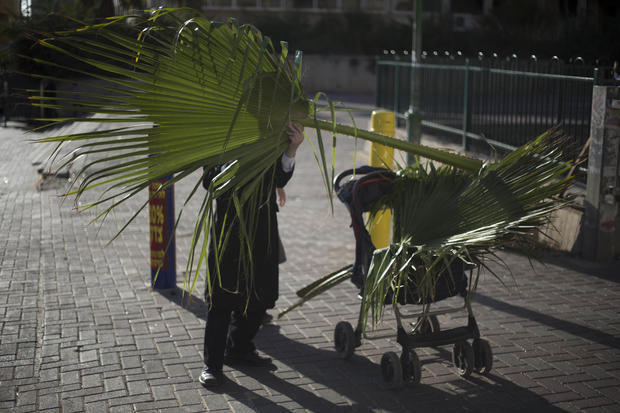
An ultra-Orthodox Jewish man and his children push a baby stroller with palm fronds to build a Sukka, a temporary hut for a weeklong holiday called Sukkot, in the ultra-Orthodox town of Bnei Brak, Israel, Sept. 16, 2013.
Bernat Armangue/AP
Ultra-Orthodox Jewish men gather during prayers at the Belz yeshiva during the Jewish holiday of Sukkot in Jerusalem, Sept. 25, 2013.
Ariel Schalit/AP
Ultra-Orthodox Jewish man gather next to palm fronds to be used to build a Sukka in Jerusalem's Mea Shearim neighborhood, Sept. 17, 2013.