AP Photo/Matt Sayles, file
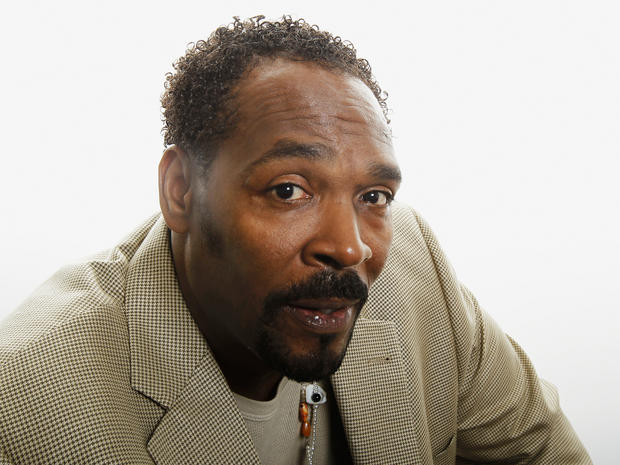
This April 13, 2012, file photo shows Rodney King posing for a portrait in Los Angeles. King, the motorist whose 1991 videotaped beating by Los Angeles police officers was the touchstone for one of the most destructive race riots in the nation's history, has died, his publicist said Sunday, June 17, 2012. He was 47.
King was found in the bottom of his swimming pool in Rialto, Calif., after his fiancee called 911. Preliminary information showed no signs of foul play.
AP Photo/Courtesy of KTLA Los Angeles, George Holliday
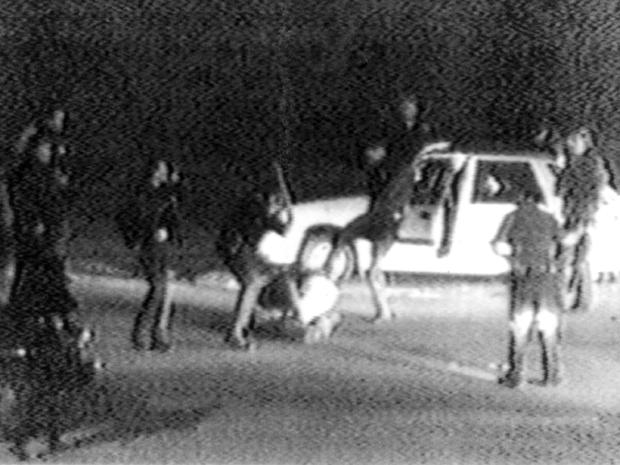
This March 31, 1991, image made from video shot by George Holliday shows police officers beating a man, later identified as Rodney King. He had been stopped for speeding in the San Fernando Valley and was beaten by four officers who hit and kicked him, and used a stun gun.
Holliday, a plumber, was awakened by the traffic stop outside his home and recorded the encounter with a video camera. Its broadcast led to outrage, and charges against the police officers.
AP Photo/Pool
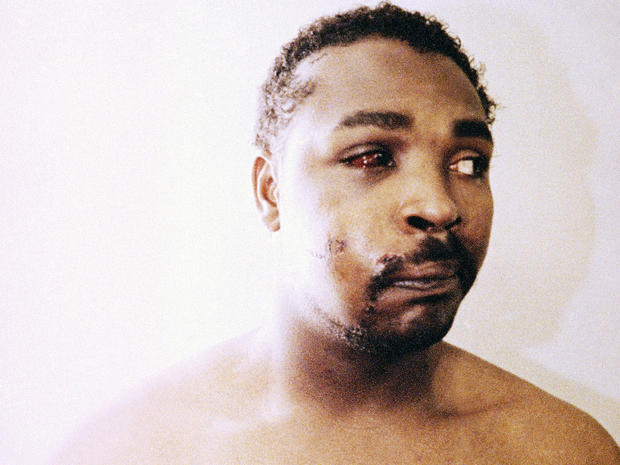
This file photo of Rodney King was taken three days after his videotaped beating in Los Angeles on March 6, 1991.
HAL GARB/AFP/GettyImages
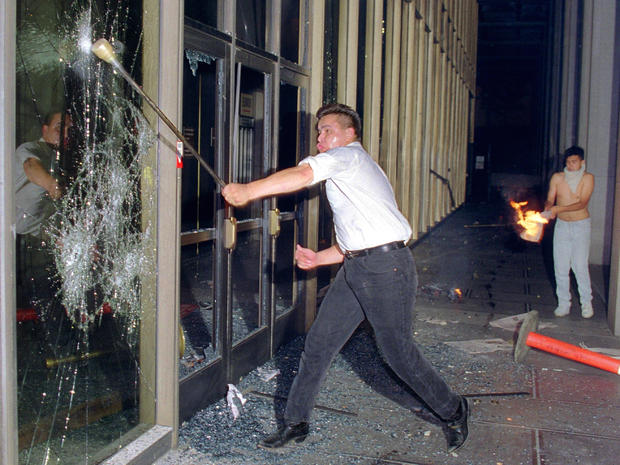
A rioter breaks a glass door of the Criminal Courts building, downtown Los Angeles, on April 29, 1992, after a jury acquitted four police officers accused of beating King. Riots broke out throughout Los Angeles hours after the verdict was announced.
Reed Saxon/AP/dapd
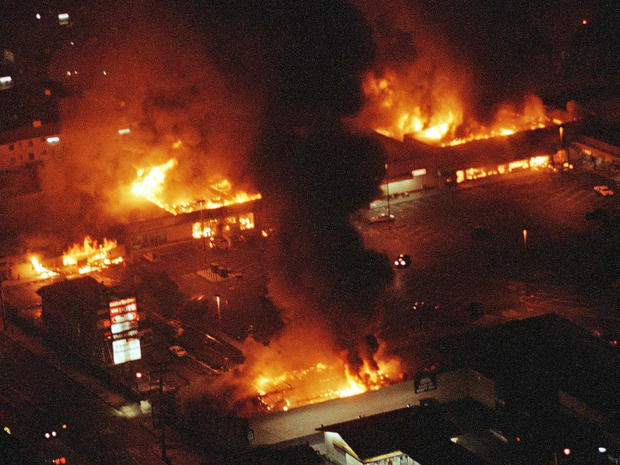
This photo shows burning buildings in South-Central Los Angeles on April 30, 1992, one day after four police officers were acquitted in the beating of Rodney King. The riots left 55 people dead and more than 2,000 injured.
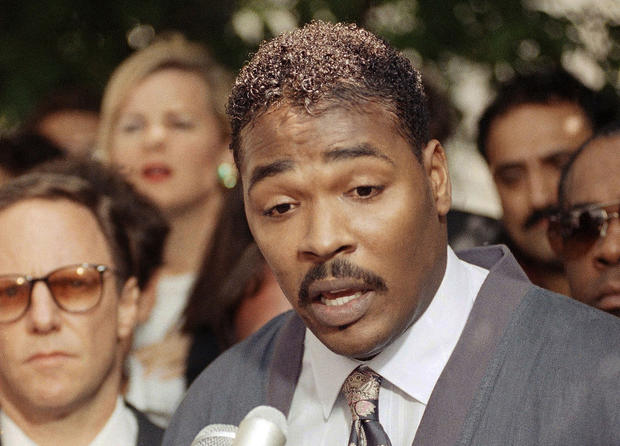
AP Photo/David Longstreath
Rodney King speaks during a news conference on May 1, 1992, in Beverly Hills. His attorney, Steven Lerman, is at left.
King called for the end of violence in the city, poignantly pleading, "Can we all get along? Can we get along? Can we stop making it horrible for the older people and the kids?"
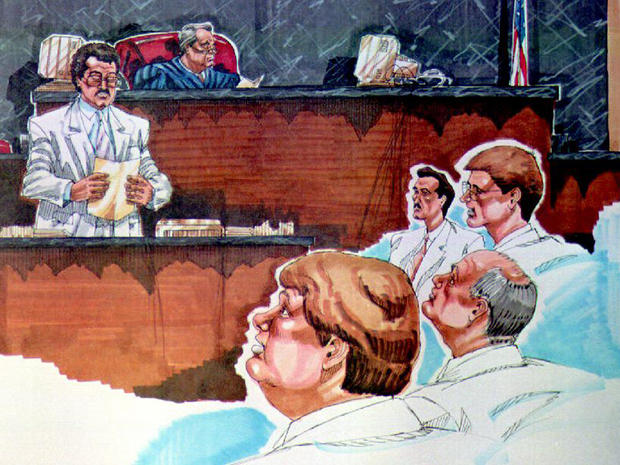
STEVE WERBLUN/AFP/Getty Images
In a courtroom sketch, court clerk Jim Holmes reads the verdict April 17, 1993, in the closing minutes of the Rodney King civil rights case as the defendants look on, in Los Angeles, Calif.
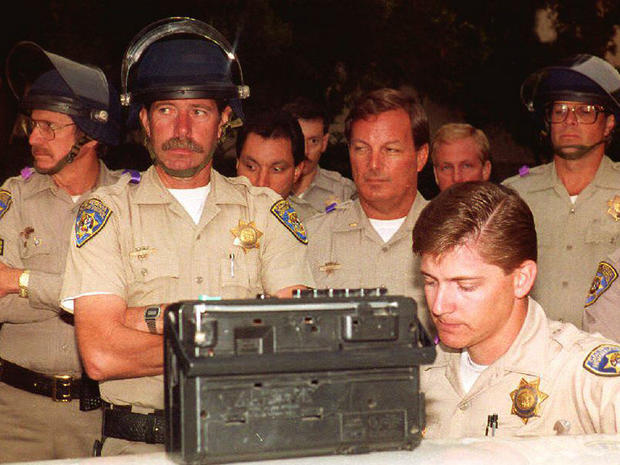
VINCE BUCCI/AFP/Getty Images
California Highway Patrol officers, some in riot gear, gather on April 17, 1993, to hear the verdicts returned in the Rodney King civil rights trial as they listen to a radio on top of a police cruiser at a staging area outside the Los Angeles Coliseum. A jury found two of the four officers charged in the case guilty.
AP Photo/Chris Pizzello, file
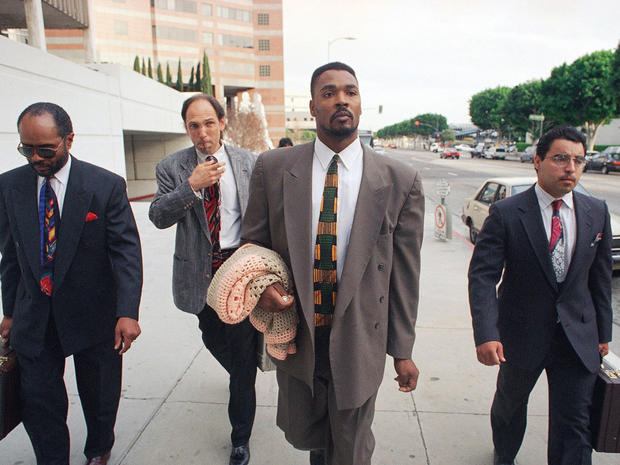
This March 23, 1994 file photo shows Rodney King, second from right, leaving the Federal Courthouse in Los Angeles with his lawyer Wilton Grimes, far left, and two unidentified men.
He received a $3.8 million settlement from the city, but recently told The Associated Press much of that money was lost to bad investments.
Kevork Djansezian/Getty Images
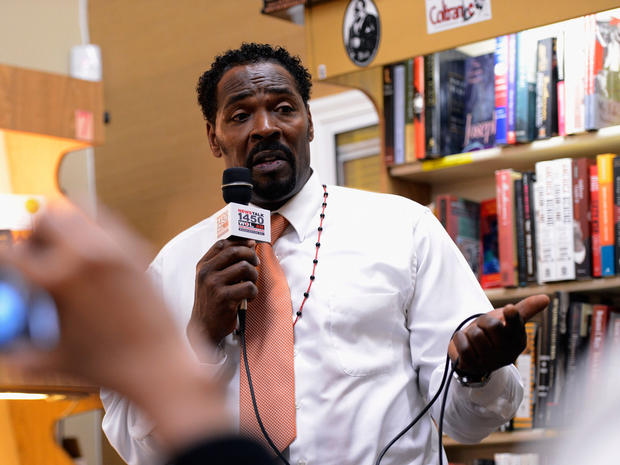
Rodney King speaks during a signing event for his new book, "The Riot Within: My Journey From Rebellion to Redemption," at EsoWon bookstore on April 30, 2012, in Los Angeles, Calif.
In April King spoke candidly to KCBS anchor Pat Harvey about the Los Angeles riots and his life since, as well as his ability to forgive the officers.
"I just felt the support throughout the world, not just here in America but the letters and the positive comments and feedback that I was getting since the beating, and people have forgiven me for some things that I've done, and so, I wouldn't be able to live with myself if I wasn't able to forgive the officers," King said.