AP Photo, file
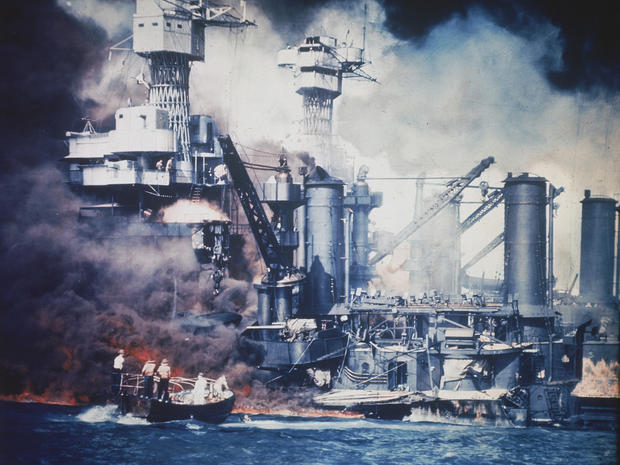
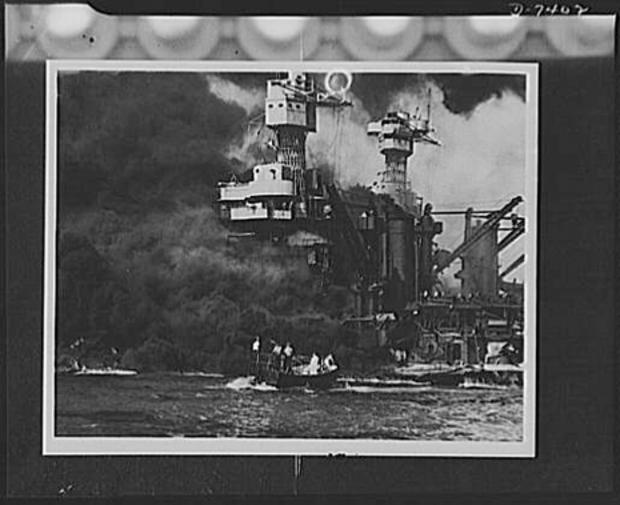
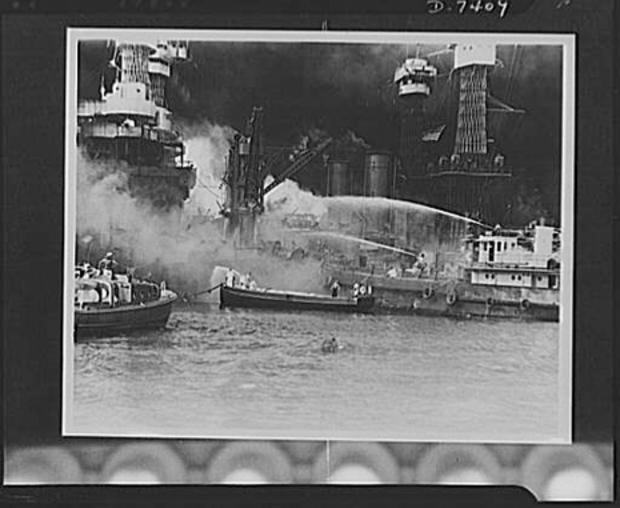
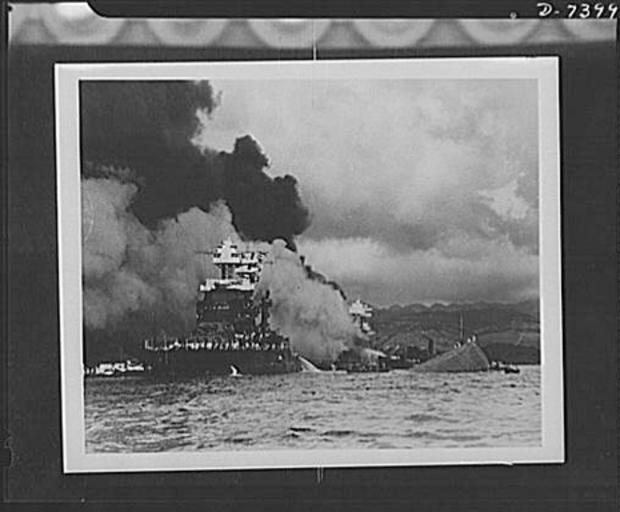
Dec. 7, 2012, marks the 71st anniversary of the Japanese attack on the U.S. naval base in Pearl Harbor, Hawaii, that killed thousands of people and launched the United States into World War II. This collection from the Library of Congress features photos taken during the attack. In this photo, a small boat rescues a USS West Virginia crew member from the water after the bombing.
National Archives
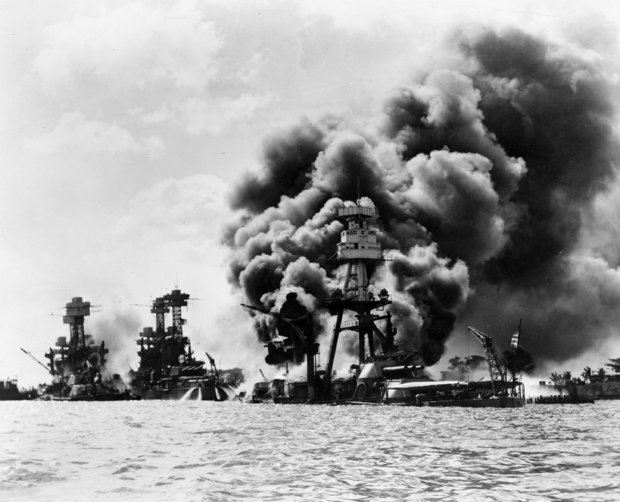
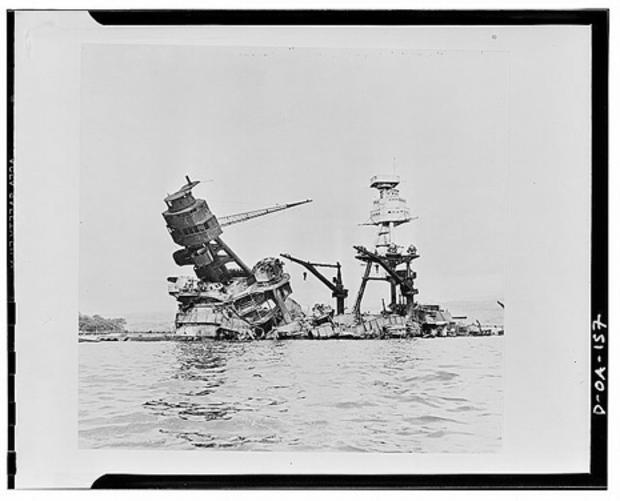
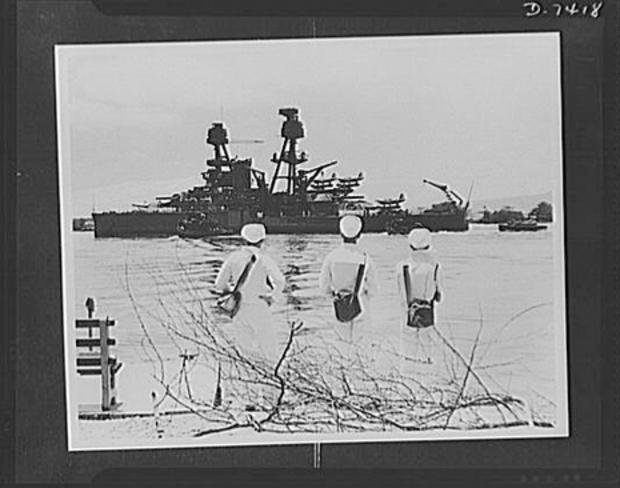
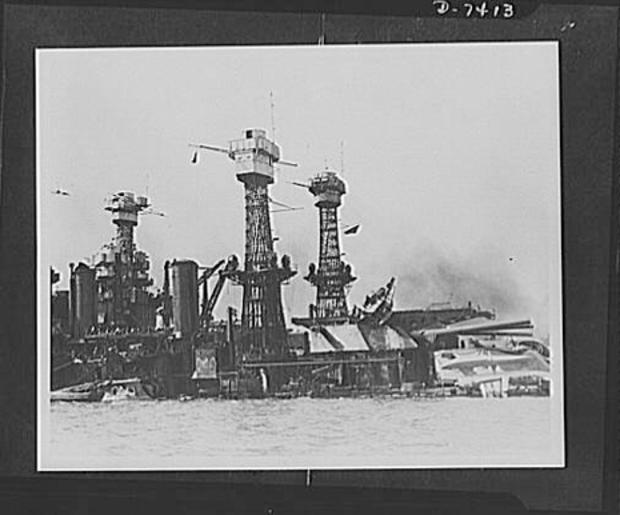
Testifying to the extent of the Japanese sneak attacks are these three stricken U.S. battleships. Left to right: USS West Virginia, severely damaged; USS Tennessee, damaged; and USS Arizona, sunk.
The Library of Congress
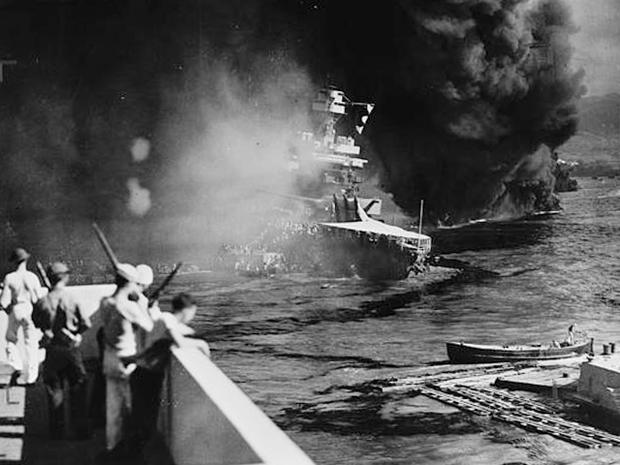
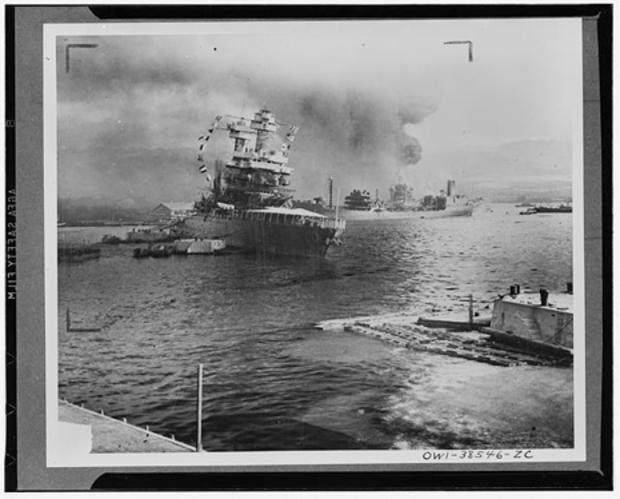
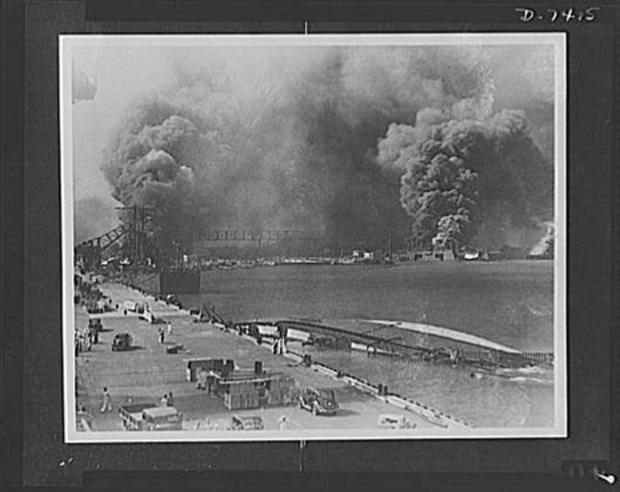
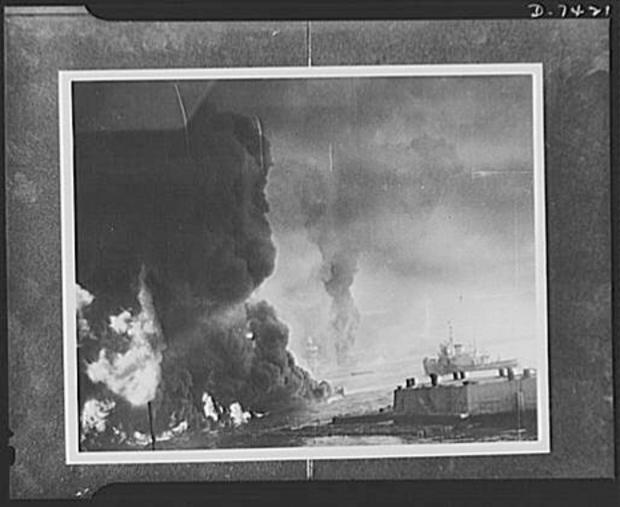
Battered by aerial bombs and torpedoes, the USS California settles slowly into the mud and muck of Pearl Harbor. Clouds of black, oily smoke pouring up from the California and her stricken sister ships conceal all but the hull of the capsized USS Oklahoma at the extreme right.
AP Photo
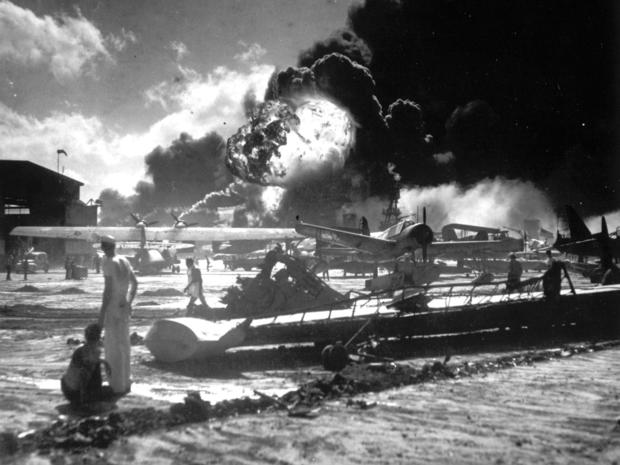
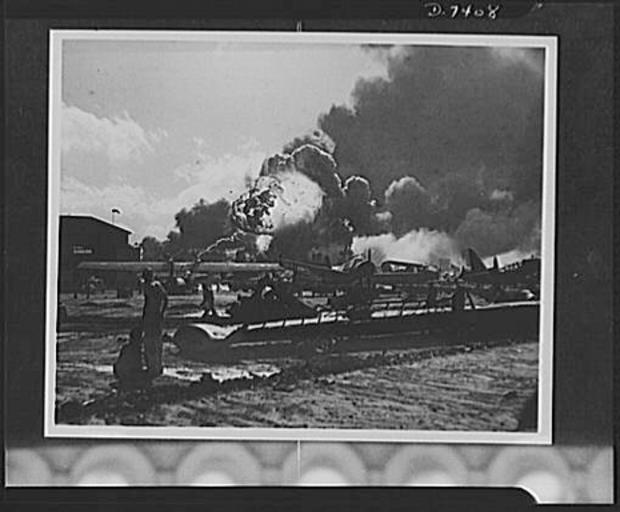
Sailors stand among wrecked airplanes at Ford Island Naval Air Station as they watch the explosion of the USS Shaw in the background, during the Japanese surprise attack on Pearl Harbor, Hawaii.
The Library of Congress
The USS Neosho, a navy oil tanker, cautiously backs away from her berth (right center) in a successful effort to escape the Japanese attack on Pearl Harbor, Dec. 7, 1941. At left the battleship USS California lists after aerial blows. Other crippled warships and part of the hull of the capsized USS Oklahoma may be seen in the background. The Neosho was later sunk in the Coral Sea.
The Library of Congress
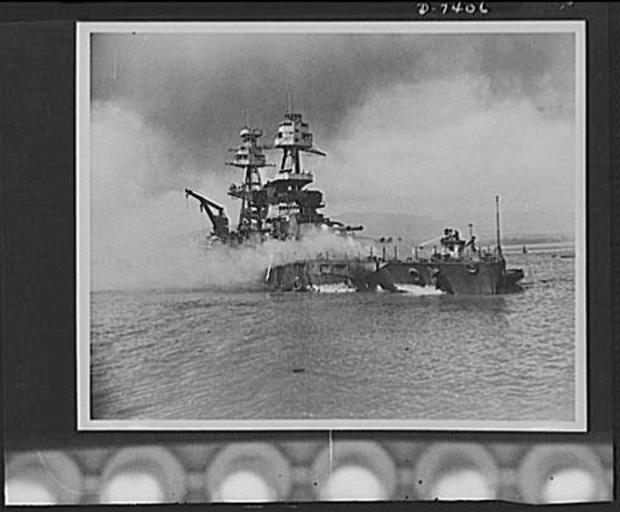
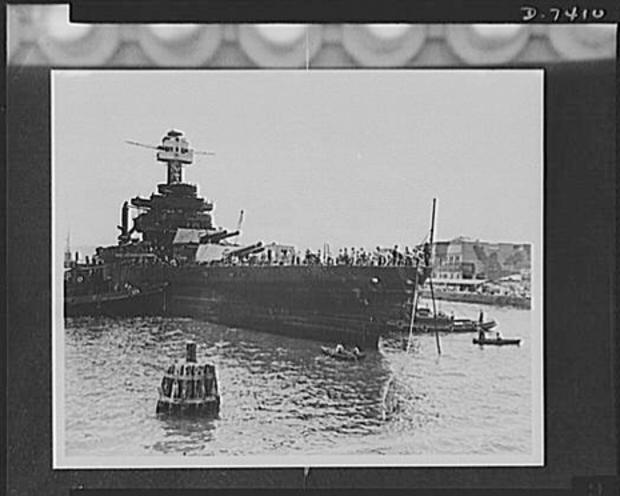
Severely damaged and beached during the Japanese attack on Pearl Harbor, the USS Nevada gets ready to leave her Hawaiian anchorage for permanent repairs at a U.S. port. Temporary repairs made at Pearl Harbor enabled the battleship to make the voyage under her own power.
The Library of Congress
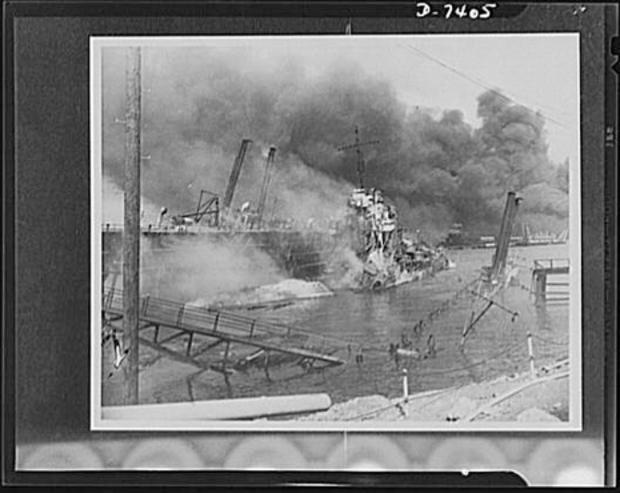
Hit by three bombs which exploded her forward magazine, the 1,500-ton destroyer Shaw lies a twisted mass of wreckage in the heavily bombed floating drydock YFD-2. Note the bow of the Shaw lying on its side in the foreground. Part of the dry dock, at right, is under water while the other side is listing heavily.
The Library of Congress
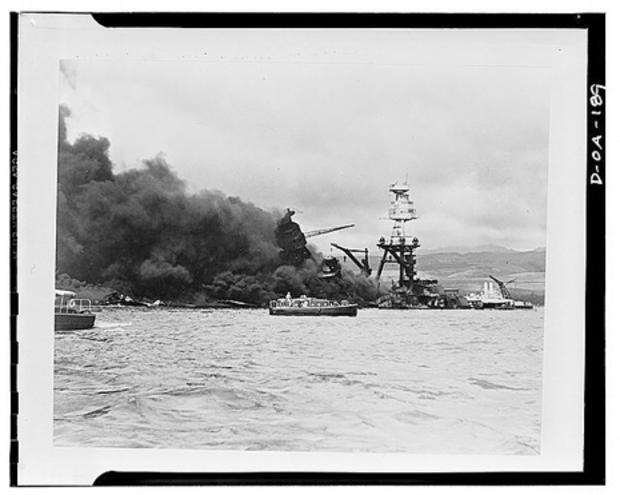
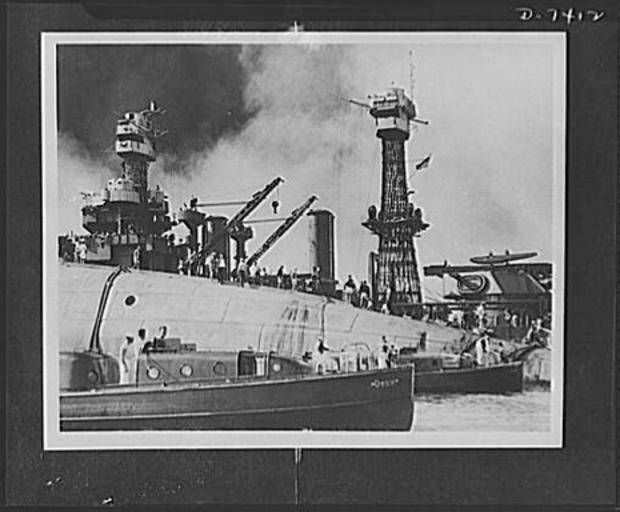
A small boat rescues a seaman from the 31,800-ton USS West Virginia burning in the foreground. Smoke rolling out amid ships shows where the most extensive damage occurred. Note the two men in the superstructure. The USS Tennessee is inboard.
The Library of Congress
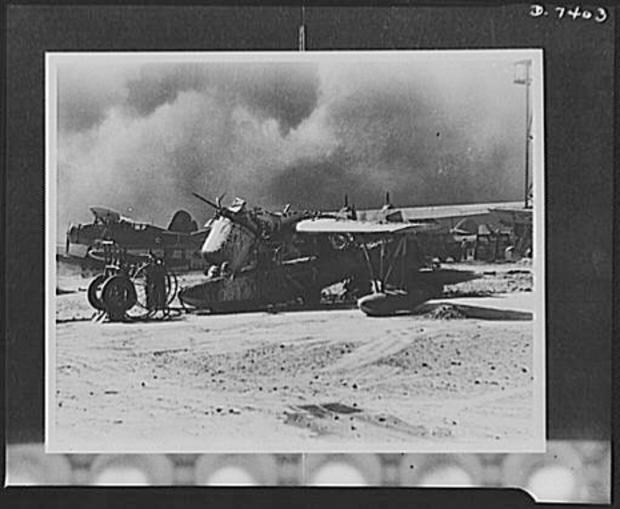
One of the 80 U.S. Navy planes wrecked by Japanese bombs and bullets during the air attacks on Pearl Harbor, Dec. 7, 1941. The plane was an OS2U, an Observation Scout built by Vought-Sikorsky.
The Library of Congress
This is the wreckage-strewn naval air station at Pearl Harbor following one of the attacks. In the background, an explosion sends a mass of flames and smoke high in the sky.
The Library of Congress
Disregarding the dangerous possibilities of explosions, U.S. sailors man their boats at the side of the burning battleship, USS West Virginia, to better fight the flames ignited by Japanese torpedoes and bombs.
The Library of Congress
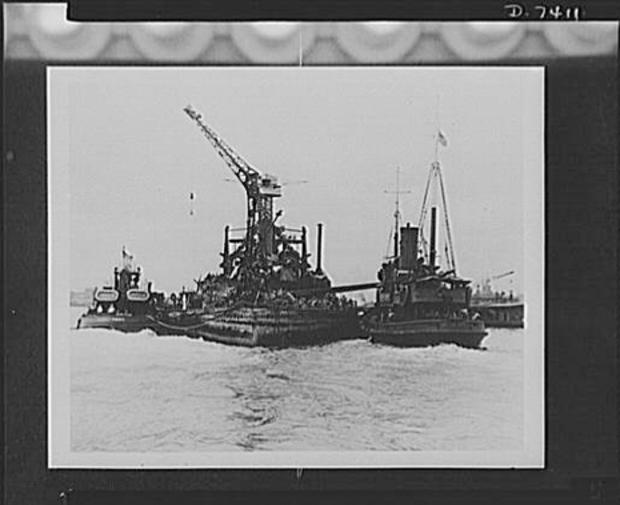
The USS West Virginia, sunk by Japanese torpedoes and bombs during the surprise attack on Pearl Harbor, was raised sufficiently to enable her to be towed to dry dock. She is shown here being maneuvered by tugs, before the start of repairs.
The Library of Congress
The 32,000-ton battleship, USS California is shown being towed to dry dock at Pearl Harbor. This ship was raised from her shallow resting place by means of cofferdams.
The Library of Congress
Rescue crews are shown here working on the upturned hull of the 29,000-ton battleship USS Oklahoma, which capsized in Pearl Harbor after being blasted by Japanese warplanes. Holes were burned through the hull to permit the rescue of some of the men trapped below. Note one of the Oklahoma's launches in the foreground. The battleship, USS Maryland is in the background.
The Library of Congress
Battered by aerial torpedoes and bomb hits, the 31,800-ton USS West Virginia (nearest ship) rests at the bottom of Pearl Harbor. Fire following the explosions as well as oil flames from the nearby sunken USS Arizona added extensively to the damage. The battleship USS Tennessee is in the background.
The Library of Congress
Smoke pours from the USS Shaw, bombed while in dry dock (right center) while in the foreground lies the capsized USS Oglala, a mine layer. To the left is the 10,000-ton cruiser, USS Helena, struck by an aerial torpedo on the starboard side. The concussion caused the Oglala, formerly berthed alongside the Helena, to flood and she turned over after being brought to the dock. Some of the superstructure of the USS Pennsylvania is seen on the left and what appears to be the USS Maryland burning on the right.
The Library of Congress
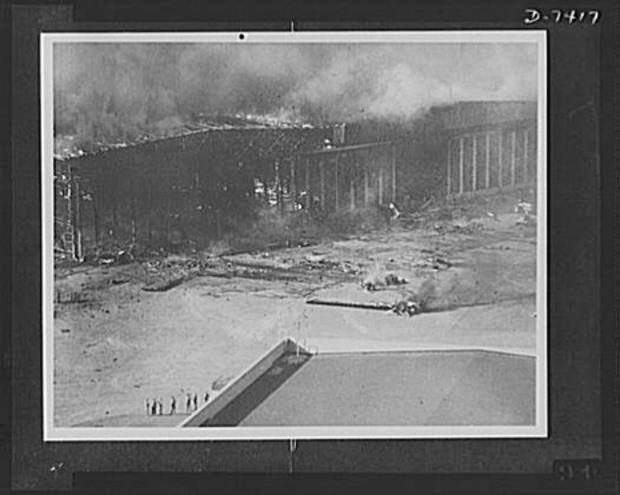
Japanese bombs wrecked and fired this hangar at the U.S. naval air station, Pearl Harbor, in addition to causing extensive damage to planes on the apron and runways, several of which may be seen in the foreground.
The Library of Congress
In this photo, the USS Maryland and USS Oklahoma are seen. The USS Oklahoma capsized. The 31,500-ton Maryland was damaged slightly and was one of the first ships to rejoin the fleet after the attack.
The Library of Congress
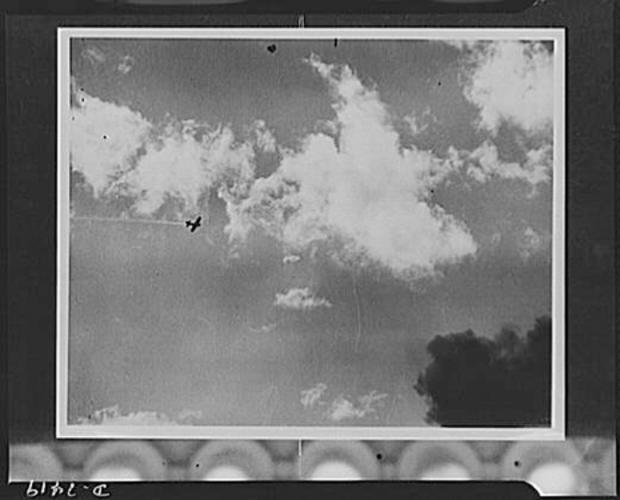
This Japanese bomber, a thin line of smoke trailing in the wake, was struck by anti-aircraft fire during the attack on Pearl Harbor.
The Library of Congress
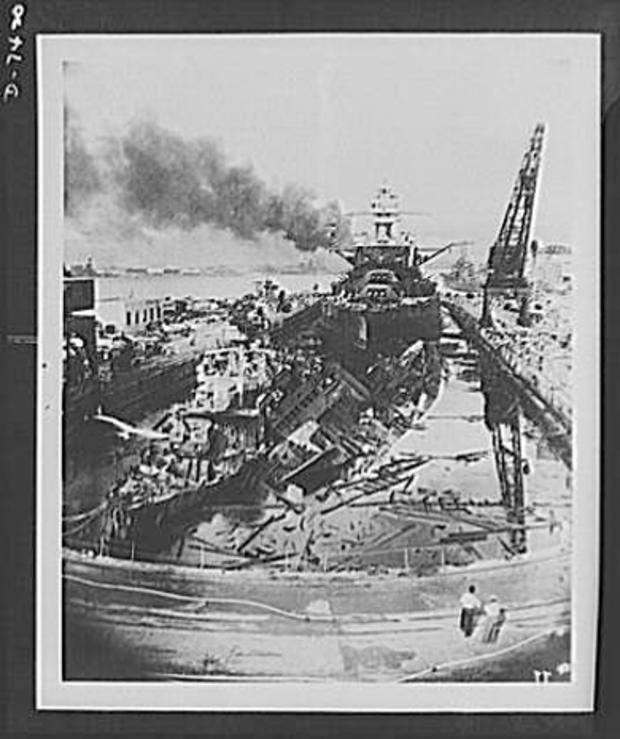
The jumbled mass of wreckage in the foreground of dry dock number one are the U.S. destroyers, Downes (left) and Cassin (right). The battleship in the rear is the USS Pennsylvania, 33,100-ton flagship of the Pacific Fleet, which suffered relatively light damage during the Japanese attack. The Pennsylvania was repaired shortly after the attack. Main and auxiliary machinery fittings of the Downes and Cassin are being transferred to new hulls.
The Library of Congress
This picture was taken from near the naval air station boat landing. Barely visible through the smoke area are a damaged U.S. battleship and the capsized USS Oklahoma.
The Library of Congress
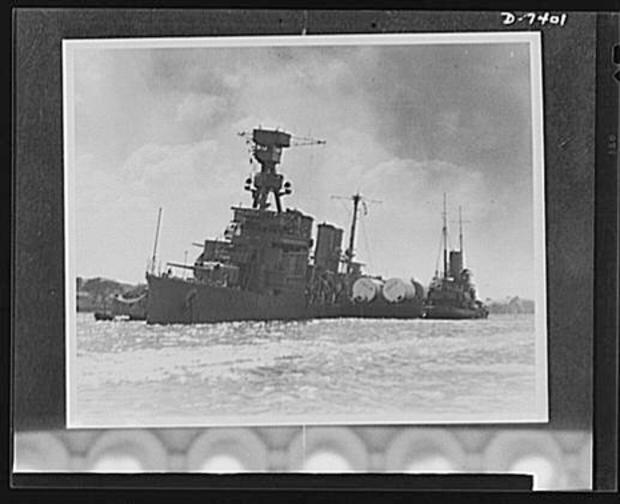
Torpedoed and bombed, the 7,050-ton light cruiser USS Raleigh is held afloat near her anchorage in Pearl Harbor by a barge. The capsized USS Utah is in the background.
The Library of Congress
Wreckage of a Japanese plane, which crashed into one of the cranes, is seen on the deck of the U.S. seaplane tender, Curtiss. In addition, the Curtiss was damaged by a bomb explosion on the main deck in the forward part of a hangar.