Gunther von Hagens/ Institute for Plastination
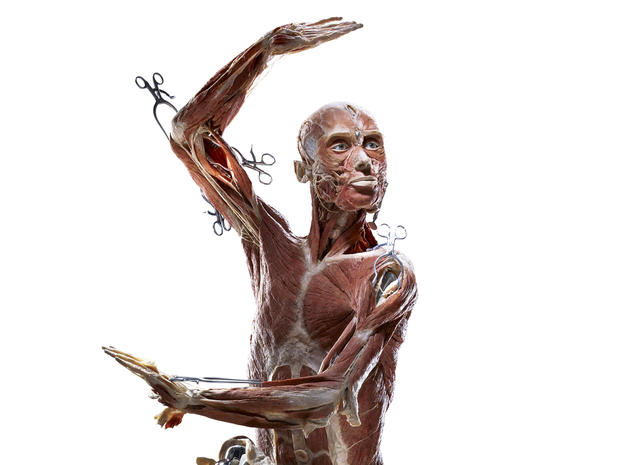
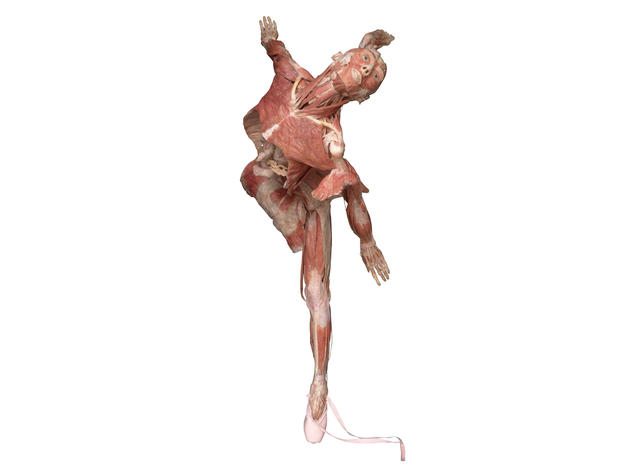
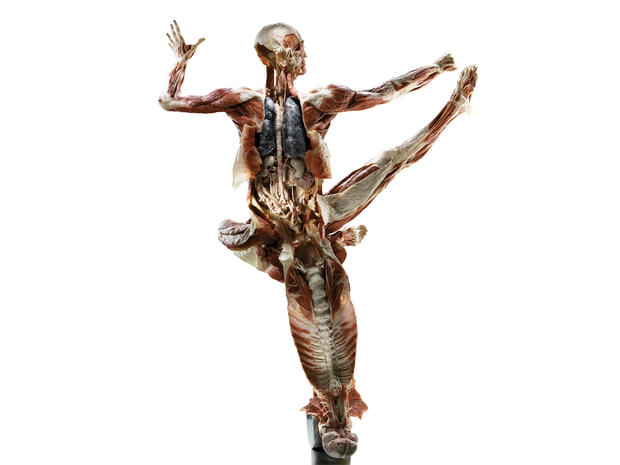
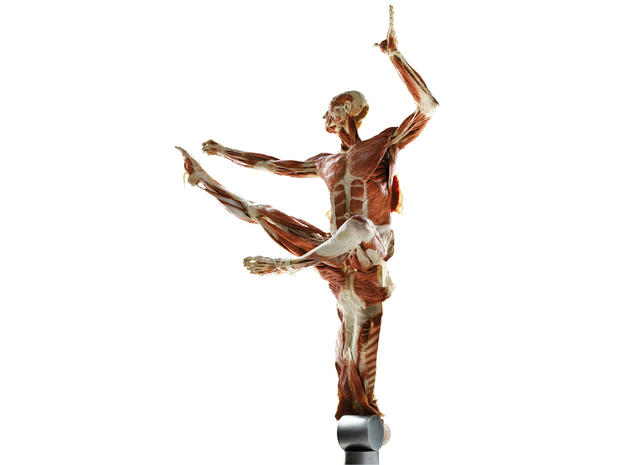
"Body Worlds: Pulse," an exhibition at Discovery Times Square in New York, showcases the human form in a way that allows that audience to see the body in a new light.
The first "Body Worlds" exhibit was shown in 1995, and more than 160 million people have seen the various displays since then.
Gunther von Hagens/ Institute for Plastination
"Body Worlds" founder German anatomist Gunther von Hagens invented the method of plastination, which is a way to preserve bodies or body parts. Water and fats are swapped out for plastic polymers that do not decay. This allows the specimen to look almost identical to the original.
Gunther von Hagens/ Institute for Plastination
"It was such a tremendous success," curator Dr. Angelina Whalley said to CBSNews.com about the first "Body Worlds" exhibit. "We were seeing people inside the exhibition being so overwhelmed at getting so close to themselves and looking at these specimens."
Gunther von Hagens/ Institute for Plastination
One of the exhibitions, "Body Worlds: Pulse," features 200 plastinated specimens that show the different systems of the body.
Gunther von Hagens/ Institute for Plastination
Dr. Angelina Whalley added that modern life affords us a lot of opportunities, but it is taking a toll on our bodies.
"We are running hastily through our lives, and we are forgetting what is really important. We forget that our bodies are not primed for hectic life," Whalley said.
Gunther von Hagens/ Institute for Plastination
Whalley said "Body Worlds: Pulse" allowed people to see the body's interior in different ways.
"In the bodies we have no extra space, but to make things visible, you need to think of spaces or make spaces to... show depth," she explained.
Gunther von Hagens/ Institute for Plastination
"We want to help people understand how intricately the body is made," added Dr. Angelina Whalley.
Gunther von Hagens/ Institute for Plastination
Dr. Whalley pointed out that one body system that is suffering in particular is our cardiovascular system, due to problems like obesity.
"I want to have them (the audience) to understand how intricate the body is made and help them understand it is the result of our lifestyles," she pointed out. "Whatever we do to our bodies matters."
Gunther von Hagens/ Institute for Plastination
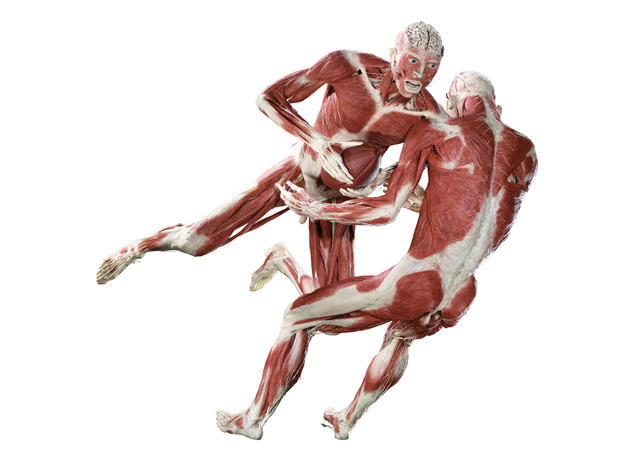
In this specimen, people are playing football. Dr. Angelina Whalley wants people to be astonished by "how can people posture a specimen like this without it falling down," showing just how strong and flexible the human body is.
Gunther von Hagens/ Institute for Plastination
Another specimen shows two people embracing.
"They have such a great quality, and they are anatomically exact science. They are really pieces of art," she said.