Universal/Weinstein Company
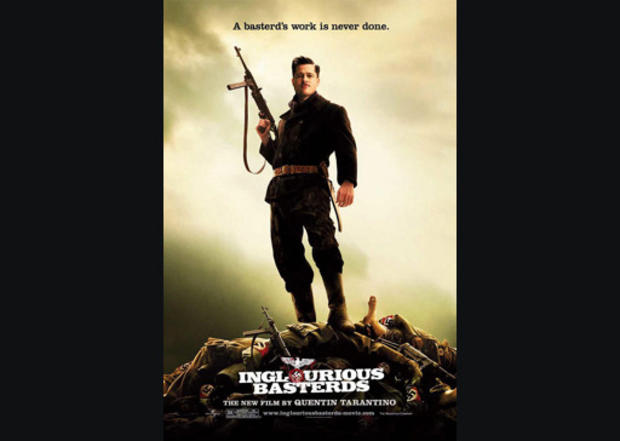
Quentin Tarantino's fable of Jewish retribution and good ol' fashioned war movie heroics gleefully rewrites World War II history, thanks to the power of cinema as both a weapon of propaganda and of revenge. The Universal-Weinstein Brothers release was nominated for eight Oscars, including Best Picture, and won one Academy Award.
By CBSNews.com producer David Morgan
The Dirty Not-Quite-a-Dozen
Universal/Weinstein Company
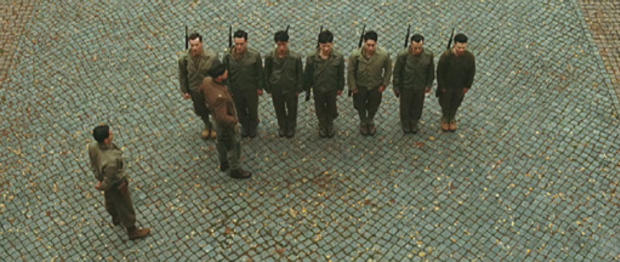
The film celebrates the director's favorite pop culture tropes, from film genres (spaghetti Westerns, '70s blaxploitation, and of course WWII epics) to an eclectic music score (incorporating Ennio Morricone, Bill Preston and David Bowie). But it is first and foremost a Tarantino film (the band of Jewish commandos aims to spread terror among the Nazis by scalping them).
Now That's a Knife
Universal/Weinstein Company
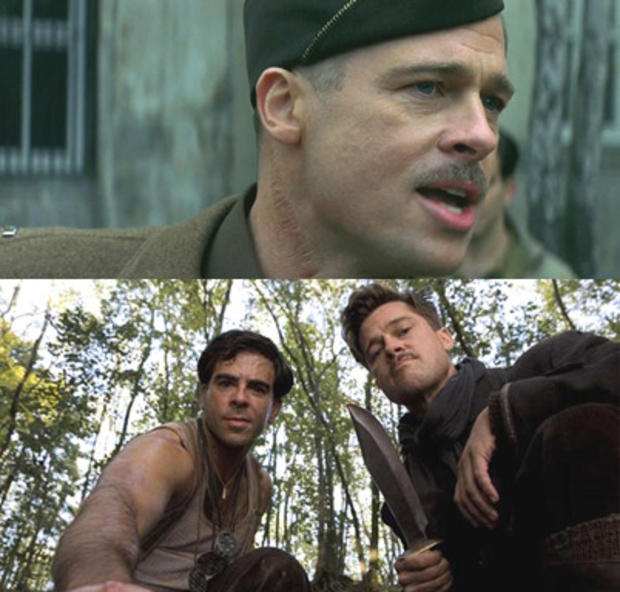
Brad Pitt (an Oscar nominee last year for "The Curious Case of Benjamin Button") plays Lt. Aldo Raine, a Tennessee hillbilly who commands his squadron of Jewish fighters to teach the German army fear: "Through our cruelty, they will know who we are. They will find the evidence of our cruelty in the disemboweled, dismembered, and disfigured bodies of their brothers we leave behind us."
The Fuhrer's Furor
Universal/Weinstein Company
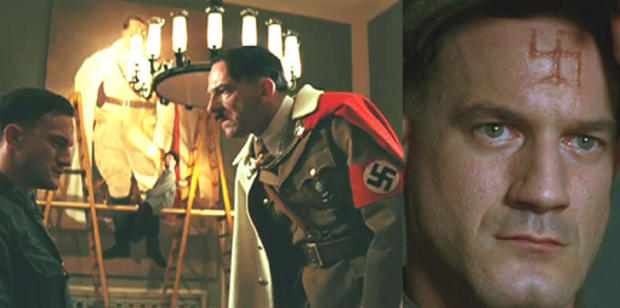
As the Inglourious Basterds sweep through Europe, their reputation for brutality becomes a form of propaganda. Adolf Hitler (Martin Wuttke) becomes obsessed with the Jewish commandos his troops fear are Golems: "This pack of filthy degenerates are doing what the Russian army didn't and Patton's army couldn't — turning soldiers of the Third Reich into superstitious old women!"
The Escape
Universal/Weinstein Company
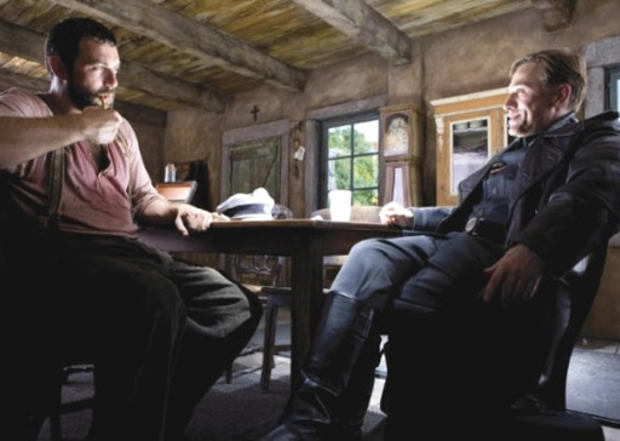
The film tells two intertwining tales set "Once upon a time in Nazi-occupied France." In one, an SS colonel interrogates a French farmer whom he suspects of harboring Jewish refugees, unleashing a blaze of violence from which a young Jewish girl barely escapes.
Not Your Father's Nazi Officer
Universal/Weinstein Company
S.S. Colonel Hans Landa, a mercurial officer in charge of hunting down Jews, plays cat-and-mouse in his interrogations, mixing congeniality, razor-sharp perception and even pastry with the coldest of threats — not to mention outbursts of unbridled violence.
Paris
Universal/Weinstein Company
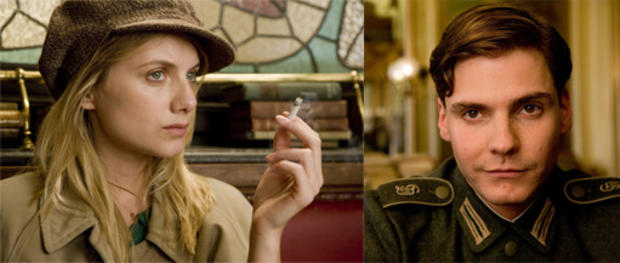
Three years later in Occupied Paris, the girl, Shosanna (played by French actress-director Melanie Laurent), finds herself the unwilling recipient of admiring attention from a German officer (Daniel Bruhl), who unwittingly provides her with an astonishing opportunity to exact revenge upon the Nazis.
"Nation's Pride"
Universal/Weinstein Company
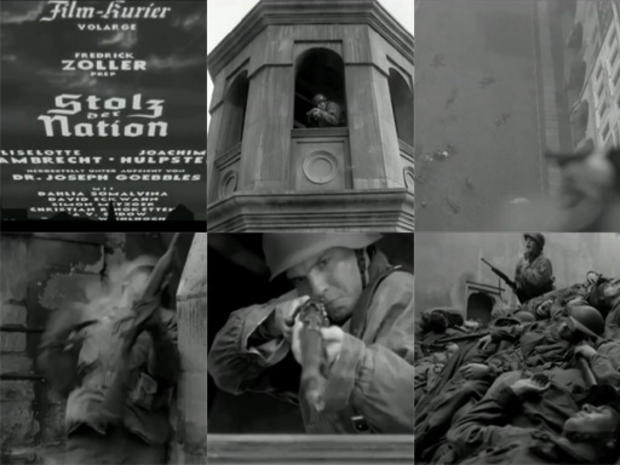
Bruhl's war hero, Fredrick Zoller, plays himself in a propaganda film aimed at bolstering the home front. "Hostel" director Eli Roth (who plays Donny Donowitz) and his brother Gabriel shot "Nation's Pride," the film-within-a-film depicting the exploits of Bruhl's sniper picking off hundreds of Allied soldiers. Roth laughed that Tarantino had gotten a Jewish director to make Nazi propaganda.
Film Lore
Universal/Weinstein Company
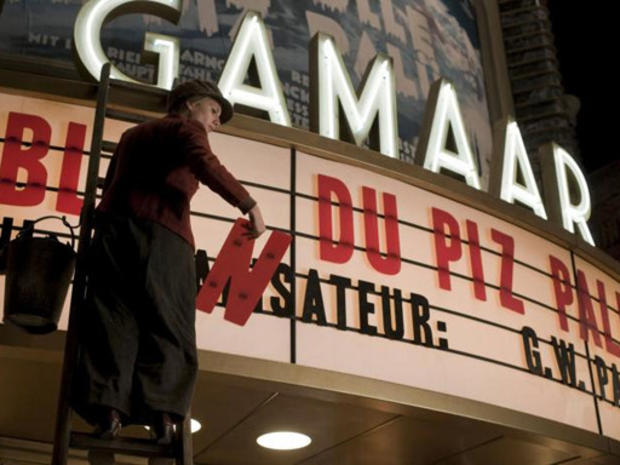
"Basterds" showcases cinema's ability to stir emotions of pride and hate (in the fever brought to a boil by the Nazis' propaganda), as well as cross the divides of culture and politics (where a love of film becomes a common link). But highly-flammable nitrate film also demonstrates cinema's capacity to become an instrument of violence.
Actress Par Excellence
Universal/Weinstein Company
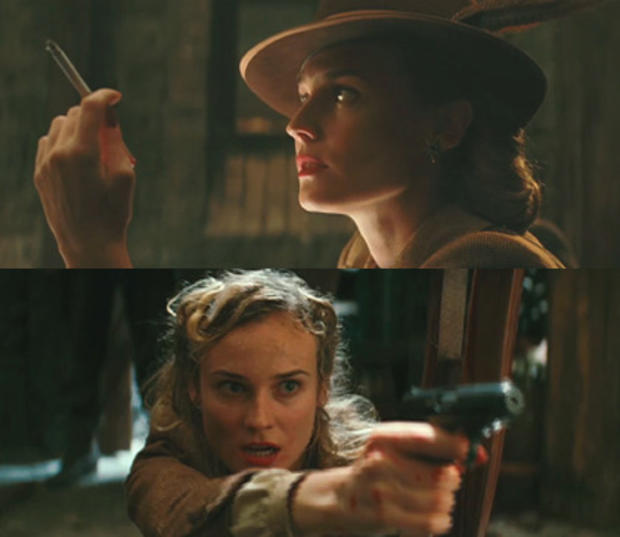
European actress Diane Kruger (who also appeared in "National Treasure" and as Helen in "Troy") stars as German movie star Bridget Von Hammersmark, described by Kruger as "a very cool character to play, "in the vein of a big UFA movie star, like Marlene Dietrich or Hildegard Knef . . . but she's actually a spy for the Brits."
The Revenge of the Big Face
Universal/Weinstein Company
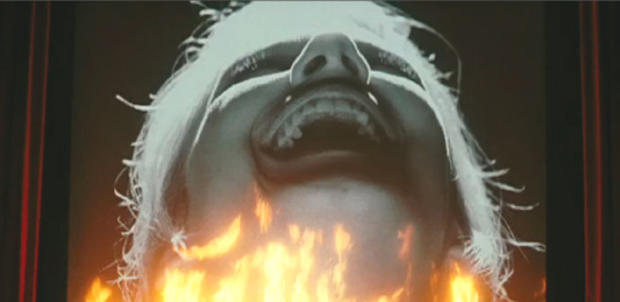
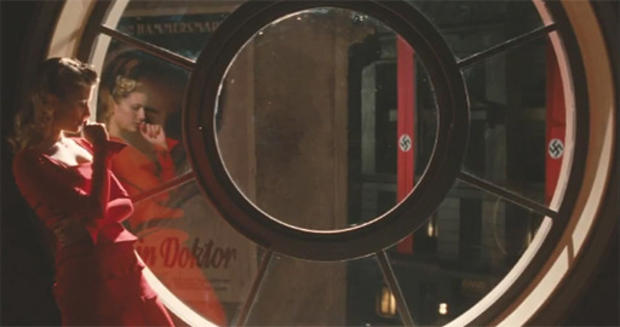
In a shot that resembles early German Expressionist cinema (such as Fritz Lang's "Metropolis"), the giant image of Shosanna appears to melt in flames.
Quentin Tarantino
Universal/Weinstein Company
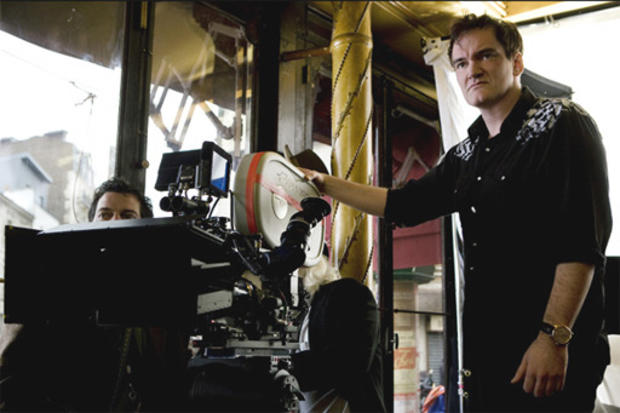
Quentin Tarantino won an Academy Award for co-writing the screenplay of "Pulp Fiction." His other films include "Reservoir Dogs," "Jackie Brown," and "Kill Bill: Volumes 1 and 2." He is nominated as both director and screenwriter of "Inglourious Basterds."
Christoph Waltz
Universal/Weinstein Company
Regardless of the countless depictions of Nazis that have come before, Christoph Waltz never fails to surprise. Producer Lawrence Bender said when Waltz auditioned for the role. "Quentin and I looked at each other, and I could see in his eyes, and he could see in my eyes, that we found him. . . . He was just killing it."
Universal/Weinstein Company
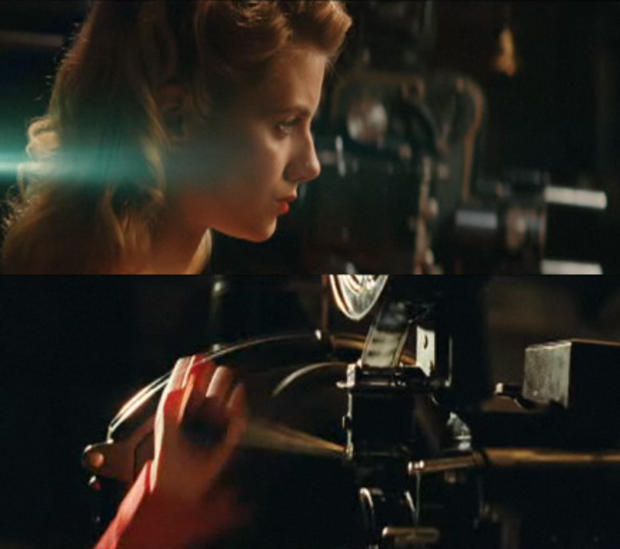
Before shooting her scenes in the cinema projection booth, Tarantino had Laurent run films at the New Beverly Cinema in Los Angeles, showing cartoons, trailers, and Tarantino's "Reservoir Dogs," in a midnight-to-3 a.m. shift. "I was alone with all the machines, and the shows did go on and I did it with pride," she said.
I Can Stare for a Thousand Years
Universal/Weinstein Company
Cinematographer Robert Richardson, a two-time Academy Award winner (for Oliver Stone's "JFK" and Martin Scorsese's "The Aviator"), also shot Tarantino's "Kill Bill: Volumes 1 and 2." Filming primarily in Germany (including on stages where Joseph Goebbels made Nazi-era propaganda films), Richardson's camera captured fascistic grandeur and the intense emotional undercurrents of revenge.
AP Photo/Francois Mori
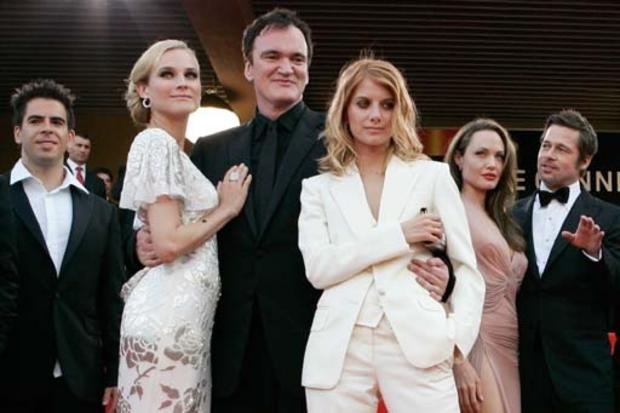
From left: Eli Roth, Diane Kruger, Quentin Tarantino, Melanie Laurent, Angelina Jolie and Brad Pitt arrive for the screening of "Inglourious Basterds" during the 62nd Cannes Film Festival in Cannes, southern France, Wednesday, May 20, 2009.
AP Photo/Joel Ryan
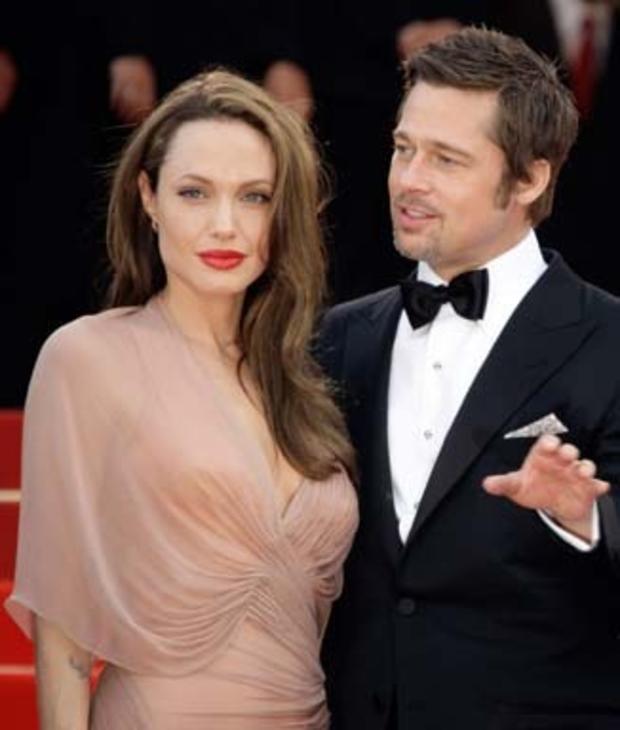
Brad Pitt and Angelina Jolie arrive for the screening of the film "Inglourious Basterds" during the 62nd Cannes Film Festival in Cannes, southern France, Wednesday, May 20, 2009.
CBS
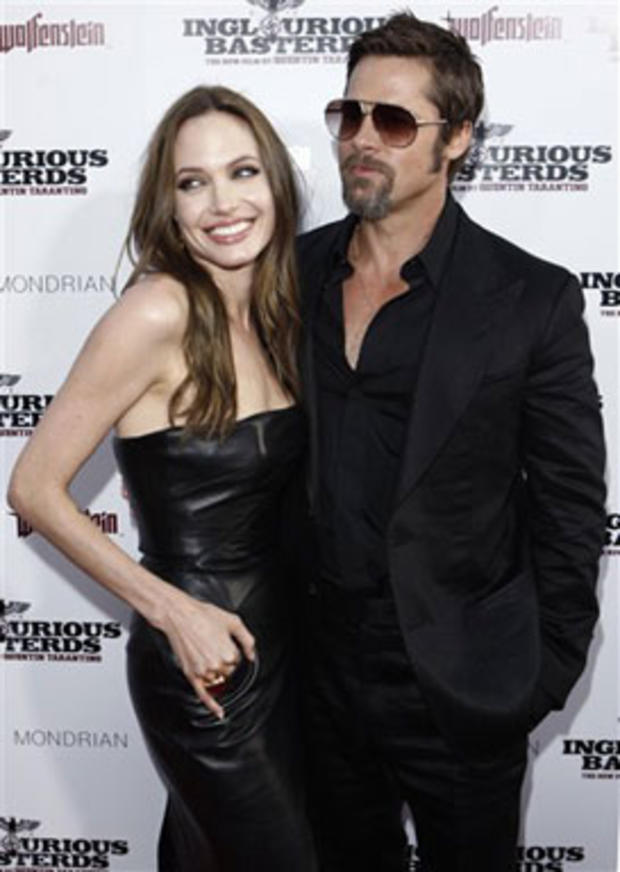
Brad Pitt and Angelina Jolie arrive at the premiere of "Inglourious Basterds" in Los Angeles on Monday, Aug. 10, 2009.
AP Photo/Matt Sayles
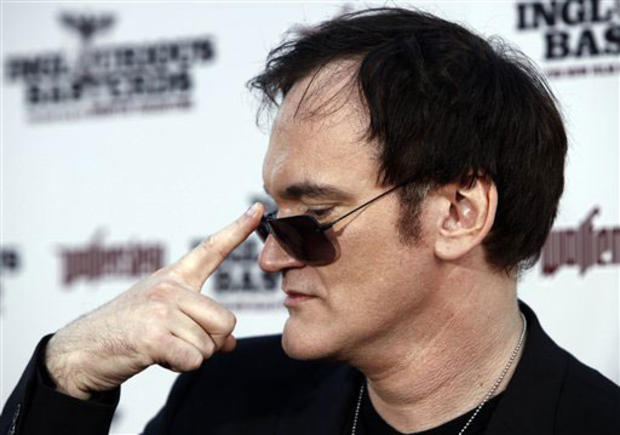
Director Quentin Tarantino arrives at the premiere of "Inglourious Basterds" in Los Angeles on Monday, Aug. 10, 2009.
AP Photo/Shizuo Kambayashi
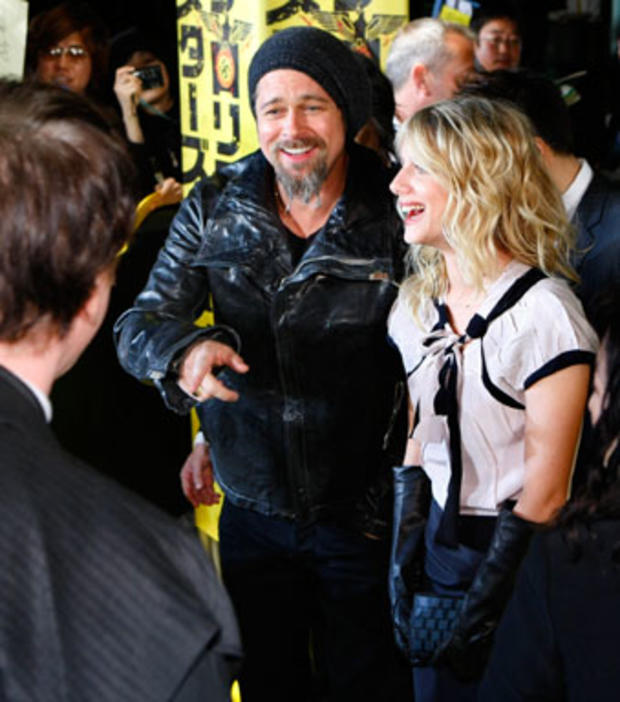
Actor Brad Pitt chats with director Quentin Tarantino, left, and French actress Melanie Laurent during the Japanese premiere of "Inglourious Basterds" in Tokyo, Wednesday, Nov. 4, 2009.
AP
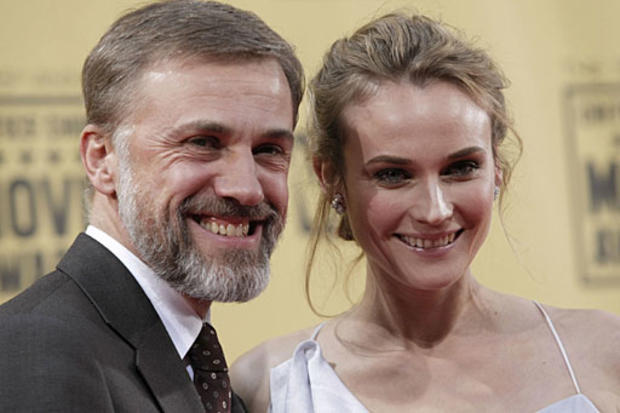
"Inglourious Basterds" co-stars Christoph Waltz and Diane Kruger pose together at the 15th Annual Critics Choice Movie Awards on Friday, Jan. 15, 2010, in Los Angeles. Waltz won the award for Best Supporting Actor.
Amy Sancetta
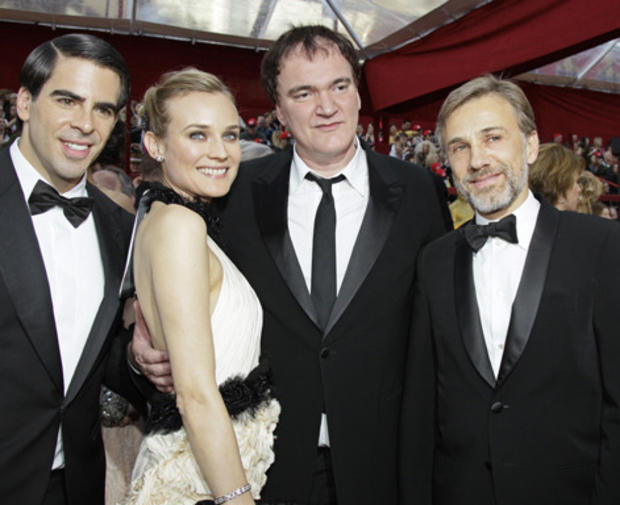
Eli Roth, Diane Kruger, Quentin Tarantino (nominated for Best Director and Best Original Screenplay) and Best Supporting Actor nominee Christoph Waltz arrive at the 82nd Academy Awards Sunday, March 7, 2010, in Los Angeles.
Mark J. Terrill
Penelope Cruz presents the Academy Award to Christoph Waltz Sunday, March 7, 2010. "Oscar and Penelope, that's an uber bingo," Waltz said.
"I always wanted to discover some new continent and I thought I had to go this way, and then I was introduced to Quentin Tarantino, who was putting together an expedition that was equipped by Harvey Weinstein and Lawrence Bender and David Linde, and he put this script in front of me and he said, 'This is where we're going, but we're going the other way.' So Brad Pitt helped me on board and Diane Kruger was there, Melanie Laurent and Denis Menochet and Bob Richardson and Sally Menke and Adam Schweitzer and Lisa Kasteler. Everybody helped me find a place. Universal and The Weinstein Company and ICM and Quentin, with his unorthodox methods of navigation, this fearless explorer, took this ship across and brought it in with flying colors — and that's why I'm here. And this is your welcoming embrace. And there's no way I can ever thank you enough, but I can start right now. Thank you."