AP/NOAA
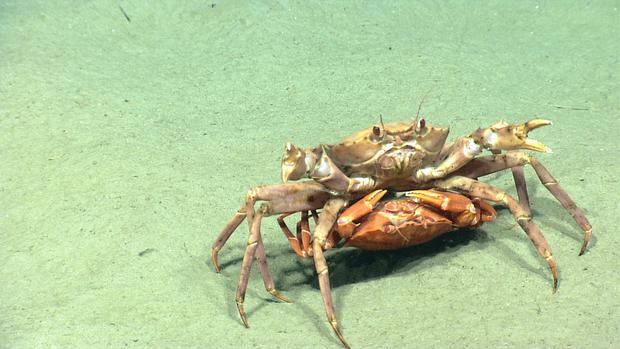
An Atlantic deep-sea red crab mating pair. The male crab is carrying the inverted female.
The National Oceanic and Atmospheric Administration's ship "Okeanos Explorer" and its robotic sub are providing live coverage of an expedition off Nantucket, that is allowing other scientists and everyday people to follow along.
Until now, the world of the deep sea floor has mostly been the province of scientists where a handful of researchers would huddle on a ship and watch the video from below, take notes, and two or three years later write a scientific paper.
AP/NOAA
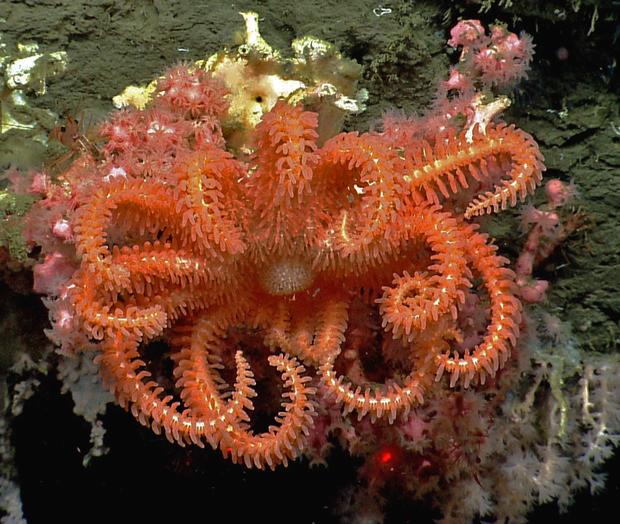
A brisingid seastar rests on a small bubblegum coral in Hydrographer canyon.
AP/NOAA
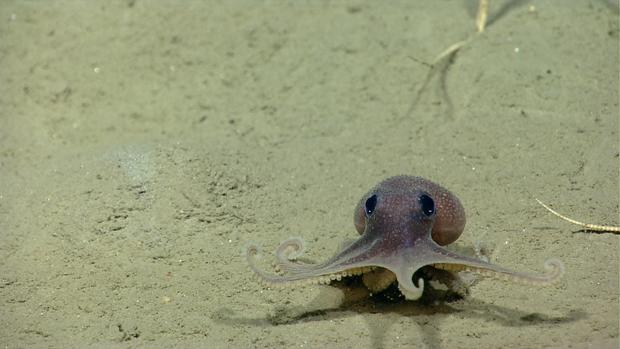
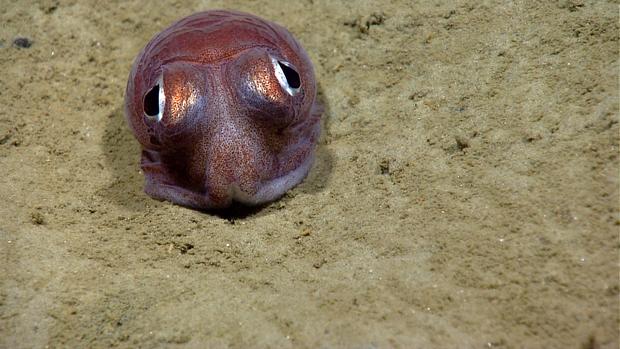
A baby octopus (graneledone verrucosa) is seen as it moves across the seafloor of Veatch Canyon.
AP/NOAA
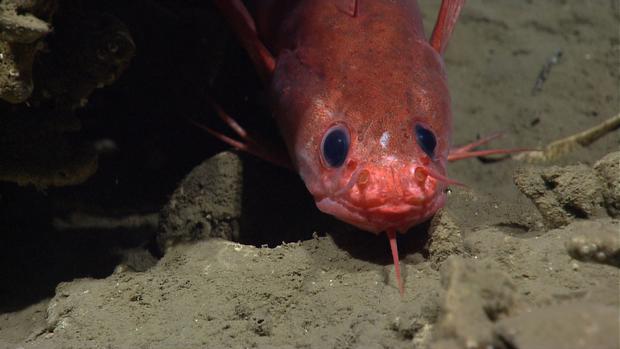
A Gaidropsarus peaks out from under a carbonate rock, during the deep sea dive.
AP/NOAA
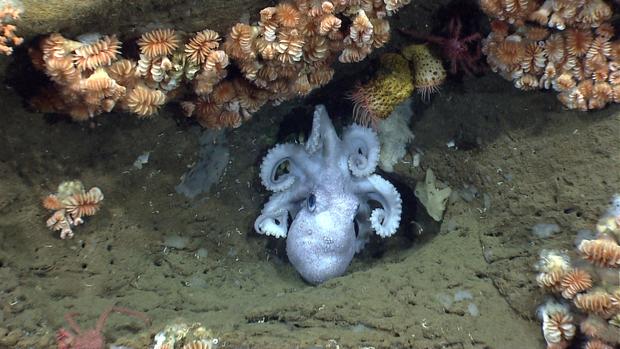
An octopus guards her eggs under an overhang in Hydrographer canyon.
AP/NOAA
An partially-hidden octopus is scene in this image from NOAA's Okeanos Explorer.
AP/NOAA
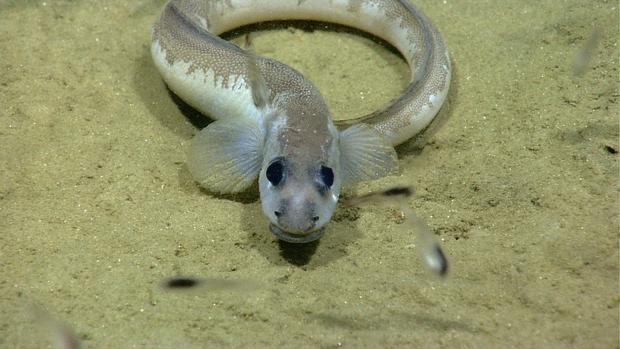
An eel pout, Lycenchelys paxillus, looks at the ROV Deep Discoverer's cameras.
AP/NOAA
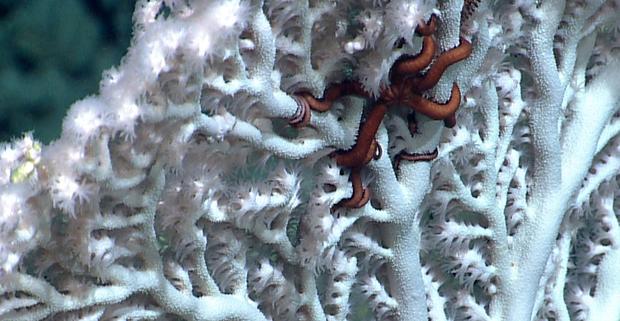
A red brittle star occupies a beautiful white octocoral.
AP/NOAA
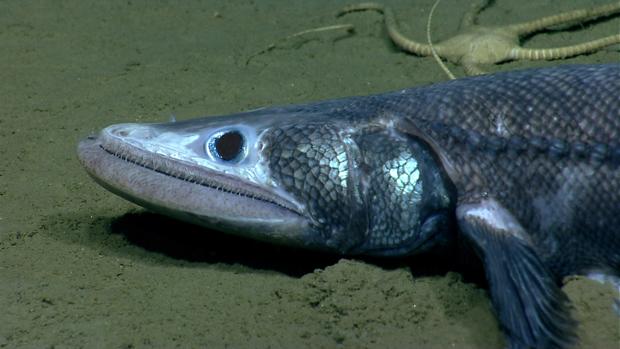
One of the stranger looking animals researchers saw in Veatch Canyon, a bathysaurus. These fish use their lower jaw to scoop sand.
AP/NOAA
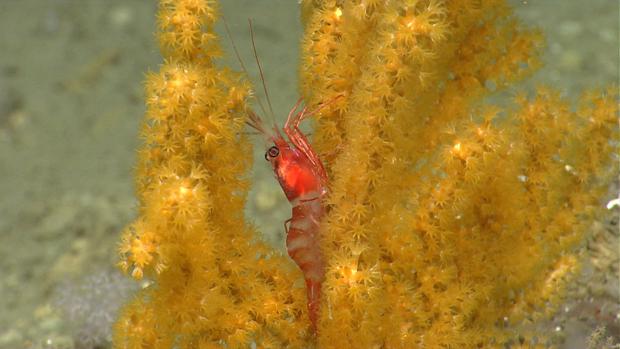
A shrimp rests on octocoral in Hydrographer canyon.
AP/NOAA
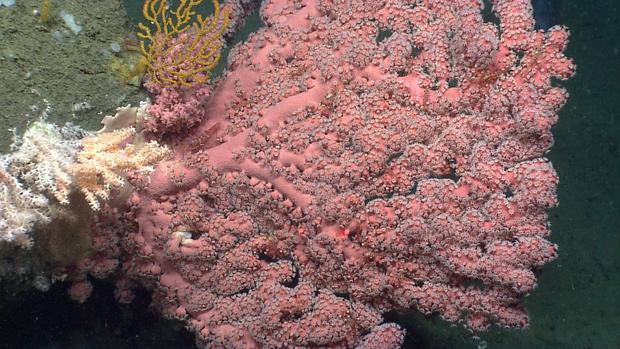
A colony with bright color and full branches with many extended polyps would be considered healthy or in good condition. The red dots in the photo are ten centimeters apart and are used for scale and age estimates.