AP Photo/Aaron Favila
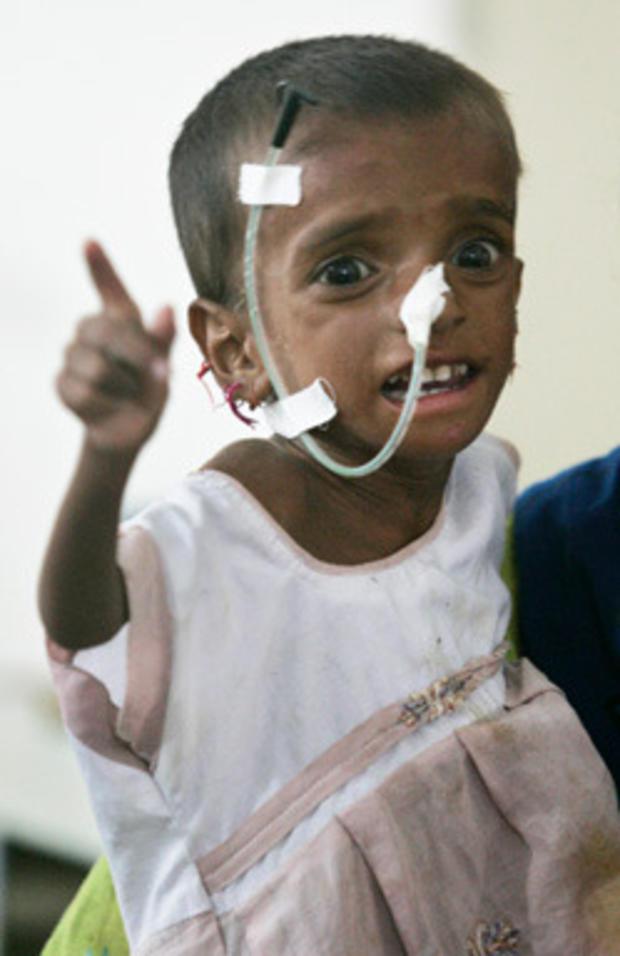
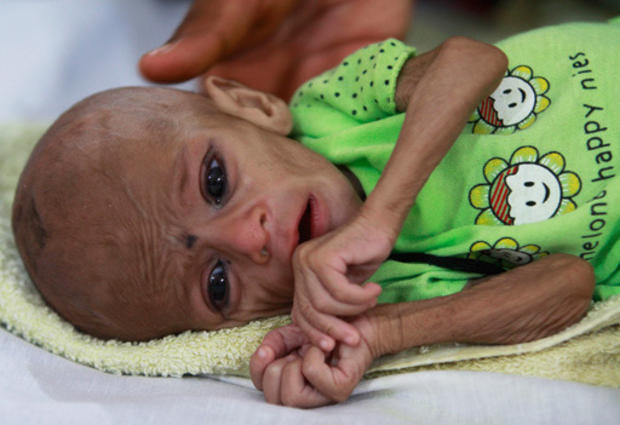
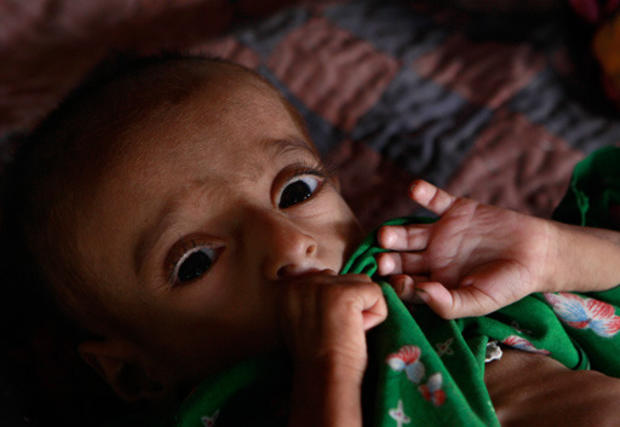
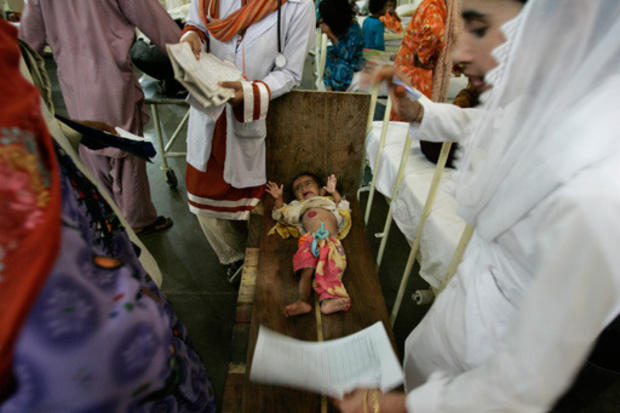
A malnourished Pakistani girl, Saira Habibullah, reaches out at the Railway Hospital in Sukkur, Sindh province, southern Pakistan, on Sept. 12, 2010. Medical experts warn the real catastrophe is moving much slower than the floodwaters. Children already sick or weak in poor rural areas prior to the floods are now fighting to stay alive as diarrhea, respiratory diseases and malaria attack their emaciated bodies.
(To find out how to you can aid the Pakistan flood relief effort, visit the U.S. State Department website here).
AP Photo/Aaron Favila
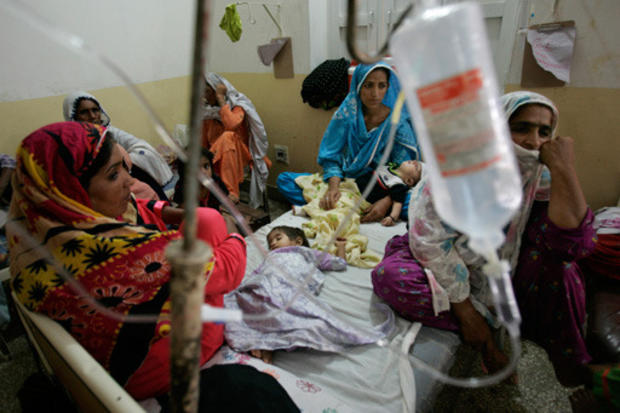
Women sit beside their children at the Railway Hospital in Sukkur, Sindh province, southern Pakistan, on Monday, Sept. 13, 2010. Medical experts warn the real catastrophe is moving much slower than the floodwaters. Children already sick or weak in poor rural areas prior to the floods are now fighting to stay alive as diarrhea, respiratory diseases and malaria attack their emaciated bodies. Many have not had milk or any form of protein since July.
(To find out how to you can aid the Pakistan flood relief effort, visit the U.S. State Department website here).
Aaron Favila
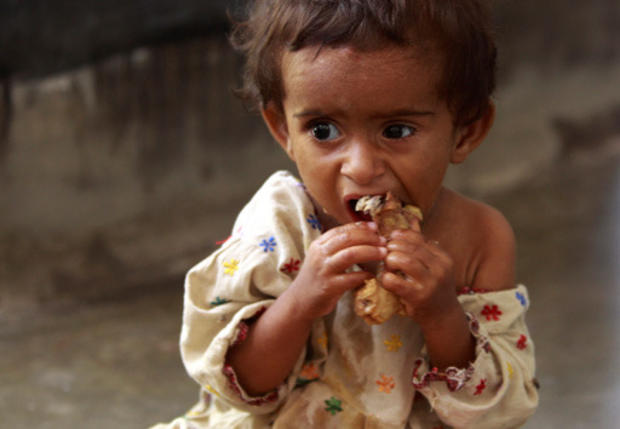
A Pakistani girl bites on a piece of chicken at the Railway Hospital in Sukkur, Sindh province, southern Pakistan, on Sept. 13, 2010. Medical experts warn the real catastrophe is moving much slower than the floodwaters. Children already sick or weak in poor rural areas prior to the floods are now fighting to stay alive as diarrhea, respiratory diseases and malaria attack their emaciated bodies.
(To find out how to you can aid the Pakistan flood relief effort, visit the U.S. State Department website here).
AP Photo/Aaron Favila
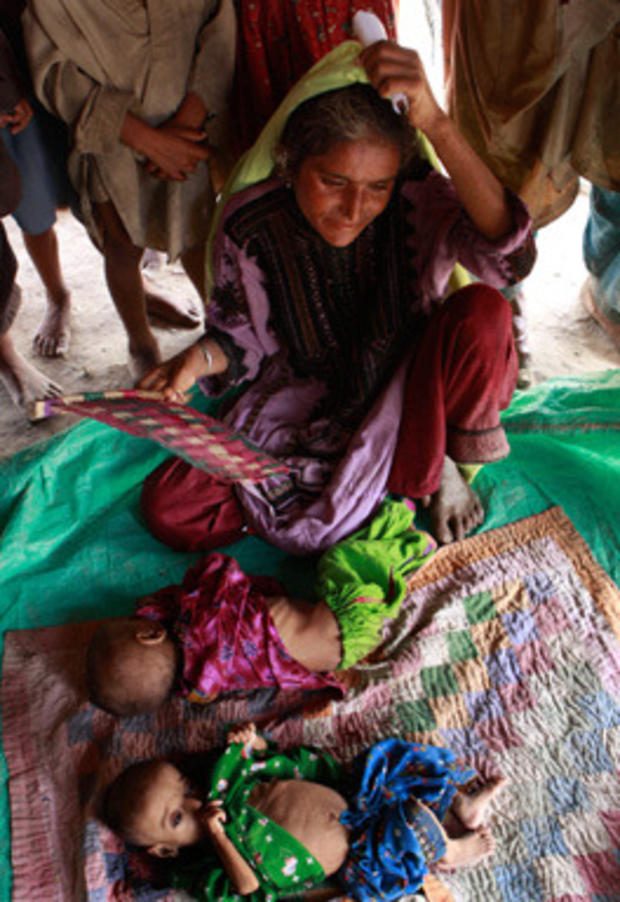
Suhani Bunglani uses a fan to keep flies away from her malnourished children at a camp for people displaced by floods in Sukkur, Sindh province, southern Pakistan, on Sept. 13, 2010. Medical experts warn the real catastrophe is moving much slower than the floodwaters. Children already sick or weak in poor rural areas prior to the floods are now fighting to stay alive as diarrhea, respiratory diseases and malaria attack their emaciated bodies.
(To find out how to you can aid the Pakistan flood relief effort, visit the U.S. State Department website here).
AP Photo/Aaron Favila
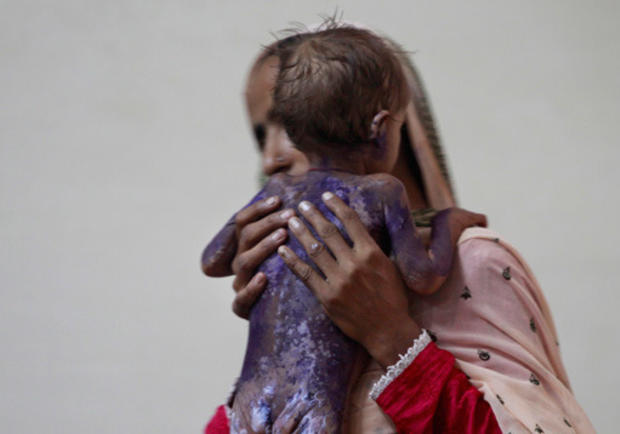
A malnourished Pakistani child, also suffering from skin disease, is seen at the Railway Hospital in Sukkur, Sindh province, southern Pakistan, on Sept. 13, 2010. Medical experts warn the real catastrophe is moving much slower than the floodwaters. Children already sick or weak in poor rural areas prior to the floods are now fighting to stay alive as diarrhea, respiratory diseases and malaria attack their emaciated bodies.
(To find out how to you can aid the Pakistan flood relief effort, visit the U.S. State Department website here).
AP Photo/Aaron Favila
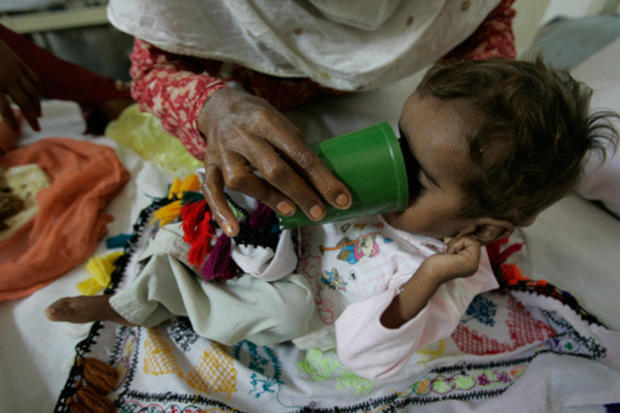
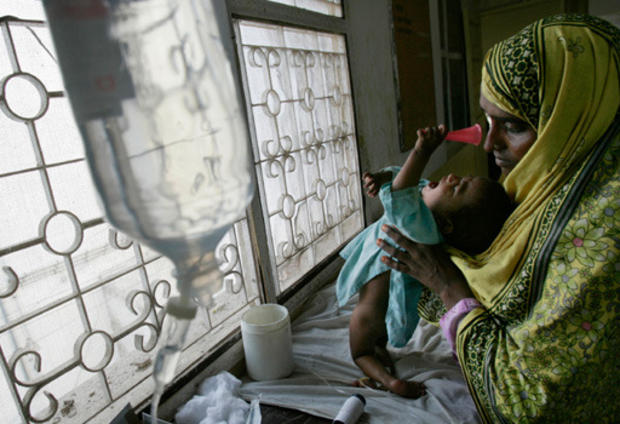
A Pakistani mother helps her child drink water in Sukkur, Sindh province, southern Pakistan, on Sept. 13, 2010. Medical experts warn the real catastrophe is moving much slower than the floodwaters. Children already sick or weak in poor rural areas prior to the floods are now fighting to stay alive as diarrhea, respiratory diseases and malaria attack their emaciated bodies.
(To find out how to you can aid the Pakistan flood relief effort, visit the U.S. State Department website here).
AP Photo/Aaron Favila
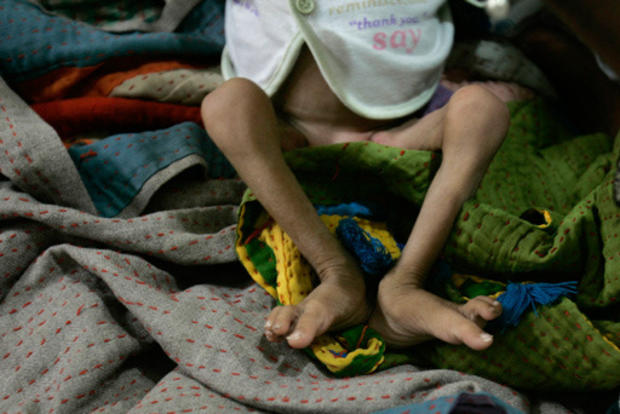
The legs of a malnourished Pakistani child are seen at the Railway Hospital in Sukkur, Sindh province, southern Pakistan, on Sept. 13, 2010. Medical experts warn the real catastrophe is moving much slower than the floodwaters. Children already sick or weak in poor rural areas prior to the floods are now fighting to stay alive as diarrhea, respiratory diseases and malaria attack their emaciated bodies.
(To find out how to you can aid the Pakistan flood relief effort, visit the U.S. State Department website here).
AP Photo/Aaron Favila
A malnourished Pakistani girl named Khadija cries at the Railway Hospital in Sukkur, Sindh province, southern Pakistan, on Sept. 13, 2010. Medical experts warn the real catastrophe is moving much slower than the floodwaters. Children already sick or weak in poor rural areas prior to the floods are now fighting to stay alive as diarrhea, respiratory diseases and malaria attack their emaciated bodies.
(To find out how to you can aid the Pakistan flood relief effort, visit the U.S. State Department website here).
AP Photo/Aaron Favila
A girl, who came from a camp for people displaced by floods in Pakistan, cries as she is treated for diarrhea at the Civil Hospital in Sukkur, Sindh province, southern Pakistan, on Sept. 13, 2010. Medical experts warn the real catastrophe is moving much slower than the floodwaters. Children already sick or weak in poor rural areas prior to the floods are now fighting to stay alive as diarrhea, respiratory diseases and malaria attack their emaciated bodies.
(To find out how to you can aid the Pakistan flood relief effort, visit the U.S. State Department website here).
AP Photo/Aaron Favila
A malnourished 1-year-old Pakistani girl named Heleema is seen at a camp for people displaced by floods in Sukkur, Sindh province, southern Pakistan, on Sept. 13, 2010. Medical experts warn the real catastrophe is moving much slower than the floodwaters. Children already sick or weak in poor rural areas prior to the floods are now fighting to stay alive as diarrhea, respiratory diseases and malaria attack their emaciated bodies.
(To find out how to you can aid the Pakistan flood relief effort, visit the U.S. State Department website here).
AP Photo/Aaron Favila
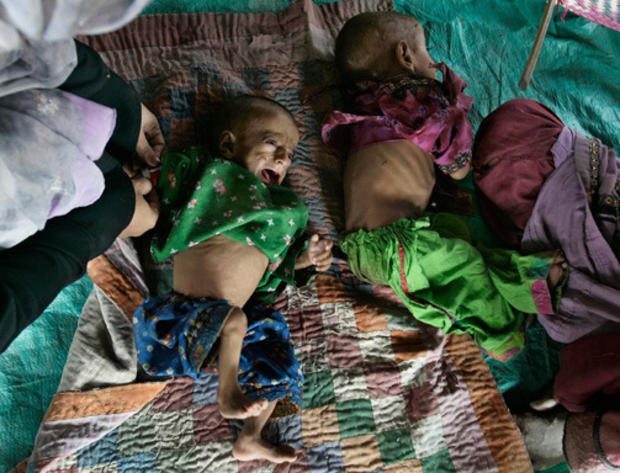
Malnourished Pakistani girls, Heleema, left, and her sister Sughra, are checked by members of Doctors Without Borders at a camp for displaced people in Sukkur, Sindh province, southern Pakistan, on Sept. 13, 2010. Medical experts warn the real catastrophe is moving much slower than the floodwaters. Children already sick or weak in poor rural areas prior to the floods are now fighting to stay alive as diarrhea, respiratory diseases and malaria attack their emaciated bodies.
(To find out how to you can aid the Pakistan flood relief effort, visit the U.S. State Department website here).
AP Photo/Aaron Favila
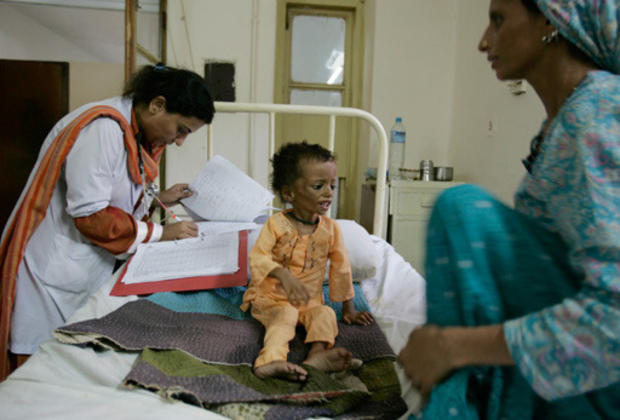
A malnourished Pakistani boy, who came from a camp for people displaced by floods, sits on his bed at the Railway Hospital in Sukkur, Sindh province, southern Pakistan, on Sept. 13, 2010. Medical experts warn the real catastrophe is moving much slower than the floodwaters. Children already sick or weak in poor rural areas prior to the floods are now fighting to stay alive as diarrhea, respiratory diseases and malaria attack their emaciated bodies.
(To find out how to you can aid the Pakistan flood relief effort, visit the U.S. State Department website here).
AP Photo/Aaron Favila
Doctors attend to a sick Pakistani child at the Railway Hospital in Sukkur, Sindh province, southern Pakistan, on Sept. 13, 2010. Medical experts warn the real catastrophe is moving much slower than the floodwaters. Children already sick or weak in poor rural areas prior to the floods are now fighting to stay alive as diarrhea, respiratory diseases and malaria attack their emaciated bodies.