AP Photo/Ramon Espinosa
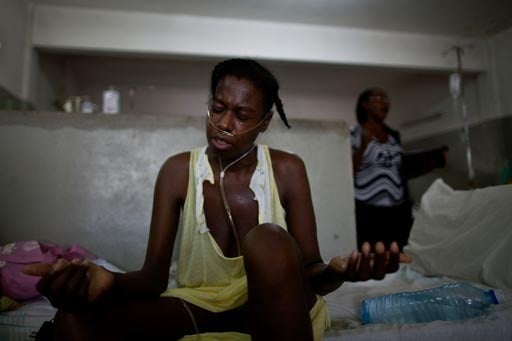
A patient prays at the State University of Haiti Hospital in Port-au-Prince, Friday, July 9, 2010. Haiti's most important general care facility, the State University of Haiti Hospital is struggling to care for patients six months after the earthquake. The American Red Cross has pledged to help pay salaries of long-underpaid doctors.
AP Photo/Ramon Espinosa
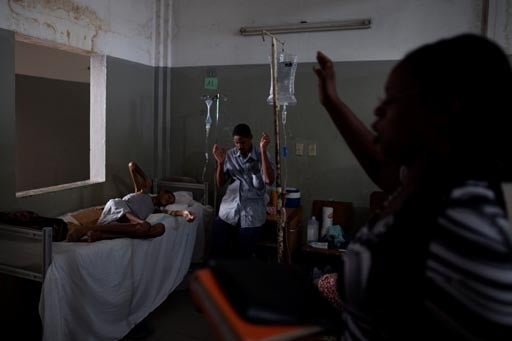
A woman prays for patients at the State University of Haiti Hospital in Port-au-Prince, Friday, July 9, 2010. Haiti's most important general care facility, the State University of Haiti Hospital is struggling to care for patients six months after the earthquake. The American Red Cross has pledged to help pay salaries of long-underpaid doctors.
AP Photo/Alexandre Meneghini
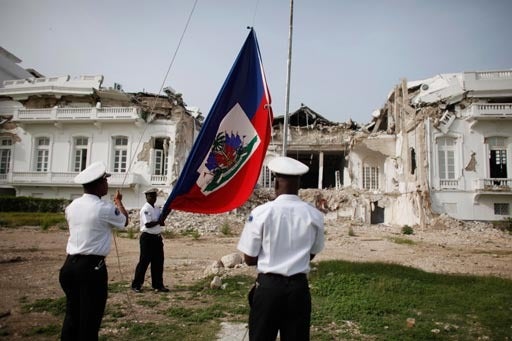
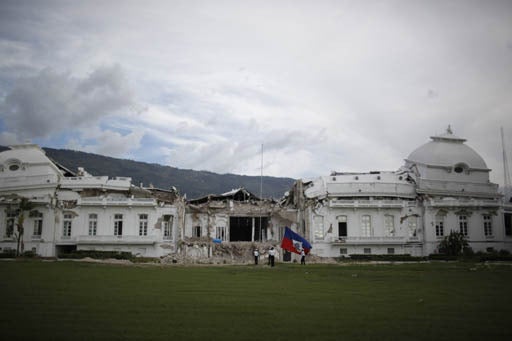
Police raise the Haitian flag in front of the Jan. 12 earthquake damaged National Palace in Port-au-Prince, Haiti, on July 4, 2010. Six months after the devastating earthquake several plans exist on paper to rebuild the main government buildings but no official decision has been made and the future of fifteen of the country's 17 ministry buildings that collapsed in the quake remains unclear.
AP Photo/Alexandre Meneghini
Police raise the Haitian flag in front of the Jan. 12 earthquake damaged National Palace in Port-au-Prince, Haiti, on July 4, 2010. Six months after the devastating earthquake several plans exist on paper to rebuild the main government buildings but no official decision has been made and the future of fifteen of the country's 17 ministry buildings that collapsed in the quake remains unclear.
AP Photo/Alexandre Meneghini
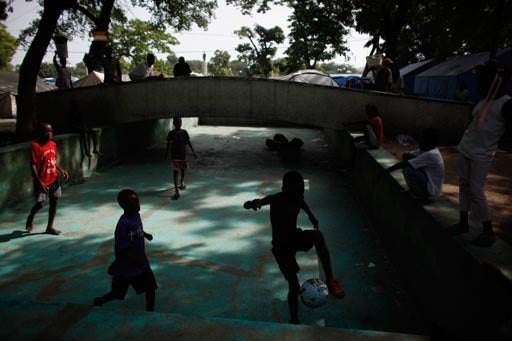
Children play inside an empty fountain at a refugee camp for earthquake displaced people in Port-au-Prince, Haiti, on July 3, 2010. Most of the $3.1 billion pledged for humanitarian aid has paid for field hospitals, plastic tarps, bandages, and food, plus salaries, transportation and upkeep of relief workers. Hundreds of millions have yet to be spent, with agencies such as the American Red Cross saying they want to avoid dumping money into half-baked projects.
AP Photo/Alexandre Meneghini
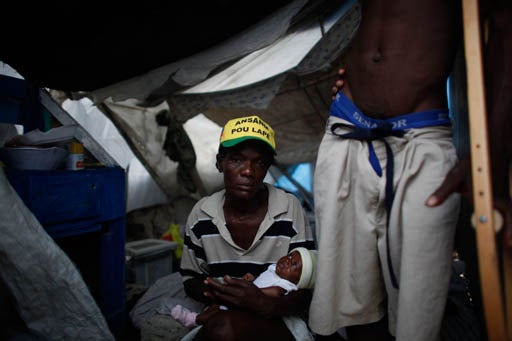
Kettelie Paul, 39, holds her 2-month-old baby Jorin Icaris in an improvised shack with her husband Belner Icaris, 28, who lost his leg in the January earthquake, in Port-au-Prince, Haiti, Friday, July 2, 2010.
AP Photo/Alexandre Meneghini
Children play near the Cathedral which was damaged by the January earthquake in Port-au-Prince, Haiti, Friday, July 2, 2010.
AP Photo/Alexandre Meneghini
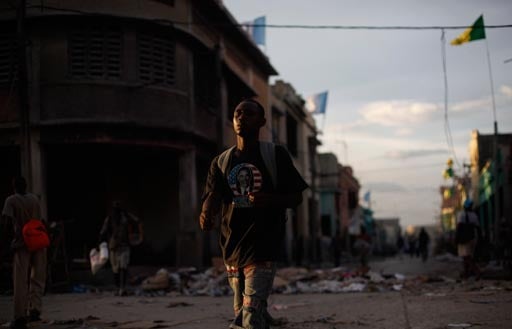
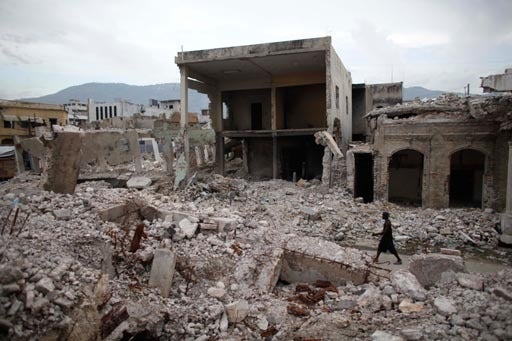
A man walks by earthquake damaged buildings in downtown Port-au-Prince, Haiti, July 1, 2010. Six months after the devastating Jan. 12 earthquake, in downtown Port-au-Prince where much of the nation's industry and commerce was clustered and where about 80 percent of the buildings were destroyed, plans are in place to remake the entire area with the government pledging $100 million for reconstruction, but top government officials cannot say where the money will come from.
AP Photo/Alexandre Meneghini
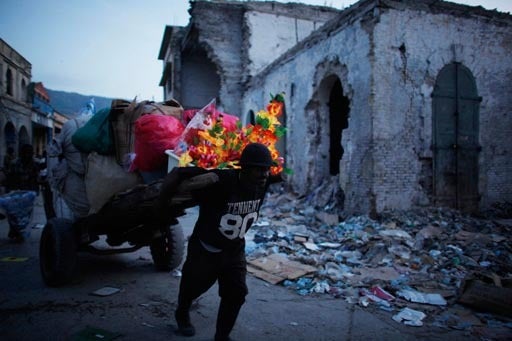
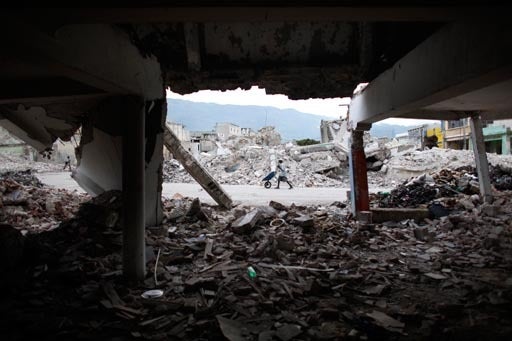
A man pulls a cart filled with merchandise in downtown Port-au-Prince, Haiti, July 1, 2010. Six months after the devastating Jan. 12 earthquake, downtown Port-au-Prince, where much of the nation's industry and commerce was clustered and where about 80 percent of the buildings were destroyed, plans are in place to remake the entire area with the government pledging $100 million for reconstruction, but top government officials cannot say where the money will come from.
AP Photo/Alexandre Meneghini
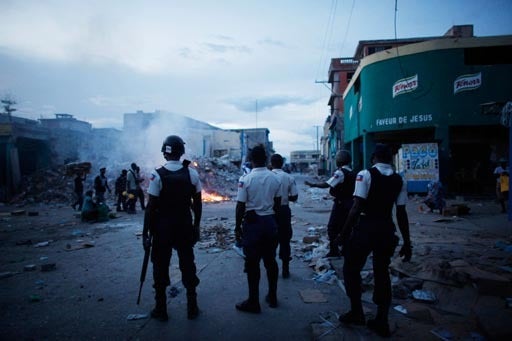
Police patrol in downtown Port-au-Prince, Haiti, July 1, 2010. Six months after the devastating Jan. 12 earthquake, in downtown Port-au-Prince where much of the nation's industry and commerce was clustered and where about 80 percent of the buildings were destroyed, plans are in place to remake the entire area with the government pledging $100 million for reconstruction, but top government officials cannot say where the money will come from.
AP Photo/Alexandre Meneghini
A man walks past debris and earthquake damaged buildings in downtown Port-au-Prince, Haiti, on June 30, 2010. Six months after the devastating Jan. 12 earthquake, downtown Port-au-Prince, where much of the nation's industry and commerce was clustered and where about 80 percent of the buildings were destroyed, plans are in place to remake the entire area with the government pledging $100 million for reconstruction, but top government officials cannot say where the money will come from.
AP Photo/Alexandre Meneghini
A man pushes a wheel barrow past earthquake damaged buildings in downtown Port-au-Prince, Haiti, June 21, 2010. Six months after the devastating Jan. 12 earthquake, in downtown Port-au-Prince where much of the nation's industry and commerce was clustered and where about 80 percent of the buildings were destroyed, plans are in place to remake the entire area with the government pledging $100 million for reconstruction, but top government officials cannot say where the money will come from.