NASA
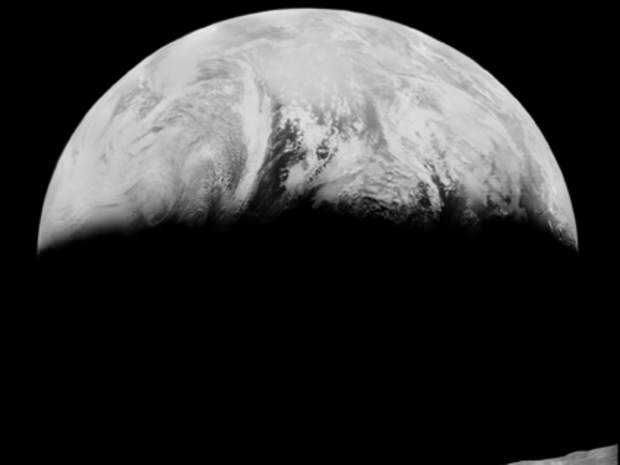
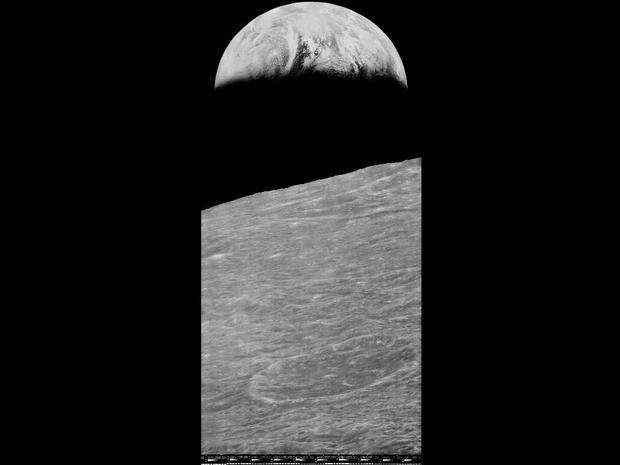
Image of the Earth recovered by the Lunar Orbiter Image Recovery Project.
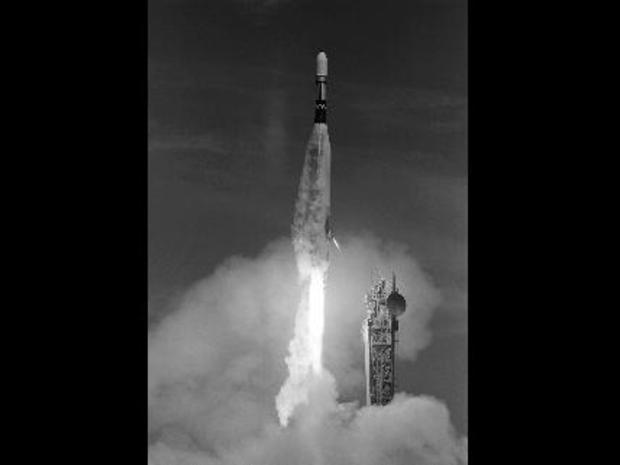
Launch of Lunar Orbiter 1
NASA
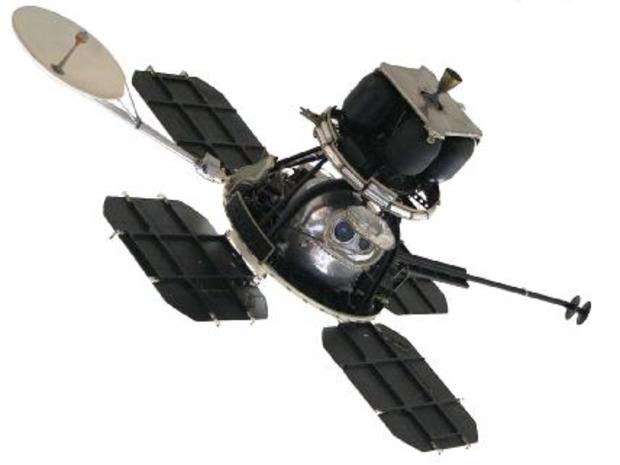
Lunar Orbiter Spacecraft
NASA/SpaceRef Interactive
Lunar Orbiter spacecraft on display in the National Air and Space Museum, Washington DC
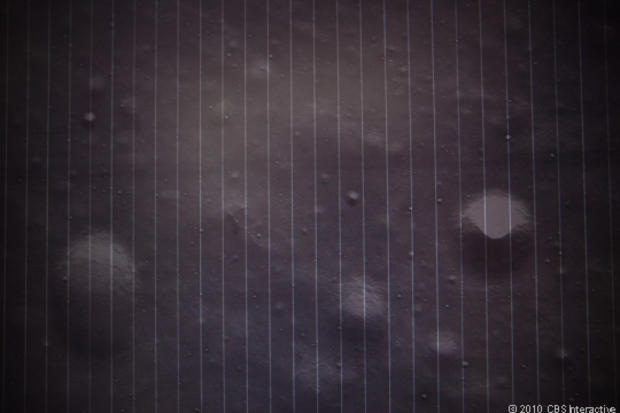
Reconstructed Image of How Data Got Laid Out
Photo by James Martin/CNET
How did images get reconstructed? Strips of data were converted to analog signals, then to digital, and finally deciphered into a viewable image before being pieced together to form the entire exposure.
The Earth Rising Above the Lunar Surface
NASA
The Lunar Orbiter 1 spacecraft took the iconic photograph of Earth rising above the lunar surface in 1966.
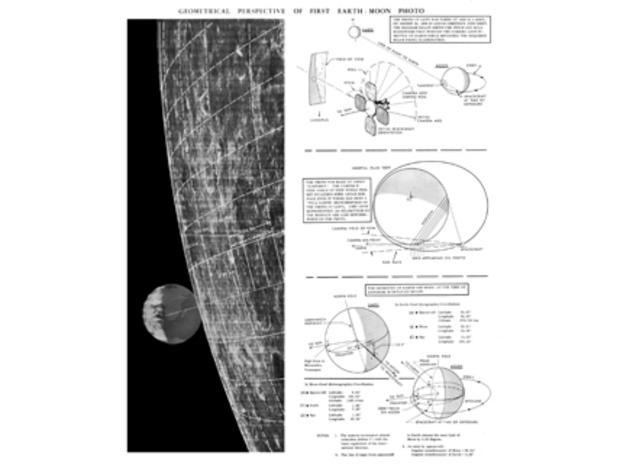
NASA Chart
NASA
NASA chart from 1966.
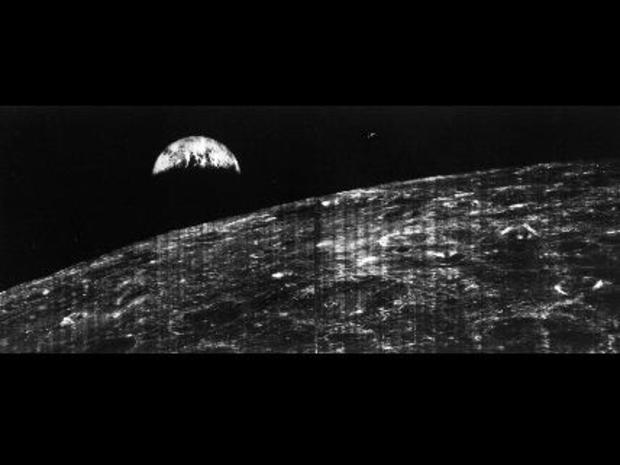
The world's first view of Earth
NASA
The world's first view of Earth was transmitted by the United States Lunar Orbiter I. It was received at the NASA tracking station at Robledo De Chavela near Madrid, Spain
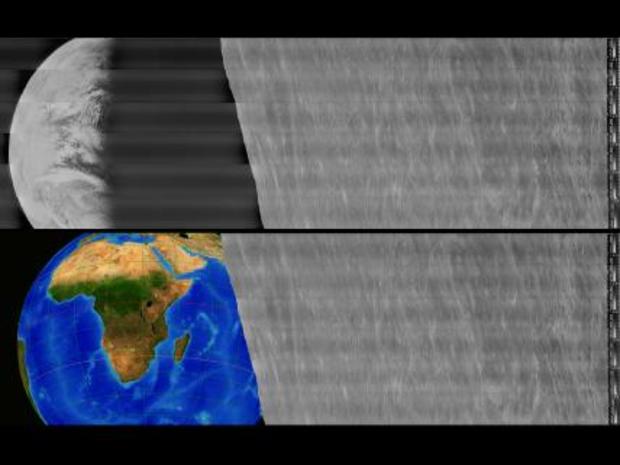
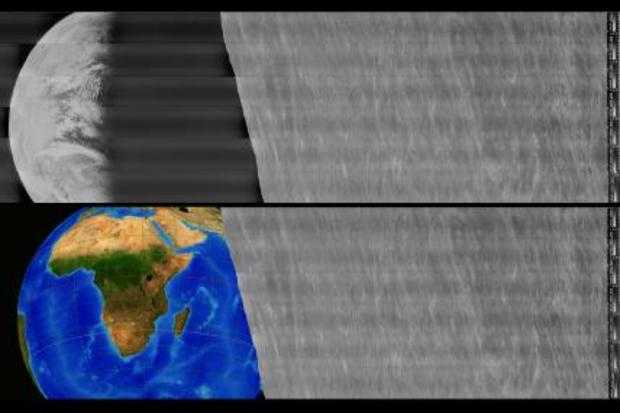
Earth Orientation
LOIRP/NASA
The top image shows the interim version of the retrieved photo. The bottom shows the orientation of Earth at time the photo was taken.
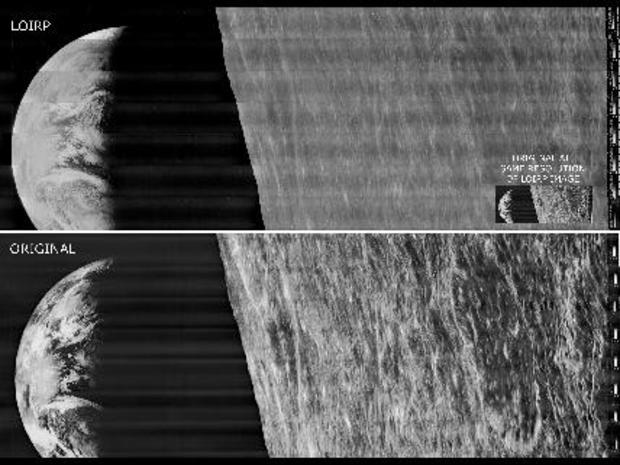
Image Comparison
LOIRP
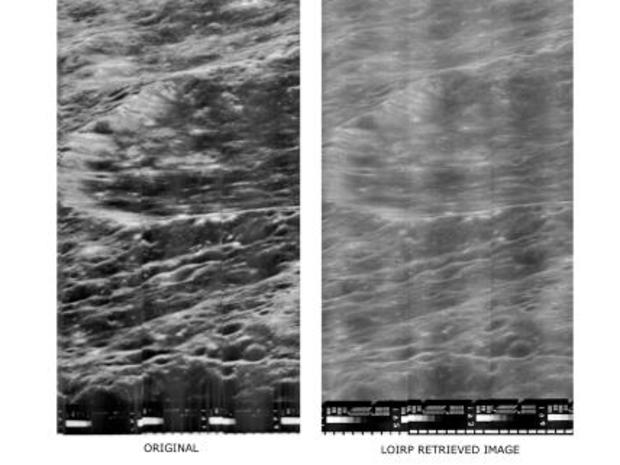
See the difference between the original image (on the bottom) and the Lunar Orbiter Image Recovery Project data on the top.
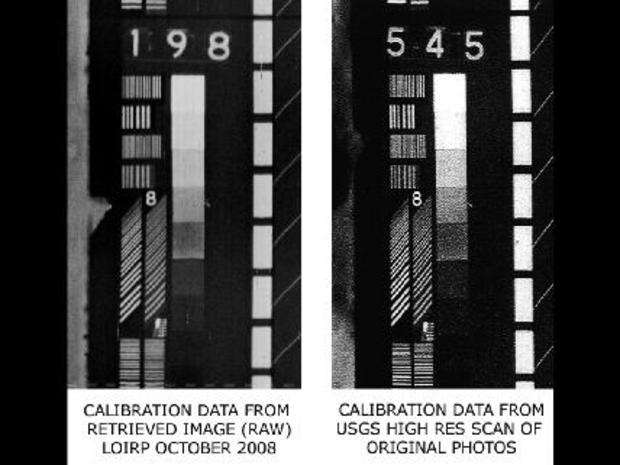
Image Comparison
LOIRP/NASA
Comparison of newly retrieved Lunar Orbiter imagery by LOIRP and high resolution scan of Lunar Orbiter images showing resolution enhancement.
Searching Out Old Space Archives
James Martin/CNET
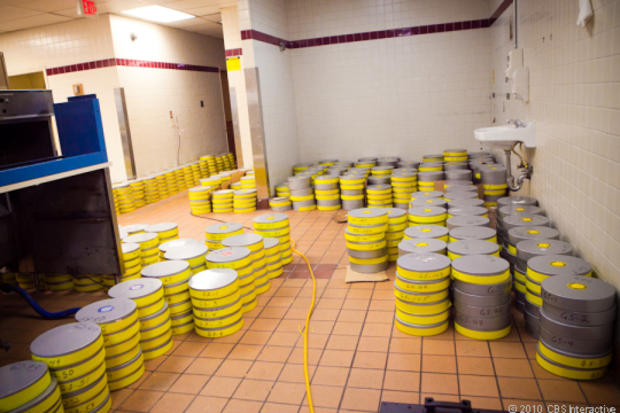
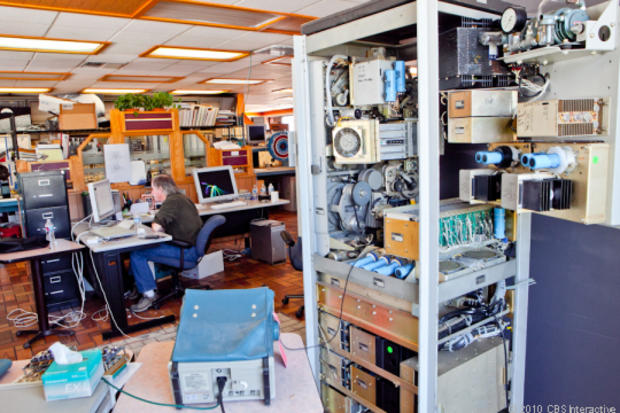
The Lunar Orbiter Image Recovery Project is going through 1,478 tape cartridges and the drives at the NASA Ames Research Center in Mountain View, Calif. The tapes hold images from five unmanned Lunar Orbiter missions during the 1960s.
Each Ampex Drive Cost a Cool $300,000
Photo by James Martin/CNET
In the 1960s, these Ampex FR-900 tape drives cost $300,000.
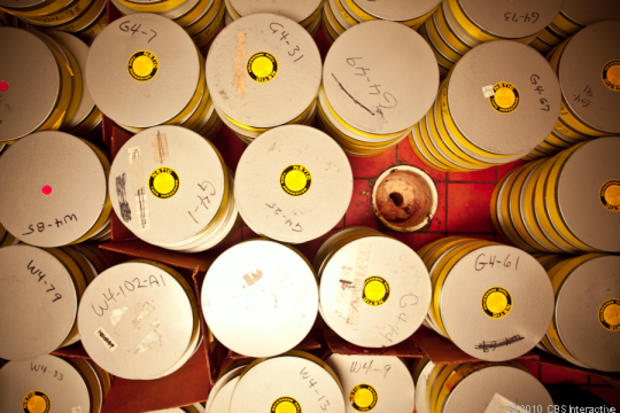
Lunar Orbiter Tapes
Photo by James Martin/CNET
The magnetic tapes of images from the Lunar Orbiter missions were stored in Maryland for years. They later were moved to the Jet Propulsion Laboratory.
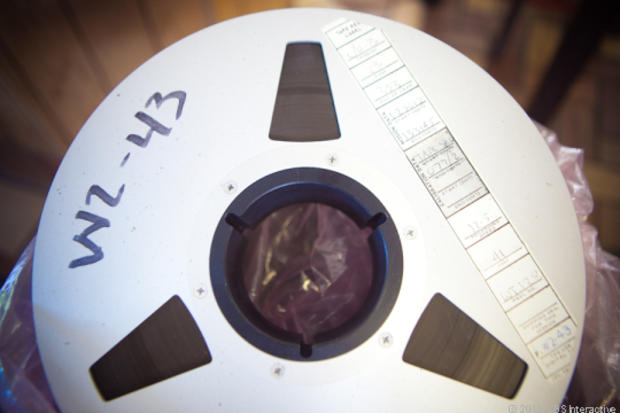
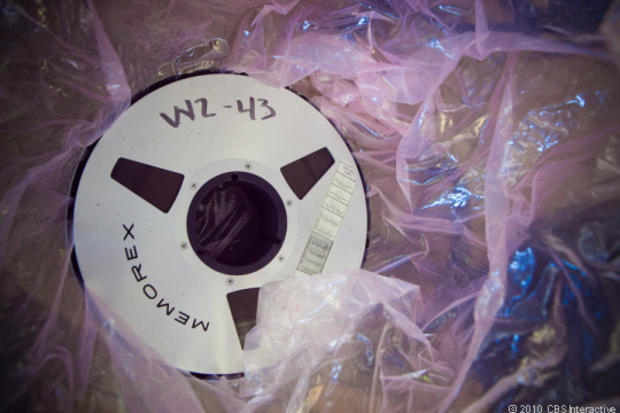
One of the 1,478 Magnetic Tapes Rescued
Photo by James Martin/CNET
Each tape contains one high-resolution and one low-resolution camera exposure written simultaneously into the data.
Keith Cowing of NASA Watch
Photo by James Martin/CNET
Keith Cowing of NASA Watch teamed up with space entrepreneur Dennis Wingo on the project to restore the tapes.
Cannisters - Lots of Cannisters - Containing Space Images
Photo by James Martin/CNET
Dozens of canisters stacked in a defunct McDonald's at NASA Ames research Center in Mountain View, Calif.
Ahoy, Matey
Photo by James Martin/CNET
A pirate flag hangs in the window of the Lunar Orbiter Image Recovery Project, officially designating it a "skunkworks" unit.
Storing Tapes for Maximum Protection
Photo by James Martin/CNET
Each tape is wrapped in plastic and stored in a protective canister to shield the magnetic data. They each contain one high-res and one low-res image, and the reel, weighing more than 8 pounds.
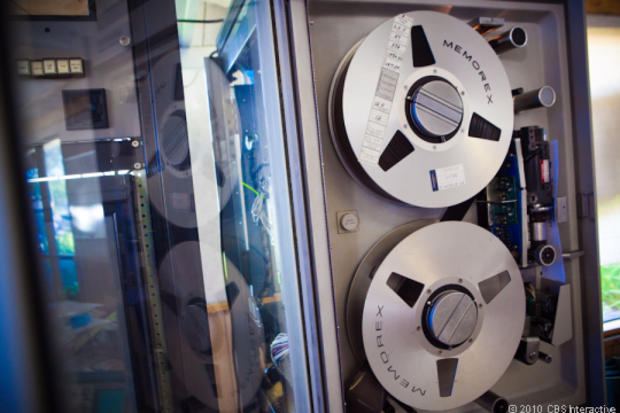
Ampex FR-900 Drives
Photo by James Martin/CNET
One of the super-rare Ampex FR-900 tape drives needed to read the magnetic tape data containing the images of the moon.
Photo by James Martin/CNET
A few decades ago, Titan I ICBMs were stockpiled in case the U.S. needed to fire off thermonuclear warheads. The one in the picture is parked alongside the former McDonald's outlet now housing the Lunar Orbiter Image Recovery Project. (It's also waiting to be restored.)
Another Comparison of the Lunar Surface
LOIRP/NASA
Comparison of original data (left) and data retrieved from the Lunar Orbiter Image Recovery Project.