Chuck Burton/AP
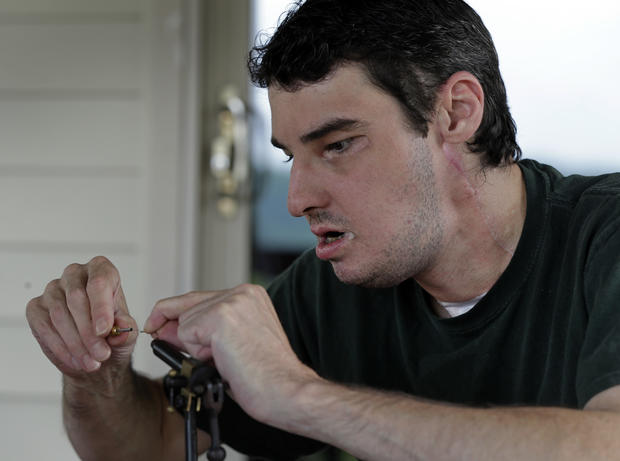
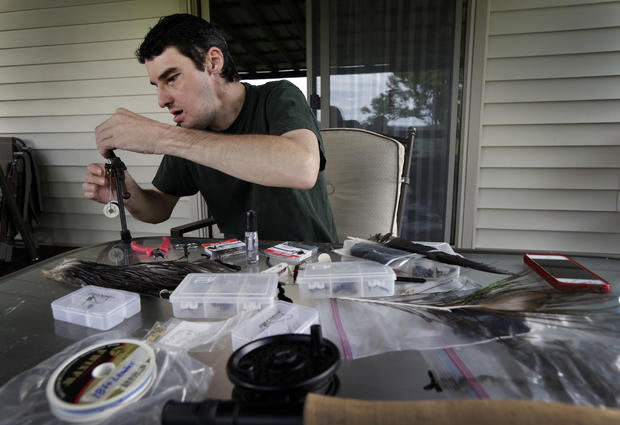
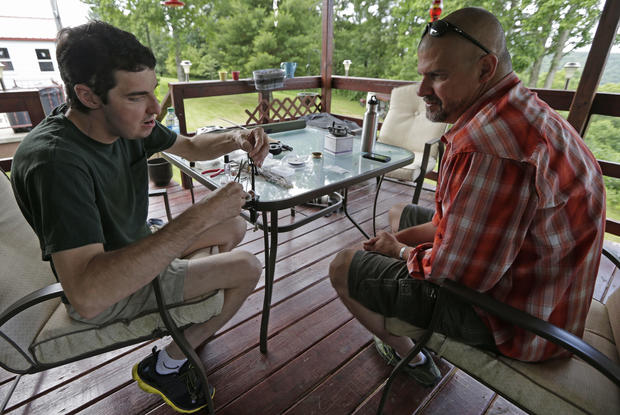
Richard Norris ties a fishing fly at his home in Hillsville, Va., June 25, 2013.
The man whose face was disfigured by a gunshot wound in 1997 spent 15 years as a recluse, but now the 38-year-old is doing things he never would have before.
University of Maryland Medical Center
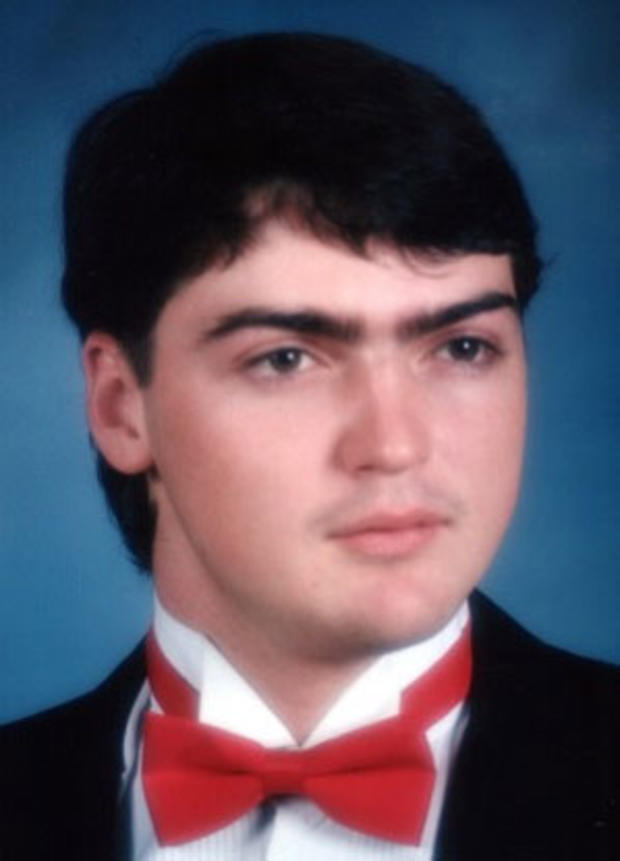
A prom portrait of Richard Norris taken before a gun accident disfigured his face in 1997.
University of Maryland Medical Center
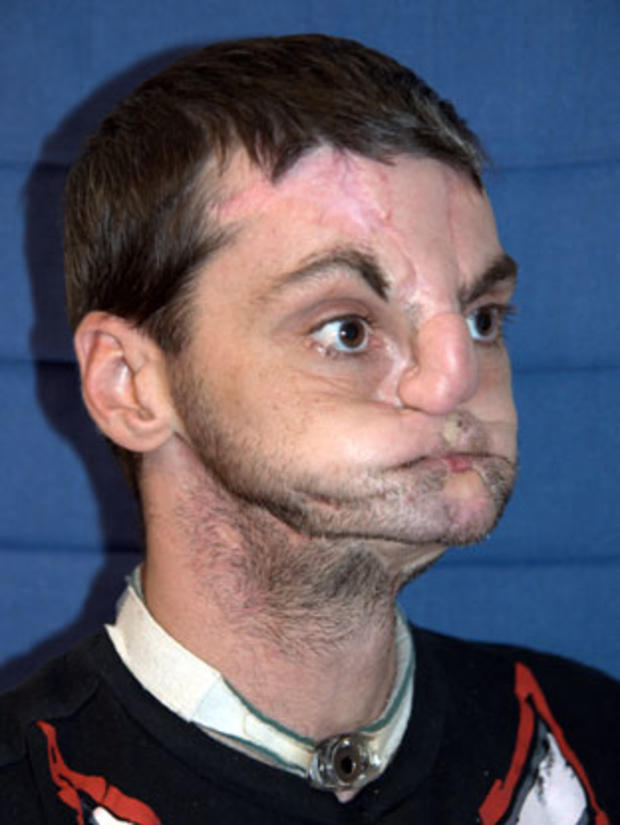
This photograph of Norris was taken after the gun accident which caused him to lose his lips and nose and have very limited movement of his mouth.
AP
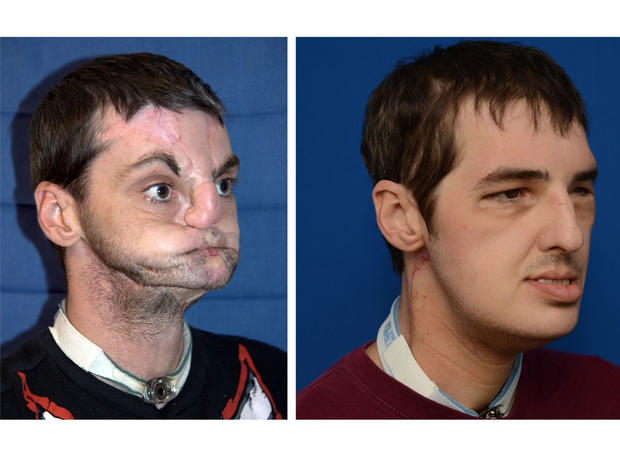
Portraits of Norris taken before the face transplant, left, and in a photo made 114 days after the transplant was performed.
Doctors have called his face transplant the most extensive to date. The 36-hour operation took March 2012. It included the replacement of both jaws, teeth, tongue, and skin and underlying nerve and muscle tissue from scalp to neck.
AP
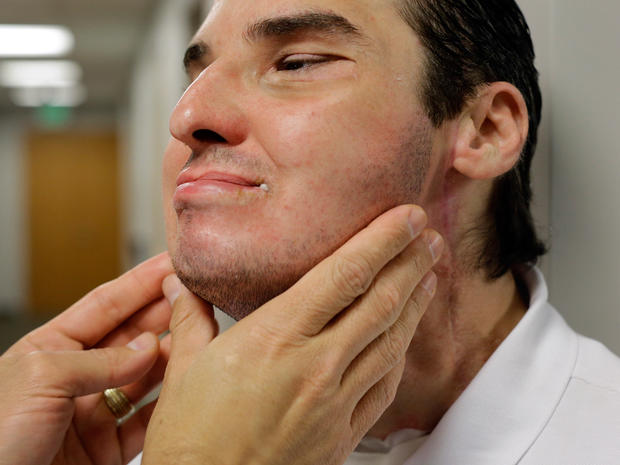
In this June 18, 2013 picture, Richard Norris's skin is inspected by Dr. Eduardo Rodriguez, who led the surgical team that performed Norris' face transplant, during a visit at the University of Maryland Medical Center in Baltimore.
In the 15 years between a shotgun blast that ravaged the bottom half of Norris' face and the face transplant -- considered the most extensive face transplant performed to date -- that ended a hermit-like life for him, he faced cruelty from strangers, fought addiction and contemplated suicide.
AP
In this June 18, 2013 picture, Dr. Eduardo Rodriguez, center, who led the surgical team that performed Richard Norris' face transplant, speaks with Norris at the University of Maryland Medical Center in Baltimore. Norris is starting a new life with the hope that his life path will send a message of hope to people in similar situations and encourage empathy in others.
AP
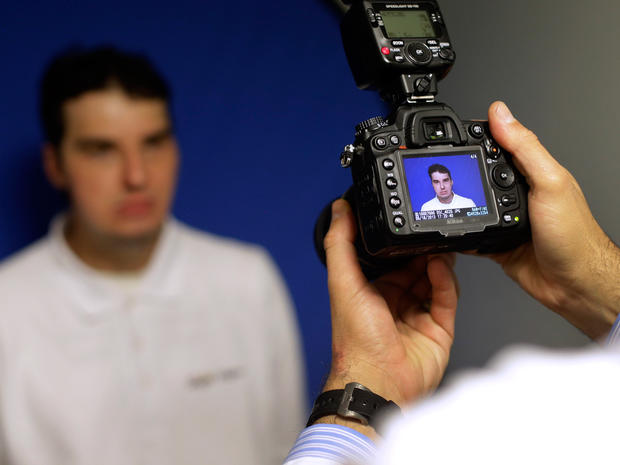
In this June 18, 2013 picture, Dr. Eduardo Rodriguez photographs Norris at the University of Maryland Medical Center in Baltimore.
Of the 27 face transplants performed since the first took place in France in 2005, four recipients have died, the Associated Press reported. Survivors face a lifetime of immunosuppressant drugs, which can affect health.
"If you talk to these patients, they will tell you it is worth the risk," Norris' surgeon, Dr. Eduardo Rodriguez, said.
Chuck Burton/AP
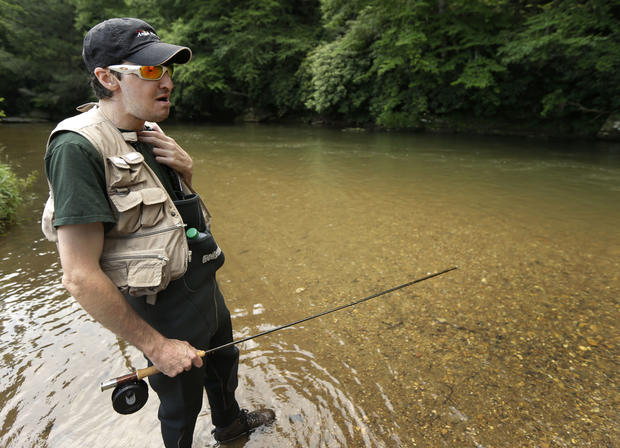
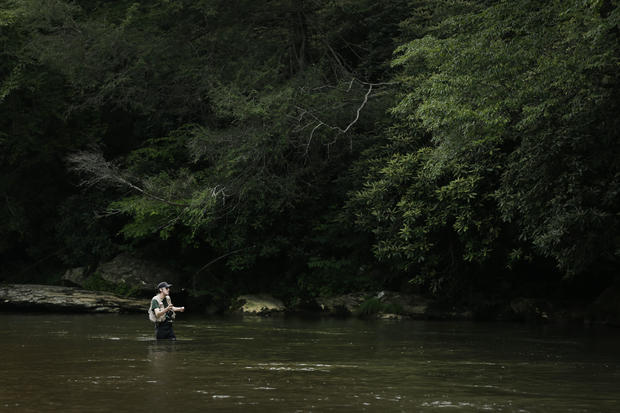
Norris talks to a friend after fishing in a stream near his home in Hillsville, Va., June 25, 2013.
After the 1997 accident, when Norris would go out in public, he'd often wear a hat and mask.
Chuck Burton/AP
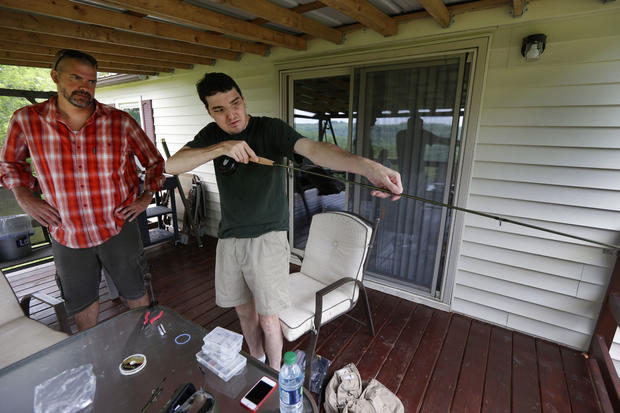
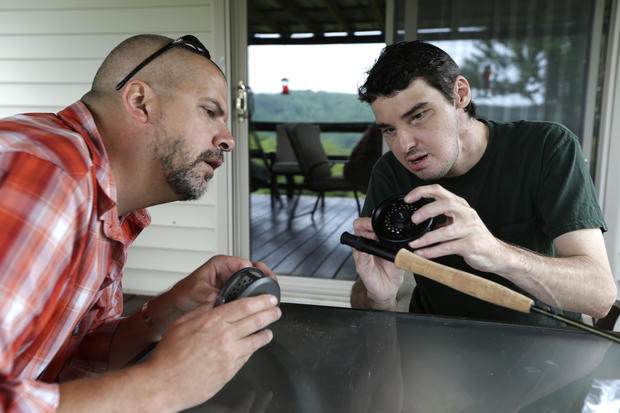
Norris, right, shows friend Andrew Kahle, left, how to load line into a fly fishing rod at Norris' home in Hillsville, Va, June 25, 2013.
The now 38-year-old said even if he could, he's not sure he'd erase the accident that left him disfigured.
"Those 10 years of hell I lived through, it has given me such a wealth of knowledge," Norris recently told The Associated Press, one of only two news outlets granted interviews since his transplant last year. "It's unreal. It has put some of the best people in my life."
Chuck Burton/AP
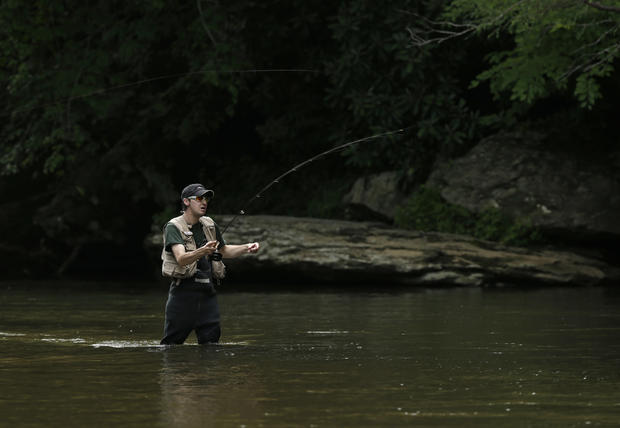
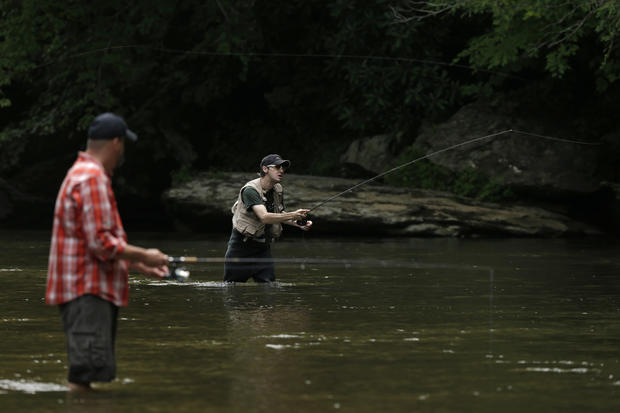
Norris fishes in a stream near his home in Hillsville, Va., June 25, 2013.
AP
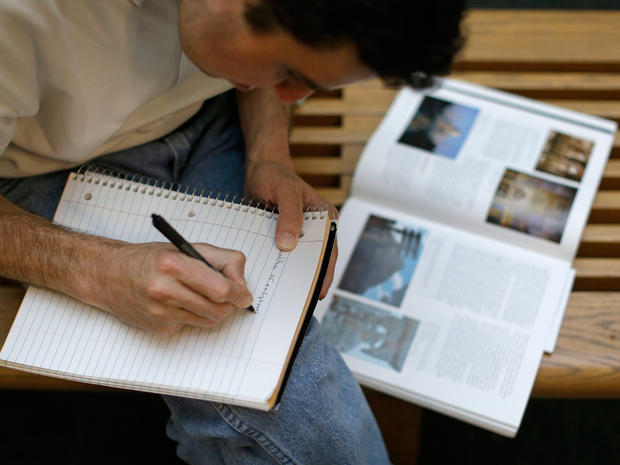
In this June 18, 2013 picture, Richard Norris completes homework for an online art history college course after visiting with doctors at the University of Maryland Medical Center in Baltimore.
Chuck Burton/AP
Richard Norris ties a fishing fly at his home in Hillsville, Va., June 25, 2013.
He has been taking online classes for a degree in information systems and hopes to one day start a foundation to help help offset face transplant recipients' everyday expenses during treatment.
Chuck Burton/AP
Norris has also has been working with a photojournalist who just completed a book about his journey, called "The Two Faces of Richard."
Here he is with friend Andrew Kahle.
Chuck Burton/AP
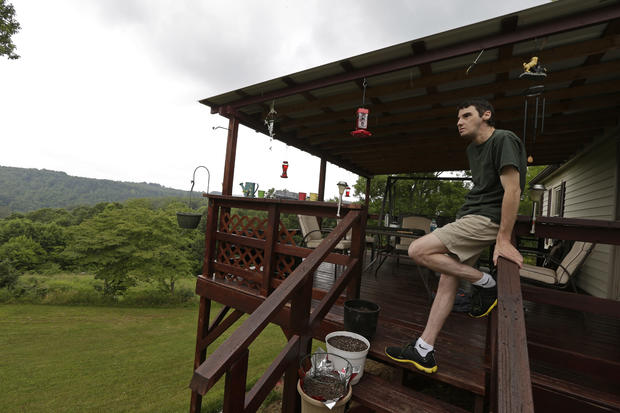
Norris looks out from the porch of his home in Hillsville, Va., June 25, 2013.
Chuck Burton/AP
Norris, back right, fishes in a stream near his home in Hillsville, Va., with friend Andrew Kahle, left, June 25, 2013.
Chuck Burton/AP
Norris, right, shows friend Andrew Kahle, left, how to load line into a fly fishing rod at Norris' in Hillsville, Va., June 25, 2013.
He said he felt an immediate connection when he saw his new face.
"When I look in the mirror, I see Richard Norris," he said.
Chuck Burton/AP
"When I was disfigured, just walking the sidewalk, I was surprised that more people didn't walk into telephone poles or break their necks to stare at me," Norris said.
"Now ... there's no one paying attention. Unless they know me personally, they don't know I am a face transplant patient," he said. "That right there is the goal we had."
AP
In this June 18, 2013 picture, Richard Norris speaks with a psychiatrist during a visit to the University of Maryland Medical Center in Baltimore. In the 15 years between a shotgun blast that ravaged the bottom half of Norris' face and the face transplant -- considered the most extensive face transplant performed to date - that ended a hermit-like life for him, he faced cruelty from strangers, fought addiction and contemplated suicide.
Now he's starting a new life with the hope that his life path will send a message of hope to people in similar situations and encourage empathy in others.
University of Maryland Medical Center/Pat Semansky/AP
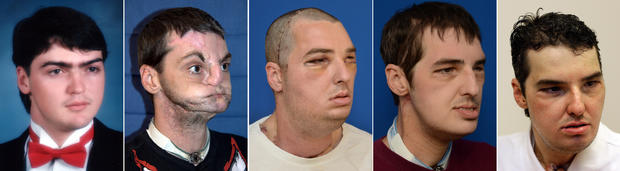
Doctors have called Norris' procedure the most extensive face transplant performed to date. Here is the chronology of his recovery, seen in a prom photo, from left to right, a picture taken before his face transplant, six days after the transplant and a 114 days after the transplant, and now.
.jpg#)
.jpg#)