Otto Dyar
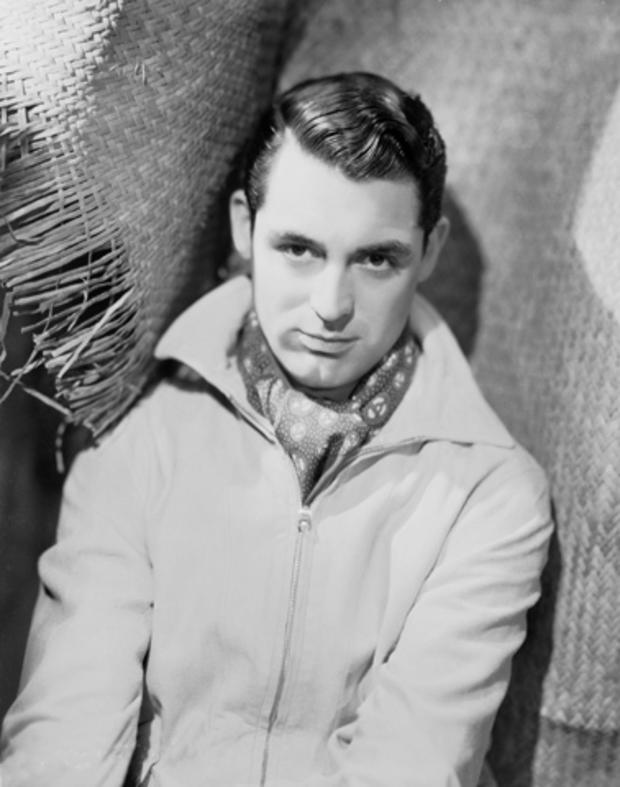
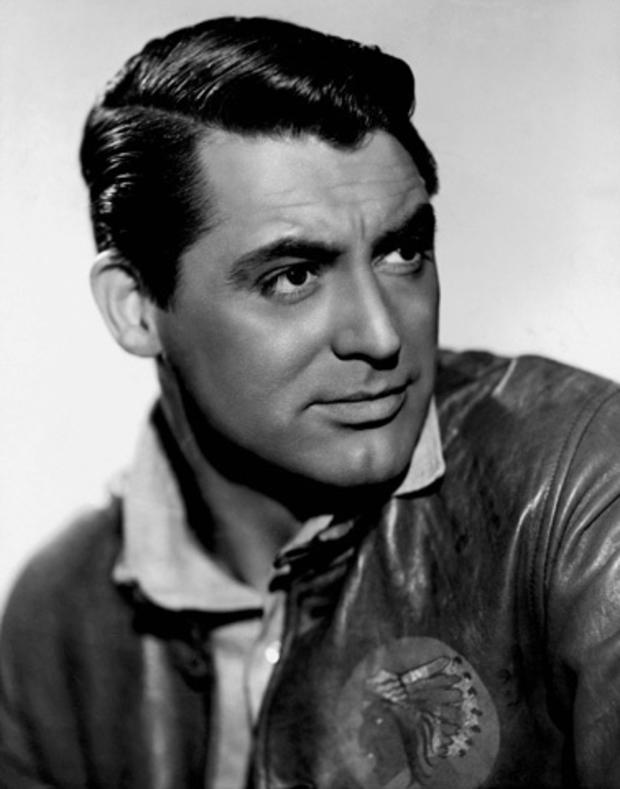
An undated portrait of Hollywood icon Cary Grant. The screen actor brought his debonair charm to screwball comedies such as "Bringing Up Baby"; romantic dramas such as "An Affair to Remember"; and thrillers like "Notorious" and "North by Northwest." Grant was the epitome of the cinema star for more than three decades, before retiring from films in 1966.
By CBSNews.com producer David Morgan
Paramount Pictures
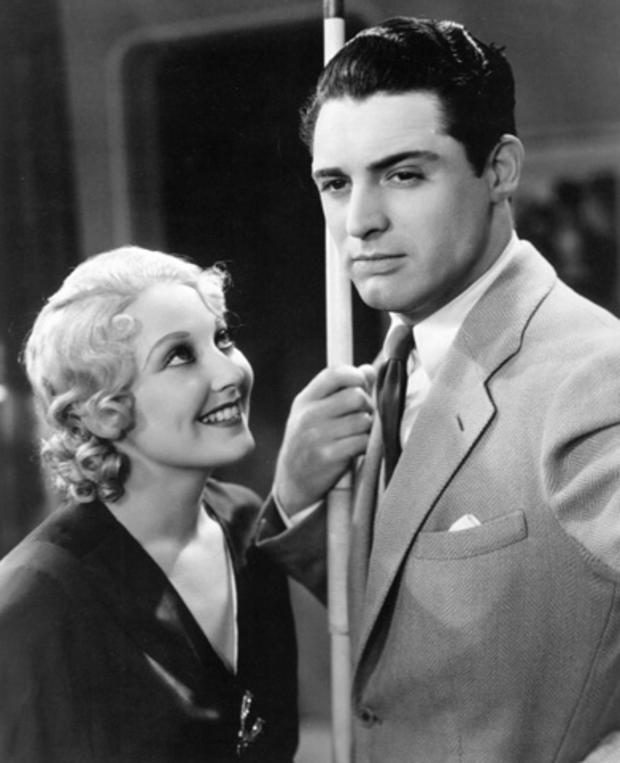
Cary Grant with Thelma Todd in his first feature film, "This Is the Night" (1932).
Born in Bristol, England in 1904, Archibald Alexander Leach left an unhappy childhood behind when he joined a stage troupe touring the U.S. When its tour ended, he stayed in New York, appearing in vaudeville shows and Broadway productions before heading to Hollywood, where he adopted the name Cary Grant. His new initials, C and G, were (he felt) lucky: after all, they had worked for Clark Cable and Gary Cooper.
Of his debut in films, Variety wrote, "It's hard to tell about Cary Grant in this talker due to limitations of his role, but he looks like a potential femme rave."
Paramount Pictures
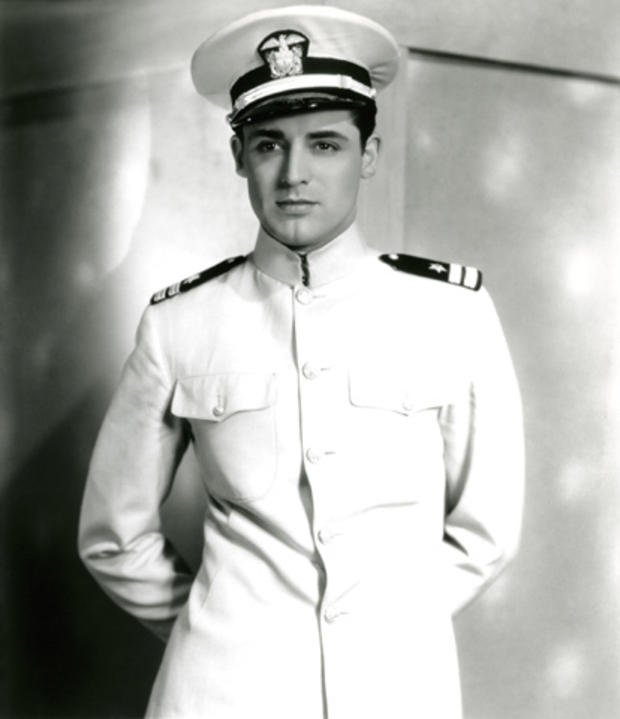
One of Cary Grant's earliest starring roles was as the naval officer caught in the romantic entanglements of "Madame Butterfly" (1932).
Paramount Pictures
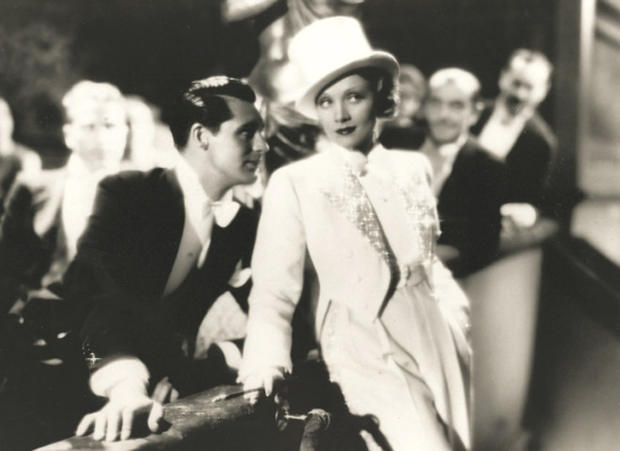
Cary Grant and Marlene Dietrich in Josef von Sternberg's "Blonde Venus" (1932).
Paramount Pictures
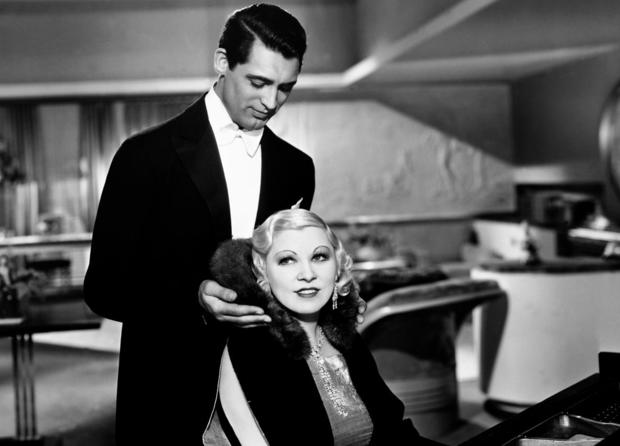
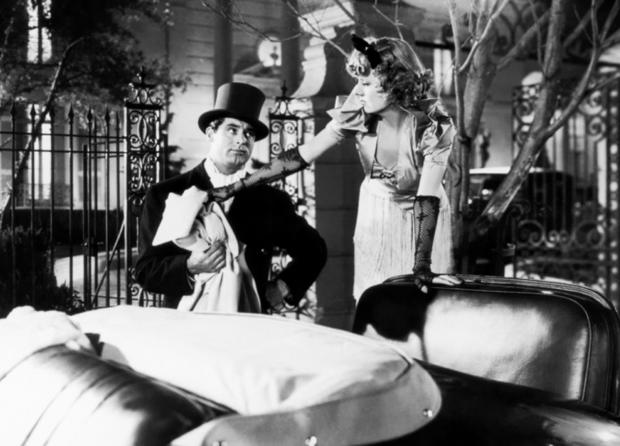
Mae West was more than a little trouble, as Cary Grant found out in "I'm No Angel" (1933). The pair also shared screen time earlier that year in "She Done Him Wrong."
Paramount Pictures
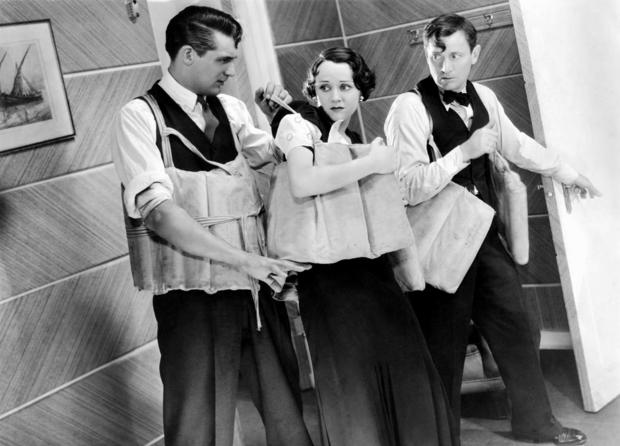
Cary Grant in the 1933 melodrama "Gambling Ship."
United Artists
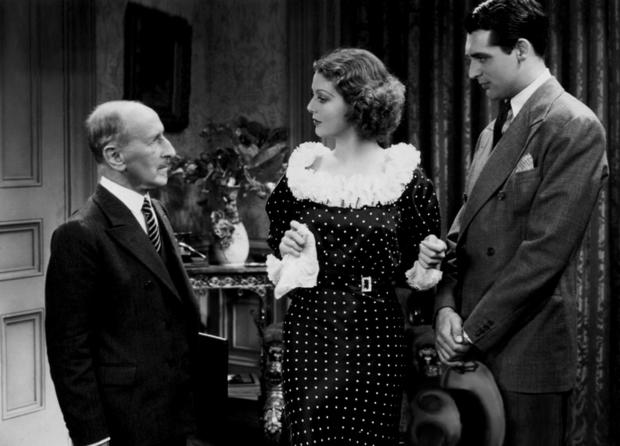
Grant starred opposite Loretta Young, who played a young woman seemingly "Born to Be Bad" (1934).
Paramount Pictures
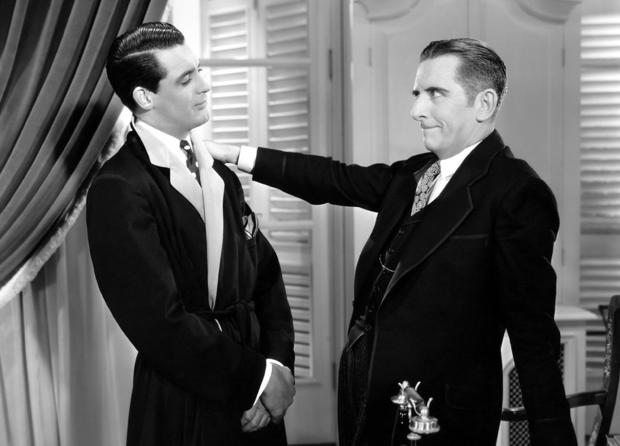
Cary Grant with Edward Everett Horton in "Ladies Should Listen" (1934).
Paramount Pictures
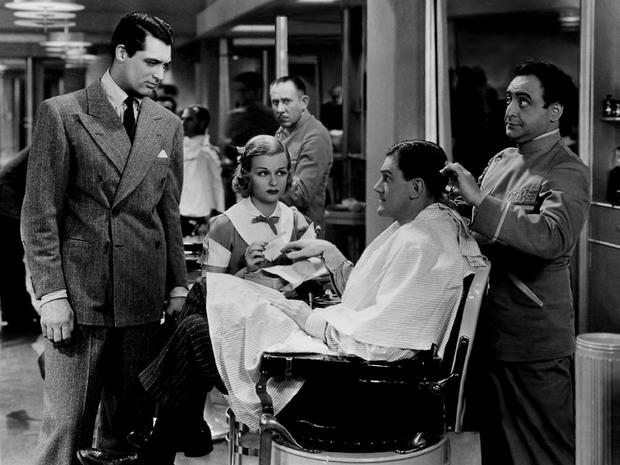
Manicurist Joan Bennet helps a detective played by Grant bust up a crime ring in "Big Brown Eyes" (1936).
MGM
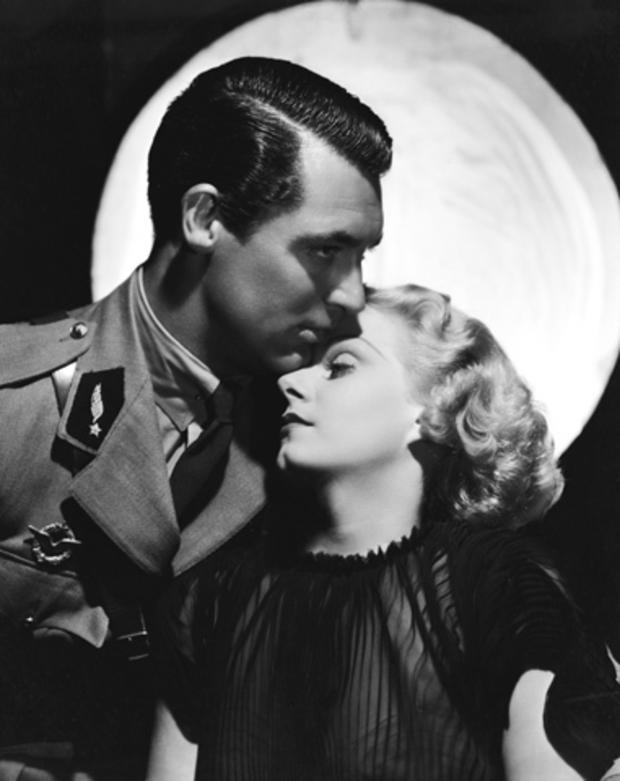
Grant with Jean Harlow in a drama of intrigue during World War I, "Suzy" (1936).
RKO Pictures
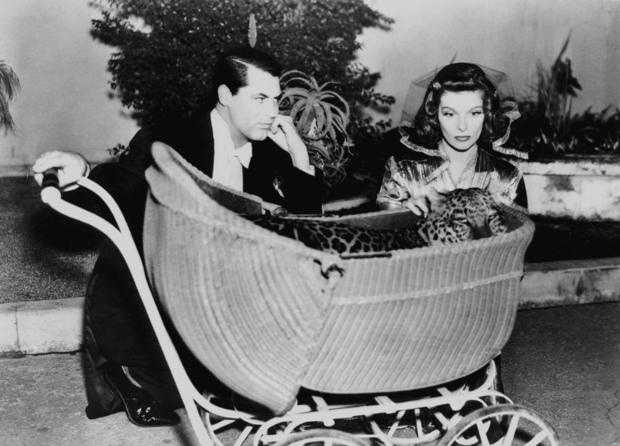
Cary Grant, Katharine Hepburn, and the real star of "Bringing Up Baby" (1937), a leopard. It was the second of four films Grant and Hepburn would do together, and while "Sylvia Scarlett" offered Hepburn dressed as a man, "Baby" allowed Grant to appear in drag.
Columbia
Cary Grant and Irene Dunne were the maritally-incongruous couple in"The Awful Truth" (1937).
RKO Pictures
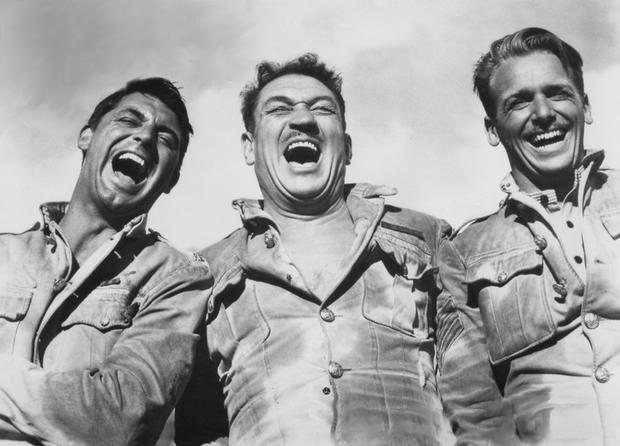
Grant appeared with Victor McLaughlin and Douglas Fairbanks, Jr., in the rousing adventure tale "Gunga Din" (1938).
Columbia Pictures
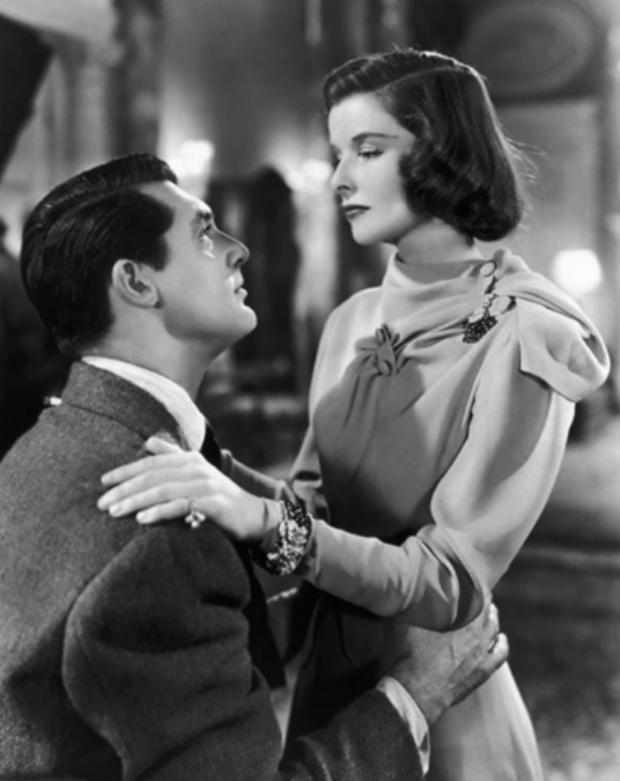
Grant and Katharine Hepburn in "Holiday" (1938).
Columbia Pictures
Howard Hawks' "Only Angels Have Wings" (1939) was well-served by Grant's heroic swagger as a daring pilot in South America.
Columbia
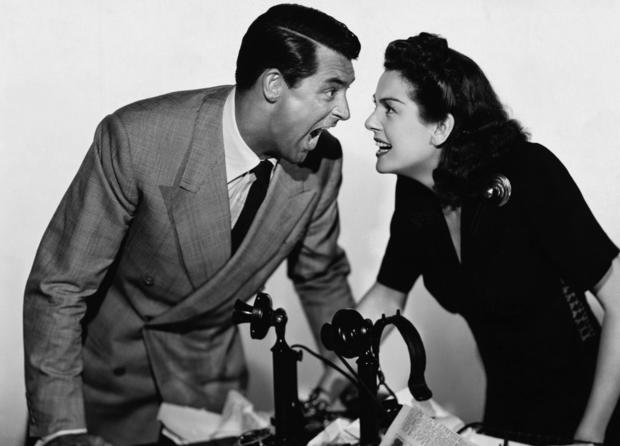
Grant may have met his match in Rosalind Russell, in "His Girl Friday" (1939), Howard Hawks' gender-switching take on the screwball classic "The Front Page."
MGM
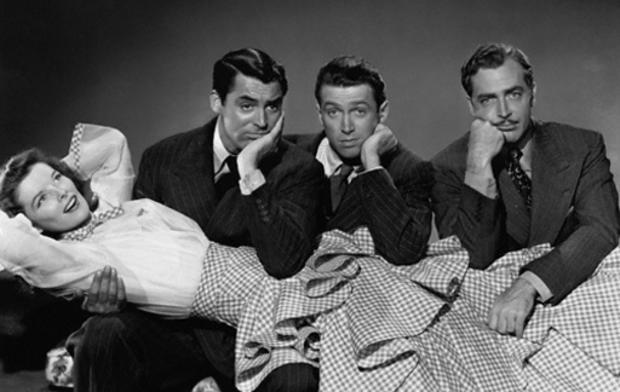
Exactly whom will Katharine Hepburn snare - Cary Grant, James Stewart or John Howard? "The Philadelphia Story" (1940).
RKO
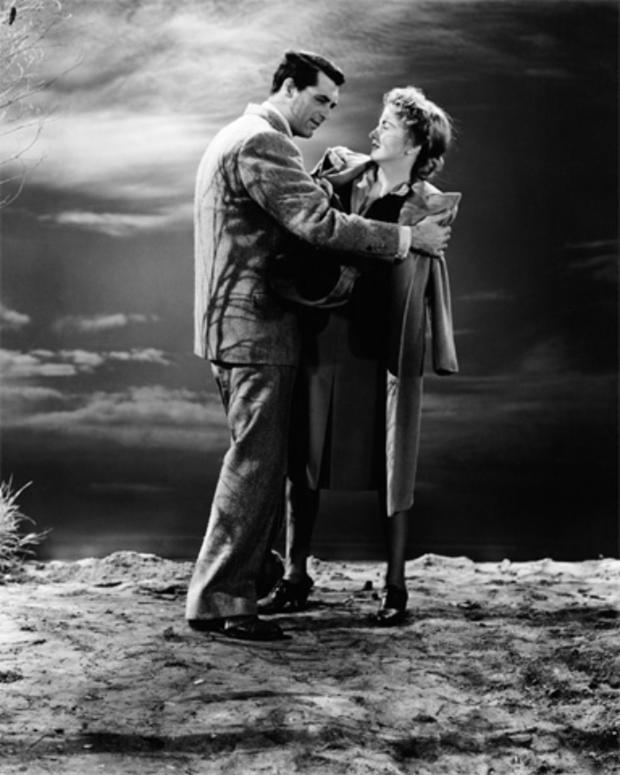
"Suspicion" (1941) was Grant's first collaboration with Alfred Hitchcock. In this psychological thriller a woman (Joan Fontaine) suspects her husband may be trying to kill her. Fontaine won a Best Actress Oscar for her performance.
Warner Brothers
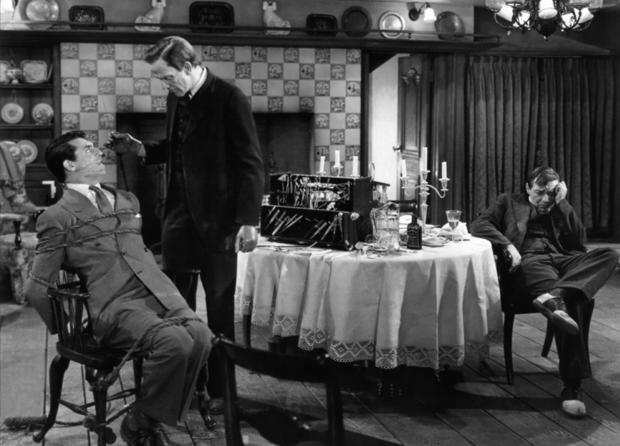
Grant with Raymond Massey and Peter Lorre in the screwball comedy "Arsenic and Old Lace" (1944) - one of the best film adaptations of a stage comedy, and certainly the funniest involving sweet old ladies who murder people and have their bodies buried in the cellar by Theodore Roosevelt.
RKO Pictures
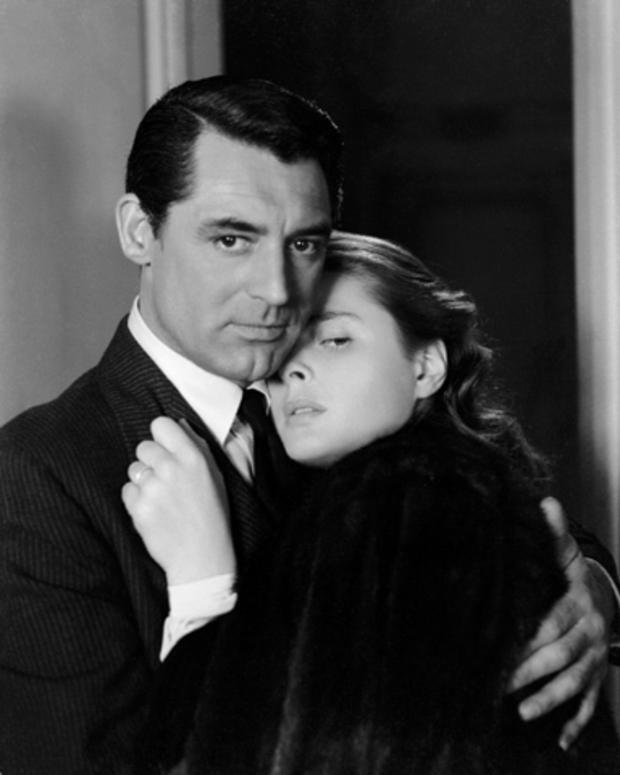
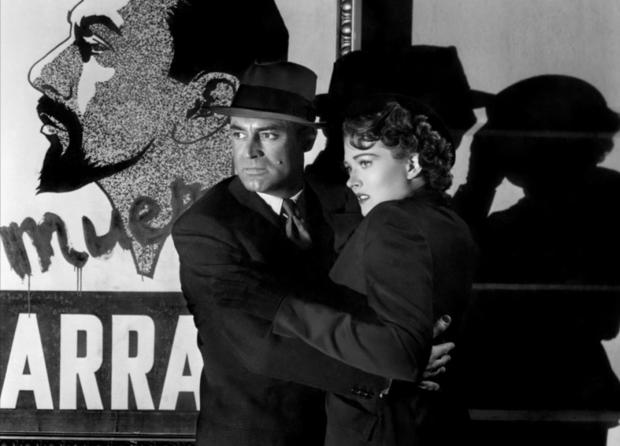
One of Grant's most indelible roles was in Alfred Hitchcock's romantic thriller "Notorious" (1946), opposite Ingrid Bergman. He played a U.S. government intelligence handler who recruits the daughter of a German spy to infiltrate a Nazi organization in South America.
RKO Pictures
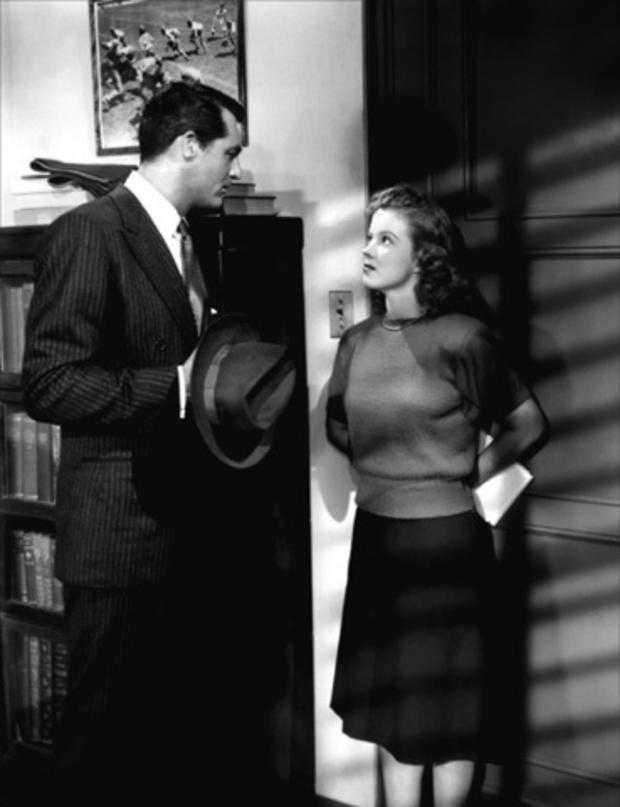
Teenager Shirley Temple (in one of her last film roles) has a crush on Cary Grant in "The Bachelor and the Bobby-Soxer" (1946).
Samuel Goldwyn
A promotional photo for the comical fantasy "The Bishop's Wife" (1947), in which Grant played an angel.
20th Century Fox
Grant's gift for comedy was evident in "I Was a Male War Bride" (1948).
RKO
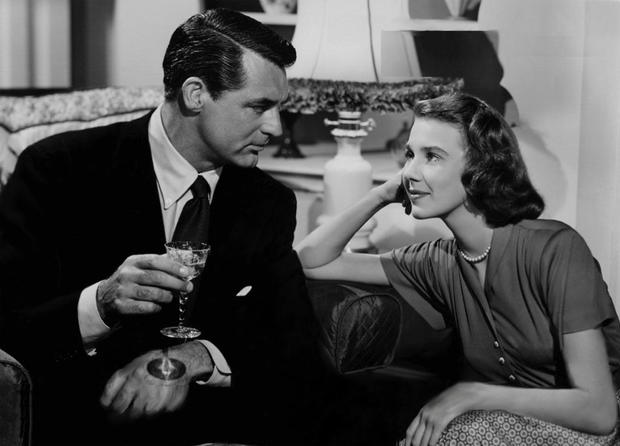
In "Every Girl Should Be Married" (1948), Betsy Drake took that advice to heart with Grant, even if his character were less than willing.
MGM
Playing a brain surgeon whose services are sought by a dictator, Cary Grant finds he can't escape intrigue in "Crisis" (1949), in which he starred with Paula Raymond.
Paramount Pictures
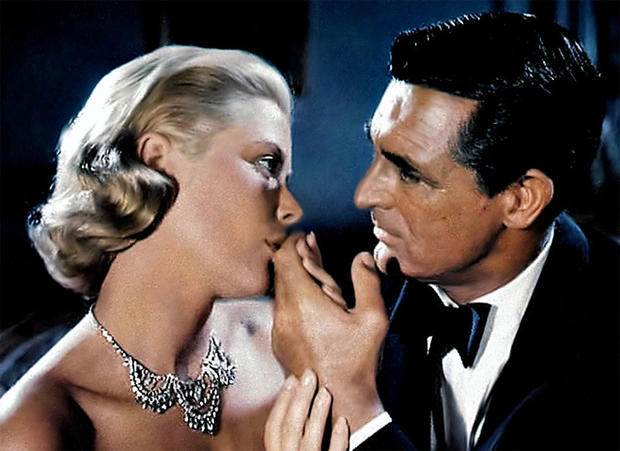
Grant played a suave retired cat burglar (or is he back on the job?), romancing Grace Kelly in Alfred Hitchcock's "To Catch a Thief" (1953).
20th Century Fox
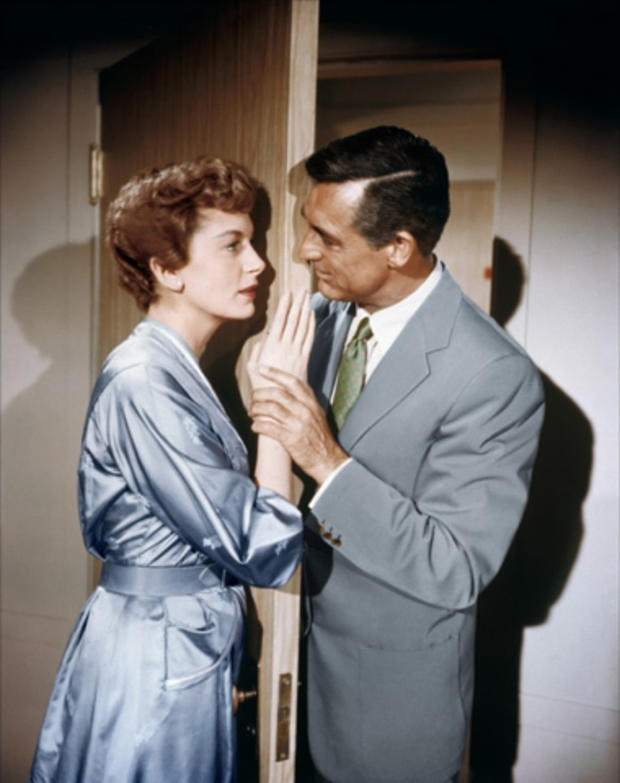
Deborah Kerr and Cary Grant in "An Affair to Remember" (1955).
Warner Brothers
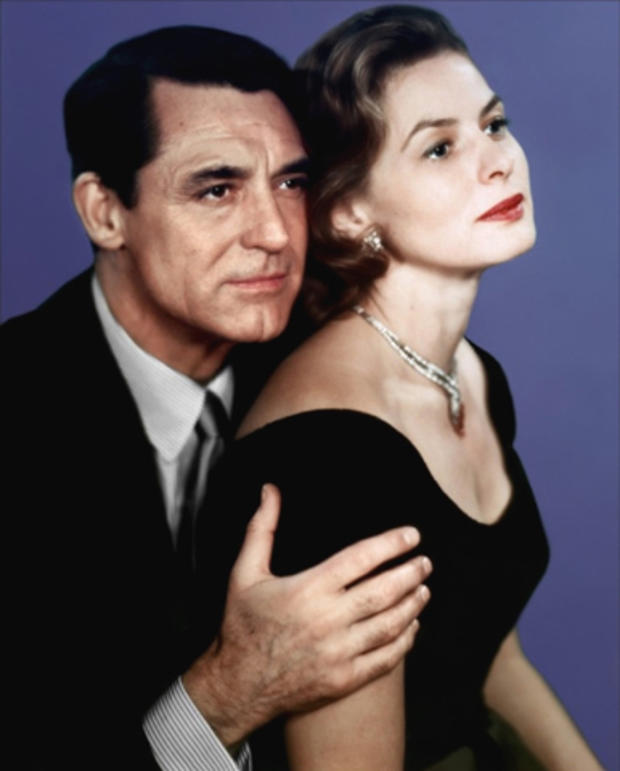
Grant re-teamed with his "Notorious" star Ingrid Bergman in "Indiscreet" (1957).
Paramount Pictures
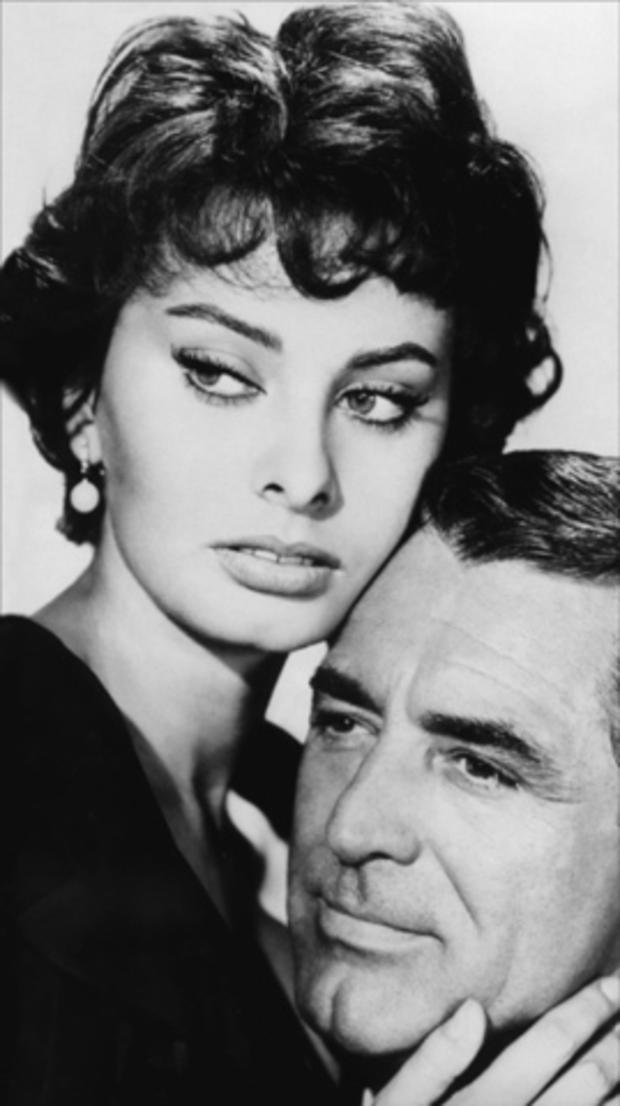
Grant starred with Sophia Loren in the 1958 romantic comedy "Houseboat."
MGM
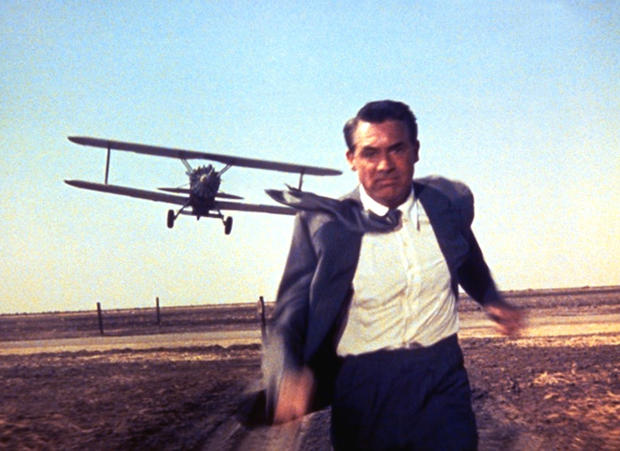
Cary Grant was the quintessential Hitchcock hero - an innocent man caught in a web of intrigue - in 1959's "North by Northwest."
Universal Pictures
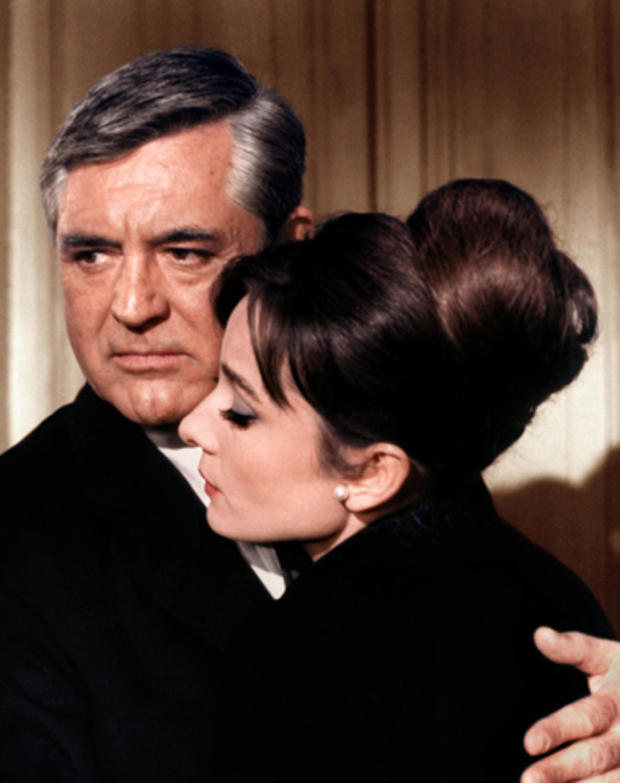
Grant was always good in a clinch, especially with Audrey Hepburn in Stanley Donan's comedy-thriller "Charade" (1962).
AP Photo/Ellis Bosworth
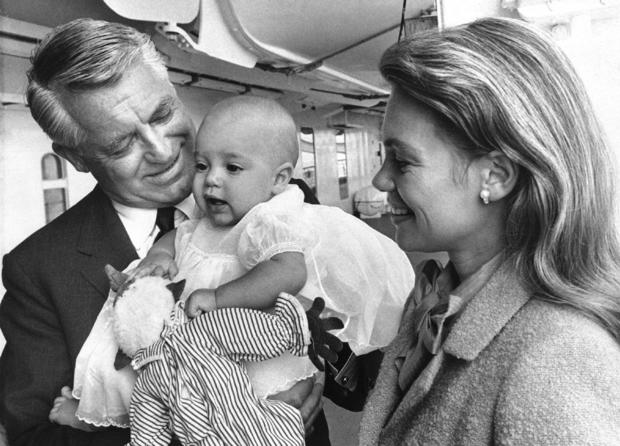
Married three times previously, Cary Grant eloped with Dyan Cannon in 1965. Here he poses with Dyan and their baby, Jennifer, on the deck of the Steamship Canberra in Los Angeles, Oct. 4, 1966, as they return from a trip to Europe. Grant retired from films after making "Walk, Don't Run" (1966), and while his marriage to Cannon ended soon after, he devoted himself to his daughter and various business pursuits.
Jennifer Grant/Random House
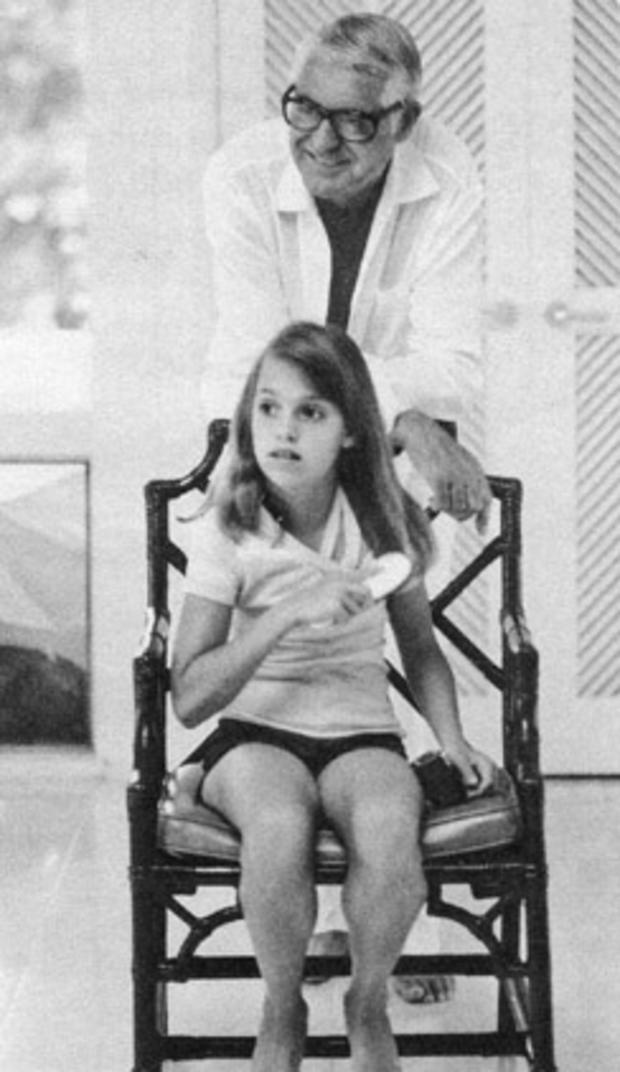
Cary Grant and his daughter Jennifer, in a photograph taken c. 1973 at the Hamptons.
AMPAS
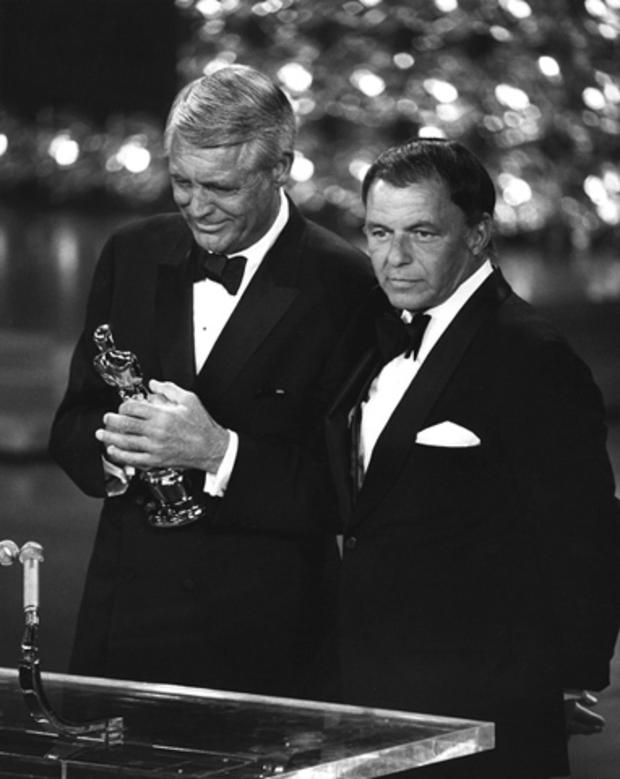
After receiving two Academy Award nominations during his career (for "Penny Serenade" and "None but the Lonely Heart"), Cary Grant was awarded an honorary Oscar by the Academy of Motion Pictures Arts & Sciences "for his unique mastery of the art of screen acting with the respect and affection of his colleagues." Grant received his Academy Award from presenter Frank Sinatra at the Academy Awards ceremony in 1970.