How new and refurbished arenas and stadiums are shutting out loyal sports fans
PHILADELPHIA — A few months before basketball superstar LeBron James made his decision to join the 76ers, season ticket holder Aaron Selkow was also staring down a crossroad: does he renew for a 59th season or has the buzzer sounded on the family's longtime investment?
"I'd been thinking about it forever," Selkow, 56, recalled to CBS News. "Those seats are us. I went from being a baby sitting on my parents' lap to being next to my dad at games. The Sixers are more than a basketball team."
Don Selkow, Aaron's father, first purchased season tickets in 1968. The two seats were located only a few rows back of the visitor bench at a cost of $6.50 each.
"It's like watching the ballet," Don quipped. "They're right in front of us. We love the sport. We love each other. What could be better?"
For decades, the Selkows would see all the greats, from George McGinnis to Julius Erving, Charles Barkley to Allen Iverson.
By 2026, however, each ticket to each game ran more than $600.
"It wasn't even just the finances," Aaron said. "It just didn't make common sense. We have a daughter in college who wanted to and now is going to graduate school. And we had wanted to, you know, do some fun things in our life."
After nearly 60 years, it was game over — a decision so agonizing that instead of calling his father, Aaron wrote all his thoughts in a letter to his dad. Aaron's letter was also published in an op-ed in the Philadelphia Inquirer — a choice that would resonate with other sports fans across the region and even around the country.
"It was Eagles tickets or it was New York Giants tickets or it was Detroit Pistons tickets," Aaron added. "The world has changed and the rate of the increase in prices is going faster than the rate of inflation. The Sixers want someone who will pay the price and that's their product."
From family experiences to exclusive offerings
The cost of attending live sports has shot up 123% since 2000, according to the Consumer Price Index — a staggering increase that cannot solely be blamed on inflation.
When the Selkows first became season ticket holders, the 76ers played their games at the Spectrum, a modest arena built in the 1960s in the same style as the Boston Garden, Chicago Stadium and Los Angeles' Great Western Forum.
The 76ers moved to the since-renamed Xfinity Mobile Arena across the street in 1996, a sprawling multi-level arena that slightly increased capacity but also made the seats plusher with suites, clubs and restaurants. The arena has since completed a $400 million renovation last year.
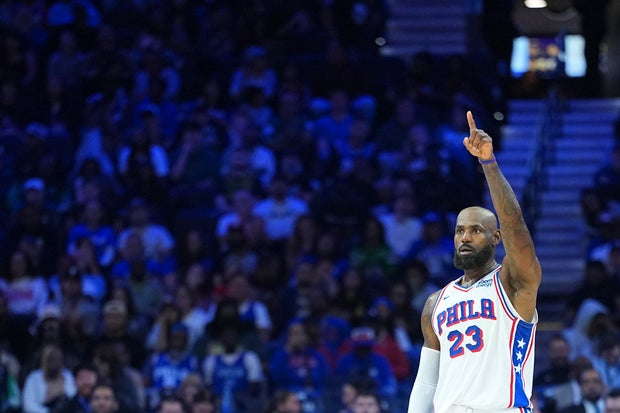
So while the number of seats for fans might have gone up, the actual number of seats for sale to the average fan have actually gone down — a trend that is on a roll across the country in all major sports.
The CBS News Data Team analyzed all stadiums and arenas in America's biggest sports cities like Philadelphia with professional teams in the four major sports: the NFL, MLB, NBA and NHL. According to CBS News analysis, new stadiums and arenas built since 2000 have actually lowered overall capacity by nearly 90,000 seats, while those venues have been running up the score on the percentage of those seats reserved for clubs, boxes and suites.
In NFL stadiums, that's especially true in Buffalo, where the new Highmark Stadium is now the smallest among 32 teams, with a capacity of roughly 60,000 — down 16% from Bills Stadium's capacity of more than 71,000. The stadium also features two suite levels, while the team sold more than 3,600 club suite licenses for $65 million.
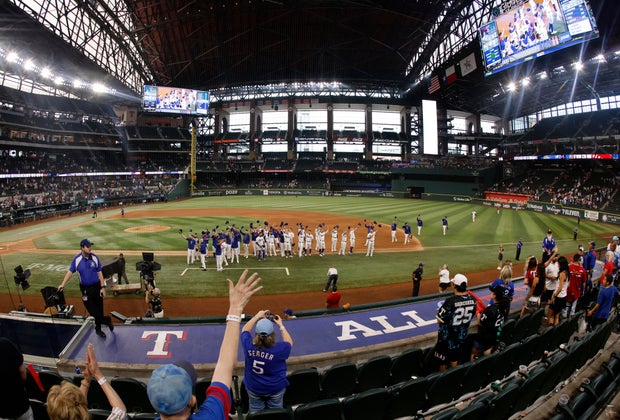
Globe Life Field, the new home of baseball's Texas Rangers, also shrank by more than 16% compared to The Ballpark at Arlington. Globe Life Field also added more than 130 suites and more than 3,000 club seats.
Rebuilds and renovations remove seats too. Angels Stadium in Anaheim's 1998 conversion cut 19,076 seats, while Miami's Hard Rock Stadium cut 10,692 in its remodel in 2015–16. Soldier Field, the current home of the Chicago Bears, cut 5,444 in its renovation in 2003.
Several franchises, including the Bears, Kansas City Chiefs, Dallas Stars, Washington Commanders and Philadelphia 76ers, among others, are planning new arenas and stadiums in the next five years.
"Everything is getting more expensive"
While the cost to attend a game has gone up, so have the costs of running a sports franchise, especially one that fields a winning roster.
Mike Vorkunov, a sports business writer for The Athletic and The New York Times, says owners are trying to maximize revenues through premium seating and exclusive offerings.
"Everything is getting more expensive," he told CBS News. "Player costs are going up, the cost of coaches are going up, the cost of general managers and front office members are going up, the cost of travel is going up, the cost of sending your scouts across the world and across the country are going up, the cost of [research and development] and tech. There's a lot of costs ... outside of just paying for the players and salaries that I think a lot of people don't know about."
Vorkunov added that new owners are especially looking to cash in after paying billions to purchase a franchise.
"I think for a lot of years, people thought of sports as something fun, something that was like a mom-and-pop organization, they could run a small deficit and be OK with it," he said. "I think now how much it costs to buy a team, the get-in price for a team is so much higher. The amount of losses that you can incur are so much higher because there's so much more money in play. The entire sports ecosystem is that they're being incentivized to treat it like a business to try to make a profit every year."
As for loyal fans like the Selkows, Vorkunov says owners are increasingly recognizing the need to appeal to those kinds of returning customers that at one time might have been the bread-and-butter of the business.
"That's something that everyone has to kind of wrestle with, where it doesn't feel like sports at every level is something that's unattainable anymore," he said.
The Selkows themselves may not be in their seats anymore as the 76ers pursue their first championship since 1983. But if LeBron James helps bring them to the NBA Finals, Aaron and Don will no doubt be watching together.
"Everybody that knows us knows that the Selkows and the Sixers do sort of go together," Aaron said.


