How Founding Father Benjamin Franklin's ideas have helped scientists understand climate change

Despite living and walking the streets of Philadelphia 250 years ago, the research conducted by America's Founding Fathers continues to play a pivotal role in helping scientists understand how the Earth's climate is changing.
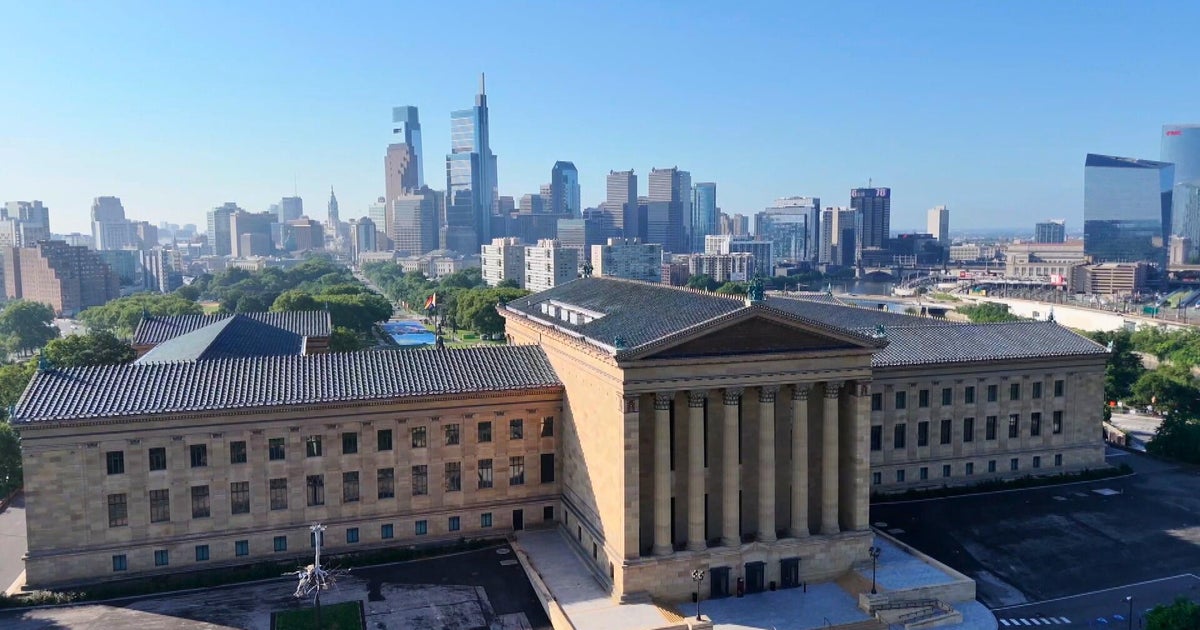
One of those innovations can be found inside the Franklin Institute along the Parkway.
The museum is home to the first known lightning rod, which Benjamin Franklin crafted in 1749.
"Probably the most monumental, arguably, invention of Benjamin Franklin," Susannah Carroll, the Franklin Institute's director of collections, said. "It was very effective. It was bent twice by lightning strikes."
Franklin's goal for the lightning rod was to prevent fires, a topic he was familiar with because he also co-founded the nation's first volunteer fire company.
Today, lightning rods can be found on top of skyscrapers around the world, including the iconic spire topping One Liberty Place in Center City.
Carroll said Franklin also shaped the path for present-day meteorologists, like CBS Philadelphia's Grant Gilmore, who track a range of weather patterns, including an ongoing trend of progressively warmer temperatures due to pollution from cars and factories.
"It was our Founding Fathers who started those initial note-taking and weather observations for what we can look back on," Gilmore said. "In 2026, our averages are about 5 to 7 degrees warmer than when they were back in 1776."
Scientists and researchers, including Jen Brady, a senior analyst and research manager at the science nonprofit Climate Central, point to rising temperatures as being a key reason for the spike in dangerous weather patterns.
"We've seen a large increase in the number of severe storms, which includes these hailstorms, lightning storms, thunderstorms," Brady said. "There is some early evidence that we are going to see more lightning as well because of climate change."
Carroll said if Franklin were alive in the 21st century, he would've likely been interested in researching the effects of climate change.
"He was trying to solve a problem for humanity," Carroll said. "He was trying to make the world a better place."