White House pushes back on lobbyist meetings
The White House today pushed back against a report suggesting that it holds meetings with lobbyists at a complex located just off the grounds of the White House in order to avoid having to make those meetings public.
Politico, citing a number of lobbyists, reported Thursday morning that the White House steers meetings with lobbyists to the Jackson Place Complex near the White House, which "allows the Obama administration to keep these lobbyist meetings shielded from public view -- and out of Secret Service logs kept on visitors to the White House and later released to the public."
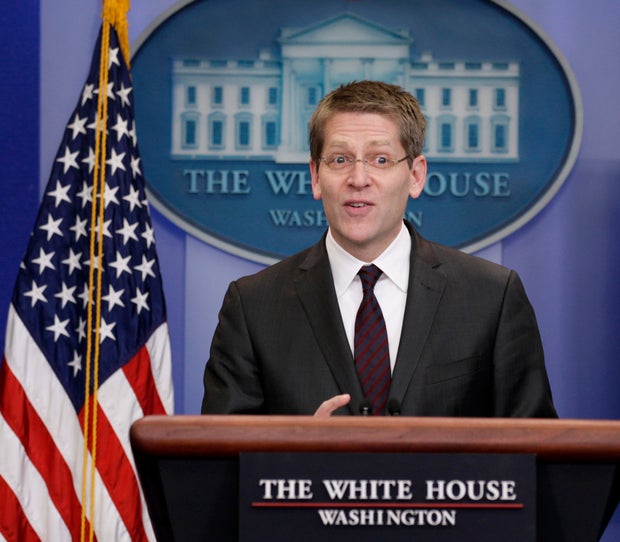
White House Press Secretary Jay Carney vigorously contested that notion at his press briefing Thursday, calling the story "absurd" and stating that the Obama administration has "taken extraordinary actions to be transparent."
Carney said the West Wing is a "very limited space" and that Jackson Place is designated as a conference center where meetings can be held if there is not room at the White House.
He added: "We never said that there was a way to get every name in every meeting."
Carney was pressed: Doesn't the use of the facility amount to a loophole in the administration's promise to disclose meetings between lobbyists and White House officials?
"It is routine for the White House officials to meet with all types of people, including lobbyists, and frequently here," Carney shot back. He then drew a distinction between the Bush administration, which turned to the courts in its effort to keep Vice President Cheney's energy task force meetings private, and the Obama administration.
"The suggestion that we're not being transparent is laughable given the unbelievable precedent this administration has set in its -- closing the door, the revolving door, and releasing these records," he said.
CBS News chief White House correspondent Chip Reid pushed further, asking why the White House isn't changing the policy so that meetings at Jackson Place are also disclosed.
"Well, Chip, look, I'm not aware what policies might be instituted in the future," Carney replied. "But what I think is fundamentally important to remind you of is that we release information that has never been released before."