While Health Care Beckons, DC Politics Turn to Mideast
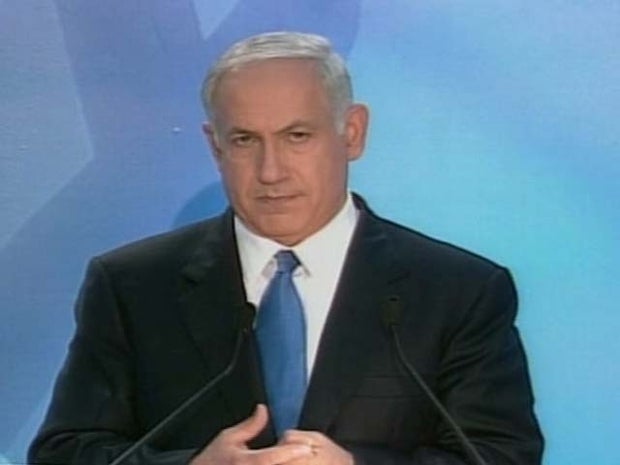
With the Obama administration racing to make its self-imposed deadline to pass health care reform legislation by the end of the week, conservatives are stepping up attacks on the credibility of the White House's foreign policy.
Both Republican House Whip Eric Cantor as well as the Wall Street Journal's editorial page came to the rescue of Benjamin Netanyahu, after the U.S. sharply criticized Israel for announcing new settlements during Vice President Joe Biden's visit last week.
In a statement, Cantor ripped the Obama team as irresponsible and argued that the White House was blaming the wrong party for the lack of progress in the peace process.
"While it condemns Israel, the administration continues to ignore a host of Palestinian provocations that undermine prospects for peace in the region. Where is the outrage when top Fatah officials call for riots on the Temple Mount? Why does the Palestinian Authority get a pass when it holds a ceremony glorifying the woman responsible for one of the deadliest terror attack in Israel's history? Surely, the Administration's double standard has set back the peace process."
The WSJ went even further, accusing Washington of creating what it described as a "a full blown diplomatic crisis."
"The U.S. needs Israel's acquiescence in the Obama Administration's increasingly drawn-out efforts to halt Iran's nuclear bid through diplomacy or sanctions. But Israel's restraint is measured in direct proportion to its sense that U.S. security guarantees are good. If Israel senses that the Administration is looking for any pretext to blow up relations, it will care much less how the U.S. might react to a military strike on Iran."
The Journal argued that Washington's decision to beat up on Jerusalem was part of a familiar pattern where "our enemies get courted; our friends get the squeeze. It has happened to Poland, the Czech Republic, Honduras and Colombia. Now it's Israel's turn."
Commentary, whose pages also reflect right-leaning opinion, offered up this summation:
"As we've noted here before, the Obami's temper tantrum looks especially unwarranted given the particulars of this situation. ("Israeli anxieties about America's role as an honest broker in any diplomacy won't be assuaged by the Administration's neuralgia over this particular housing project, which falls within Jerusalem's municipal boundaries and can only be described as a 'settlement' in the maximalist terms defined by the Palestinians.") Perhaps this is a pretext for regime change (i.e., to go after Bibi). Maybe this is the undisciplined and very thin-skinned Obami demonstrating their lack of professionalism. Or maybe this is par for the course -- courting our enemies while squeezing our friends."
Maybe Netanyahu's a political genius in disguise. After all, he apparently came up with a way to get the world to stop talking about Mossad involvement in the January assassination of the Hamas official, Mahmoud al-Mabhouh, in Dubai. But Bibi is wearing out his welcome with many Israelis, who predict his tenure as Prime Minister will again end in failure.
Two points, in particular, are worth considering:
- The Netanyahu Count Down Watching Israeli television, it's clear that the PM has an increasingly weak grip on his shaky coalition. Meanwhile, the criticism of Netanyahu inside Israel is growing louder as political pundits note his style is informed more by tactics than by strategy. (Check out Yoel Marcus in Ha'aretz.) Even before the Biden visit, critics depicted Netanyahu as an ineffective politician who winds up lurching from one crisis to the next. Then there's the worsening relationship with the U.S. Although American supporters of the Prime Minister say the latest row involving building permits for the Ramat Shlomo section of Jerusalem is a trivial issue - after all, he apologized, so can't we move on? - there remain deep doubts inside Israel whether Netanyahu can compromise his core ideological belief that the Jewish state has a right to all - or most - of the West Bank. Arik Sharon did, to be sure. Then again, Bibi's no Arik Sharon.
- Israel's value as a strategic asset A piece over the weekend in Foreign Policy suggests that the leadership of the U.S. military is getting nervous about the inability to break the status quo. A briefing prepared by Gen. David Petraeus for Joint Chiefs of Staff Chairman Adm. Michael Mullen on the Israeli-Palestinian conflict pointed to "a growing perception among Arab leaders that the U.S. was incapable of standing up to Israel, that CENTCOM's mostly Arab constituency was losing faith in American promises, that Israeli intransigence on the Israeli-Palestinian conflict was jeopardizing U.S. standing in the region, and that (U.S. Mideast enjoy George) Mitchell himself was (as a senior Pentagon officer later bluntly described it) "too old, too slow ... and too late."