Flights canceled, states of emergency declared as winter storm forecast to bring dangerous weather across U.S.
More than 13,000 U.S. flights have been canceled for Saturday and Sunday as a massive storm moves across the United States. It is forecast to bring dangerous winter weather, including snow, ice and frigid temperatures, throughout the weekend into Monday.
At least 230 million people are under winter storm threats from the Southern Rockies to New England, with conditions like heavy snow, sleet and freezing rain along with dangerously cold temperatures and wind chills.
States of emergency declared, National Guards activated
At least 19 states and Washington, D.C., have declared states of emergency, which allow for the activation of emergency response programs and state assistance for operations. Ten states have activated their National Guards.
Homeland Security Secretary Kristi Noem issued a statement urging Americans to stay off the roads over the next two days. Some federal offices announced closures for Monday.
On Saturday, the Texas Department of Transportation posted images of highways covered in snow in the suburbs north of Dallas, after ice and sleet hit northern Texas overnight. Ice was also covering roads and bridges in parts of Mississippi, according to Scott Simmons, a spokesman for Mississippi's emergency management agency.
Freezing rain was already coating roads Saturday in Texas and Alabama, and cars in Mississippi. Nearly 200 Florida utilities workers were in Georgia and South Carolina, in position for what is to come.
Tennessee has also started being walloped by snow and ice, with forecasters predicting up to six inches of snow expected from the storm, more than a season's worth in about one day.
The clear message from state leaders to residents was stay home and don't drive, but already dozens of drivers have slid off the roads.
Nashville city transportation officials only have 45 snow plows to clear hundreds of miles of roads. But once the storm shifts from snow to sleet, the plows may not help.
In Arkansas, Little Rock was covered with snow and sleet on Saturday.
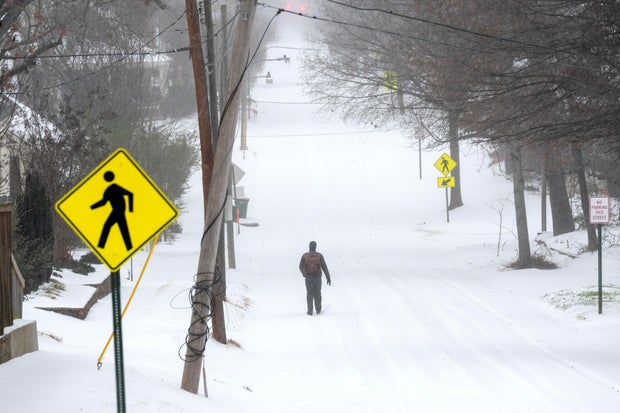
Pictures also showed snow covering Nashville.
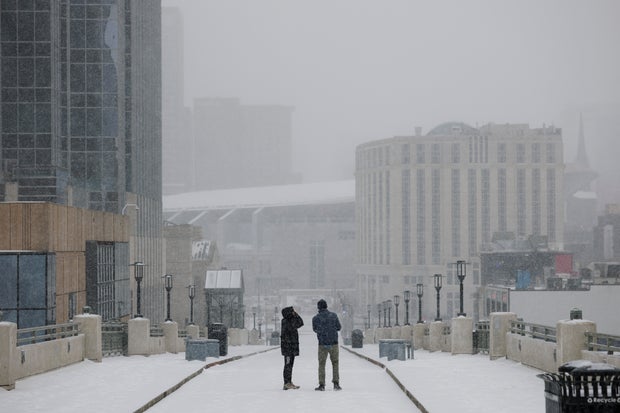
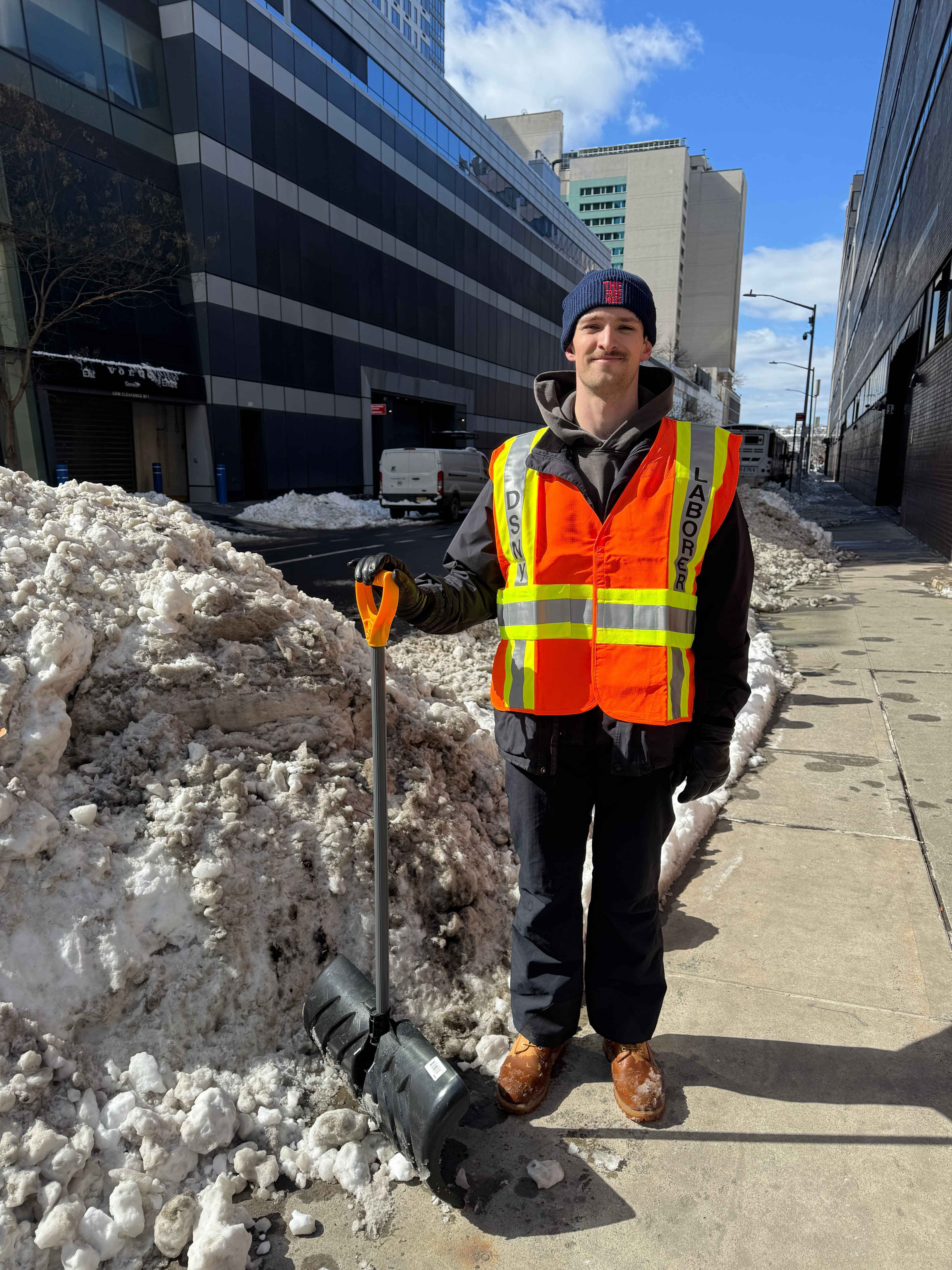
In a statement late Saturday night, New York City Mayor Zohran Mamdani said city agencies had been fully mobilized and encouraged New Yorkers to avoid unnecessary travel and remain home if possible. The mayor said the city was forecast to face the coldest sustained temperatures it had seen in eight years.
Flight delays and cancellations
Flight tracking site FlightAware reported over 4,00 cancellations affecting flights in or out of the U.S. for Saturday. More than 4,000 delays have been recorded.
Dallas Fort-Worth International Airport has canceled most of its scheduled flights. Nashville International Airport has canceled more than half.
Cancellations for Sunday soared to more than 9,400 — the most cancellations in a single day since the start of the COVID pandemic in March 2020.
Southwest Airlines dispatcher Emily Estapa told "CBS Saturday Morning" that airlines are working to prevent any unnecessary travel to airports. Many airlines have put travel waiver programs in place that allow fliers to reschedule their trips at no cost.
"We have to take into consideration not only our passengers, but our crews, our folks that are out at the station," Estapa said.
The effects of the storm may last for days. Frigid temperatures are expected to follow the ice and snow. Gus Hudson, the senior deputy general manager for operations at Hartsfield-Jackson Atlanta International Airport, the busiest airport in the world, said the facility's winter storm team is already treating runways and taxiways.
"Things may be slower, but we think we will still be able to maintain our operations," Hudson said. "They will just be at a slower pace."
Power outages
As Saturday night, outage tracking site PowerOutage.com reported more than 54,000 outages in Texas and more than 67,000 were reported in Louisiana.
Officials are particularly concerned about power outages. Ice is heavier than snow, and its weight on power lines may lead to widespread outages. In at least 11 Southern states, the majority of homes are heated by electricity, raising the possibility of dangerously cold conditions during an outage.
"Once we get more than about a quarter inch of ice on those lines, the lines either start sagging and failing, or more likely, you actually get the vegetation above it, the trees, to fall on the lines, and that causes potentially a larger number of outages," said Thomas Overbye, a professor of electrical and computer engineering at Texas A&M University.
Chris Johnson, the assistant director of operations and field services at Tennessee Emergency Management Agency, told CBS News that his "biggest concern" is power outages followed by frigid temperatures. More than 200 people died when a 2021 ice storm in Texas knocked out power for days.
"When you have that extreme cold following power outages, you know, there's vulnerable populations," Johnson said. "The impacts that that creates is the concern."
If an outage occurs, propane heaters or generators should not be used inside the home because of their dangerous fumes. Texas officials said some of the deaths in the 2021 ice storm were due to carbon monoxide poisoning as people sought warmth from cars and outdoor grills.