Uncertainty among allies stokes Libyans' anxiety
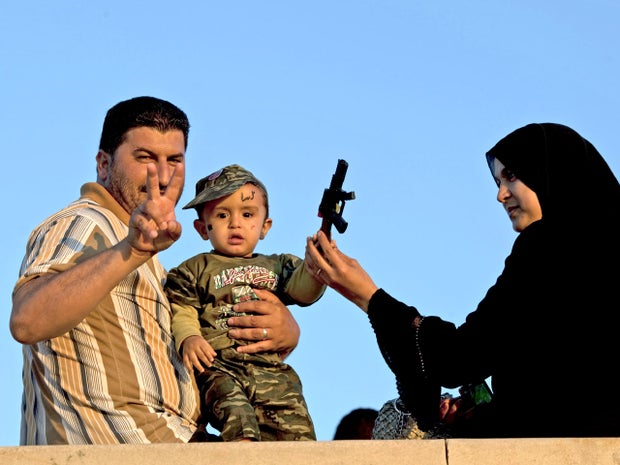
In the rebel capital of Benghazi, Libyans follow United States news more than many Americans. Every hour, the locals watch CNN, BBC and Al-Jazeera broadcasts including news from the front but also the western world.
As such, the rebels know all about the recent House rebukes to President Obama over the U.S. intervention in Libya and the demand that he explain himself before Congress. The locals who depend on NATO airstrikes remain optimistic but have admitted to a sense of anxiety over the reports.
"We believe that U.S. is the strongest country in the world - more important than NATO," said Adel al-Aorfi, a resident of Benghazi.
Libyans who are not on the colonel's side have, since Day 1, welcomed the airstrikes as a "blessing from the sky," as one local put it. Military support from the coalition has reshaped how the Libyans view Americans and Europeans after a French airstrike halted a Qaddafi force before it could reach Benghazi.
"Before, we used to burn American flags," quipped Khaled Menafi, a former account manager for a cement company and current NGO volunteer. "Now we're raising them up." Flags of various NATO countries, including the U.S. fly over Liberation Square in downtown Benghazi.
Last week, NATO extended its air campaign for another 90 days and started using attack helicopters in addition to warplanes. The colonel's compound in Tripoli and other military targets have been feeling the firepower of this escalation.
But at the same time, some news reports hinted at a growing uncertainty about the intervention among the people in NATO countries, especially the United States. Even though the House did not pass Rep. Dennis Kucinich's resolution calling for a withdrawal, legislators said they would be more forceful if President Obama doesn't justify himself by the end of this week.
"[Libyans] are concerned - if the operations need to be continued and U.S. steps back, that will be bad," said Tamer Braika who manages online social networking for the rebel Transitional Council. "From one side, we appreciate what NATO did but at same time, we are concerned if things will last. If [Qaddafi] will continue killing, can NATO keep to the required level or not?"
Libyans are also worried about NATO's reported supply shortages as underscored by outgoing U.S. defense secretary Robert Gates. In his speech, he berated European countries for relying on the U.S. military budget in conflicts such as the one Libya. Many Libyans understand that they need foreign air support to win the war against the colonel.
In recent days, these concerns have been partly allayed by NATO's renewed commitment as well as the decision by Italy to start giving money to the rebels. The U.S. has already transferred $1 billion and pledged to give more in the near future.
Some Libyans also think that the war will be shorter and cheaper if NATO intensified its campaign and broadened its list of targets. "The [war] bill will increase if NATO is slow. If they increase, it won't last even a month." Al-Aorfi said. "Sometimes we get the impression that they are not active enough," said Azza Tashani, another Benghazi native.
"But mostly we are very happy," she added.
Political and military analysts have said that the NATO allies are committed to finishing the fight.
"I think the will in the administration to see this through is strong, and should not be confused by the de rigeur noise from the Republican opposition," said Paul Kinsinger, a professor at the Thunderbird School of Global Management and a former CIA intelligence analyst. "There is some grumbling from liberal Democrats, but not enough to undermine the administration."
Azel Din el Sharif, a Libyan interpreter and human rights activist in the U.K. added that "the British foreign minister and prime minister are very committed to remove Qaddafi."
In the meantime, Benghazi residents will remain glued to their television sets and continue to cheer the U.S. and its allies as they strike at Qaddafi targets.
"We are very optimistic that our success is connected with the bond of international commitment to remove Qaddafi," said Taofik, a local community organizer. "The responsibility for removing dictator and terrorist is not just the Libyan people - it's also international community responsibility as well."