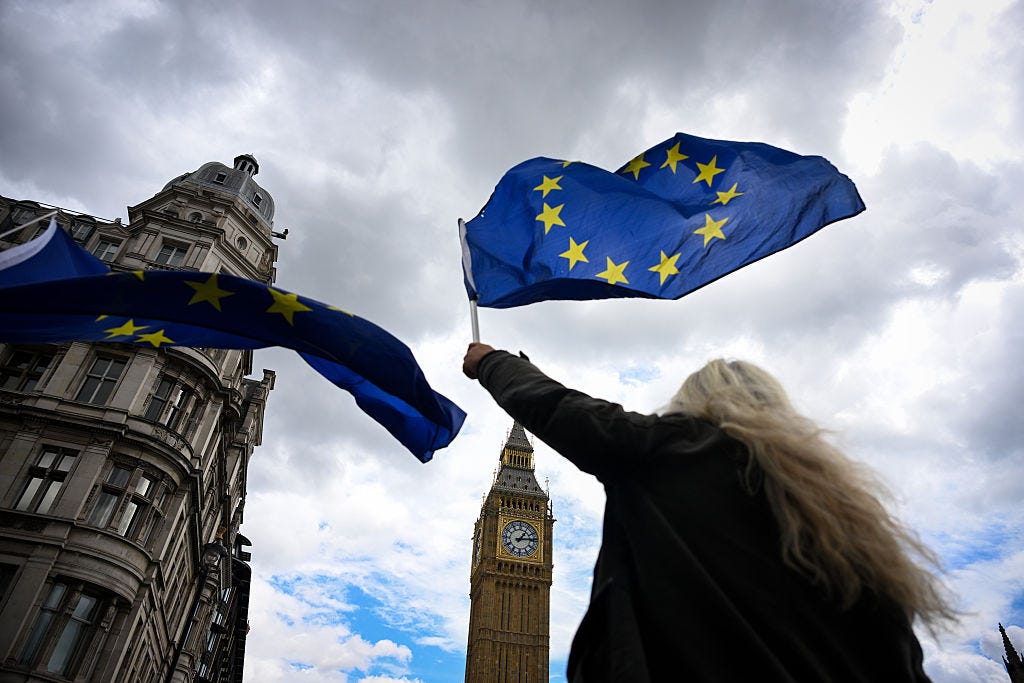
10 years after "Brexit" vote, majority of Britons say leaving European Union was a mistake
London — A decade after the public referendum vote that led to the United Kingdom's "Brexit" from the European Union, a majority of Britons now say leaving the bloc was a mistake, according to a recent survey by the independent YouGov polling organization.
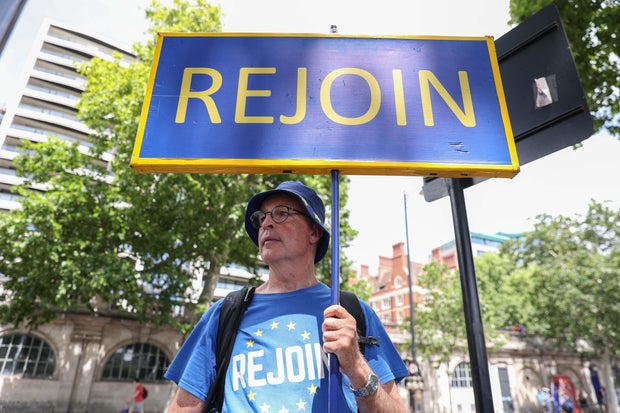
"Brexit has been an absolute disaster for the country," one pro-EU campaigner told France 24 on Monday, the eve of the referendum anniversary. "Not just economically, but loss of freedom of movement, families being split up."
Brexit has split Britain "down the middle, and nothing good has come of that since," said another.
The U.K. has been mired in political turmoil since the vote, with seven prime ministers in the last 10 years struggling to deal with the fallout — and the economic impact in particular, which has been compounded by the COVID-19 pandemic and then the wars in Ukraine and the Middle East.
Leaving the EU has reduced British productivity, imports and exports, according to the Office for Budgetary Responsibility, while an analysis of government data shows the economy took a 6% hit as a result of Brexit.
"The consequences 10 years on are worse than we feared," London Mayor Sadiq Khan, who campaigned to remain in the EU ahead of the referendum, said recently.
"We've got to go forwards"
While some who voted to leave the EU now admit to feeling some "Bregret," two-thirds of those who voted for Brexit still stand by their original vote. Overall, 30% of the Britons polled by YouGov said they still believe the U.K. was right to leave.
Many who still support the exit from the European bloc argue that it was handled poorly by the successive governments and politicians that oversaw the transition, and the move itself shouldn't be blamed.
Asked by CBS News' partner network BBC on Tuesday if he regretted Brexit, one of the architects of the split, far-right populist and Trump ally Nigel Farage, who leads the Reform UK party, said that it was "absolutely the right thing to do."
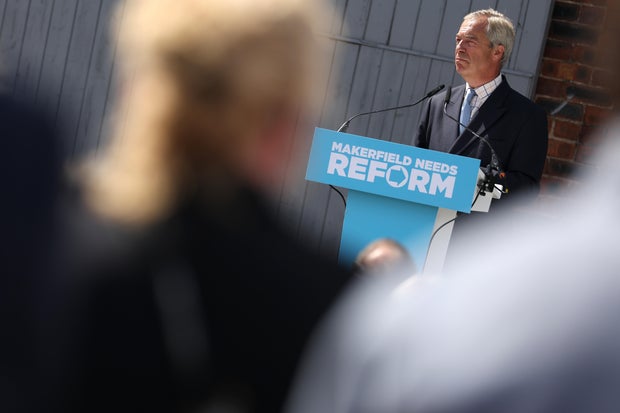
"The earthquake that happened 10 years ago today was not accepted by the establishment," he said. "And when finally they were pushed into actually getting us to leave the European Union, they then did not implement the wishes of the people."
A key promise of the "Vote Leave" campaign was that leaving the EU would enable Britain to "take back control" of its borders and curb migration from the EU.
But amid labor shortages after Brexit, then-Prime Minister Boris Johnson, who was a prominent supporter of leaving the EU, eased restrictions, and non-EU migration to the U.K. spiked.
Simon Boyd, a steel manufacturer in Dorset who helped campaign for Brexit, told the BBC he was "quite disappointed" with how things have turned out, but he added: "We've got to go forwards, embrace Brexit, embrace the opportunities that are there."
Rejoining the EU, he said, would "be akin to getting back on the Titanic on the conditions that you hand over your life vest first."
Another referendum?
For many Brits like Boyd, the idea of going through the national psychodrama of another referendum is too much to even consider.
Statistics do point to a major shift in public opinion, however.
In 2016, the Leave campaign won with 51.9% of the vote: About 17.4 million people voted to leave, while 16.1 million voted to remain.
Six million people in the U.K. have died since the vote, according to pollster Peter Kellner, and data show that "turnout among older voters was higher than average" in the referendum. Two thirds of participants in 2016 over the age of 65 backed Brexit, while a generation of young people, who tend to skew more pro-EU, are now old enough to vote.
The pro-Brexit majority "has literally died out," Kellner said in December.
Three fifths of Gen Z Brits say they'd like a new referendum on EU membership, according to polling by the More in Common think tank, while over half of respondents overall told YouGov this month that they would like to see the U.K. rejoin the EU in some way, shape or form.
But with Farage's fiercely anti-EU Reform UK party (previously called The Brexit Party) seeing major success in recent local elections, and Brexit still a divisive issue for the country, few politicians have indicated any will to even table the idea of holding another referendum.
The presumptive next prime minister of the country, Andy Burnham, said last year that he hoped Britain would rejoin the EU in his lifetime, but he said in May: "I also believe the last thing we should do right now is re-run those arguments."