Turnout is critical variable in Iowa caucuses
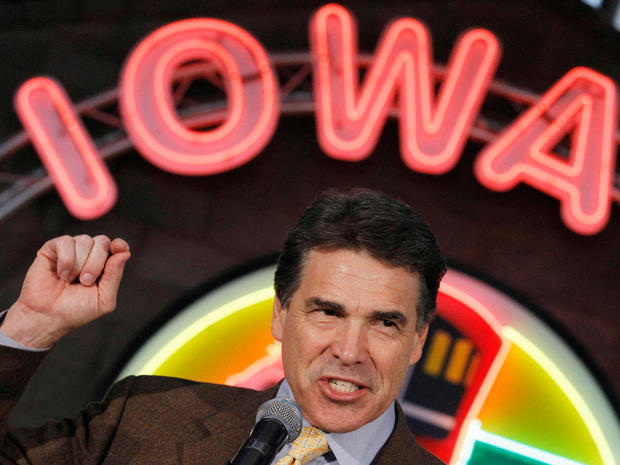

DES MOINES -- Despite a late developing campaign with relatively little of the extensive organizing considered critical to attracting voters on Caucus Day, campaign operatives and unaligned Iowa Republican officials believe there's potential for a big turnout on Jan. 3.
In conversations with several longtime observers and participants in the Iowa caucuses, most were optimistic that this year's kickoff event to the Republican nominating contest would exceed 2008's participation level, when 120,000 Iowa Republicans came out on an icy January evening.
Since that time, the Iowa Republican Party has narrowed its voter registration deficit with Democrats, as President Obama's approval rating has languished in the state.
Additionally, Iowans elected a Republican governor and voted Republicans into the majority in the state House of Representatives in the 2010 midterm elections.
Twice as many Democrats than Republicans caucused in 2008's record-breaking cycle, but Iowans are allowed to switch their party registration up until the very moment they enter their caucuses.
Tim Albrecht, Iowa Gov. Terry Branstad's communications director, noted that "360,000 Iowans caucused, total, last time, [and] a lot of those voters will go to where the action is this year, which is on the GOP side." He predicted a robust turnout of around 140,000 Republicans, with an additional 20,000 in the event of accommodating weather.
Officials aligned with the campaigns are reluctant to offer public turnout predictions, but one top aide to a major presidential candidate said that he was "betting on 125,000," while a senior adviser to another top GOP contender estimated between 105,000 and 115,000 participants in January's caucuses.
An opposing school of thought says that with a lackluster field of candidates -- who have helmed weak organizations in Iowa and spent little time campaigning in the state -- the number of caucus-goers will be close to the 88,000 who came out in 2000.
Longtime Iowa Republican strategist Doug Gross predicted a modest turnout of between 80,000 to 90,000 caucus-goers.
Almost everyone who made a prediction did so with the caveat that it remains a difficult guessing game.
Iowa pollster Ann Selzer conducted the final Des Moines Register survey in the 2008 cycle, which correctly predicted both Barack Obama's victory in the Democratic contest and Mike Huckabee's win on the Republican side.
According to Selzer, there are no statistics that correlate weather to turnout. She noted that 2008's caucuses were held on a particularly chilly night with some icy sidewalks, but there was record participation nonetheless.
"It's all about motivation," Selzer said.
While low turnout would likely benefit Texas Rep. Ron Paul, whose supporters are known to be particularly committed, it's anyone's guess as to how a high-turnout affair would affect the outcome.
In 2008, Huckabee benefited from a particularly high concentration of evangelical voters when he cruised to a nine-point victory over Mitt Romney in a race that most polls had shown to be much tighter.
The Iowa Faith & Freedom Coalition -- one of the state's most prominent Christian conservative advocacy groups -- is currently putting together voter guides that it plans to circulate in churches and among conservative groups during the week before Christmas.
Steve Scheffler, the group's president, predicted a turnout similar to the 2008 caucuses and said the only factor holding back an even larger crowd would be the campaigns' lack of extensive organizing.
Scheffler said that his group and other likeminded organizations would help pick up some of the campaigns' slack in turning out deeply conservative Iowa Republicans, who catapulted Huckabee to victory in 2008.
"If you include people who are not self-identifying evangelicals but who are very conservative on a number of issues, then you're looking at probably 80 to 85 percent of caucus-goers," he said.
Recent polls have shown that most likely caucus-goers who are currently supporting a particular candidate remain open to changing their minds before caucus day.
The unique caucus format -- which allows precinct leaders to speak on behalf of their favored candidate in an effort to convince others to switch allegiances at the last moment -- figures to be particularly impactful in a campaign as fluid as this one.
"My gut tells me there's just no doubt that on caucus night, we'll have more people walking in there than ever before who are still undecided at that point," said Iowa Republican Party chairman Matt Strawn.