Trump says U.S. isn't withdrawing "quite yet," but allies must "come in and take care of" Strait of Hormuz

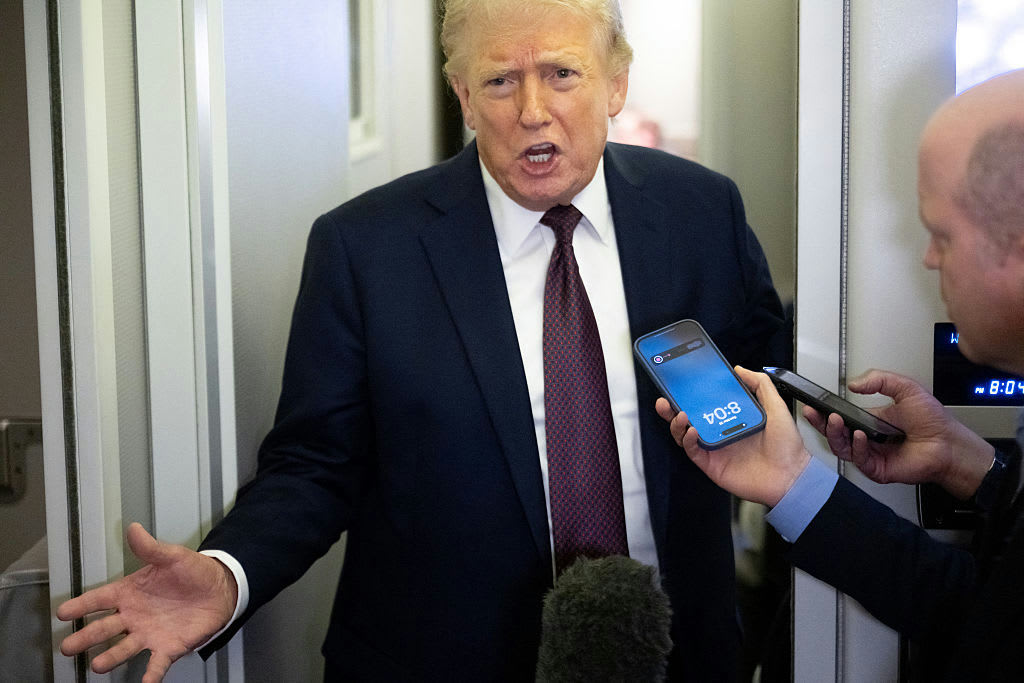
President Trump told CBS News Tuesday morning that he is not ready "quite yet" to remove U.S. assets as part of efforts to force Iran to reopen the Strait of Hormuz, despite a Truth Social post suggesting allies need to do it themselves.
In a phone call, Mr. Trump reiterated his frustration that other countries, including the U.K., had not sent military assets to join the U.S.-Israeli war against Iran. But he said he isn't pulling American forces out of the effort yet.
"At some point I will, not quite yet. But countries have to come in and take care of it. Iran has been decimated, but they're going to have to come in and do their own work," Mr. Trump said.
The president also reiterated his claim that, despite ongoing Iranian strikes on ships and Persian Gulf nations' infrastructure, "there's no real threat" in the Strait of Hormuz, a key transit route for 20% of the world's oil supplies.
"I'll be there, but if they're having a hard time getting oil, let them come and take it like they're supposed to. Let them come up and take it. They didn't want to give a hand to anybody. NATO is terrible, and they're all terrible. So if they want oil, come up and grab it. There's no real threat, there's no substantial threat because the country [Iran] has been decimated," he said. "Let them come up and take it. It's about time they did something for themselves."
Gas prices have continued to rise as the war has progressed. The national average for a gallon officially surpassed $4 Tuesday for the first time in more than 3 years, according to AAA. Asked about this milestone, Mr. Trump said that the prices would drop "when we leave" after the war is over.
White House press secretary Karoline Leavitt also told CBS News in a statement, "When Operation Epic Fury is complete, gas prices will plummet back to the multi-year lows American drivers enjoyed before these short-term disruptions."
Asked when the U.S. military operation may wind down, Mr. Trump did not give an end point but said, "It won't be long," adding, "I would say we are two weeks ahead of schedule."
When the war started, Mr. Trump said it would last "4 to 6 weeks," but this is already week 5.
He said Iran has "no military might anymore. They are down on everything they had. They're a mess."
"We've done our job," he continued. "It'll take them 10 years to rebuild. We've had total regime change. These are different people than anyone has ever heard of before, and frankly they've been more reasonable. So, we've had total regime change beyond what anyone thought possible. It's a big factor."
One of the president's original objectives was to guarantee that Iran can never have a nuclear weapon. But in the call, Mr. Trump declined to specify if it would be possible to declare victory without removing Iran's enriched uranium stockpile — something military experts say would be incredibly challenging and risky to attempt.
"I don't I even think about it. I just know that, you know, that's so deeply buried it's gonna be very hard for anybody," he said. Referring to last June's U.S.-Israeli bombing of Iran's nuclear facilities, he said, "Finally people admit it was obliteration. It's down there deep. And they haven't been able to do it. You know, even without a war they haven't been able to do it. So… it's pretty safe. But, you know, we'll make a determination."