Trump administration plan to sell Taiwan a record $10 billion in arms draws angry response from China
Washington — The Trump administration has announced a massive package of arms sales to Taiwan valued at more than $10 billion that includes medium-range missiles, howitzers and drones, drawing an angry response from China.
The State Department announced the sales late Wednesday during a nationally televised address by President Trump, who made scant mention of foreign policy issues and did not speak about China or Taiwan at all.
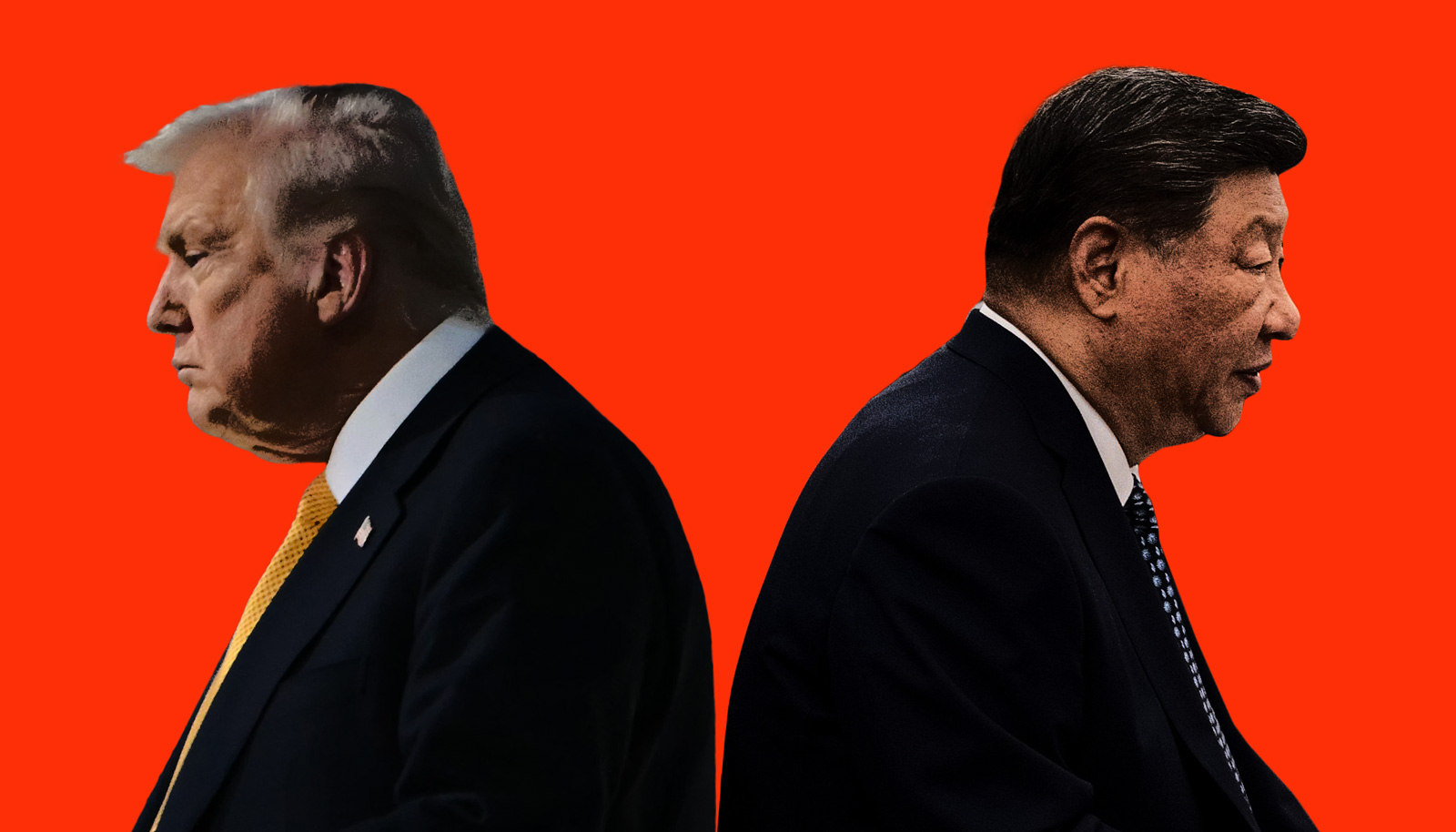
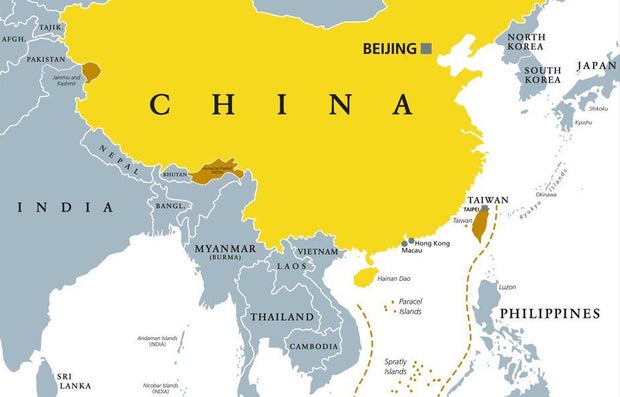
The tension between the U.S. and China, the world's two largest single economies, has ebbed and flowed during Mr. Trump's second term, largely over trade and tariffs but also over China's increasing aggressiveness toward Taiwan, which Beijing has vowed to reunify with the mainland. President Xi Jinping has not ruled out the use of force to make that a reality.
If approved by Congress, it would be the largest-ever U.S. weapons package to Taiwan, exceeding the total amount of $8.4 billion in U.S. arms sales to Taiwan during the Biden administration.
The eight arms sales agreements announced Wednesday cover 82 high-mobility artillery rocket systems, or HIMARS, and 420 Army Tactical Missile Systems, or ATACMS — similar to what the U.S. had been providing Ukraine during the Biden administration to defend itself from Russia — worth more than $4 billion. They also include 60 self-propelled howitzer systems and related equipment worth more than $4 billion and drones valued at more than $1 billion.
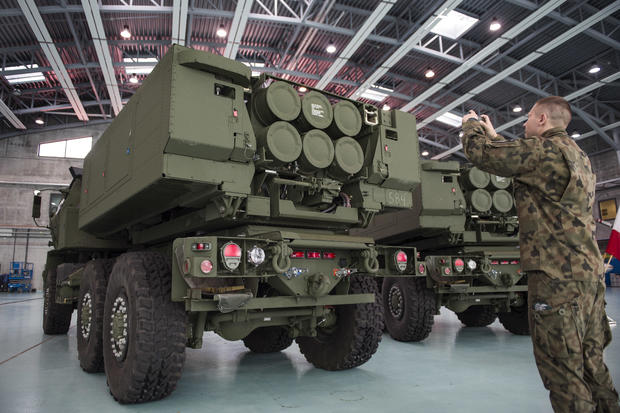
Other sales in the package include military software valued at more than $1 billion, Javelin and TOW missiles worth more than $700 million, helicopter spare parts worth $96 million and refurbishment kits for Harpoon missiles worth $91 million.
The eight sales agreements amount to $11.15 billion, according to Taiwan's Defense Ministry.
The State Department said the sales serve "U.S. national, economic, and security interests by supporting the recipient's continuing efforts to modernize its armed forces and to maintain a credible defensive capability."
"The proposed sale(s) will help improve the security of the recipient and assist in maintaining political stability, military balance, and economic progress in the region," the statements said.
China blasts U.S.-Taiwan arms deals, says they "will only end up backfiring"
China's Foreign Ministry attacked the move, saying it would violate diplomatic agreements between China and the U.S.; gravely harm China's sovereignty, security and territorial integrity; and undermine regional stability.
"The 'Taiwan independence' forces on the island seek independence through force and resist reunification through force, squandering the hard-earned money of the people to purchase weapons at the cost of turning Taiwan into a powder keg," said Foreign Ministry spokesperson Guo Jiakun.
"This cannot save the doomed fate of 'Taiwan independence' but will only accelerate the push of the Taiwan Strait toward a dangerous situation of military confrontation and war. The U.S. support for 'Taiwan Independence' through arms will only end up backfiring. Using Taiwan to contain China will not succeed," Guo added.
The U.S. role in Taiwan's "self-defense capabilities"
Under federal law, the U.S. is obligated to assist Taiwan with its self-defense, a point that has become increasingly contentious with China, which has vowed to take Taiwan by force, if necessary.
President Trump, in an exclusive interview with 60 Minutes aired in early November, said Chinese President Xi Jinping didn't bring up the issue of Taiwan when the two leaders met in late October, but he said Xi knew "the consequences" of taking military action against the island.
"He never brought it up. People were a little surprised at that," Mr. Trump said. "But they understand what's gonna happen. He has openly said, and his people have openly said at meetings, 'We would never do anything while President Trump is president,' because they know the consequences."
Asked by CBS News' Norah O'Donnell whether he would order U.S. forces to defend Taiwan if Xi did move militarily on the island, Mr. Trump said, "I can't give away my secrets."
Taiwan's Defense Ministry in a statement Thursday expressed gratitude to the U.S. over the arms sale, which it said would help Taiwan maintain "sufficient self-defense capabilities" and bring strong deterrent capabilities. Taiwan's bolstering of its defense "is the foundation for maintaining regional peace and stability," the ministry said.
Taiwan's Foreign Minister Lin Chia-lung similarly thanked the U.S. for its "long-term support for regional security and Taiwan's self-defense capabilities," which he said are key for deterring a conflict in the Taiwan Strait, the body of water separating Taiwan from China's mainland.
The arms sale comes as Taiwan's government has pledged to raise defense spending to 3.3% of the island's gross domestic product next year and to reach 5% by 2030. The boost came after Mr. Trump and the Pentagon requested that Taiwan spend as much as 10% of its GDP on its defense, a percentage well above what the U.S. or any of its major allies spend on defense. The demand has faced pushback from Taiwan's opposition KMT party and some of its population.
Taiwanese President Lai Ching-te last month announced a special $40 billion budget for arms purchases, including to build an air defense system with high-level detection and interception capabilities called Taiwan Dome. The budget will be allocated over eight years, from 2026 to 2033.
The U.S. boost in military assistance to Taiwan was previewed in legislation adopted by Congress that Mr. Trump is expected to sign Thursday. Last week, the Chinese embassy in Washington denounced the legislation, known as the National Defense Authorization Act, saying it unfairly targeted China as an aggressor. The U.S. Senate passed the bill Wednesday.