Top military officials faced polygraphs over leaks of sensitive information on weapons stockpiles, sources say

Washington — Some of the highest-ranking officials in the U.S. military were subjected to polygraph tests as part of a sweeping leak probe after highly sensitive classified details about the nation's stockpiles of sophisticated weapons were reported in the media, U.S. officials briefed on the matter told CBS News.
President Trump was furious about the leaks, according to three of the sources, who spoke on condition of anonymity. A very small set of people had access to the classified details on the munitions, and there was concern about whether anyone could potentially be acting as a foreign intelligence asset, one of the sources said.
Polygraph tests are often a part of the routine cadence for top military and civilian officials, but the mass volume of people who were pulled in for testing in this case was extremely rare, officials said.
Several dozen people were given the tests earlier this summer, including some U.S. Central Command officials as well as other combatant commanders.
The polygraph questions delved deeply into various national security-related matters. No one failed the questions meant to determine if these officials leaked to the media, two of the sources said.
Chief Pentagon spokesman Sean Parnell said in a statement to CBS News on Friday night: "The Department does not comment on internal personnel or investigative matters but takes all leaks of classified national security information extremely seriously and investigates accordingly. Securing classified information is critical to ensuring the security of the United States and of our troops deployed around the world."
Not all senior military officials were part of the testing. For example, the chairman of the Joint Chiefs of Staff, Gen. Dan Caine, wasn't polygraphed, a senior Pentagon official said.
The New York Times was first to report on the polygraph tests.
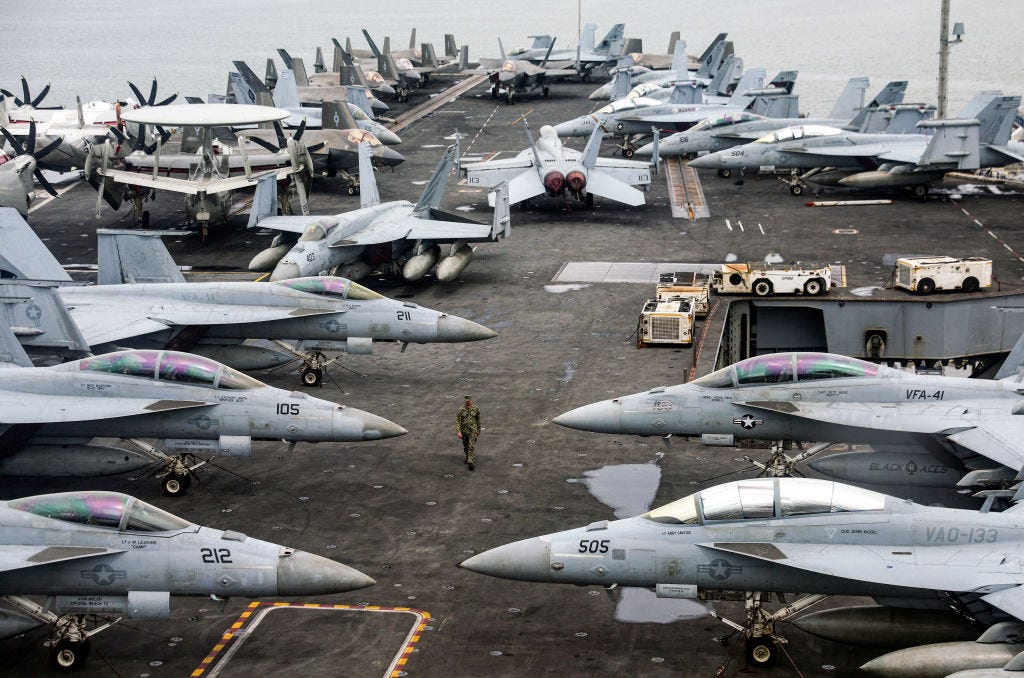
Weeks into the Iran war, CBS News and other news outlets had reported information concerning the rapid pace at which the U.S. was expending some of its most advanced finite munitions.
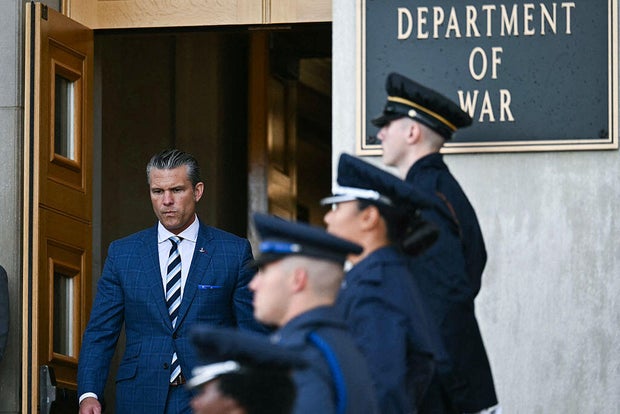
In July, Defense Secretary Pete Hegseth announced the Pentagon and Justice Department had formed a joint task force to identify and prosecute people suspected of leaking sensitive government information to the press, significantly expanding an effort that had begun inside his own office.
Hegseth gave the Pentagon's Office of General Counsel, led by Earl Matthews, broad authority to demand information, records and assistance for leak investigation. Pentagon officials and personnel were instructed to prioritize those requests and respond within a two-day period.
"When a leak of department information occurs today, it's critical that we provide the Department of Justice and other partners in federal law enforcement — including the FBI — with actionable information as quickly as possible," Hegseth said when he announced the task force.
He added: "Leaked information risks lives."
The move came days after the Justice Department subpoenaed several New York Times reporters over their reporting on security shortcomings aboard Mr. Trump's new Qatari-donated Air Force One.
Later, the Justice Department withdrew its subpoenas for grand jury testimony and phone records. The decision followed a contentious court hearing where a U.S. district judge grilled federal prosecutors on why they had issued the subpoenas before taking further investigative steps, according to previous CBS News reporting.
Polygraphs aren't unusual for government officials who have permission to view top-secret files or "special access programs," which place even tighter controls on sensitive national security information. Tests are given every few years to recertify an individual's clearance.
The scope of the testing this summer indicates an investigation, national security officials told CBS News. The FBI was not involved in these polygraph tests, several people with direct knowledge of the matter said.
The military has its own investigators.
Secretaries of defense have the authority to direct counterintelligence investigations that can include polygraph examinations, but federal law and Pentagon regulations also impose restrictions on when polygraphs may be used and require procedural safeguards. In those circumstances, the person being examined must consent to or request the test.
That includes cases in which investigators are trying to resolve serious information uncovered during a security investigation or when someone wants to clear themselves of allegations or evidence that emerged during an investigation.
Under federal law, a defense secretary is required to ensure that polygraph examinations are used in a "responsible and effective" manner within the Defense Department and is also required to provide information to congressional bodies on polygraph use.
For Hegseth, the latest effort is not the first time he has turned to polygraphs amid concerns about leaks from inside the Pentagon.
Following the ouster of Gen. C.Q. Brown, the former chairman of the Joint Chiefs of Staff, Hegseth was reportedly furious last year after details of a planned classified briefing on China set up for Elon Musk at the Pentagon had leaked to the press, according to The Wall Street Journal.
The newspaper reported that Hegseth shouted at Adm. Christopher Grady, the then-acting Joint Chiefs chairman, and demanded evidence he wasn't the source for leaking the March 21, 2025, briefing. Citing two anonymous people familiar with the exchange, the newspaper said Hegseth yelled at Grady: "I'll hook you up to a f—ing polygraph!"
The Journal reported Grady was never subjected to a polygraph examination, as Hegseth accused others of leaking, including Lt. Gen. Doug Sims, who served as director of the Joint Staff and was also threatened with a polygraph.
Hegseth decided against promoting Sims to four-star general, the Times reported. He retired last September.