The GOP's Donald Trump problem
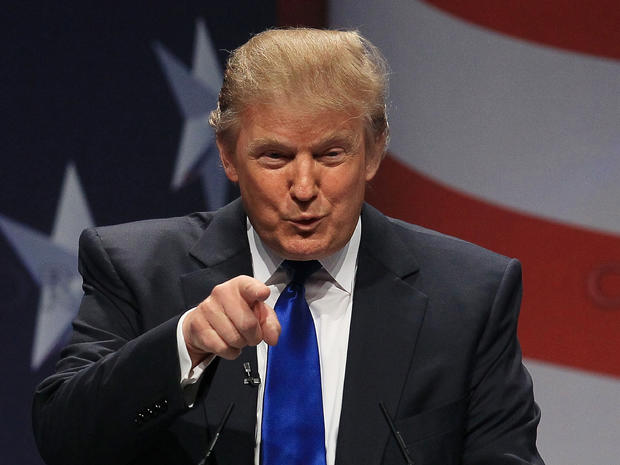
Donald Trump, the real estate developer and reality television star, has in recent months been loudly proclaiming that he is considering a run for the 2012 Republican presidential nomination. The press has - thus far - largely treated the claims as less-than-serious, casting Trump's presidential flirtation a vanity-driven publicity stunt that will have little impact on the Republican race.
In an apparent effort to dispel the notion that Trump isn't a serious candidate, Republican consultant and infamous dirty trickster Roger Stone told Politico this week that The Donald could find a niche as an "anti-war Republican." Stone also stressed that Trump can self-fund a campaign - eliminating the need for a donor network - stating that Trump has $2 billion in cash and "could write a check for $200 million if he wanted to."
Meanwhile, Trump himself called MSNBC's Joe Scarborough, who reported that Trump said "Most people out there think this is a joke - that I'm doing this for publicity. Imagine what happens the day I announce I am actually running for president." Both the Scarborough and Stone comments found their way into Mike Allen's widely-read "Politico Playbook" column Friday morning, guaranteeing they will be digested by the political media elite.
Yet the fact remains that Donald Trump is not a serious candidate for president. He may ultimately declare he is running, but for most voters he'll likely be seen as little more than an entertaining distraction. Consider what happened when Trump appeared at the Conservative Political Action Conference(CPAC), the gathering of conservative activists that doubles as a cattle-call for GOP presidential contenders.
(At left, Trump trumpets a poll showing him close to President Obama in a hypothetical match-up -- a finding more telling about the nation's split opinion on the president than Trump's prospects in a GOP primary or general election.)
Trump stole the show on CPAC's opening day, speaking to a packed house that gave him a rapturous reception for lines like "If I run, and I win, this country will be respected again." But when it came time for the straw poll of presidential candidates, Trump didn't even register one percent support - despite a push for conference attendees to write him in. The CPAC crowd, it seemed, saw Trump as an entertainer, not a contender. (And just imagine what happens when Trump starts campaigning with the little people, considering that he has deemed the act of shaking hands "barbaric.")
But that doesn't mean Trump is irrelevant, exactly. Imagine he does get into the race: Thanks to his widespread name recognition, he'll probably be invited to a number of debates. And if he isn't invited, he's likely to unleash a torrent of complaints that will generate enormous media coverage.
Consider the possible scene on the debate stage: Mitt Romney trying to explain his Massachusetts health care plan, Mitch Daniels seeking to win Republican hearts and minds as the anti-Obama, Newt Gingrich delivering lectures laced with historical references on the dangers of the Obama agenda. And then, next to them, The Donald, a man more associated with a catchphrase than a deficit reduction plan. Trump may labor to show off his policy positions, but most viewers will take him about as seriously as they did Jimmy "The Rent is Too Damn Nigh" McMillan in the New York gubernatorial debate last fall.
In other words, Trump is not likely to be much more than a sideshow - but a sideshow still has the power to dominate the conversation. And the last thing GOP candidates need as they struggle to find their niche and win media coverage is the presence of a rich narcissist whose $50,000 donation to Rahm Emanuel speaks to his commitment to the Republican cause. Trump may not be a serious candidate, but that doesn't make him any easier to ignore.