"Wonder and awe": The art of Ruth Asawa
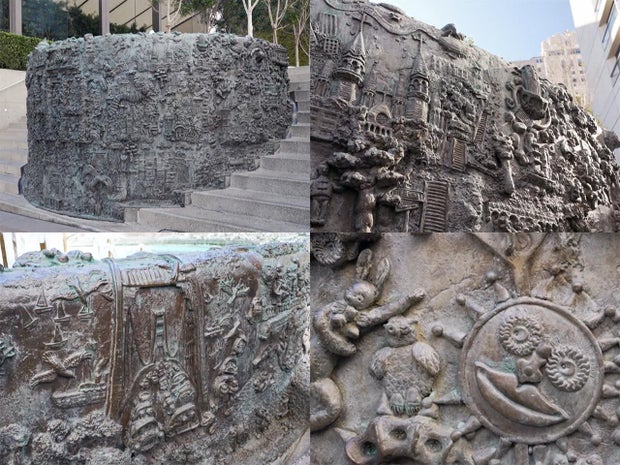
Artist Ruth Asawa's San Francisco Fountain, in the city's Union Square, is an endless treasure trove of Bay Area knowledge. "Some people refer to it as sort of a Where's Waldo?, because there are so many things to find," said her son, Paul Lanier. "You can find Willie Mays, the San Francisco Giants, the opera, city hall, the library."
It's just one of Asawa's eleven public works in the city, and a reminder to Paul Lanier and his sister, Addie Lanier – the youngest of her six children – of their mother's commitment to community, and her ability to make art out of anything. "She said that she would be fulfilled making something out of mud and paper, because it's the process that is the important thing for the artist," said Addie.
Asawa, who would have turned 100 this year, is best known for her looped wire structures, a continuous line of wire bent and woven to create a free-hanging sculpture. Addie said, "The media that she worked in is very economical. It's industrial wire. It's like the baling wire that you would find on a farm."
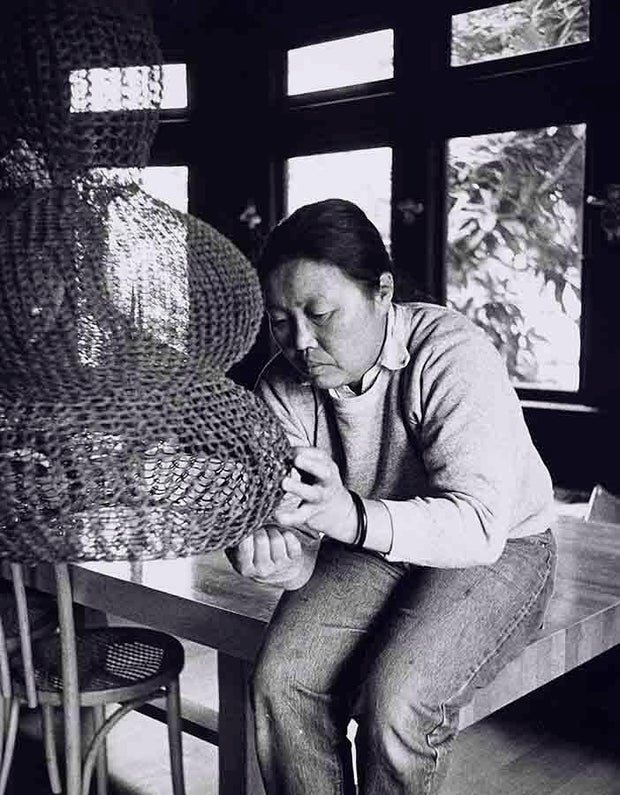
Asawa learned to be resourceful from a young age, finding materials everywhere. Her media ranged from baker's clay in the kitchen, to recycled paper.
Asked what she was like as a mom, Paul replied, "Well, she's just like your mom, or anyone's mom, making lunches and breakfast, getting people out of the house."
"But she used blow torches on the front deck!" laughed Addie.
Asawa spent her early years on a farm in Southern California, working alongside her parents. Her childhood was cut short during World War II when she (along with other Japanese-Americans) was sent to a detention camp – incarcerated along with more than 120,000 people of Japanese descent under Executive Order 9066.
There, in the face of incredible adversity, she first learned to draw. Cara Manes, the curator of a Ruth Asawa retrospective now on view at New York's Museum of Modern Art, said Asawa attended "grassroots drawing lessons that were led by fellow detainees who were animators for the Disney Studios."
After the war, Asawa landed at North Carolina's famed arts school Black Mountain College, where she honed her skills with mentors like German-born artist Josef Albers and choreographer Merce Cunningham.
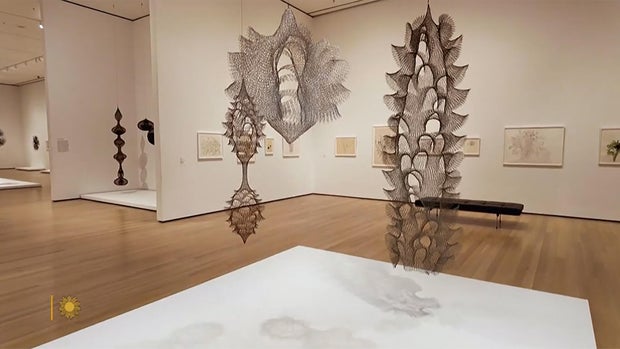
, Her dynamic sculptures appear to have a life of their own. "They're really animated," said Manes, "and they change as you move around them."
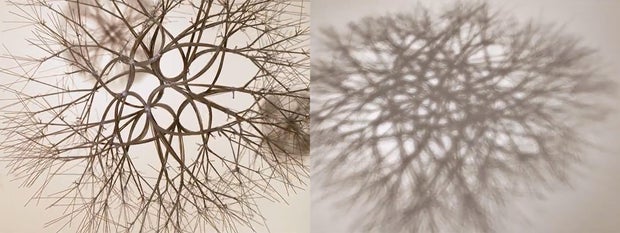
A special aspect of Asawa's work is its unpredictable rhythm. Manes said, "Sometimes by looking at the shadow cast by a given sculpture, you can understand how many layers of wire mesh there is, you know, in a way that you might not be able to discern from head-on."
Everyone could become art in Asawa's home, according to her children. Paul said, "If someone came over she would say, 'You have such a nice face. Can I cast it?' And so they would say yes. They didn't know what they were agreeing to!"
"But she could get away with it," Addie said. "She could do this with total strangers."
While her works fetch millions at auction now, Asawa didn't find much commercial success during her lifetime. But that wasn't her purpose, say her children.
Asked what she hopes people discover from her mother's work, Addie replied, "I think people breathe. I think people take a big, deep breath and go, 'Oh my God.' I think it's, like, wonder and awe to see that something like this exists, that was made by hand. It's kind of the experiment of what one person can do. You are that experiment. Go forth. Do something with your life, you know? Learn a technique, do something, pass it on, right?"
For more info:
- "Ruth Asawa: A Retrospective," at the Museum of Modern Art, New York City (through Feb. 7)
- Exhibition catalogue: "Ruth Asawa: Retrospective" (Yale University Press), in Hardcover format, available via Amazon, Barnes & Noble and Bookshop.org
- ruthasawa.com (Official site)
Story produced by Julie Kracov. Editor: George Pozderec.